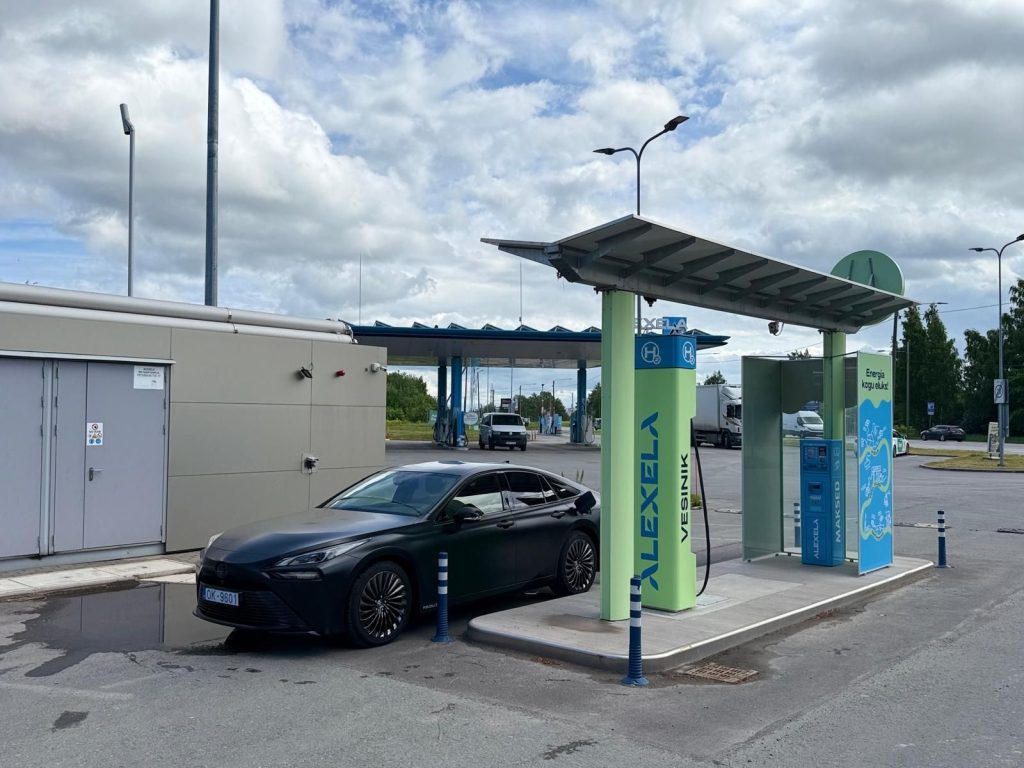
While hydrogen refuelling infrastructure across the Baltic Sea Region remains fragmented, Latvia is preparing its next step in Jelgava.
Summary
Hydrogen refuelling infrastructure in the Baltic Sea Region is expanding, but unevenly. EU regulation – AFIR, CO₂ standards for heavy-duty vehicles, and the Eurovignette Directive – sets the direction, but national market maturity and funding still determine the pace. Latvia and Estonia illustrate two different starting points: Latvia’s only existing HRS in Riga still runs on non-renewable hydrogen, while Estonia opened its first public green-hydrogen refuelling infrastructure in 2025. Against this backdrop, the H2Value project’s pilot in Jelgava – expected to be completed in the second half of 2026 – will establish one of the first full hydrogen value chains in Latvia, built in cooperation with Estonian partners.
Introduction
For many EU countries, cutting greenhouse gas emissions from transport remains one of the biggest challenges in meeting climate and energy goals. As fossil fuel prices remain unstable, the search for cleaner alternatives in transport has become not just an environmental and public health issue, but an economic one too.
Alongside electric charging, expanding hydrogen refuelling infrastructure is now part of the EU’s broader push to phase out fossil fuels. Green hydrogen, in particular, could play an important role in heavy-duty transport such as lorries, buses and coaches. But while the overall direction is set at EU level, each Member State is taking its own approach depending on policy priorities, market conditions, and geography.
This article looks at how hydrogen refuelling stations (HRS) are developing in Latvia, Estonia, and Lithuania, based on recent studies, pilot projects, and planned next steps.
European context, Baltic Sea Region
EU Regulations
Due to the relatively early stage of hydrogen technologies for heavy-duty vehicles, market conditions alone are not sufficient to support balanced development. Therefore, EU, national, and regional regulation plays a significant role in creating incentives and mitigating constraints on the uptake of fuel-cell electric vehicles powered by green hydrogen.
AFIR
The EU’s Alternative Fuels Infrastructure Regulation (AFIR) provides a clearer framework for the development of hydrogen refuelling infrastructure. Rather than relying mainly on national strategies and pilot projects, it introduces common requirements for publicly accessible hydrogen stations, including maximum intervals of 200 km along key TEN-T routes and coverage in major urban nodes. This framework supports the further development of hydrogen as a transport fuel, particularly for heavy-duty transport, where different zero-emission technologies are still being assessed. For Member States, AFIR creates a more structured basis for infrastructure planning and investment until 2030. For market participants, it improves regulatory predictability. At the same time, progress toward these targets is likely to vary across countries, depending on demand, public funding, permitting processes, and the pace of national market development.
CO2 standards for heavy-duty vehicles
The EU’s CO₂ standards for heavy-duty vehicles create an important regulatory context for hydrogen in road transport by setting progressively stricter fleet-wide emission reduction targets for new lorries, buses and coaches: 45% by 2030, 65% by 2035 and 90% by 2040. The rules also require 90% of new city buses to be zero-emission by 2030 and 100% from 2035, while encouraging the market uptake of zero- and low-emission vehicles through dedicated incentive mechanisms. In this framework, hydrogen can play a role where it enables heavy-duty vehicles to qualify as zero-emission, particularly through fuel-cell technologies or other configurations meeting the regulation’s very low tailpipe CO₂ thresholds. The standards therefore do not promote hydrogen in isolation, but they strengthen the business case for hydrogen-based heavy-duty transport by pushing manufacturers toward zero-emission pathways and accelerating the roll-out of both recharging and refuelling infrastructure.
Eurovignette
The Eurovignette Directive has become another key element of the EU policy mix for cleaner road transport. Since its 2022 revision, it has allowed Member States to vary road tolls and user charges for heavy-duty vehicles according to their CO₂ emissions, creating a direct financial advantage for cleaner vehicles. For zero-emission trucks and buses, lower tolls or full exemptions can make a meaningful difference to operating costs and help speed up market uptake. Full toll exemptions for zero-emission heavy-duty vehicles were originally possible under the Eurovignette Directive until 31 December 2025, but Directive (EU) 2025/2459 has extended this option to 30 June 2031. From 1 July 2026, the revised heavy-duty vehicle CO₂ framework is expected to affect how CO₂-based road tolls are calculated under the Eurovignette Directive, particularly through the application of CO₂-emission classes to vehicle sub-groups such as hydrogen fuel-cell vehicles.
Hydrogen refuelling network in the Baltic Sea Region
A detailed assessment of hydrogen refuelling station (HRS) development in the Baltic Sea Region was carried out by the HyTruck project under the Interreg Baltic Sea Region programme, with the aim of developing a transnational spatial concept and planning tools for HRS deployment. Its findings show that the regional network remains highly uneven and still largely corridor-based under AFIR. As of late 2025, the region had 21 HRS suitable for heavy-duty transport in operation, concentrated mainly in Germany, Poland and Sweden, while Finland and much of the Baltic states remained sparsely covered. Even in countries with existing stations, coverage was often fragmented, with gaps of more than 200 km between neighbouring sites, leaving the region far from a seamless network for long-distance hydrogen freight. HyTruck also identified more than 50 stations under construction or in the planning phase (see Figures below), but noted that some of these projects were backed only by public support decisions rather than final investment decisions, meaning the pace of delivery could still prove slower than expected.
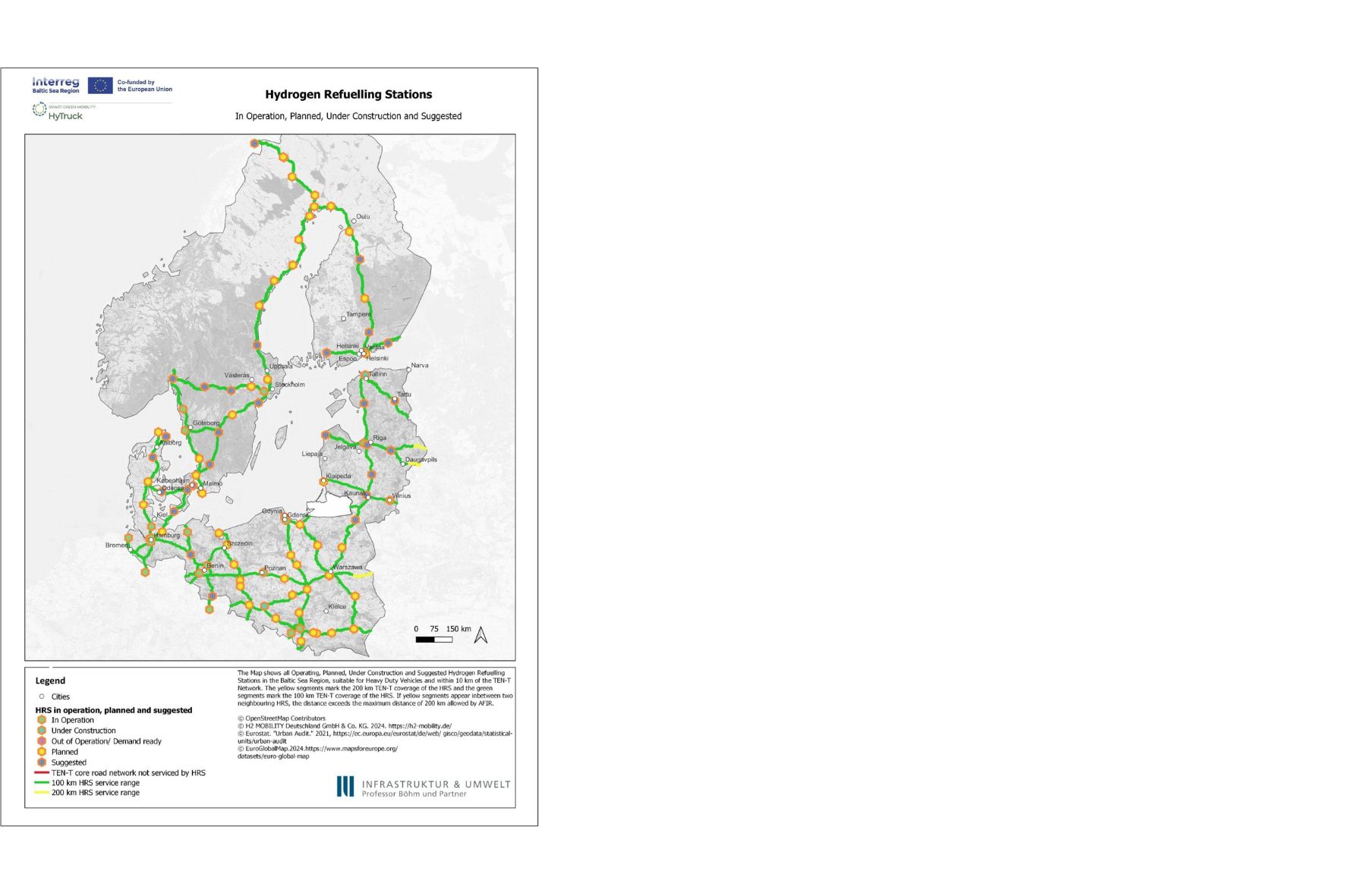
HRS in the Baltic Sea Region in operation, planned, under construction and suggested. Source HyTruck Project
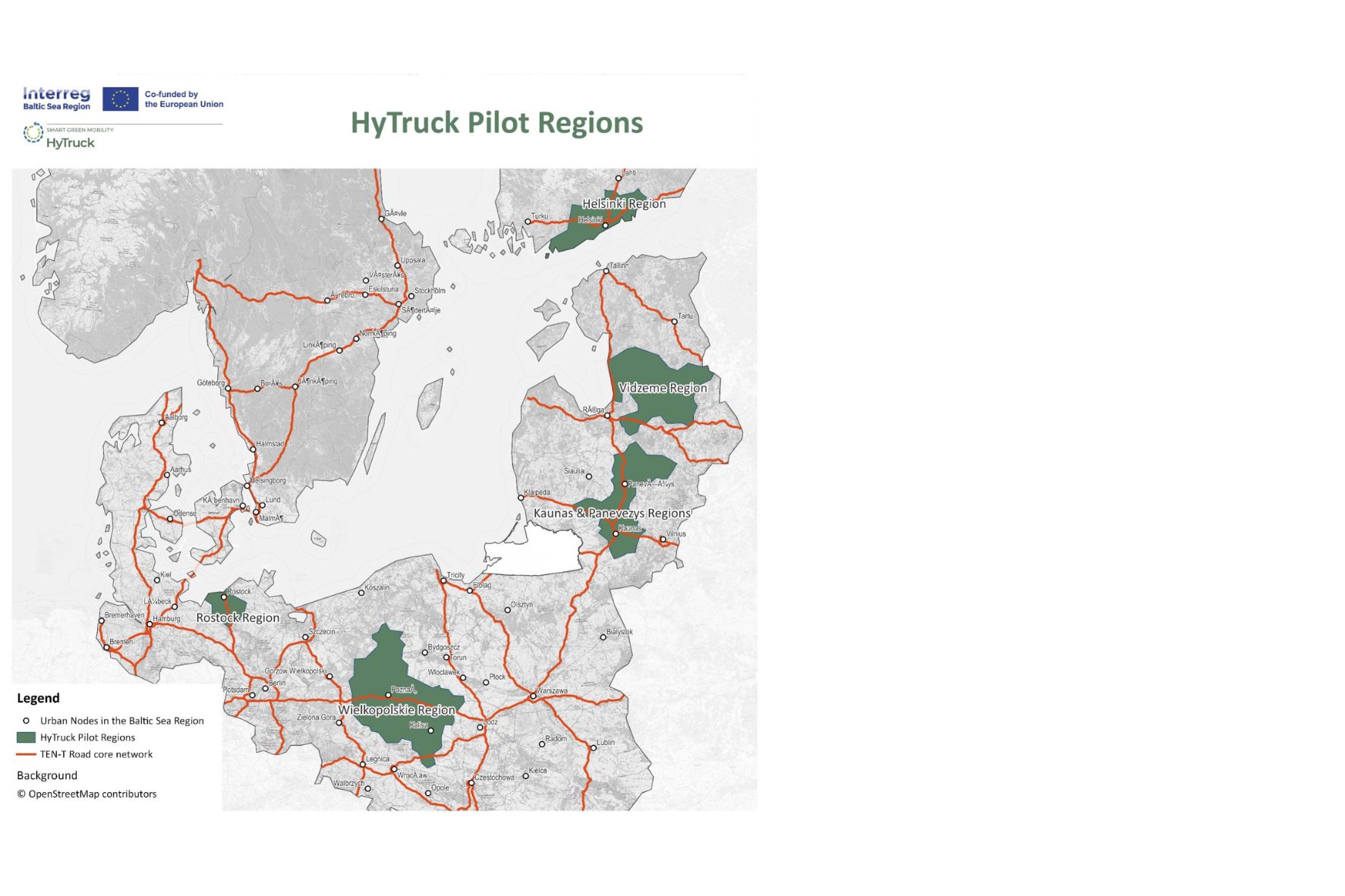
Pilots regions and the TEN-T network studied in the HyTruck project
What the region shares is not a common level of progress, but a common set of obstacles. According to the HyTruck evaluation and stakeholder workshops, the main barriers across countries include weak uptake of hydrogen vehicles, high hydrogen and equipment costs, limited green hydrogen supply, complex permitting procedures, and the absence of coherent long-term support schemes. Although AFIR provides an important common framework, the overall policy and funding environment across the Baltic Sea Region is still not sufficient to support rapid market development. In practice, the Baltic states are described as more demand-constrained and cautious, while countries such as Germany, Poland and Sweden have more developed legal and financial instruments. Overall, the region is moving toward a more connected hydrogen corridor model, but at different speeds, with national market maturity and domestic policy choices continuing to shape outcomes more than EU targets alone.
At the same time, Lithuania is moving from planning to implementation. In 2025, the country still had no operating hydrogen refuelling stations, but projects in Klaipėda and Vilnius had already been identified. Since then, the Klaipėda Port project has advanced significantly, with Lithuania’s first green hydrogen production and refuelling facility now opened at the port. The project combines local hydrogen production with refuelling infrastructure and is positioned as part of Klaipėda’s wider green port strategy. It is designed to serve several transport uses, including port operations, road transport and, potentially, maritime applications.
Vilnius is moving in a similar direction, but with a stronger focus on public transport. Construction of a EUR 10 million green hydrogen plant began in 2026, centred around a 3 MW electrolyser and intended to supply hydrogen for the capital’s first hydrogen-powered buses. The facility is expected to begin operating in the second half of 2026, with 10 hydrogen buses due to enter service around the end of that year. Together, the Klaipėda and Vilnius projects show how Lithuania is shifting from strategic planning toward practical deployment of hydrogen production, refuelling infrastructure and early demand creation.
Latvia
In 2020, Riga opened the first HRS in the Baltic states. Located at the Rīgas satiksme site on Vienības gatve, the station was built primarily to serve the company’s hydrogen trolleybuses, but it also includes a 700-bar dispenser for public access and passenger cars (see Figure 3). Hydrogen at the site is produced through steam reforming of natural gas, which means it is not renewable hydrogen. As a result, the station has mainly served as an early demonstration project rather than a scalable source of low-emissions transport fuel.
Latvia’s approach to green hydrogen is set out in the updated National Energy and Climate Plan and is complemented by newer policy documents, including the Sustainable Energy Technologies Development Plan until 2035 and the Alternative Fuels Infrastructure Development Strategy adopted in 2025. As stipulated by the revised Renewable Energy Directive, the updated NECP includes a 1% target for renewable fuels of non-biological origin in transport by 2030, while also requiring at least 30% renewable transport energy or electricity in public and municipal transport in state cities.
Even so, implementation remains difficult. Latvia has acknowledged that hydrogen mobility is still held back by the early stage of market development, limited vehicle deployment, and the need to build production, refuelling infrastructure and demand at the same time. Although the Transport Energy Law entered into force on 1 January 2026 and green hydrogen is recognised within the broader framework for meeting renewable energy and emissions goals in transport, the practical rollout of HRS and hydrogen vehicles still depends heavily on funding availability and market uptake.
In late 2024, Vidzeme Planning Region published a pilot study on HRS development in Latvia, identifying Salaspils as the most suitable location for the country’s first AFIR-compliant HRS. That conclusion was later reflected in Latvia’s Alternative Fuels Infrastructure Development Strategy, which foresees three 1-tonne-per-day hydrogen stations on the TEN-T network by 2030 and notes that the existing station in Riga only partly meets AFIR requirements because of its lower capacity. The study and subsequent strategy also point to other potential locations, including Ventspils and Jēkabpils, with Liepāja and Jelgava mentioned as possible alternatives depending on traffic patterns, TEN-T coverage and broader hydrogen production.
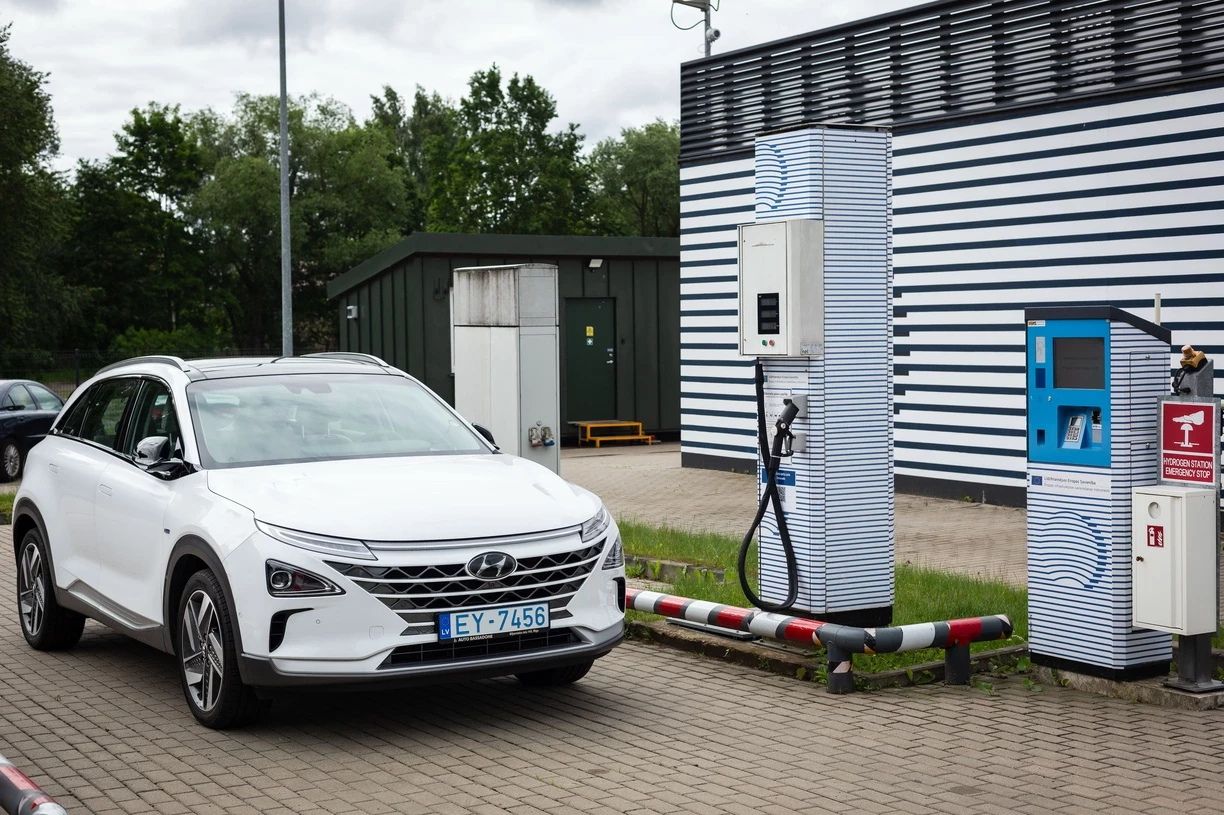
Hydrogen refuelling station at Rīgas Satiksme. Photo Juris Rozenbergs, jauns.lv
Estonia
Estonia reached a significant milestone in 2025 with the opening of its first public hydrogen refuelling infrastructure, ending a period in which the nearest option for Estonian hydrogen drivers was across the border in Riga. The first operational site is located at Utilitas’ Väo energy complex in Tallinn, where green hydrogen is produced on site. This station initially serves business users and is mainly suited to heavy-duty vehicles and buses, with refuelling available at 350 bar. A second station, developed at Alexela’s Peterburi Road site, is intended to provide broader retail access, including 700-bar refuelling for passenger cars. The two sites therefore play complementary roles: Väo supports early commercial and heavy-duty use, while Peterburi Road expands access to the wider vehicle market. A defining feature of the Estonian rollout is the fuel itself: unlike the hydrogen currently dispensed in Latvia, the hydrogen sold in Estonia is 100% green, produced from renewable sources using a Stargate Hydrogen electrolyser.
The first real-world application is already visible on Tallinn’s streets, where Bolt has launched a taxi service featuring 30 Toyota Mirai hydrogen vehicles. This infrastructure forms part of Estonia’s broader ambition to build the world’s first nationwide hydrogen valley, with further refuelling stations envisaged for Pärnu, Tartu and eastern Estonia to support the country’s targets of carbon neutrality by 2050. Estonia’s Energy Development Plan until 2035 considers the use of hydrogen in the transport sector, while the National Policy Framework for AFIR provides further detail. It indicates that the responsible ministry has placed stronger emphasis on meeting recharging infrastructure requirements for battery-electric vehicles.
Next steps
Despite market uncertainty and delays in state funding for the expansion of the AFIR-compliant HRS network, several pilots and initiatives are exploring hydrogen technologies in practice. One example is the H2Value project, which brings together solutions for the local production, distribution, and use of green hydrogen in urban transport. The H2Value pilot in Jelgava City is expected to be completed in the second half of 2026, serving as one of the first examples of a full hydrogen value chain established in Latvia in cooperation with Estonian partners.
Concluding remarks
- The EU-wide network of HRS is gradually taking shape. In the Baltic Sea Region, development remains fragmented, but progress is being made. For now, the rollout still depends heavily on public funding.
- In Latvia, the reallocation of funding originally intended for hydrogen in transport may become a major barrier to meeting the 2030 targets.
- In Estonia, the success of the first HRS will depend largely on cooperation with potential users and the development of sufficient demand.
- To reduce greenhouse gas emissions in transport, battery-electric vehicles and charging infrastructure are likely to remain the dominant and most practical option. Green hydrogen is more relevant in segments that require long-range operation and fast refuelling.
- Vehicle manufacturers also play an important role. At present, only a limited number of fuel-cell vehicles are available in the heavy-duty segment.
- EU rules on CO₂ standards, together with exemptions from tolls and charges for zero-emission vehicles, may support more hydrogen-friendly policies. Even so, investment decisions will continue to depend on broader market conditions.
The author of this article is Krista Pētersone, Lead Expert for the “H2Value” project at the Vidzeme Planning Region.