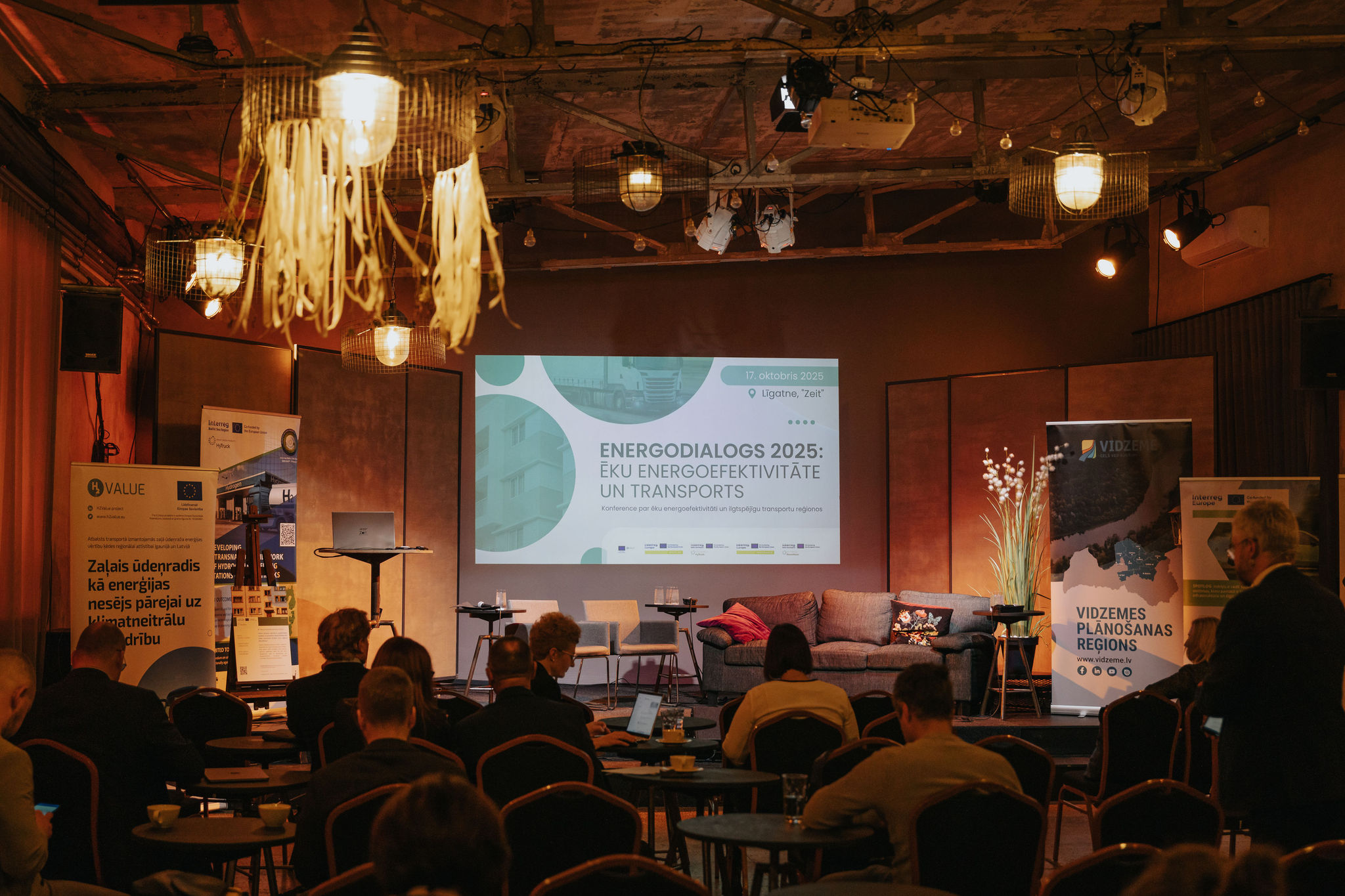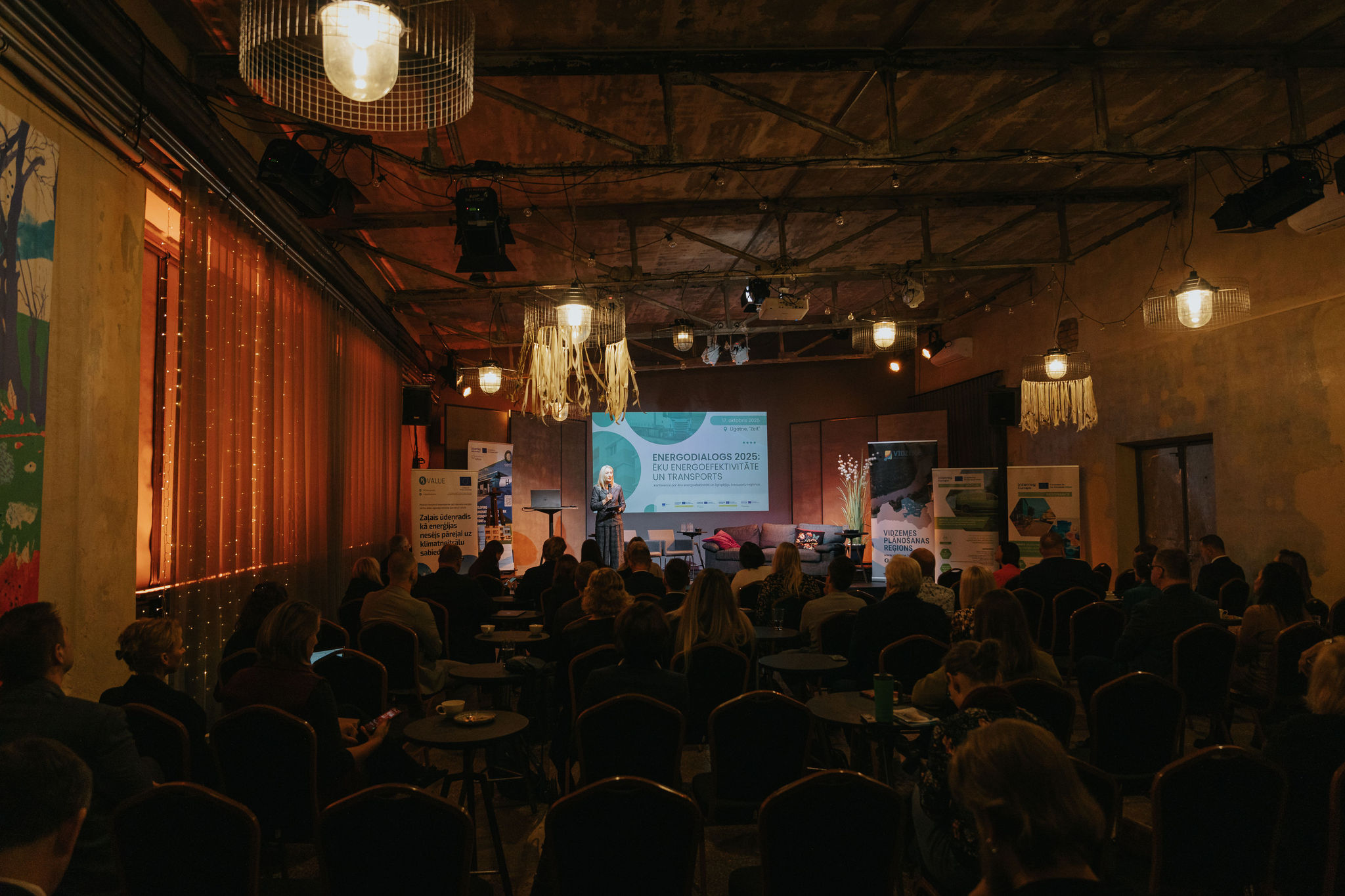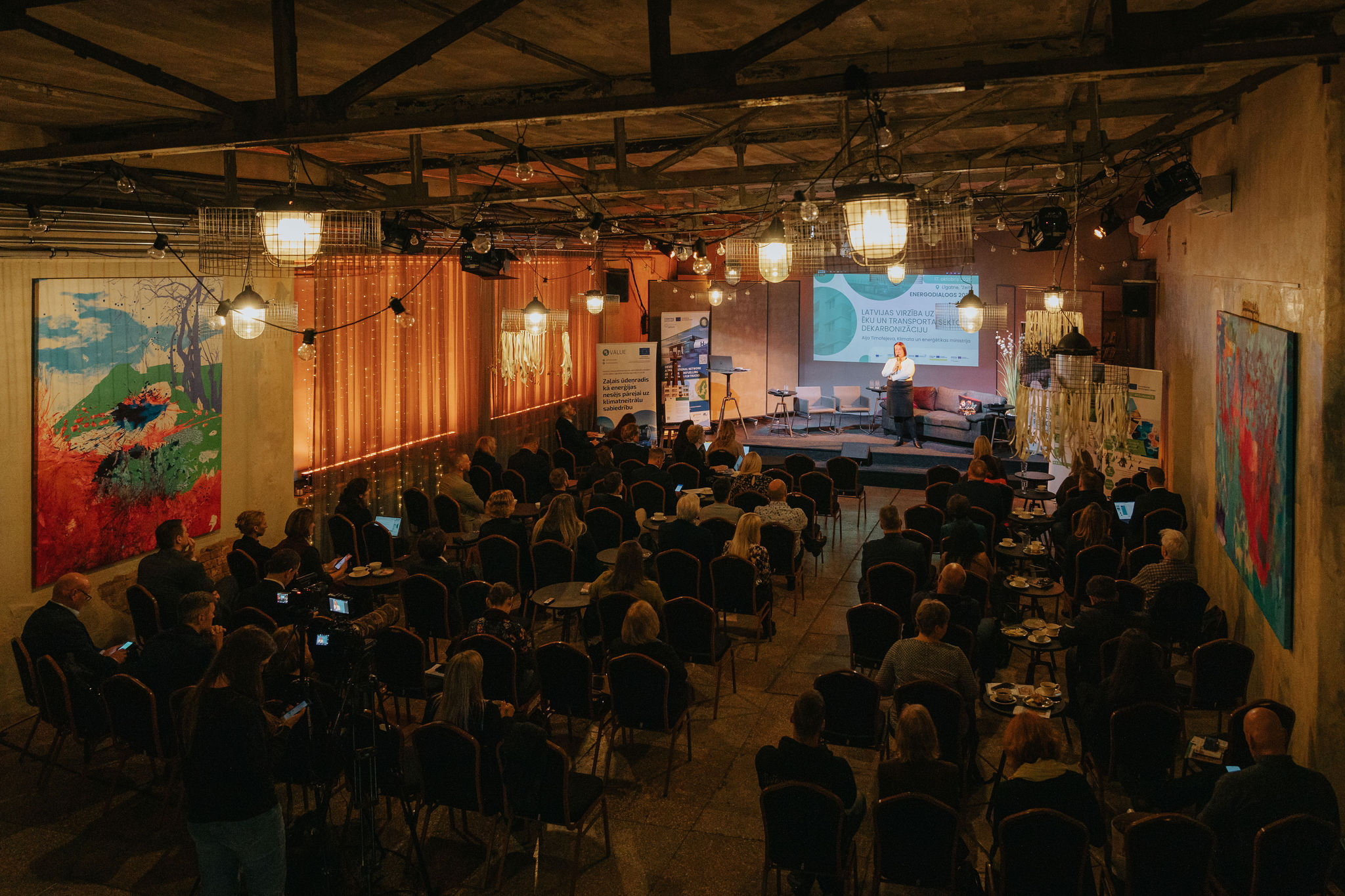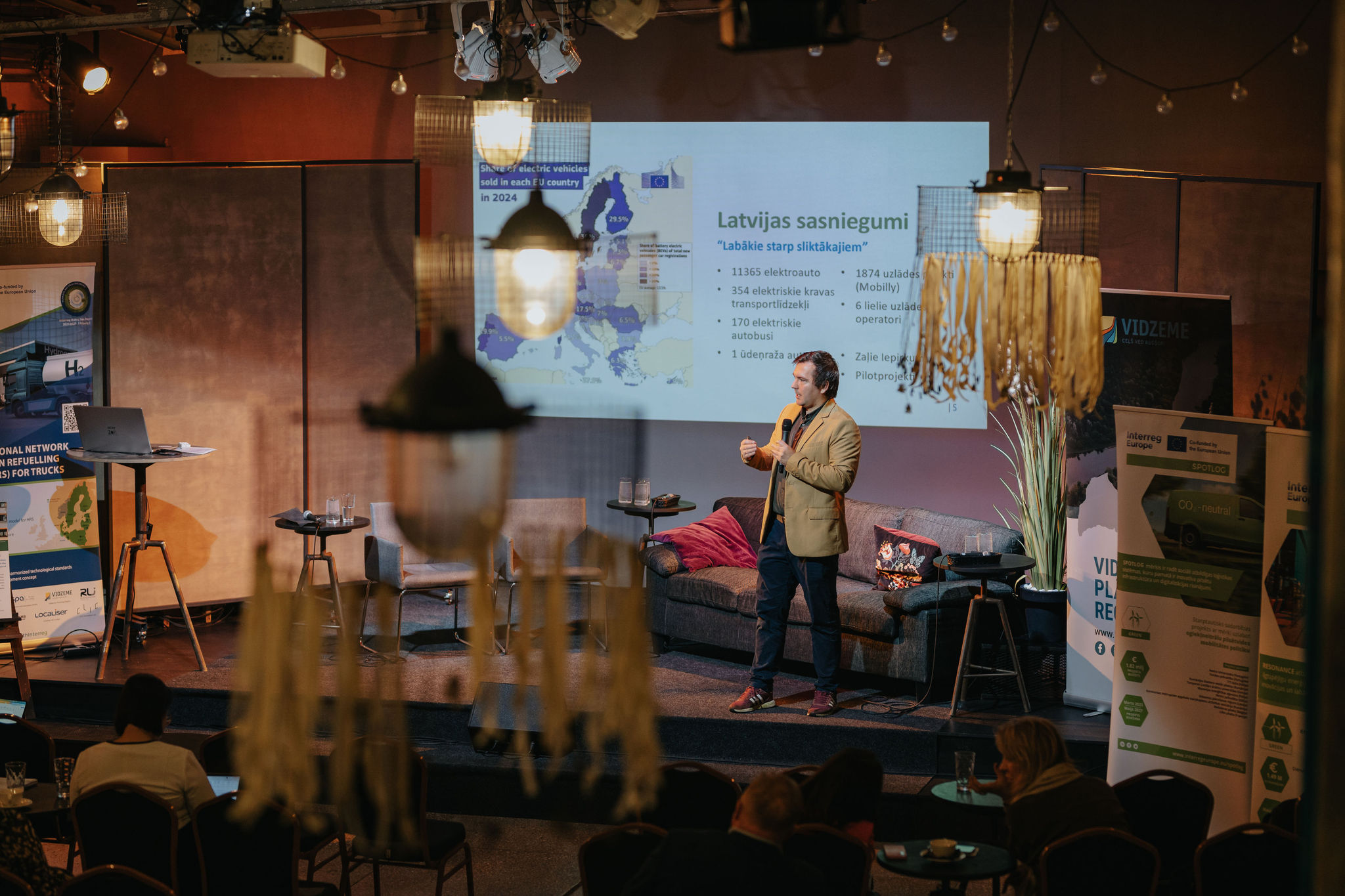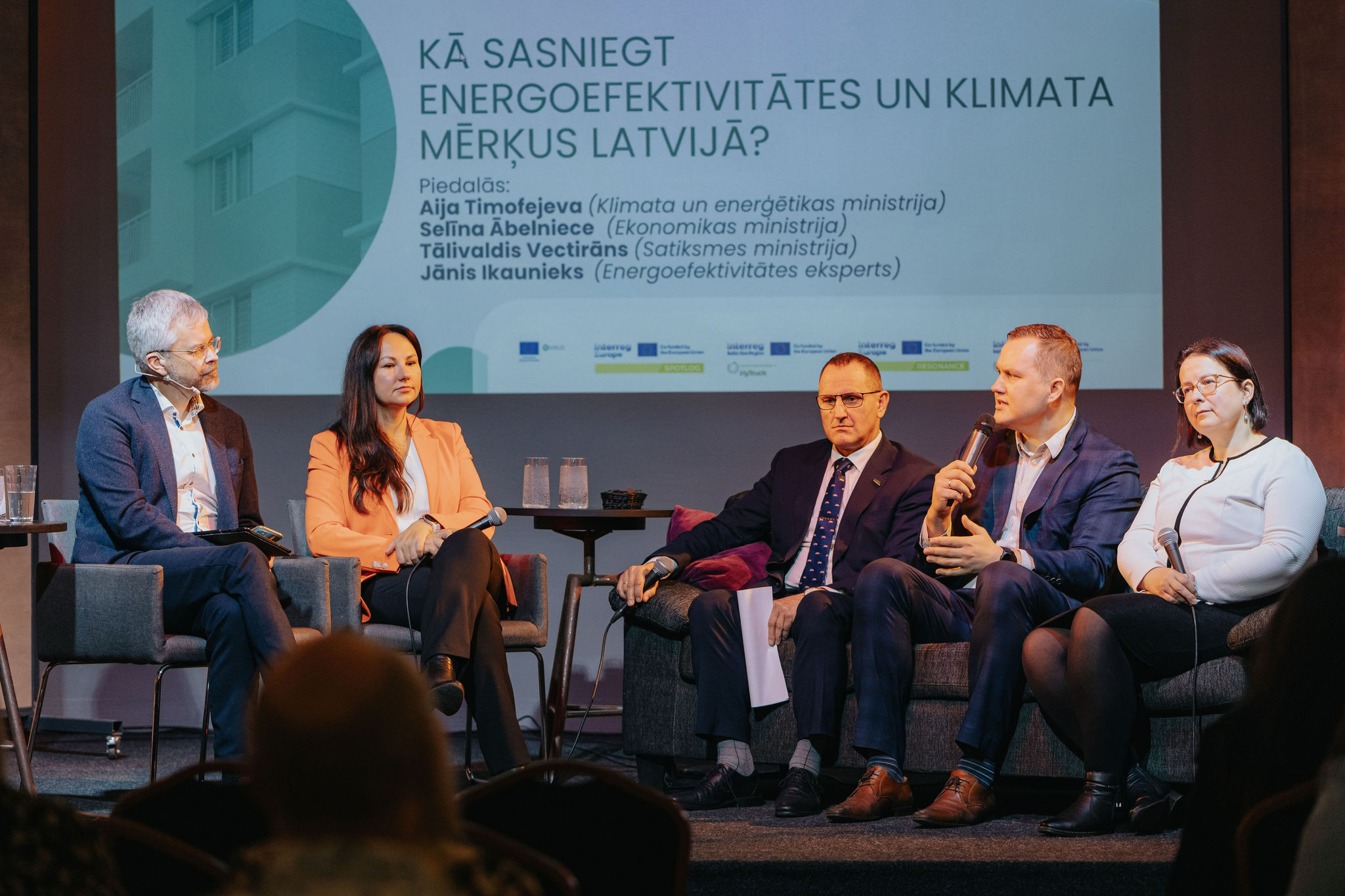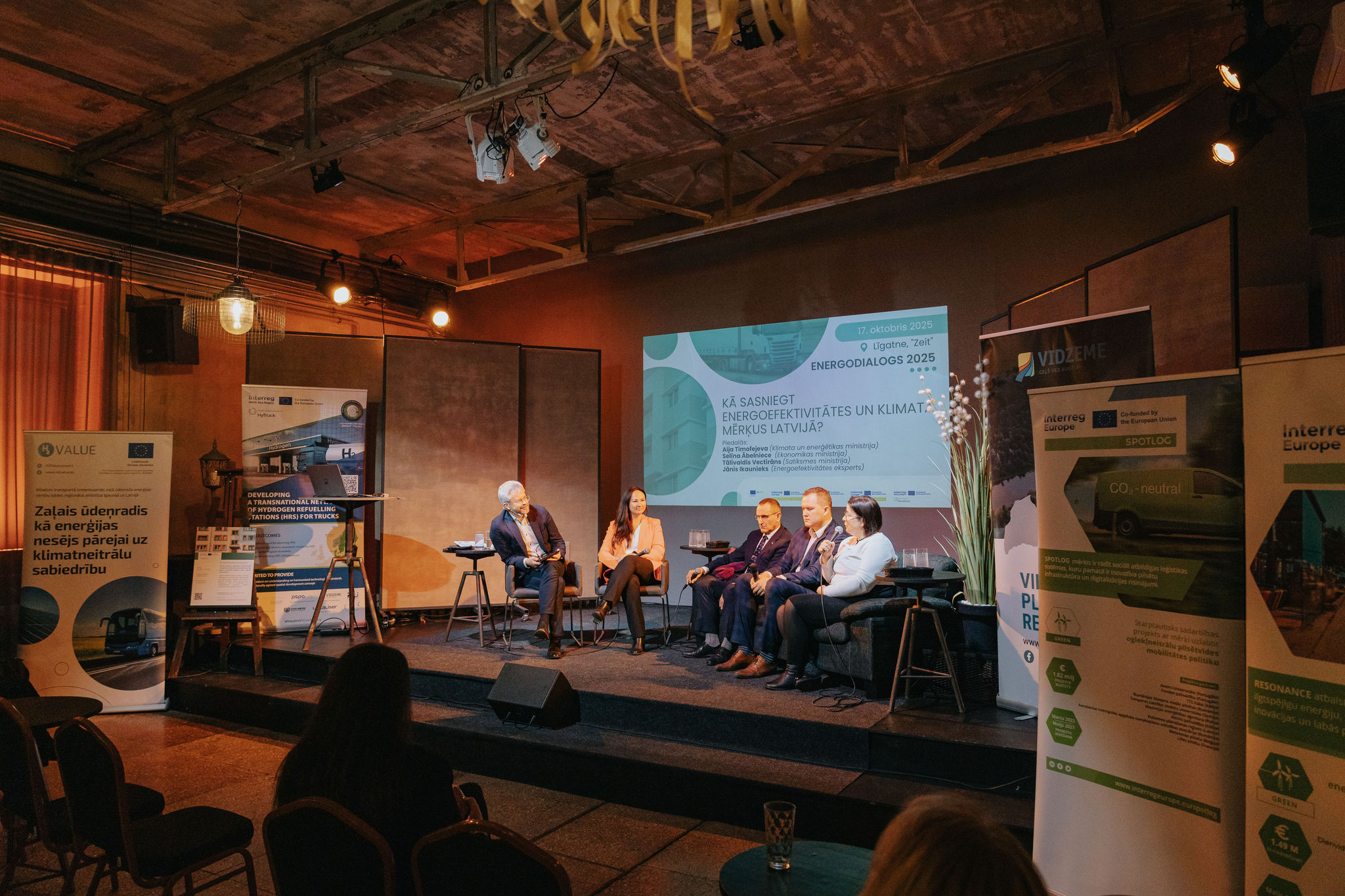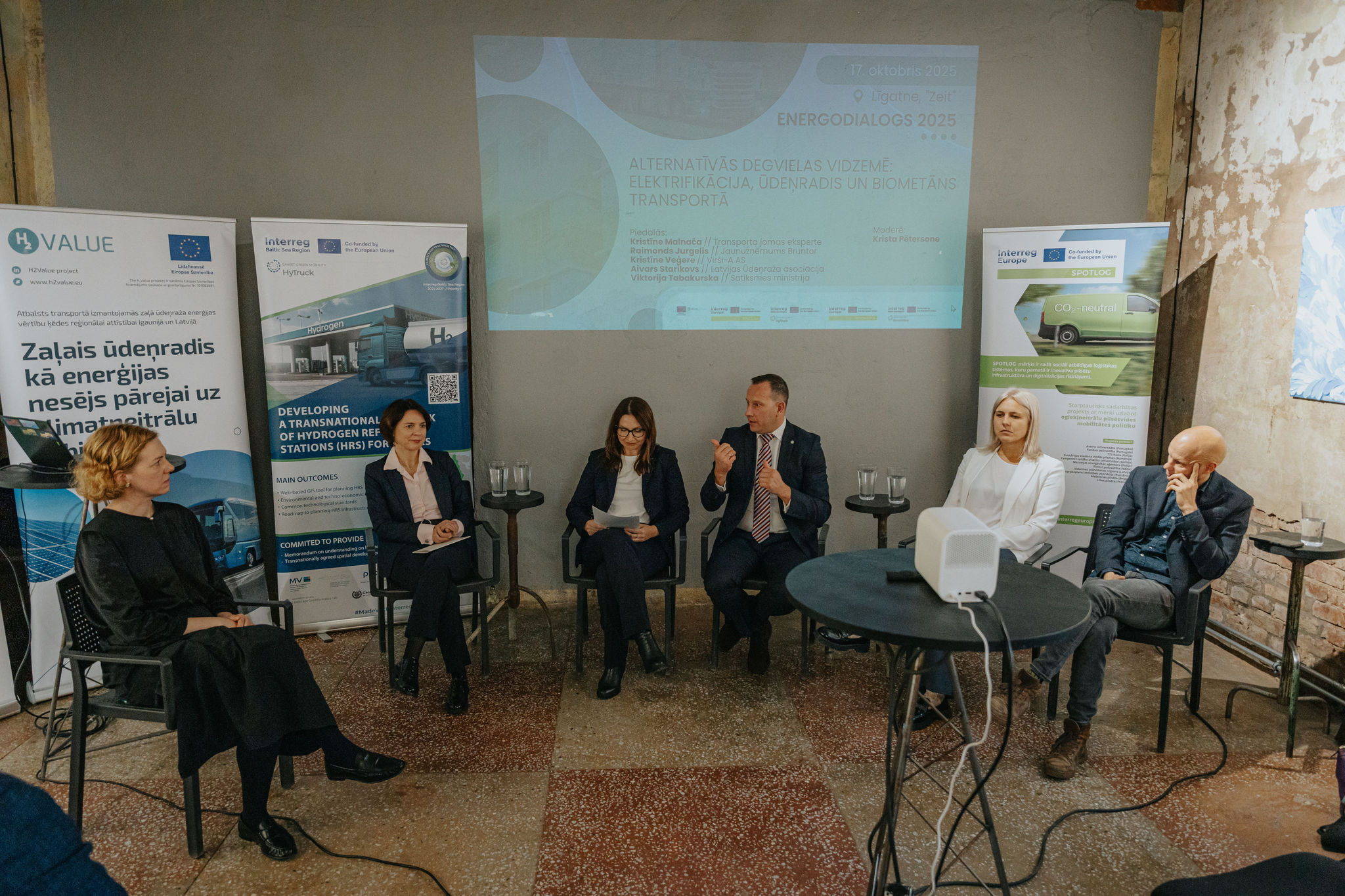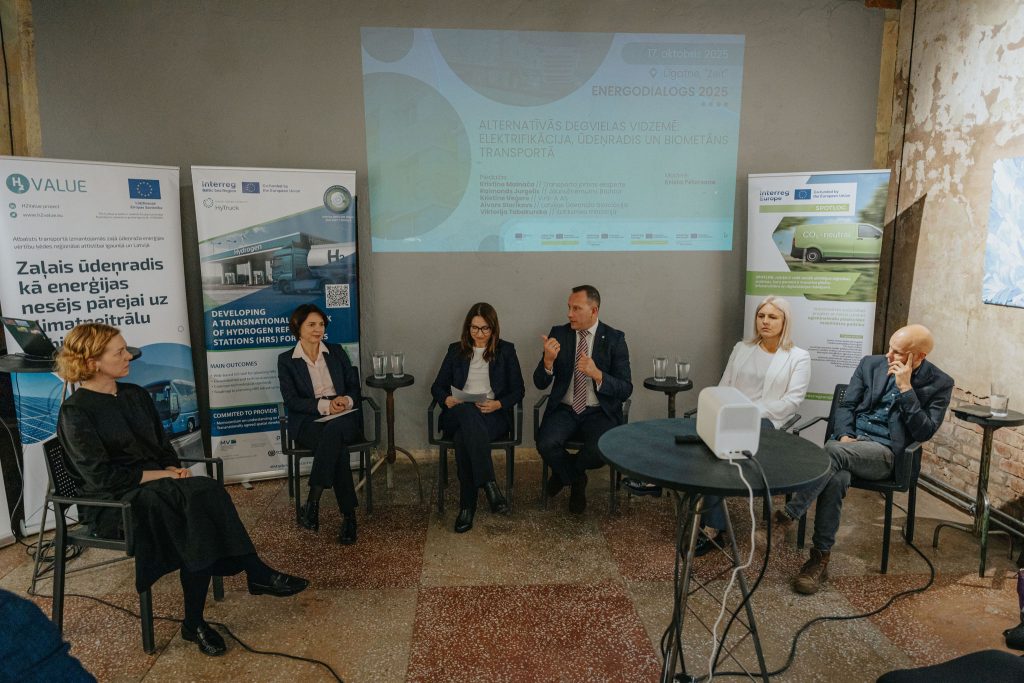
On 17 October 2025, the conference “EnergoDialogs 2025” took place in Līgatne, bringing together more than 70 participants — municipal specialists, policy-makers, entrepreneurs, sector experts and regional mobility stakeholders. As part of the event, a SPOTLOG stakeholder meeting was held within the panel discussion “Alternative fuels in Vidzeme: electrification, hydrogen and biomethane in transport”, bringing together partners and regional actors involved in last-mile logistics and sustainable mobility.
Although the overall conference programme addressed a broad range of climate-neutrality topics, this session placed particular focus on sustainable transport, regional mobility and alternative fuel infrastructure — themes of high relevance for both Vidzeme and the SPOTLOG project partners, as they directly influence the efficiency of logistics and the availability of services in sparsely populated areas.
The event was opened by Inese Suija-Markova, Chair of the Vidzeme Planning Region Development Council, who emphasised that climate-neutrality policy is not an abstract goal — it is implemented in real places, regions and communities. Therefore, both national support instruments and locally developed solutions are essential, including those related to the transformation of the mobility and logistics sector.
Analysing the prerequisites for developing logistics and mobility solutions
In the first part of the day, participants heard updates on climate and energy policy. Aija Timofejeva from the Ministry of Climate and Energy underlined the critical role of local authorities in implementing change, while Kārlis Mendziņš (Latvian Electric Vehicle Association) noted that although zero-emission mobility technologies are already available, their wider uptake is hindered by a lack of political certainty and limited public readiness. This is particularly relevant for SPOTLOG, as it directly affects the development of last-mile logistics solutions in regions.
During the panel discussion “Alternative fuels in Vidzeme: electrification, hydrogen and biomethane in transport”, experts assessed technological developments and regulatory changes shaping innovative mobility and logistics services in the regions.
Transport expert Kristīne Malnača highlighted that modern transport infrastructure includes not only roads and railways, but also digital and energy infrastructure, all of which ensure connectivity and logistics efficiency.
Raimonds Jurgelis, founder of the start-up Bruntor, presented practical solutions for last-mile deliveries and other operational needs, emphasising that the introduction of innovative light electric vehicles is most often hindered not by the lack of technology, but by inflexible regulations and procurement rules that do not accommodate new solutions.
Meanwhile, Kristīne Veģere (Virši) and Aivars Starikovs (Latvian Hydrogen Association) underlined the importance of biomethane and hydrogen in decarbonising regional services, including their potential to support the circular economy and provide alternative fuels for regional transport.
Conclusions for further improvement of SPOTLOG policy instruments
The insights shared during the conference provide valuable input for evaluating and further developing SPOTLOG policy instruments:
- Regulatory flexibility is essential for innovation. The introduction of new logistics and mobility solutions in regions is hindered not by technological limitations but by unclear or outdated regulatory categories and procurement requirements.
- Public–private cooperation is crucial. Investments by the state and municipalities in core infrastructure create stability and enable private companies to develop new services, including in sparsely populated areas.
- Successful last-mile solutions require community involvement. Practice shows that once solutions are tested in real-life settings, trust and willingness to adopt them permanently increases significantly.
- Inter-regional knowledge exchange is vital. The diverse experience of SPOTLOG partners demonstrates that comparable pilot projects and structured sharing of good practices help identify the most effective policy instruments for regional logistics.
- Policy instruments must be based on a life-cycle approach. Evaluating not only initial costs but also operational efficiency and societal benefits ensures sustainable decisions and encourages the adoption of innovative logistics solutions.
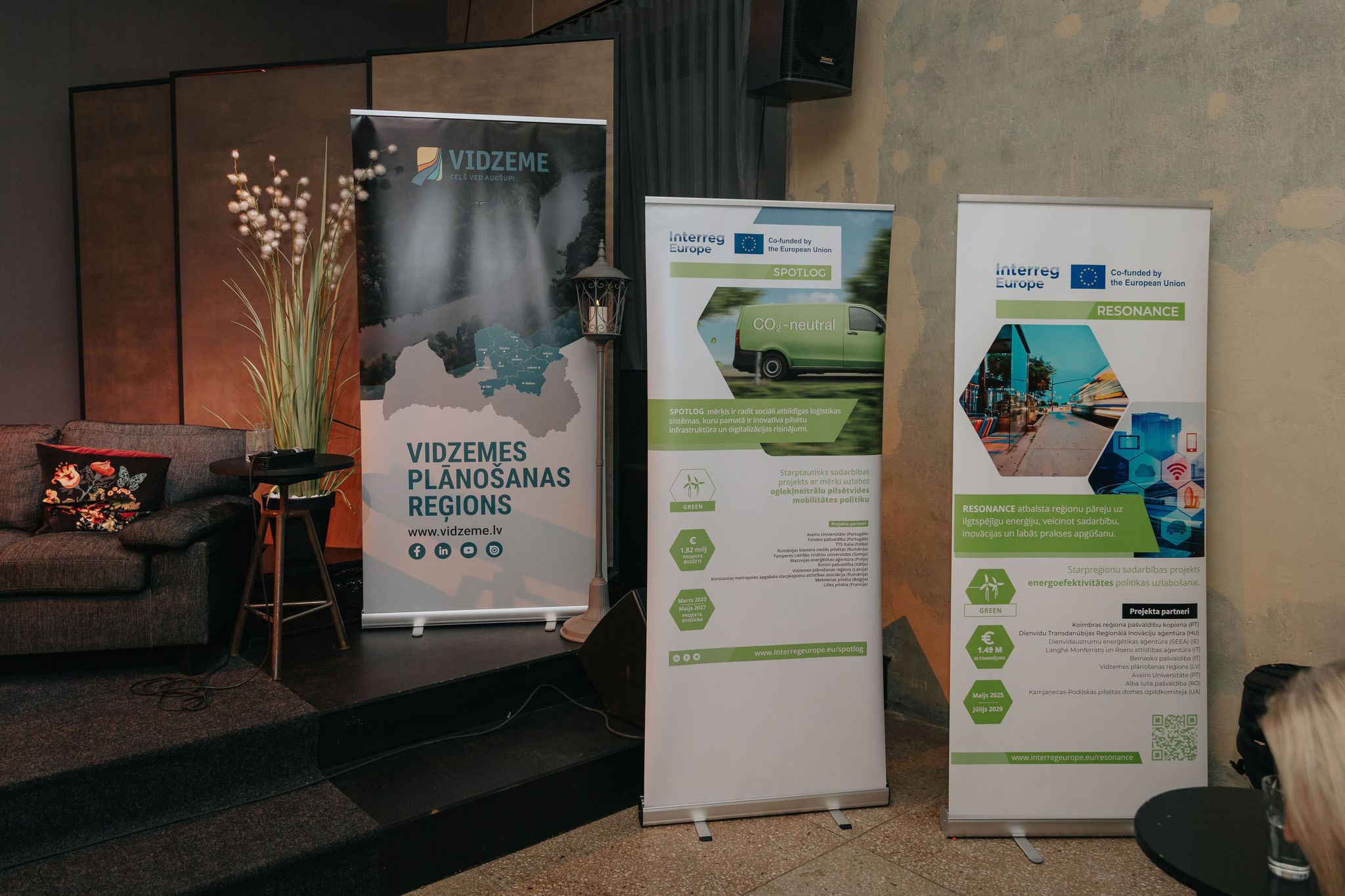
The conference was organised by the Vidzeme Planning Region as part of the Interreg Baltic Sea Region projects RenoWave and HyTruck, the Interreg Europe projects RESONANCE and SPOTLOG, as well as the H2Value project funded by the European Regional Development Fund’s Interregional Innovation Investments (I3) Instrument.