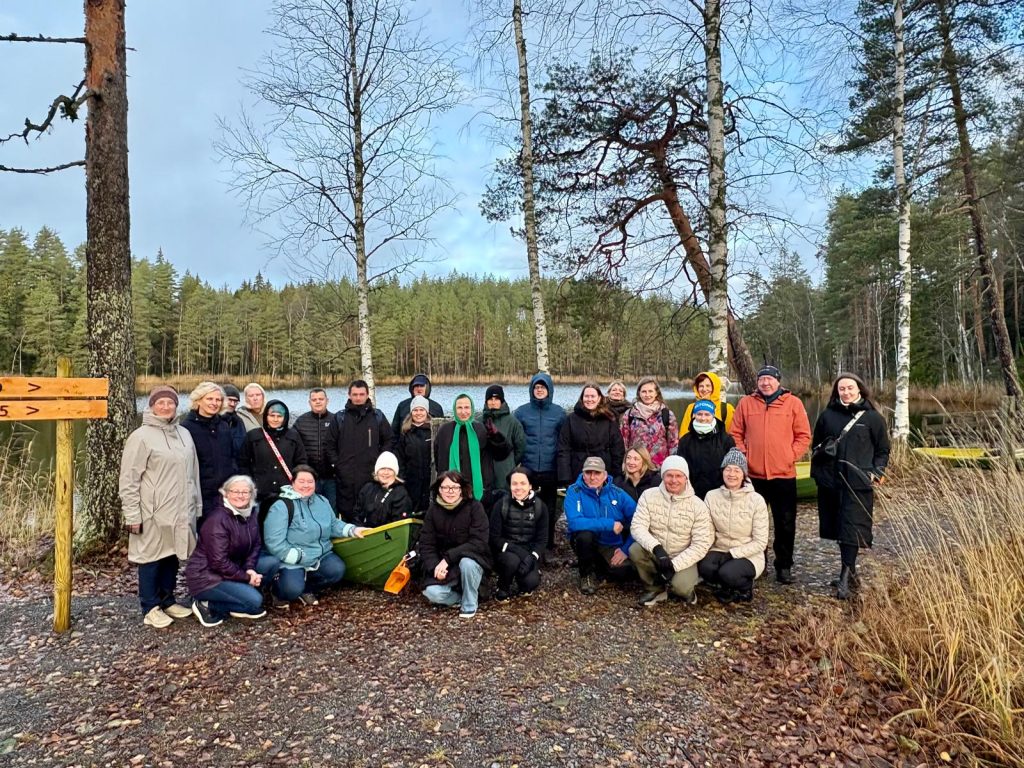
From November 3 to 7, the Vidzeme Planning Region team of the project “Facilitating access to watertourism activities” (Riverways II), together with other project partners from Latvia and Estonia, took part in an experience exchange visit to Finland. The aim of the visit was to explore best-practice examples of accessibility solutions in natural sites, swimming areas, and various tourism services, as well as to learn about the latest trends in the development and availability of assistive technologies. The visit provided valuable insights that will support both achieving the project’s objectives and planning future initiatives.
Niemis–Koukkunen nature trail in the Evo region – accessible to everyone
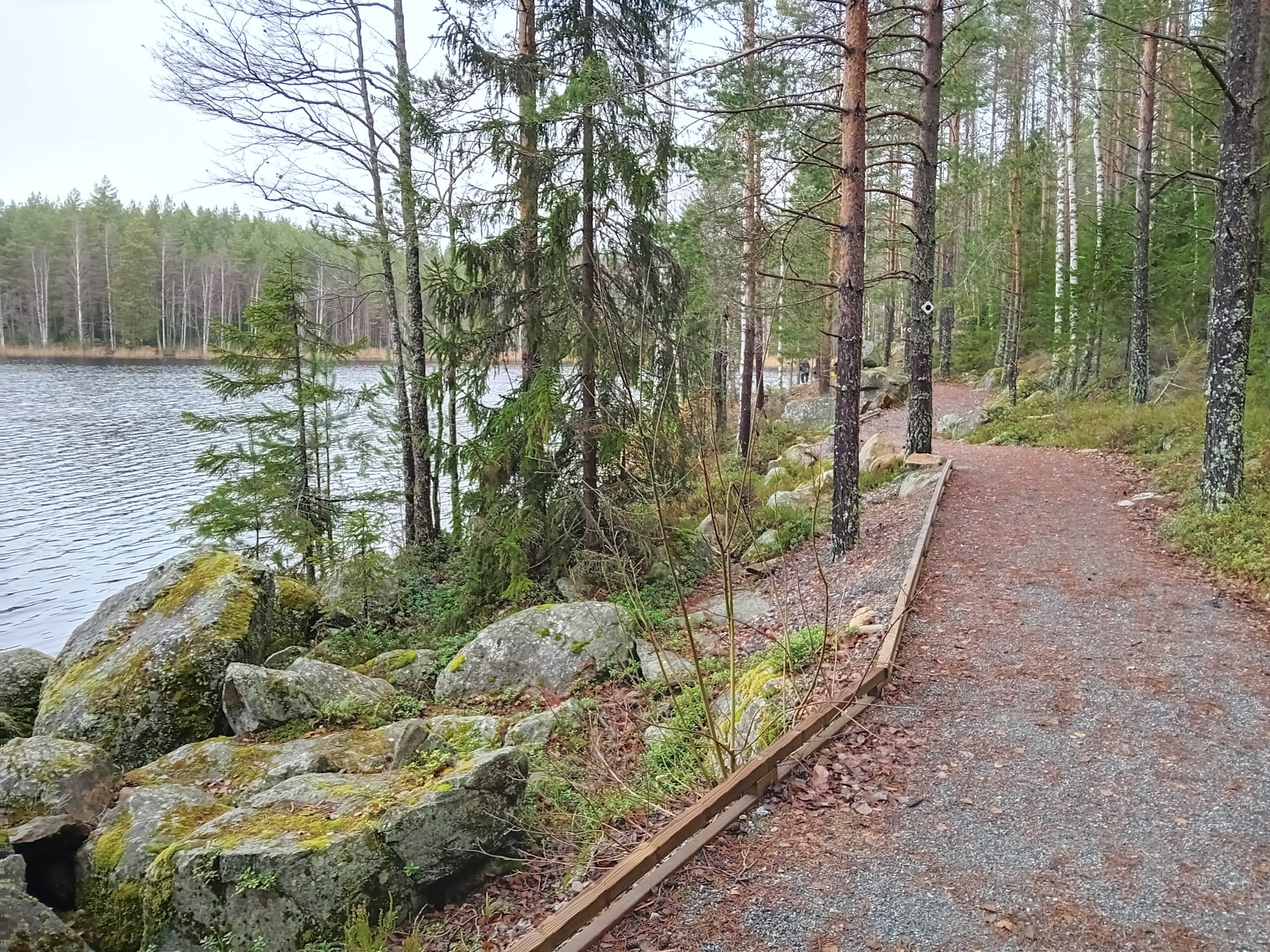
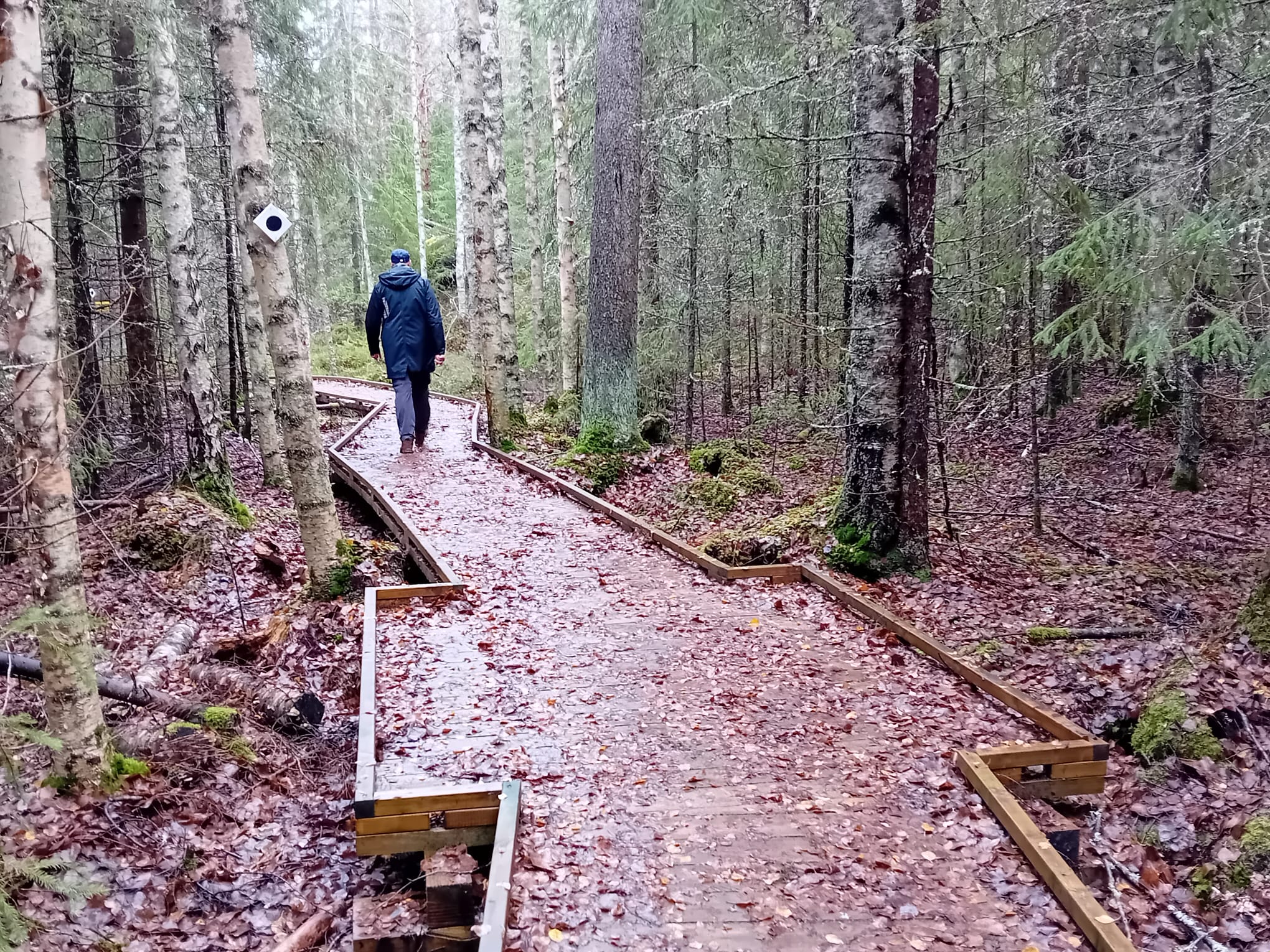
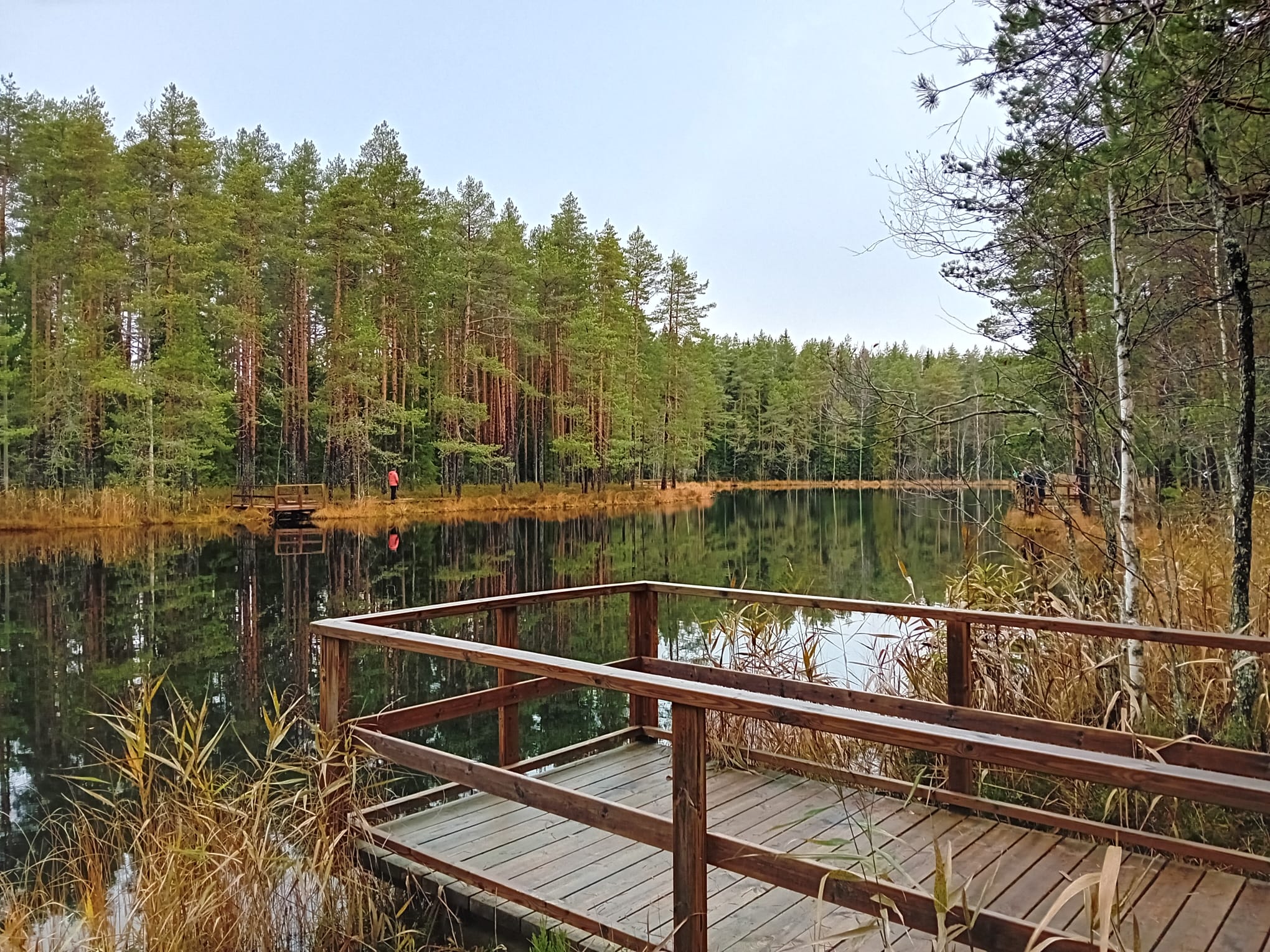
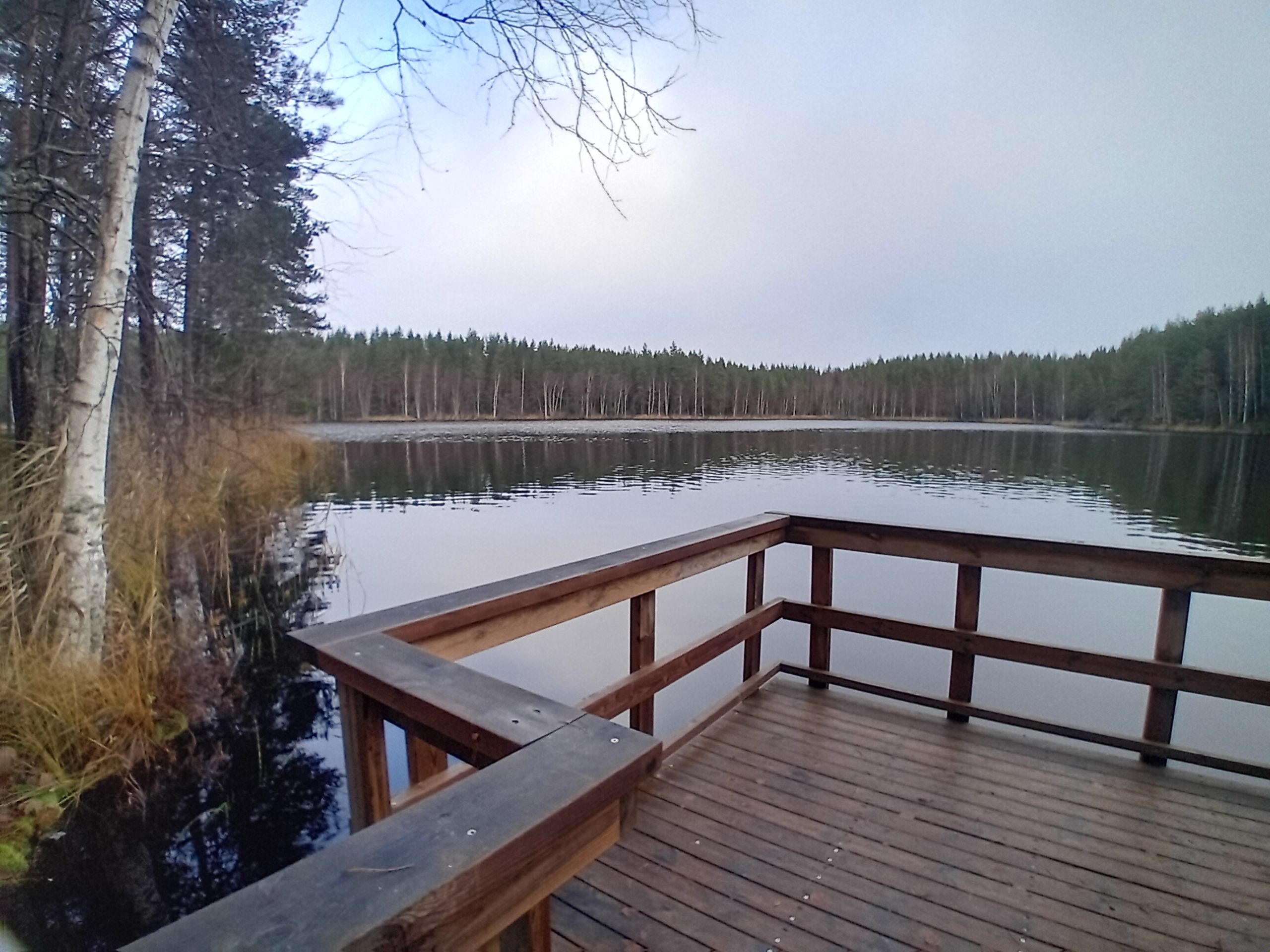
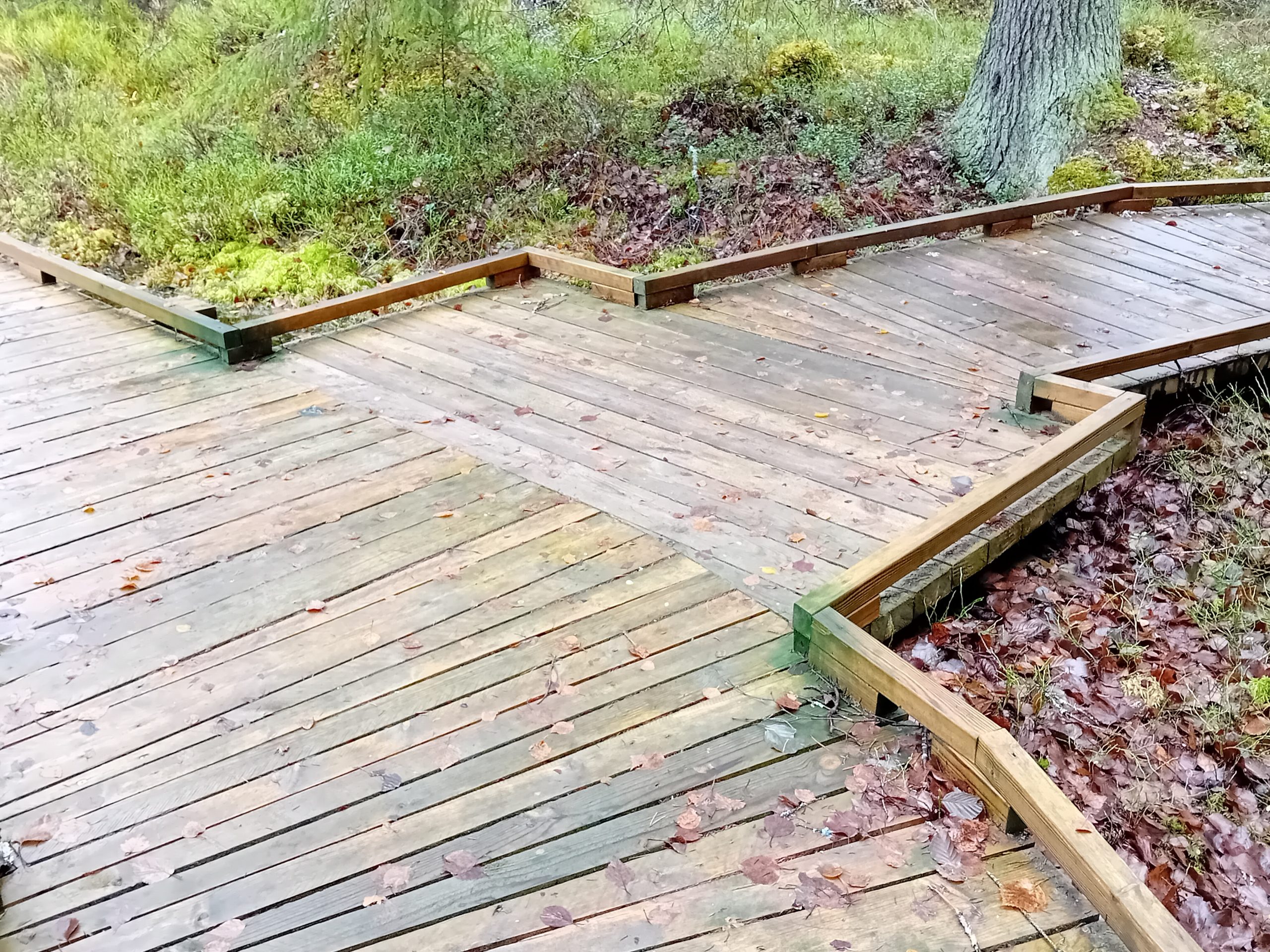
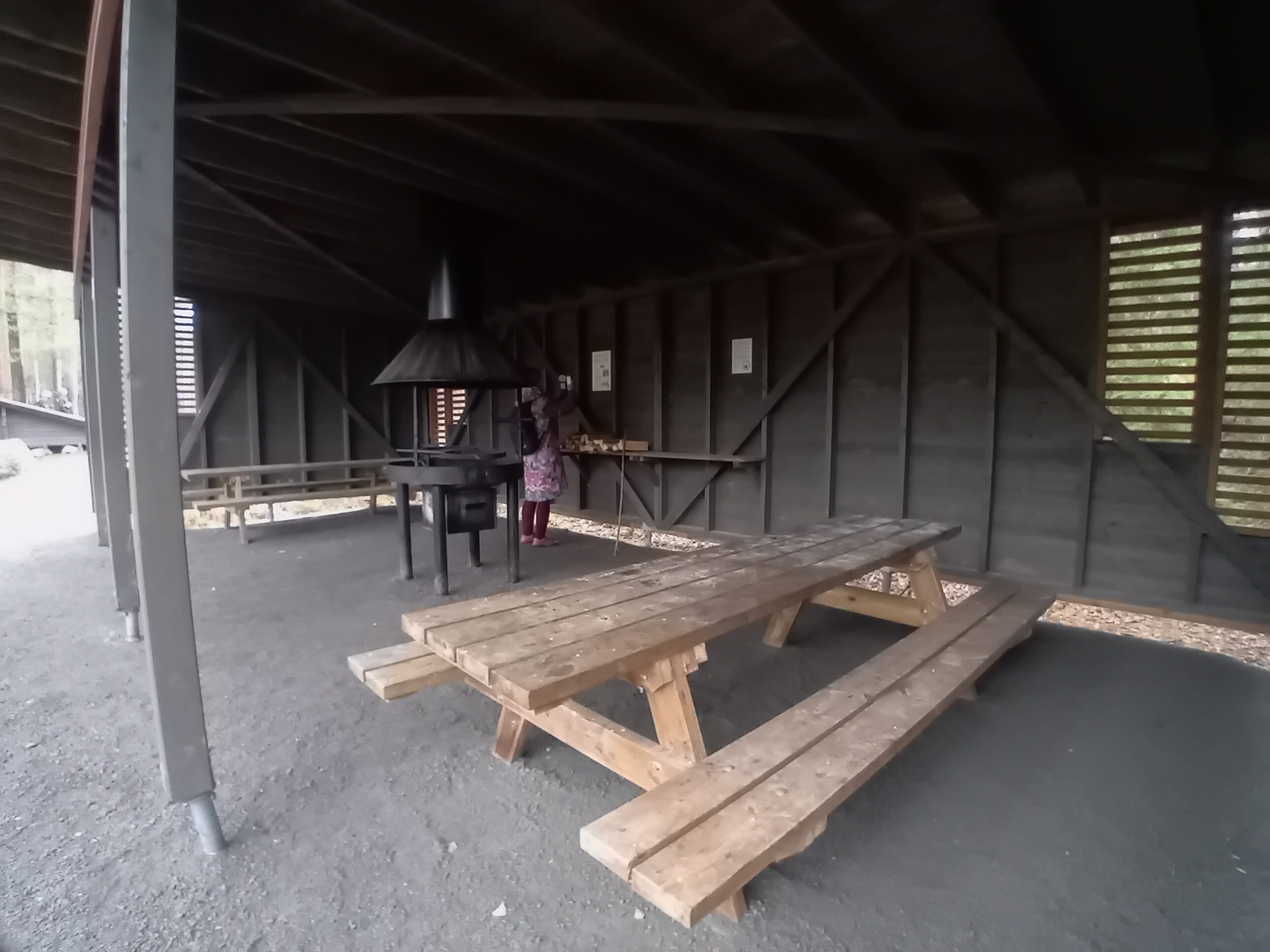
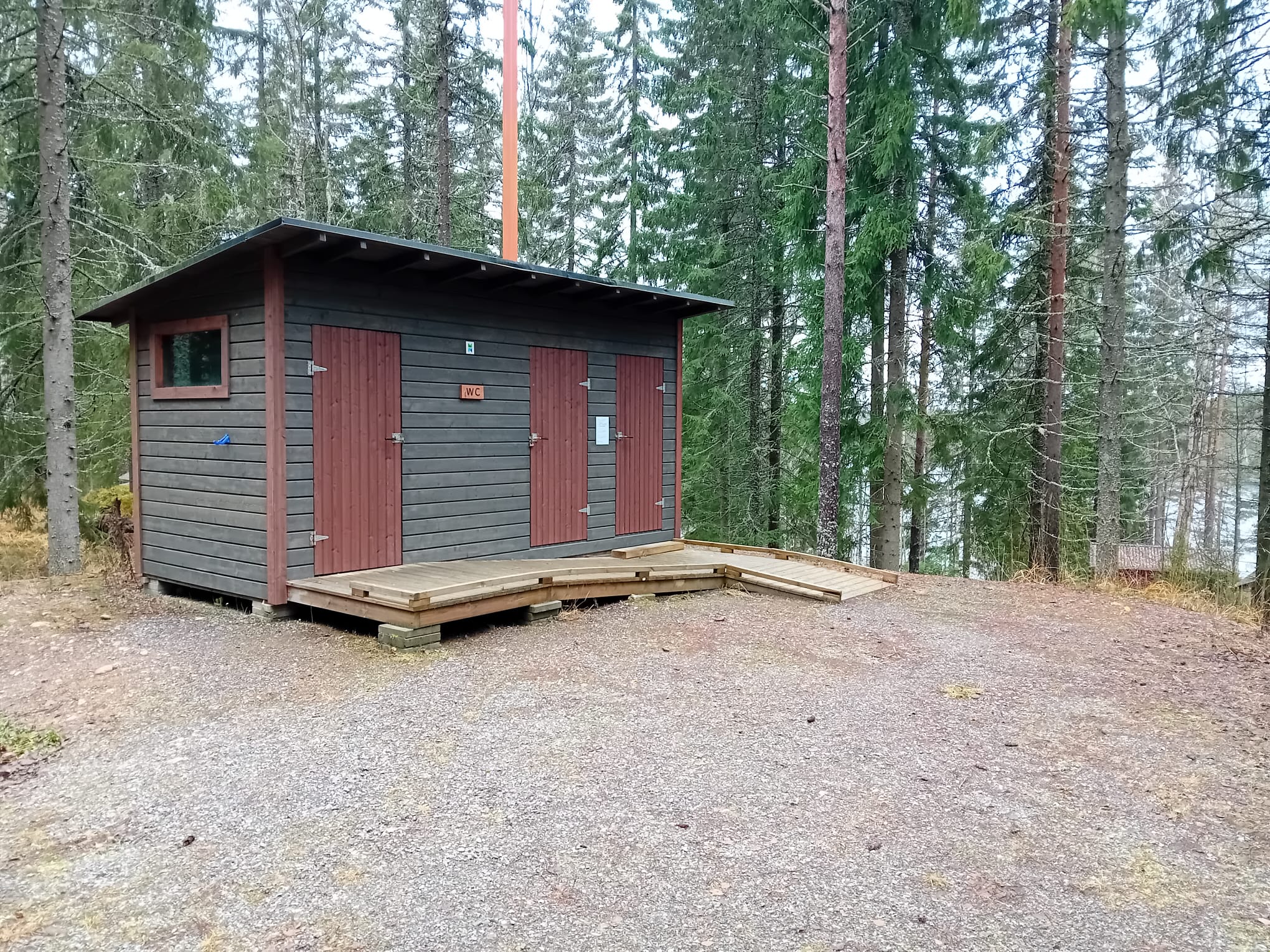
On November 4, participants in the experience exchange visit explored the Niemis–Koukkunen nature trail in the Evo region, one of Finland’s good-practice examples of environmental accessibility. The approximately 3 km long trail runs along two lakes and features a stable, high-quality surface throughout, making it suitable for wheelchair users as well.
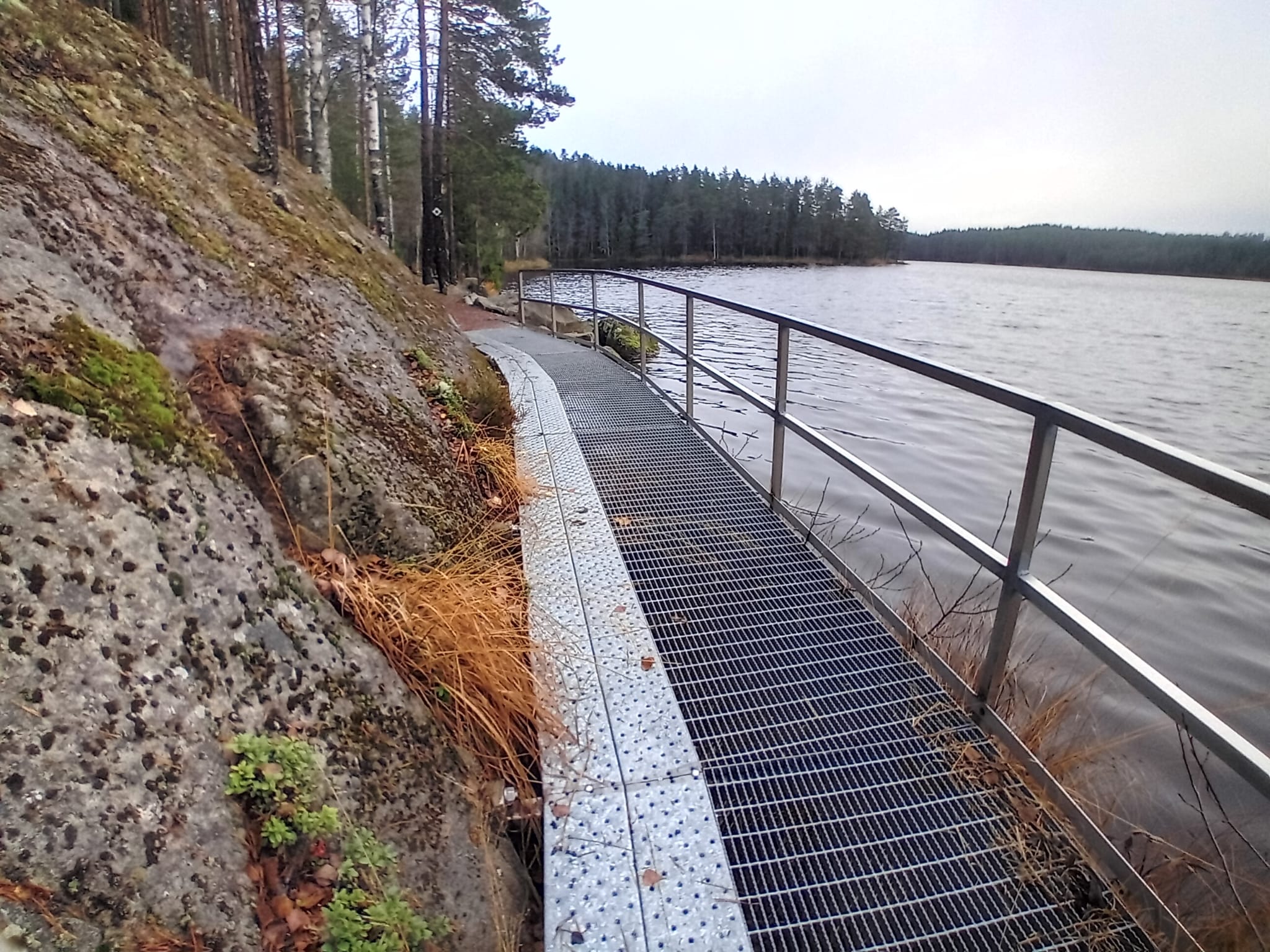
The trail is thoughtfully equipped with safe, accessible fishing platforms, well-maintained rest areas with prepared firewood conveniently available on site, and accessible toilets for people with various functional impairments. A particularly noteworthy solution is the widened passing platforms along the trail, allowing two wheelchairs to pass each other safely. The needs of people with visual impairments have also been taken into account — in sections where a metal mesh surface is used along the lakeshore, a continuous solid strip has been installed alongside it for guide dogs, helping protect their paws and facilitating their movement.
An accessible swimming area at Lake Pyhäjärvi in Tampere
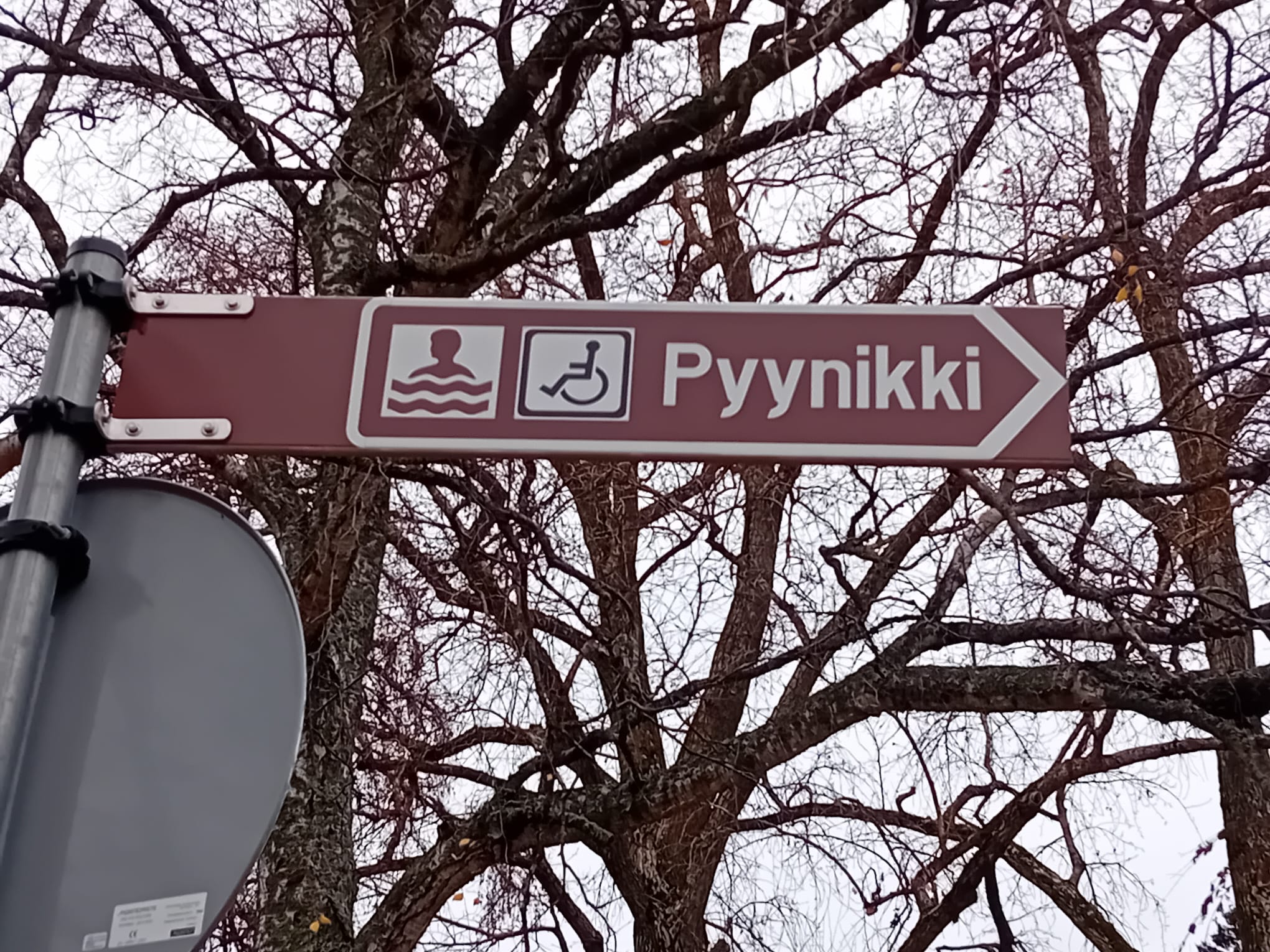
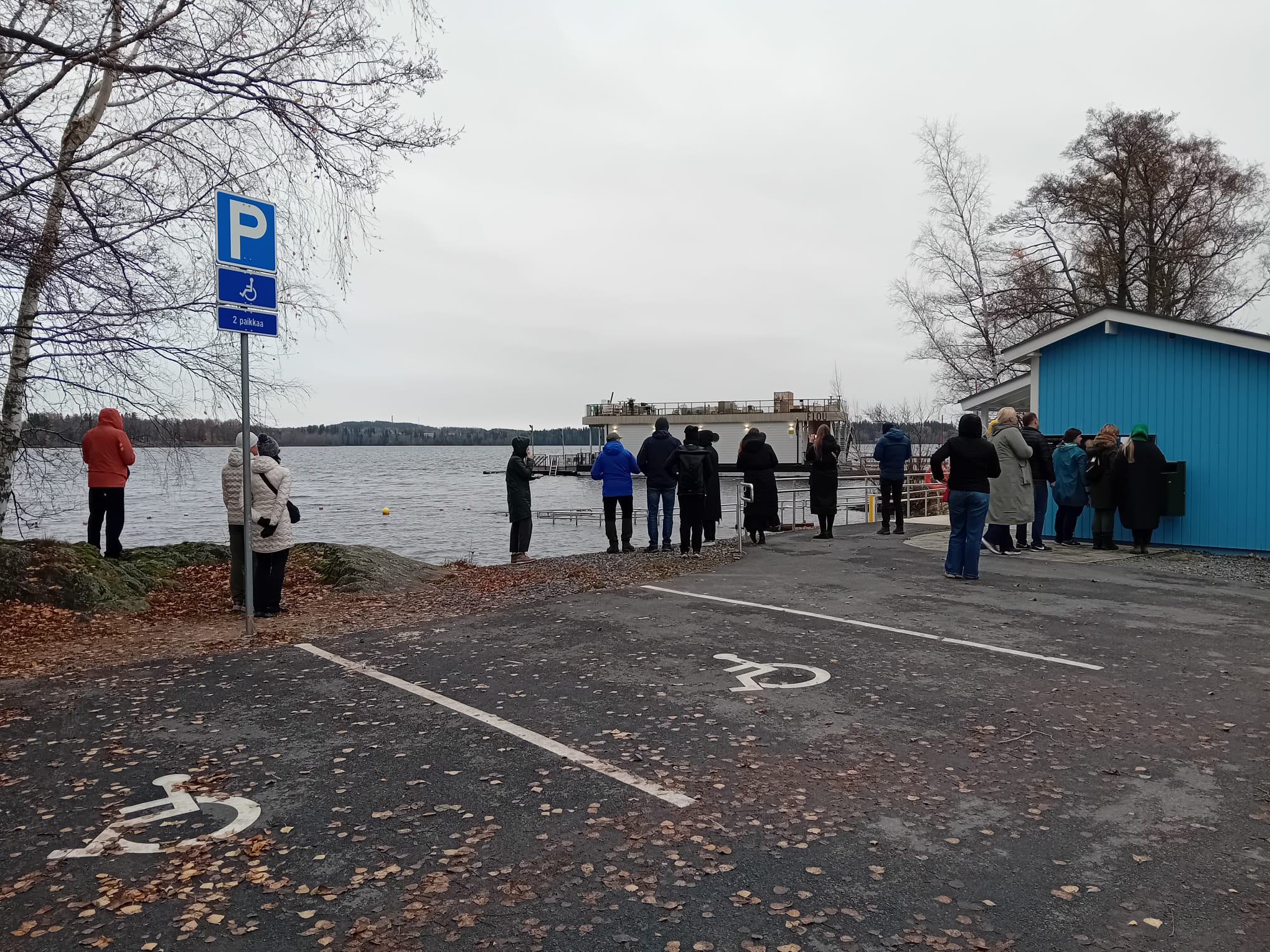
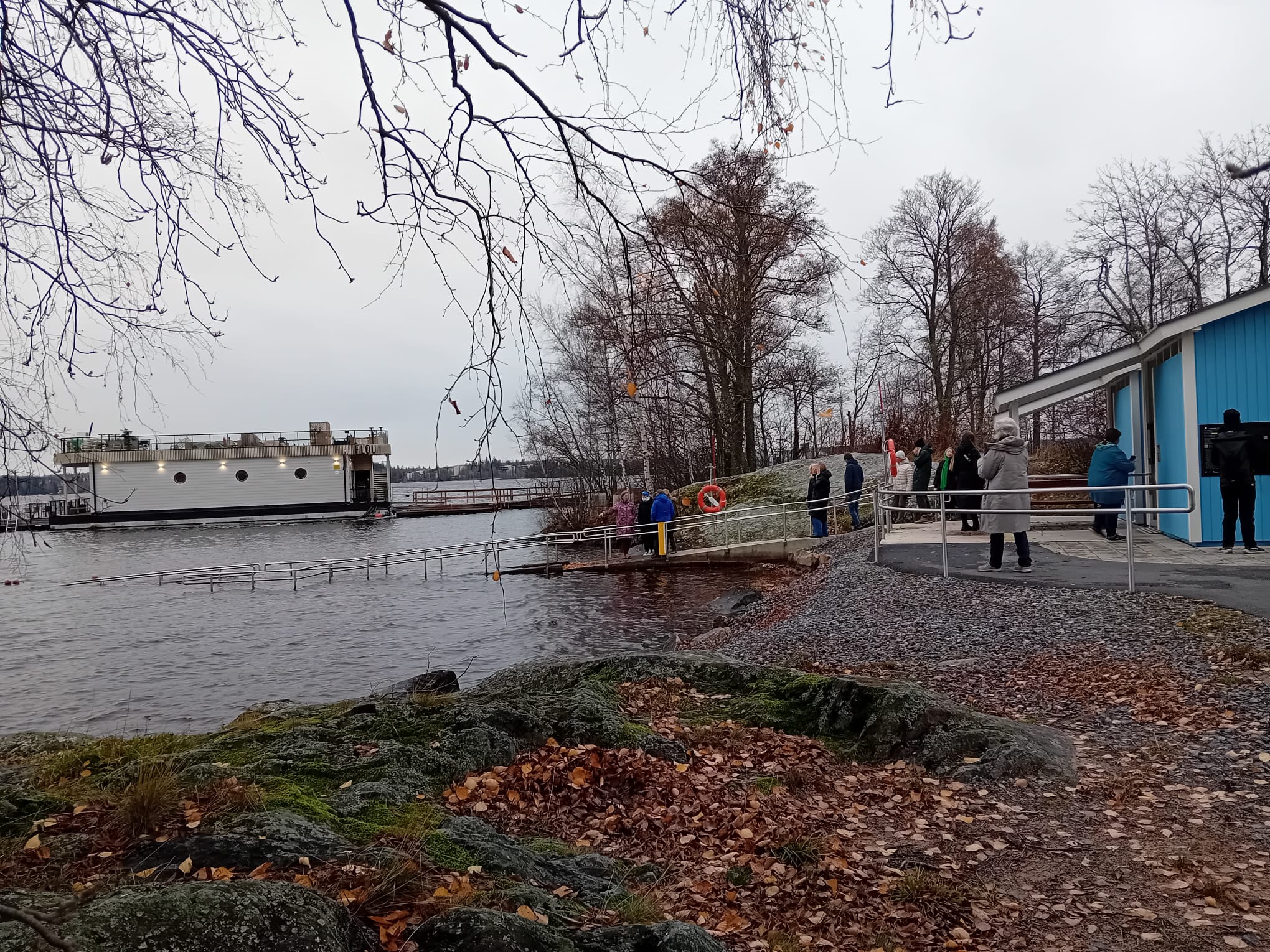
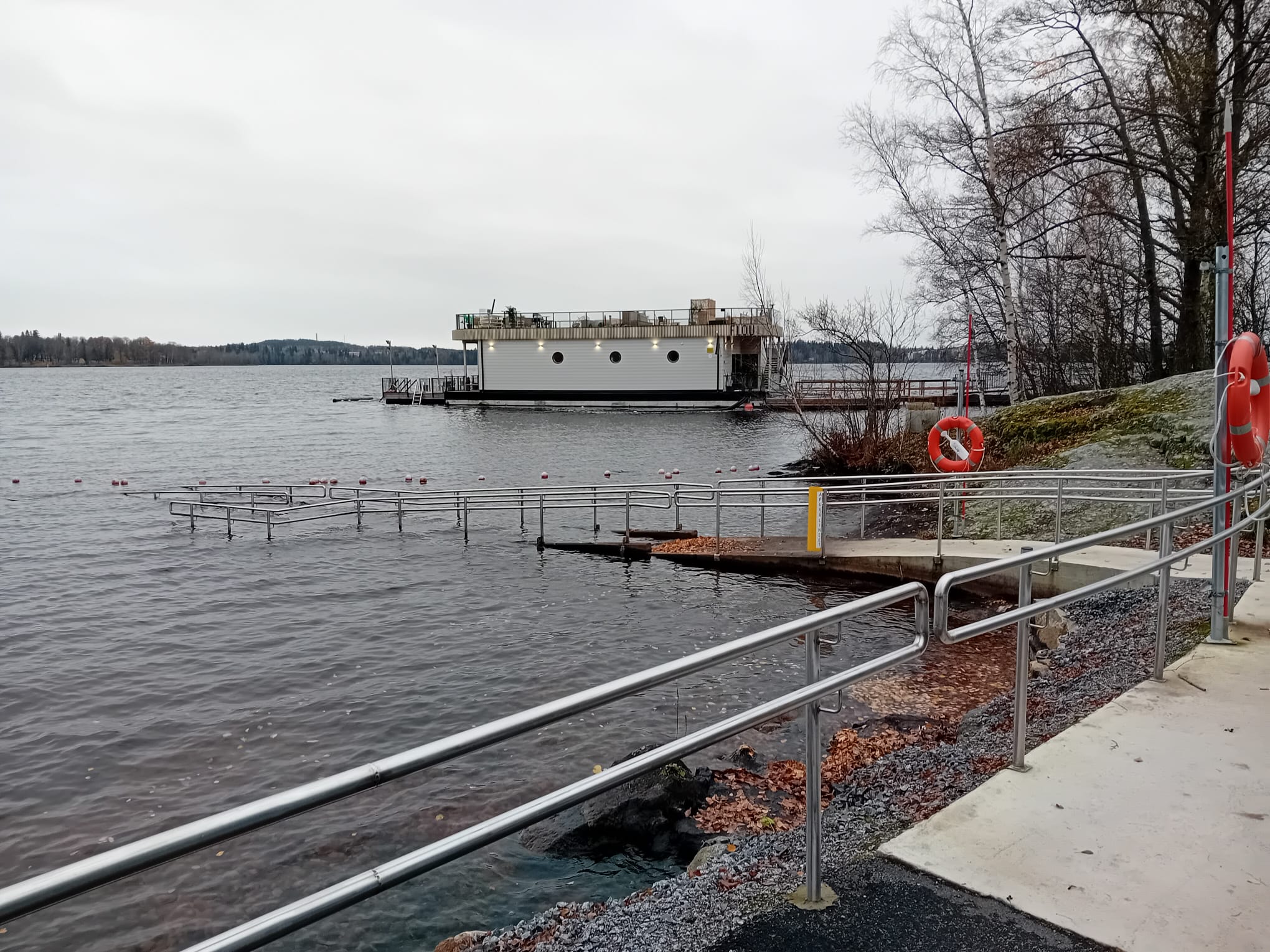
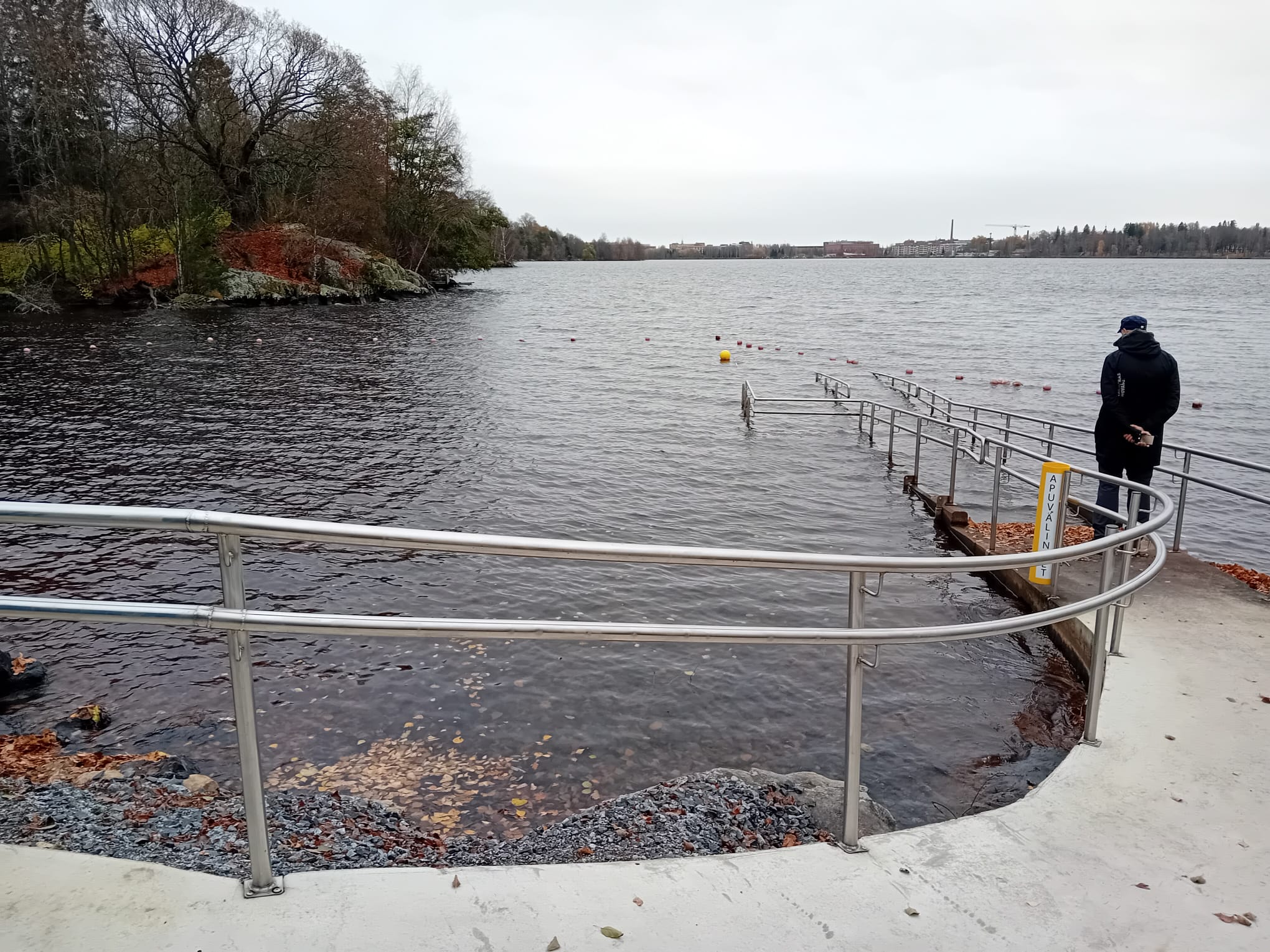
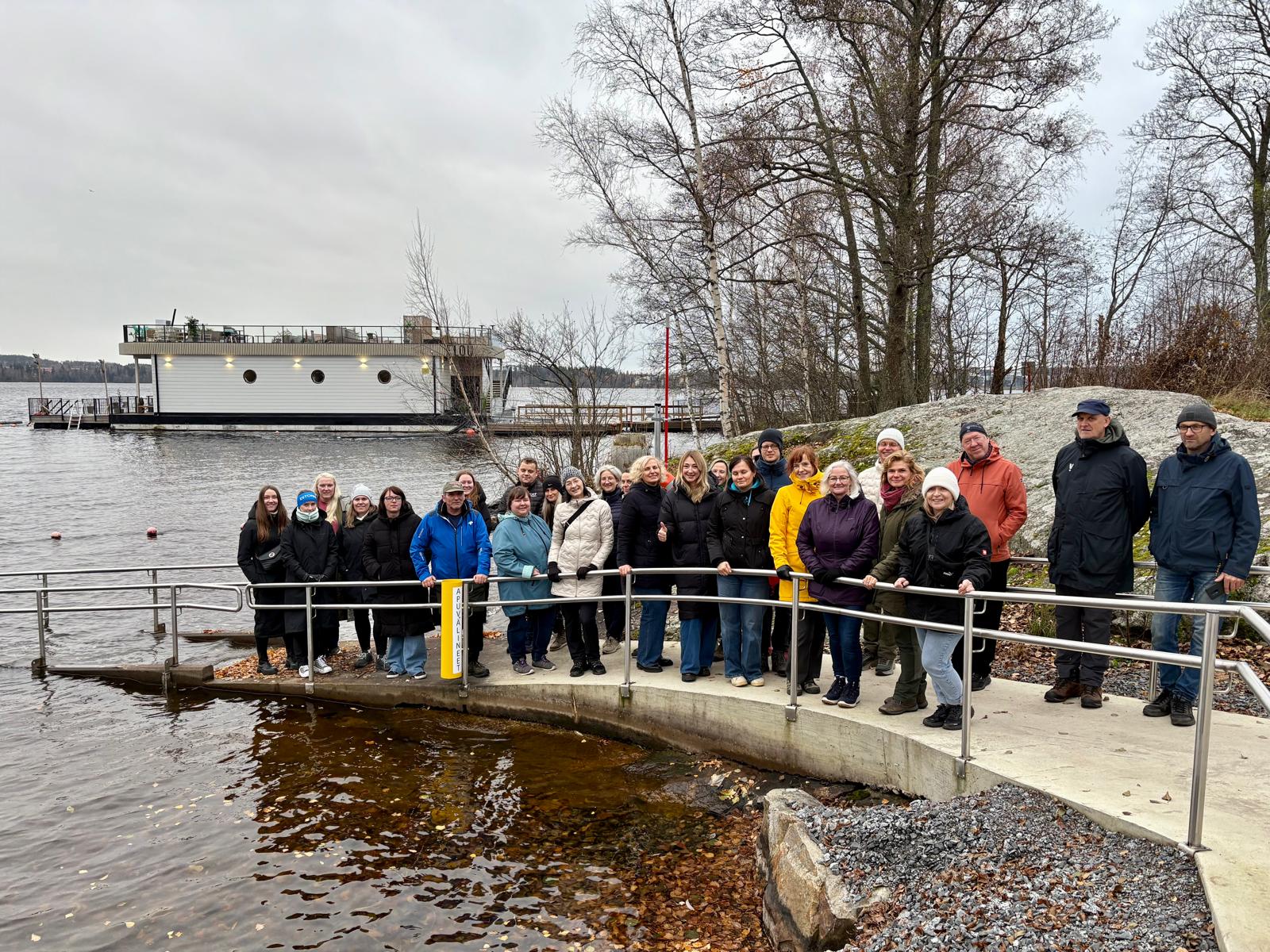
After visiting the Evo region, participants continued to Tampere to explore a public swimming area by Lake Pyhäjärvi, which has been specially adapted for people with disabilities. Parking spaces are located directly next to the beach, ensuring convenient access.
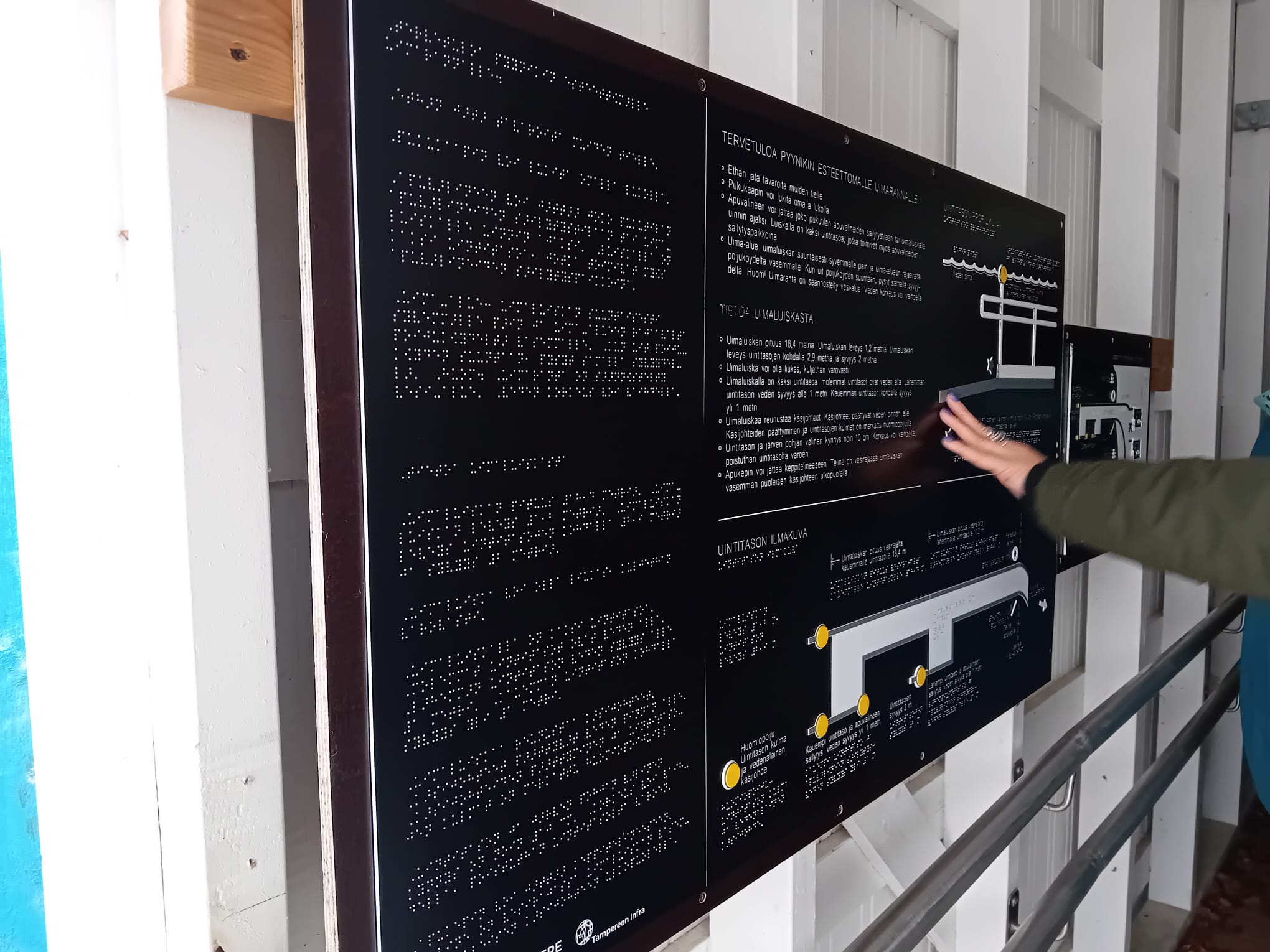
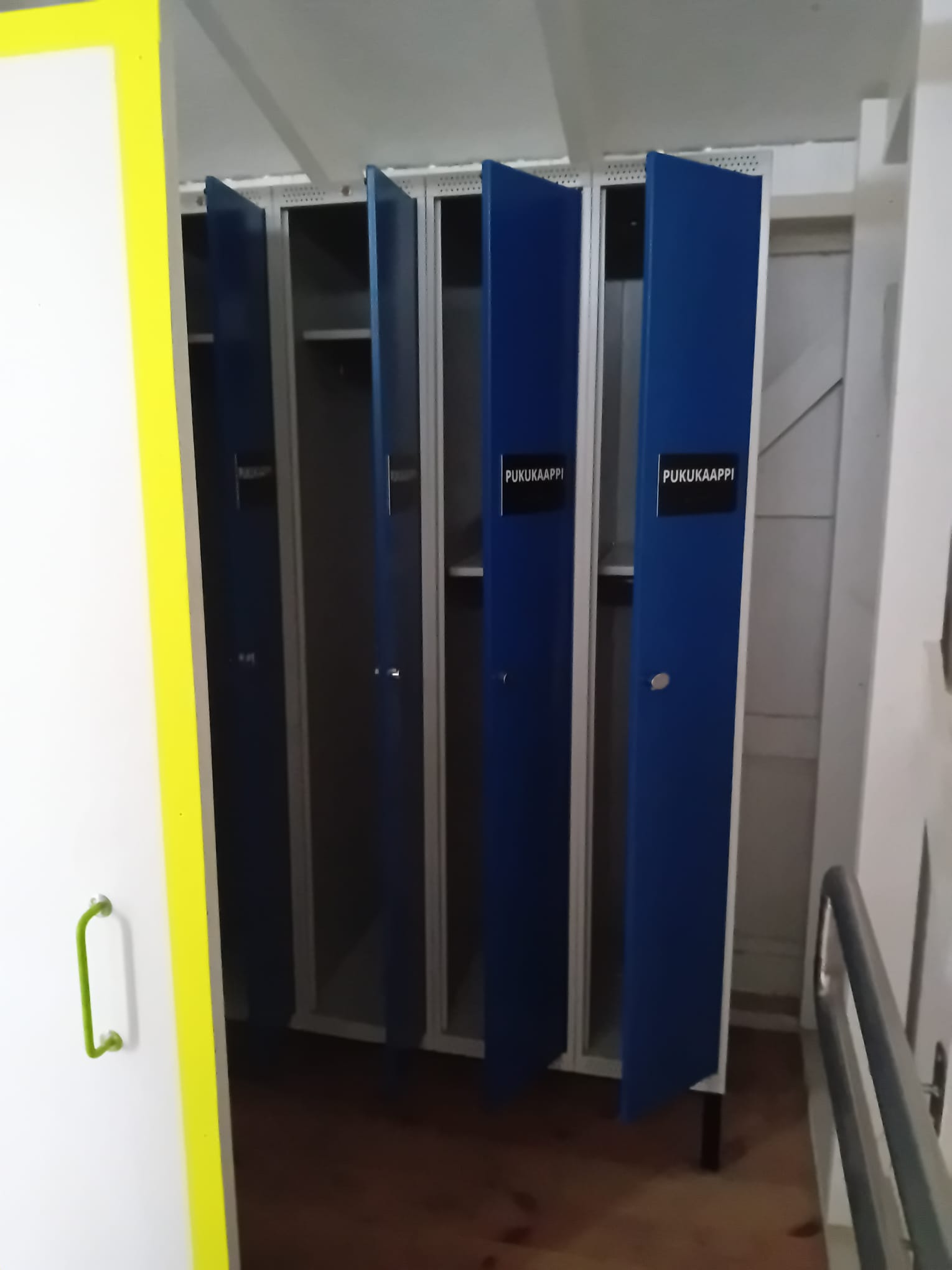
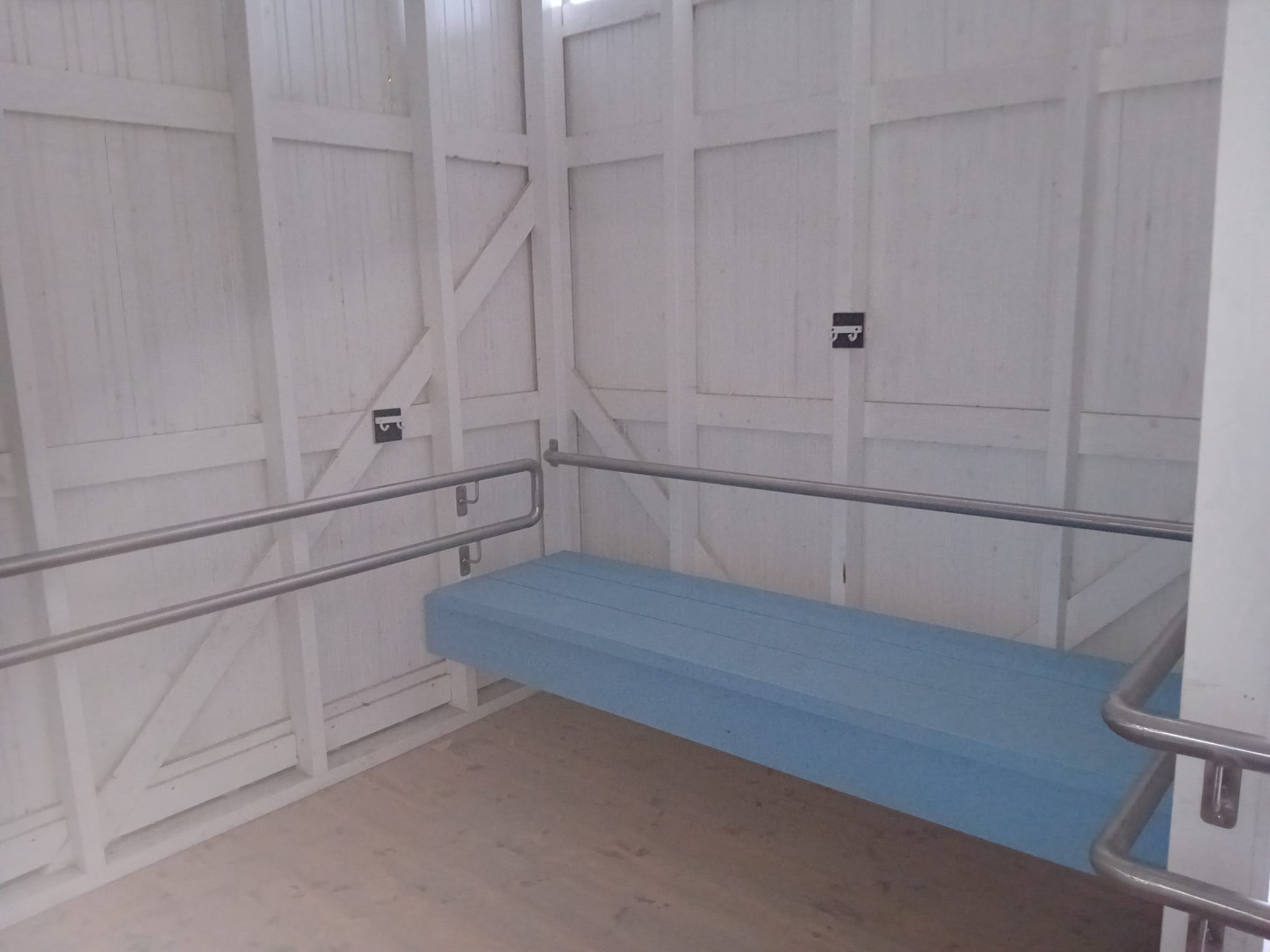
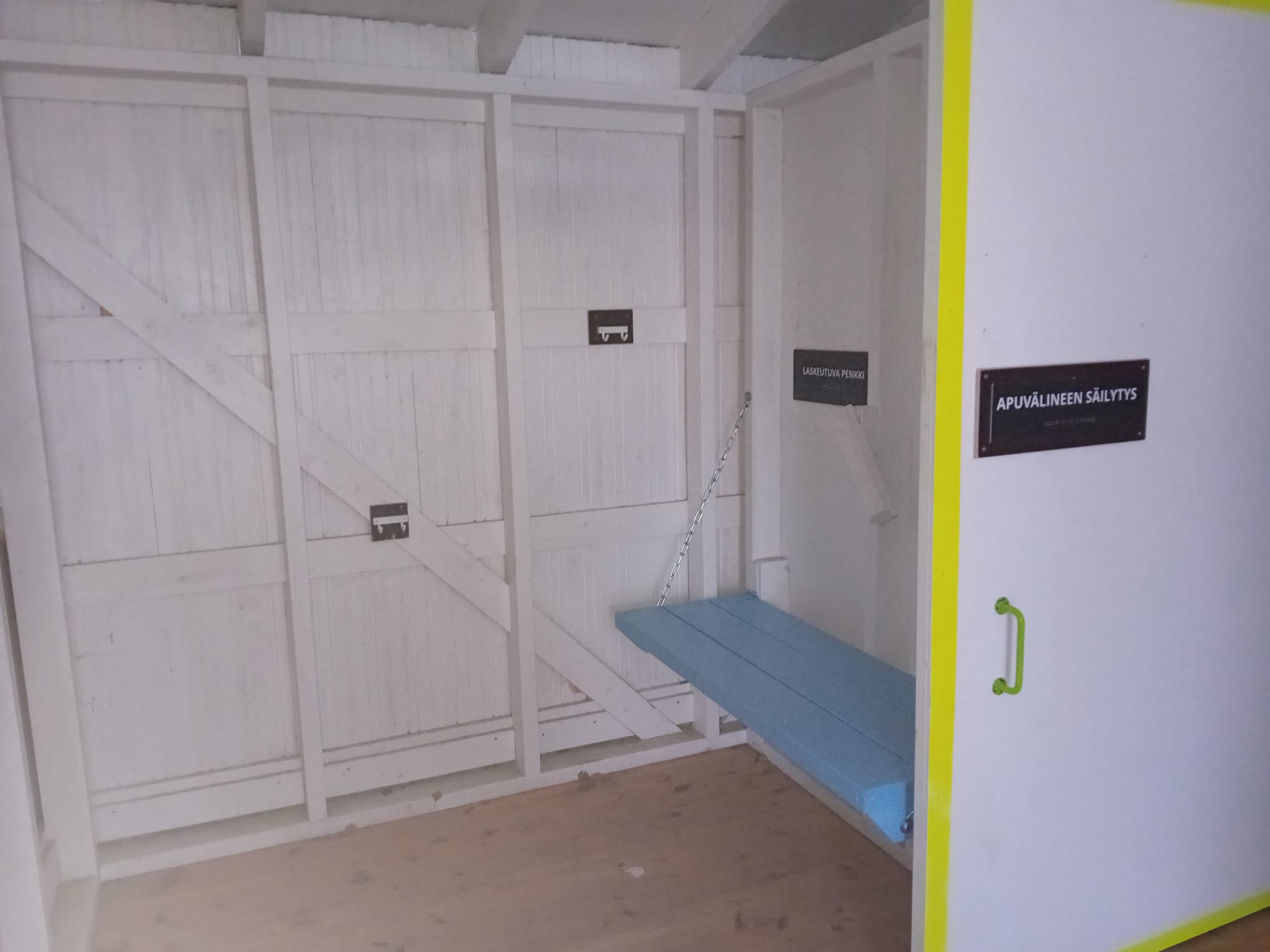
The swimming area features two spacious and functional buildings with adapted changing rooms, wide benches, handrails and support bars. Visitors can safely store their belongings in lockers and comfortably change clothes in a separate room. Each building also has a large entrance area with a long bench, allowing easy manoeuvring, including for wheelchair users. All information is available in Braille and highlighted using tactile elements. A wide ramp leads directly into the water, and for safety reasons, the swimming area in the water is clearly demarcated.
Inspiring initiatives at Yyteri Beach on the coast of the Gulf of Bothnia
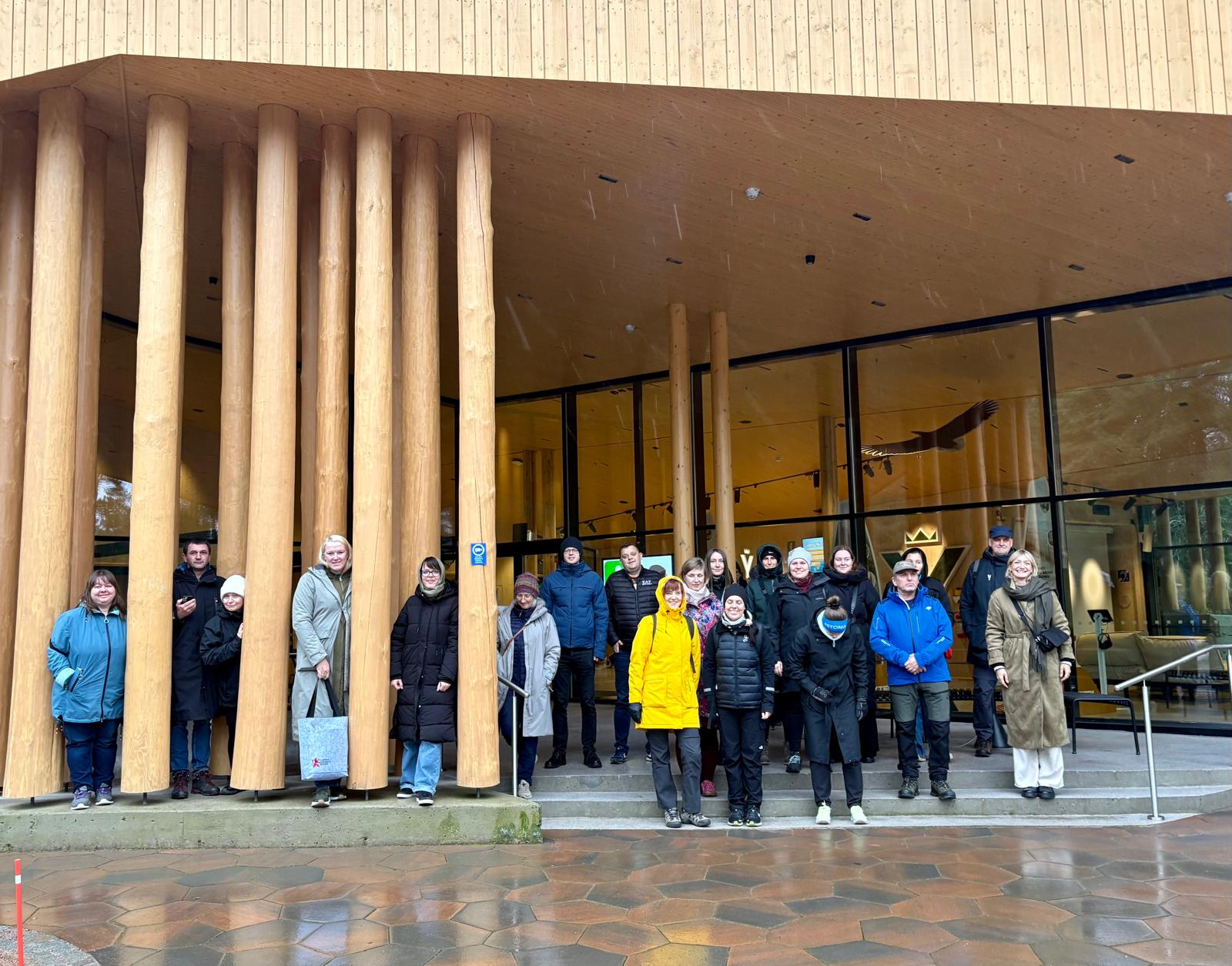
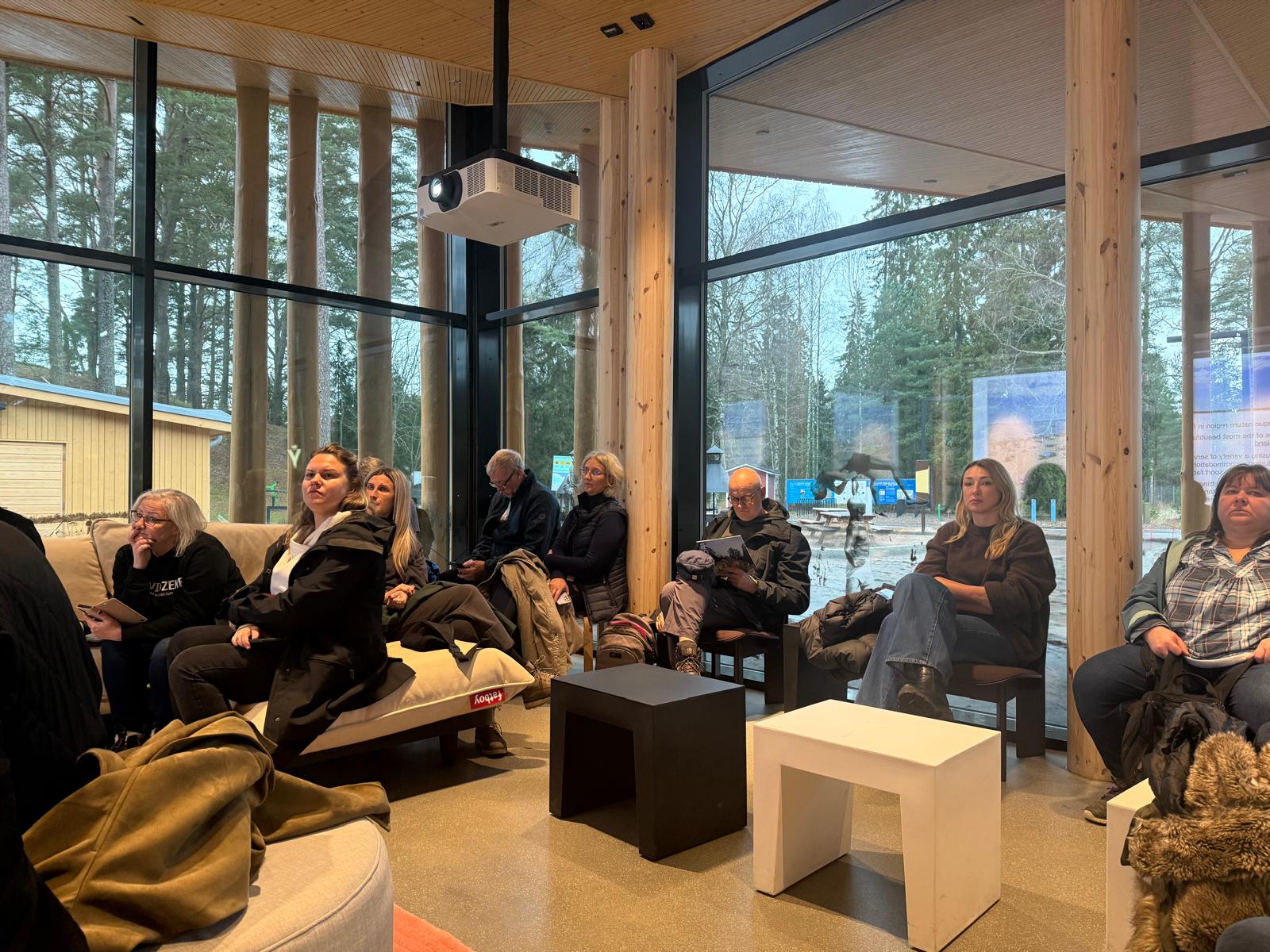
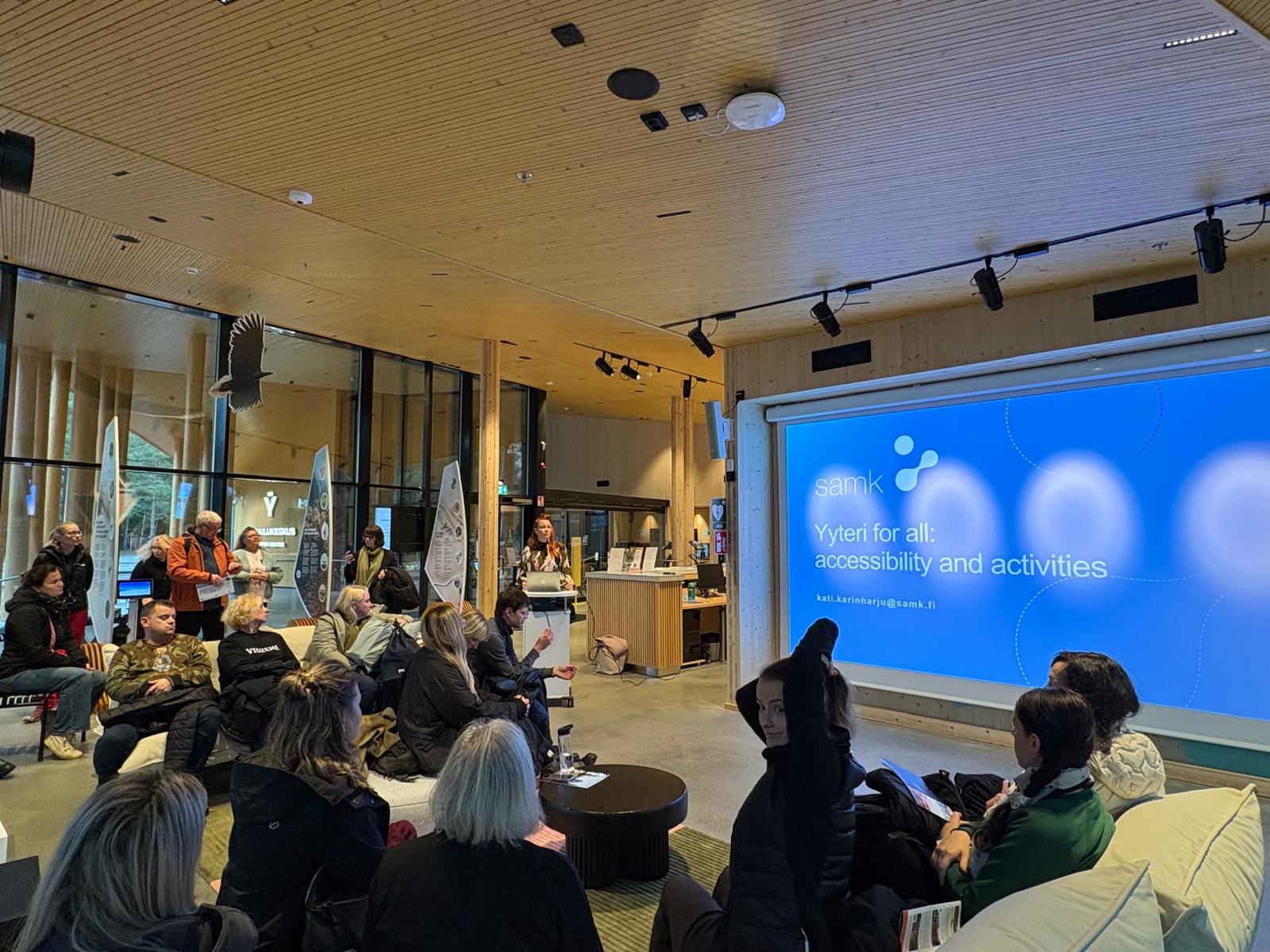
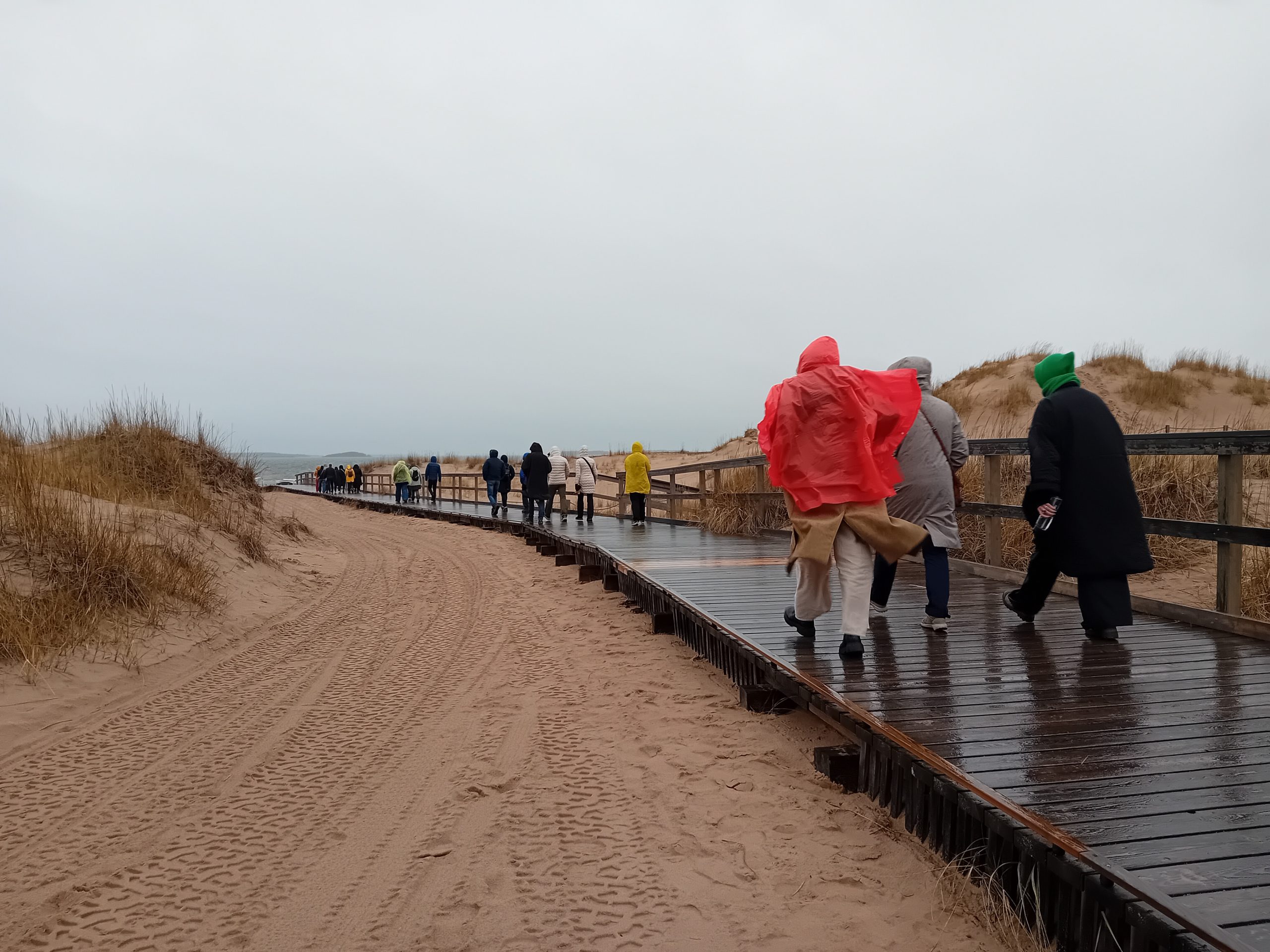
On November 5, the group visited the Pori region, home to Yyteri Beach. Before exploring the accessible trail along the beach, participants visited the Yyteri Visitor Centre, where a representative introduced the accessibility solutions implemented along the Pori coastline.
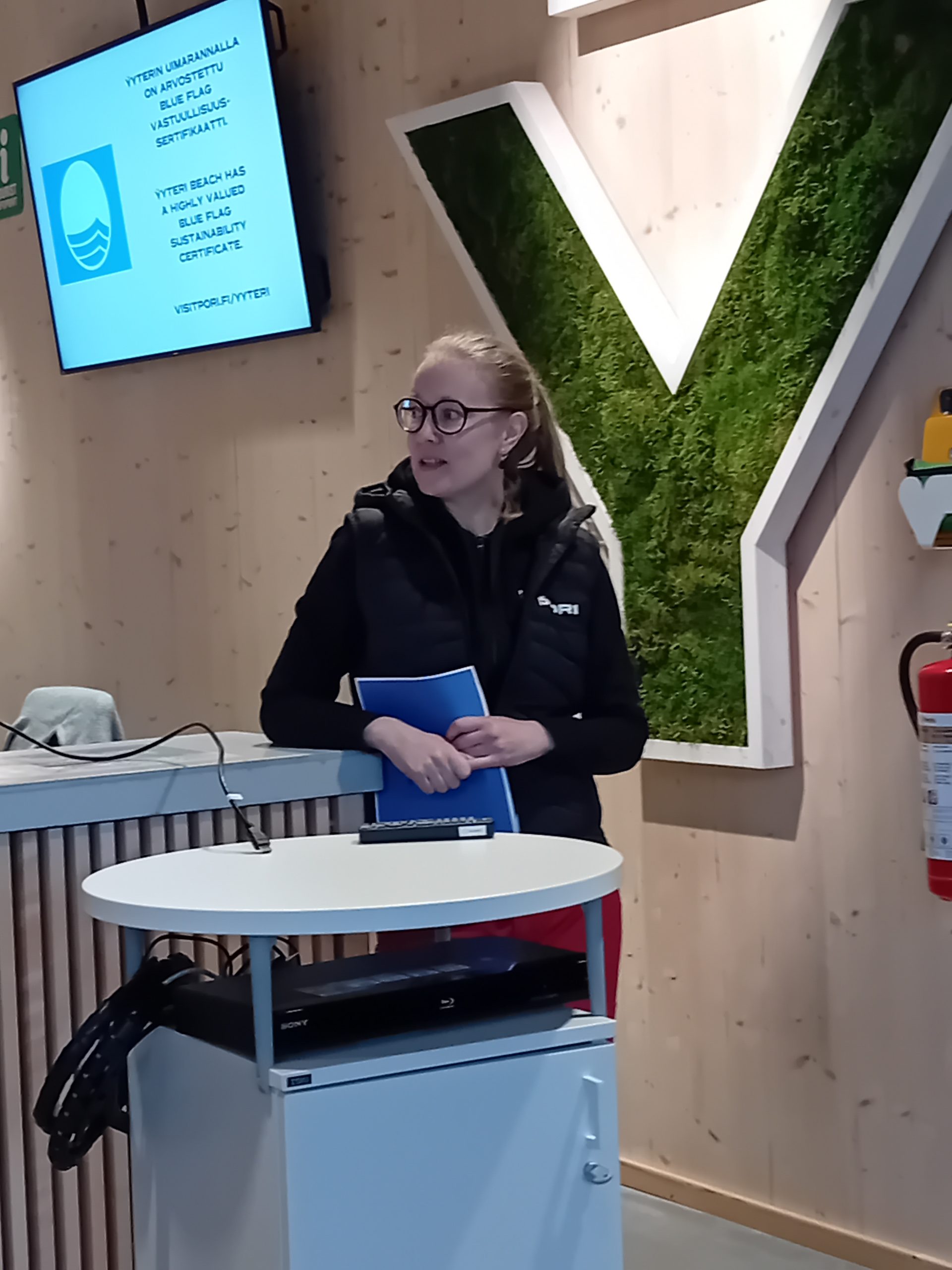
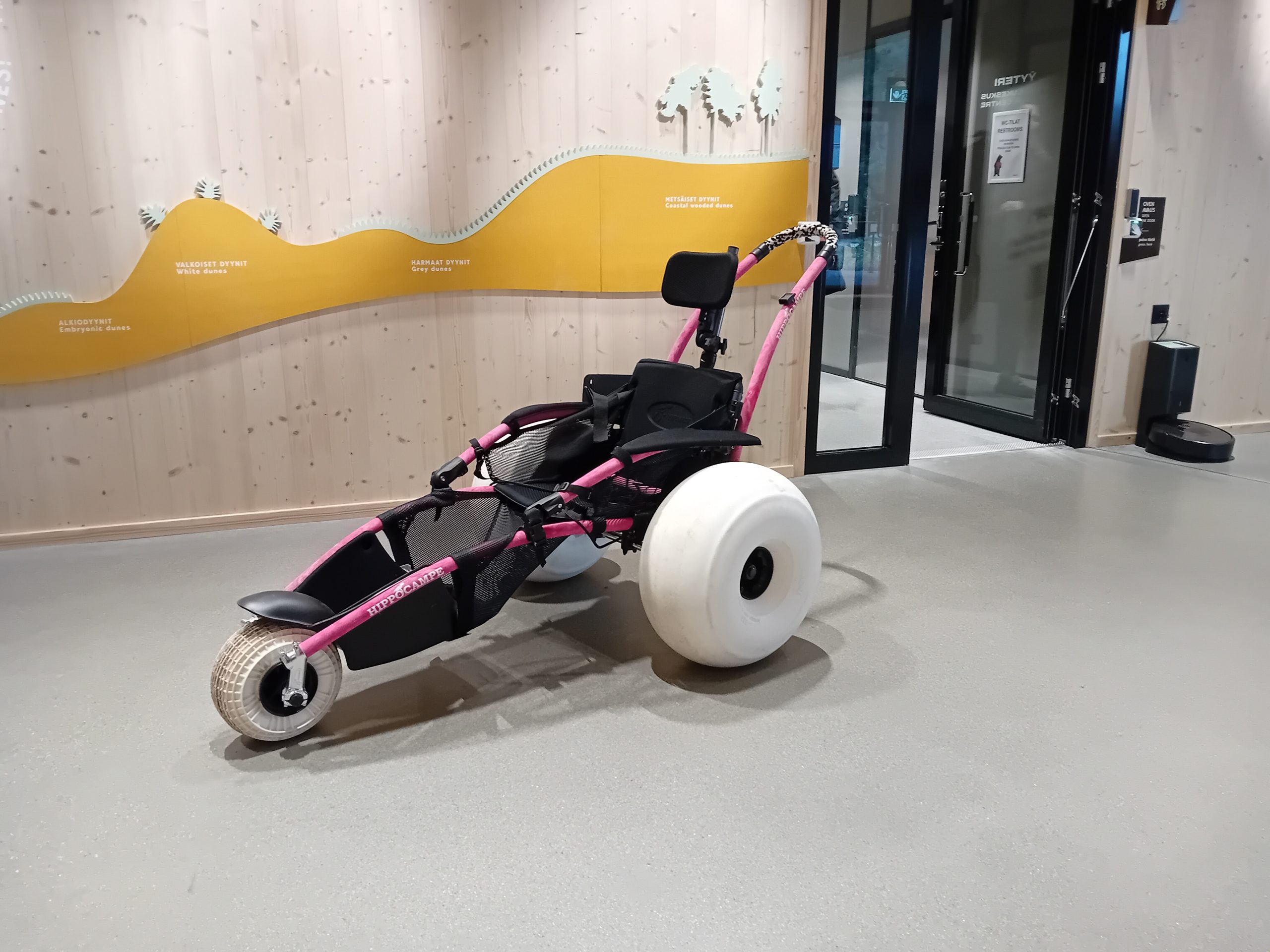
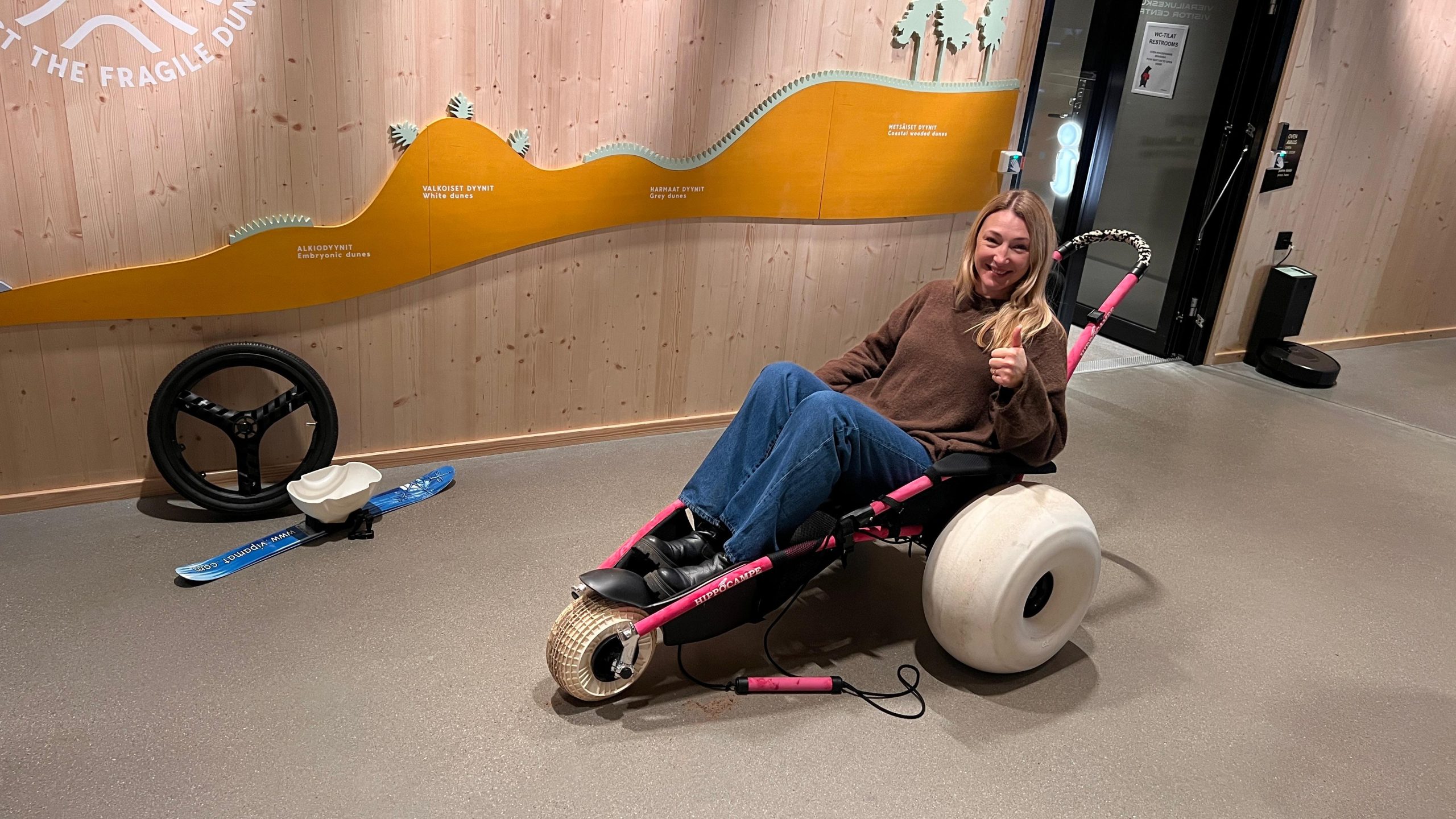
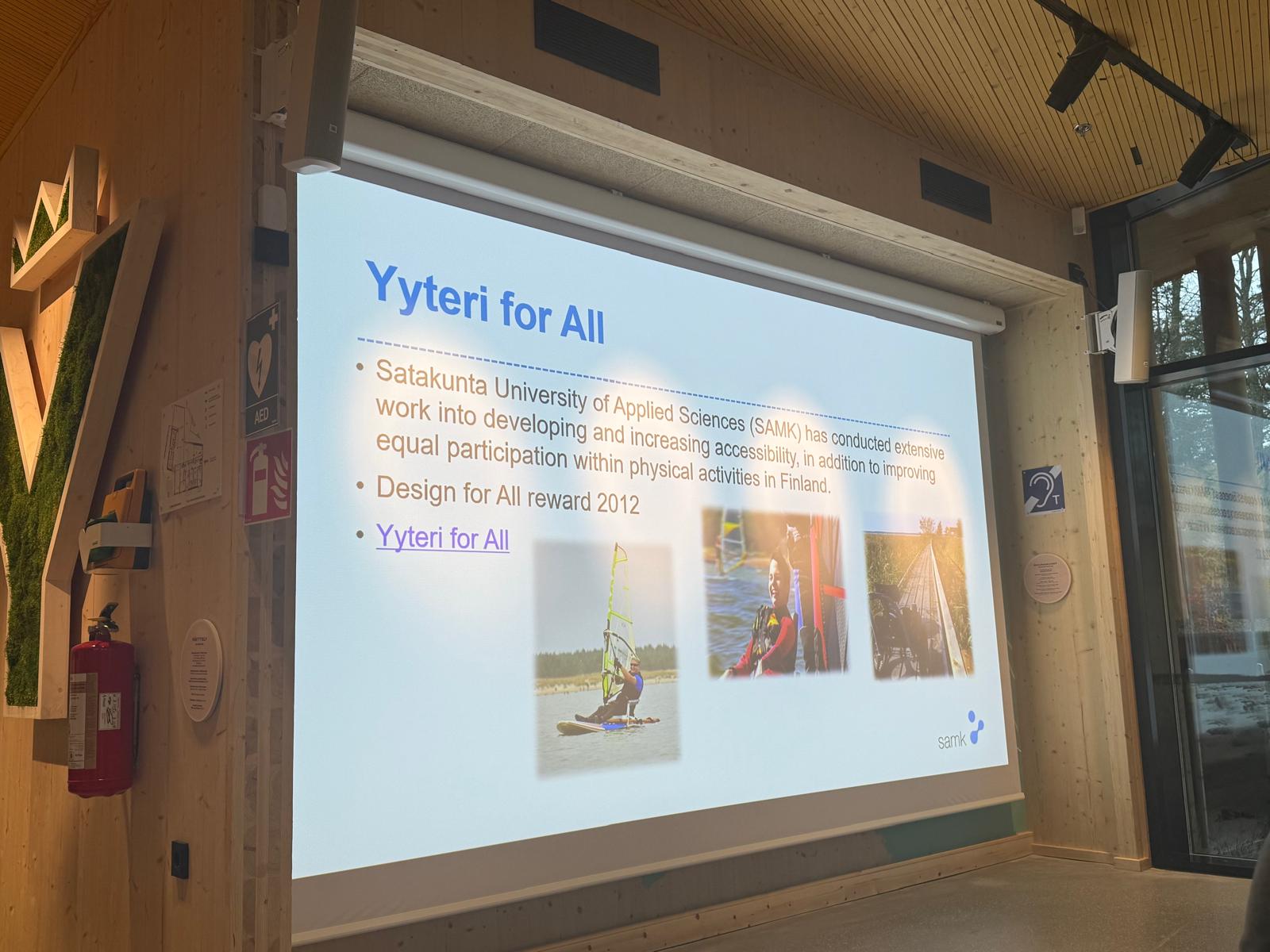
A particularly valuable part of the visit was a presentation by researcher and physical activity and movement specialist Kati Karinharju on the project “Yyteri for All”. Within this project, people with disabilities are offered opportunities to enjoy water-based activities in summer, such as canoeing and sailing, and to take part in downhill sliding and other outdoor physical activities during winter. She explained that many solutions are developed by creating prototypes of assistive devices, testing, and continuously improving them. Students, including those from Latvia, are actively involved in this work.
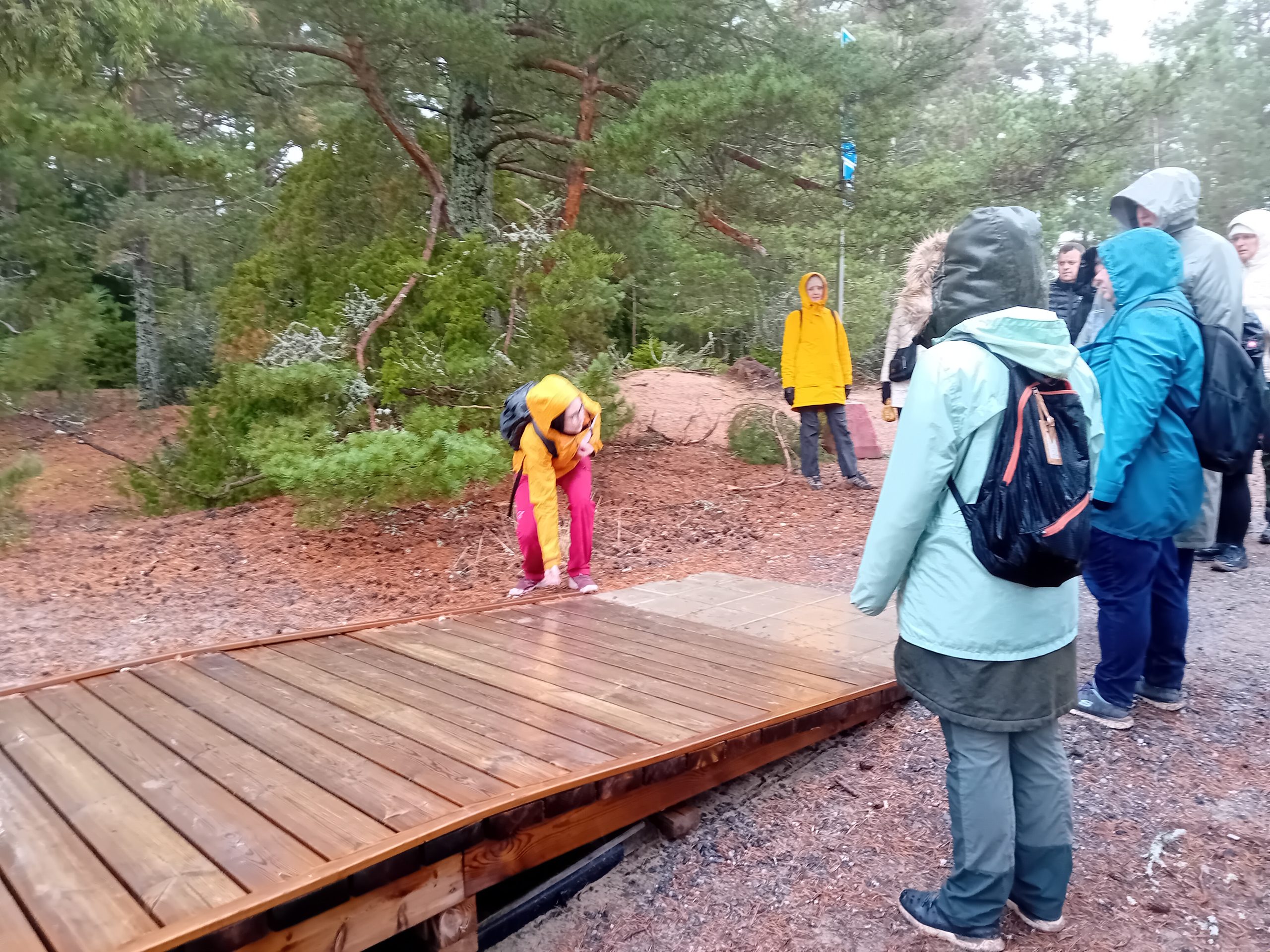
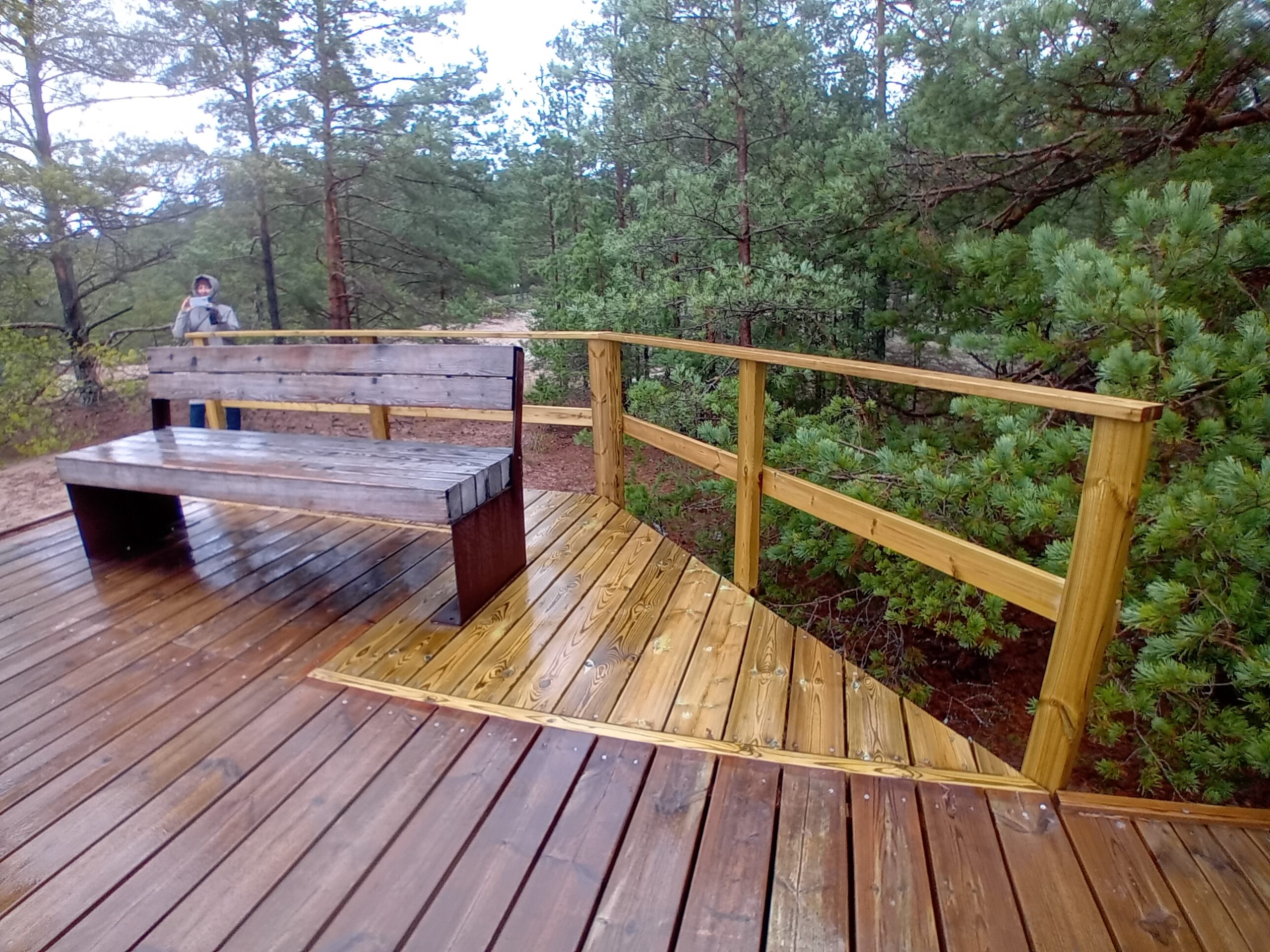
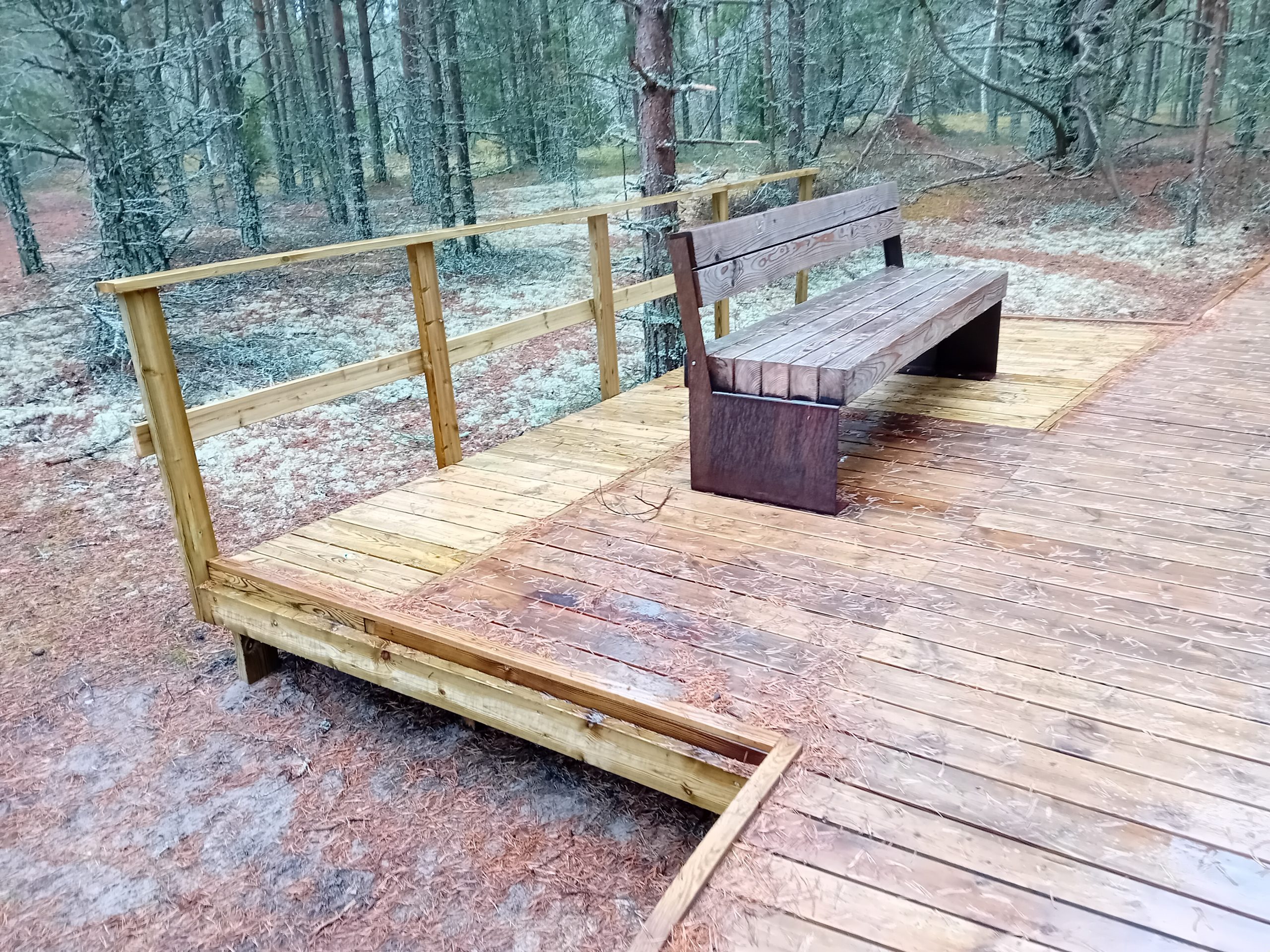
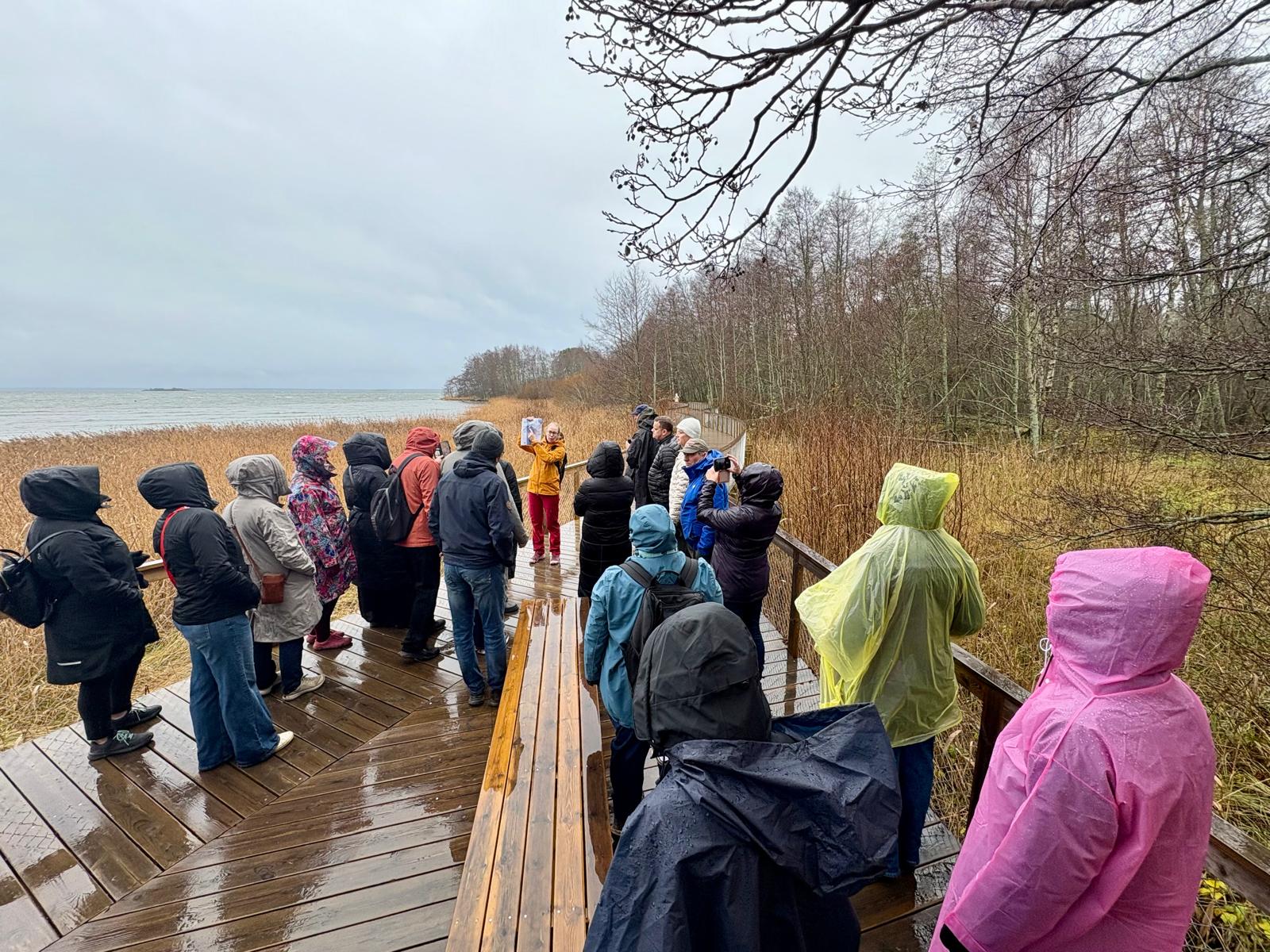
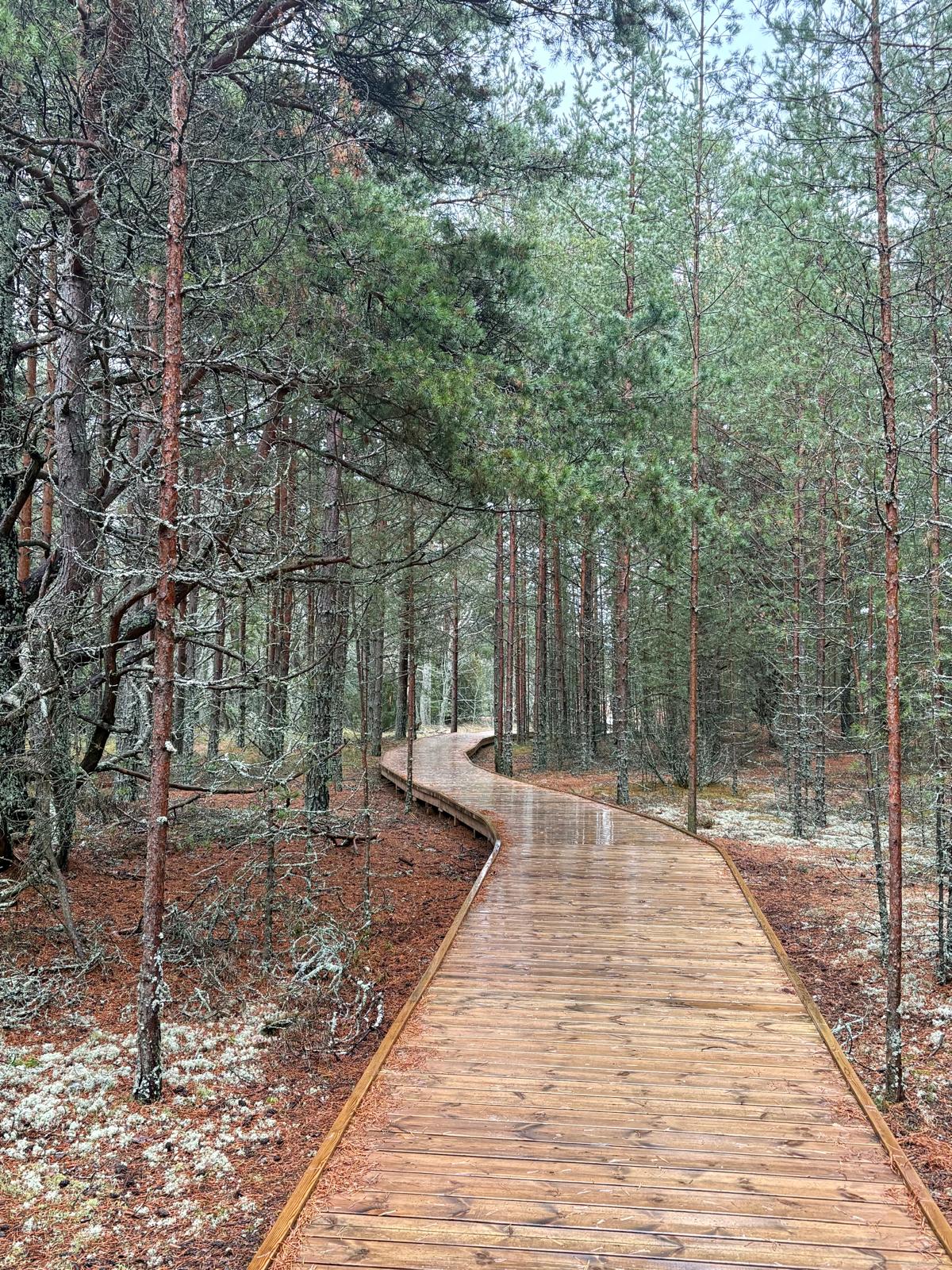
After the presentation, participants walked the accessible nature trail along the beach. Numerous improvements have been made to the trail this year, including enhanced edging and expanded platforms around benches to provide sufficient wheelchair space. A representative of the Yyteri Visitor Centre emphasized the importance of designing trail edges and railings to allow water to drain and wind to clear fallen leaves. Continuous solid edges can cause leaves to accumulate on the trail, becoming slippery in wet conditions and increasing safety risks, while standing water on wooden surfaces accelerates material deterioration.
Apuväline exhibition: latest trends in assistive technology development
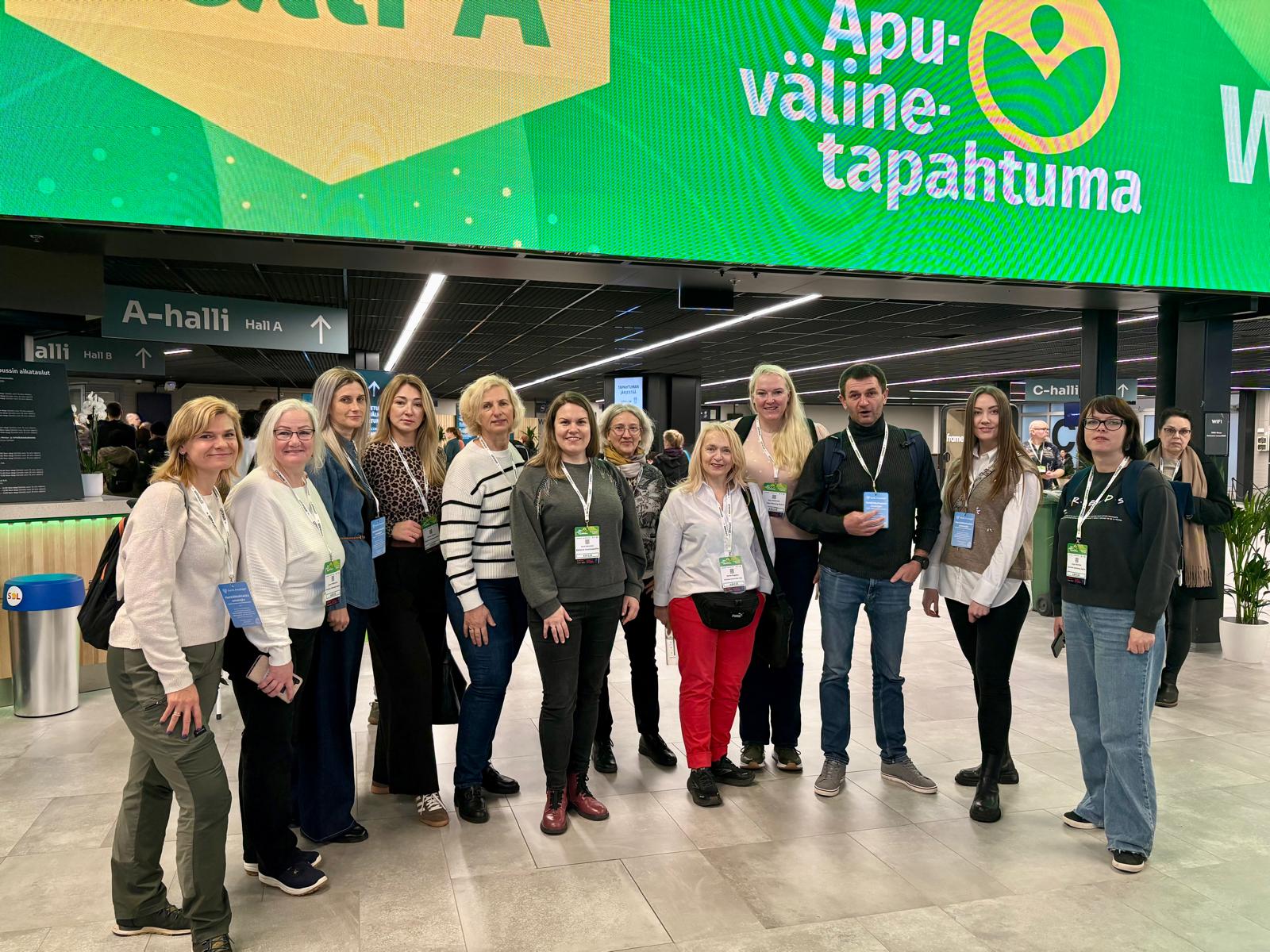
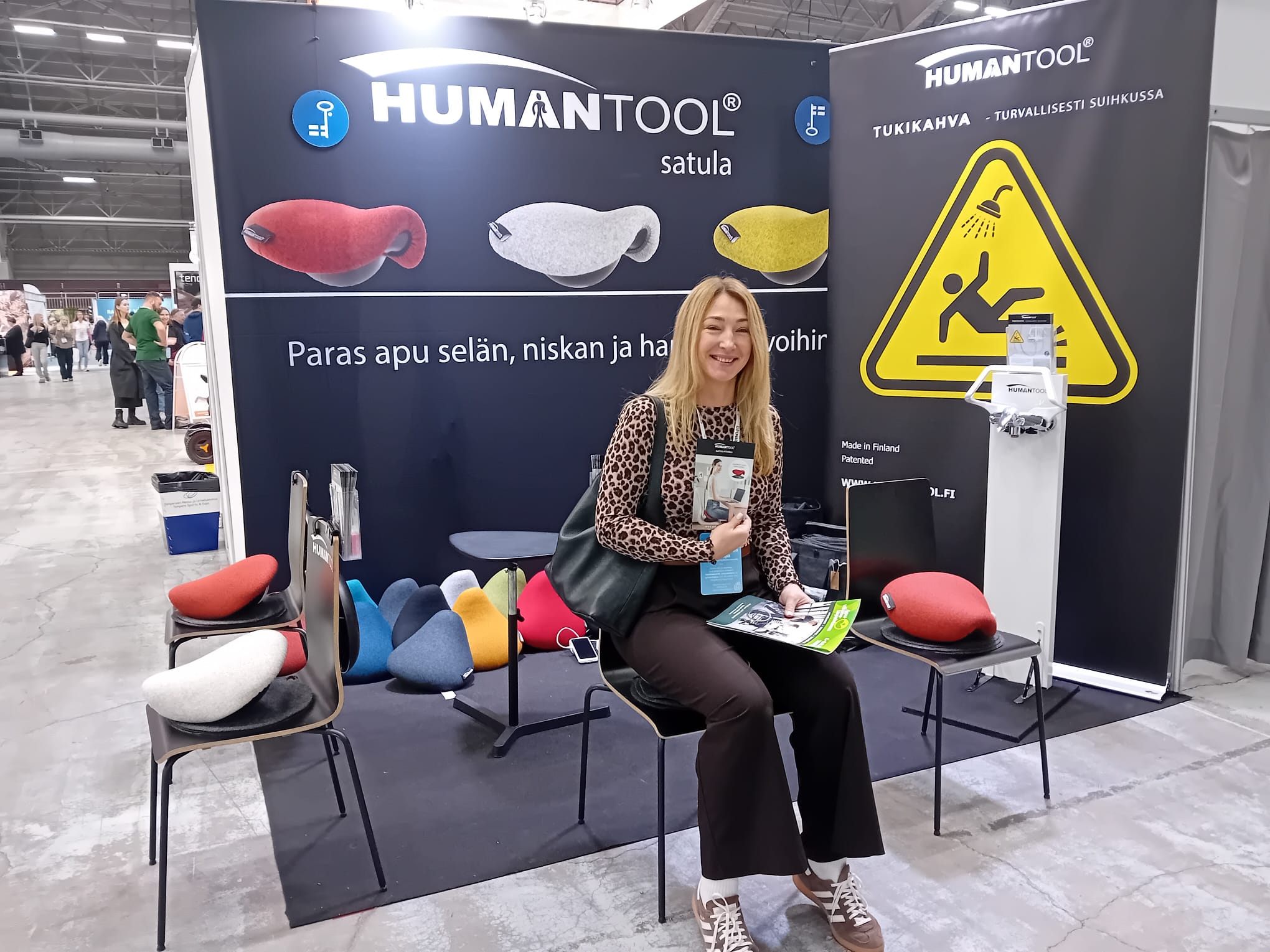
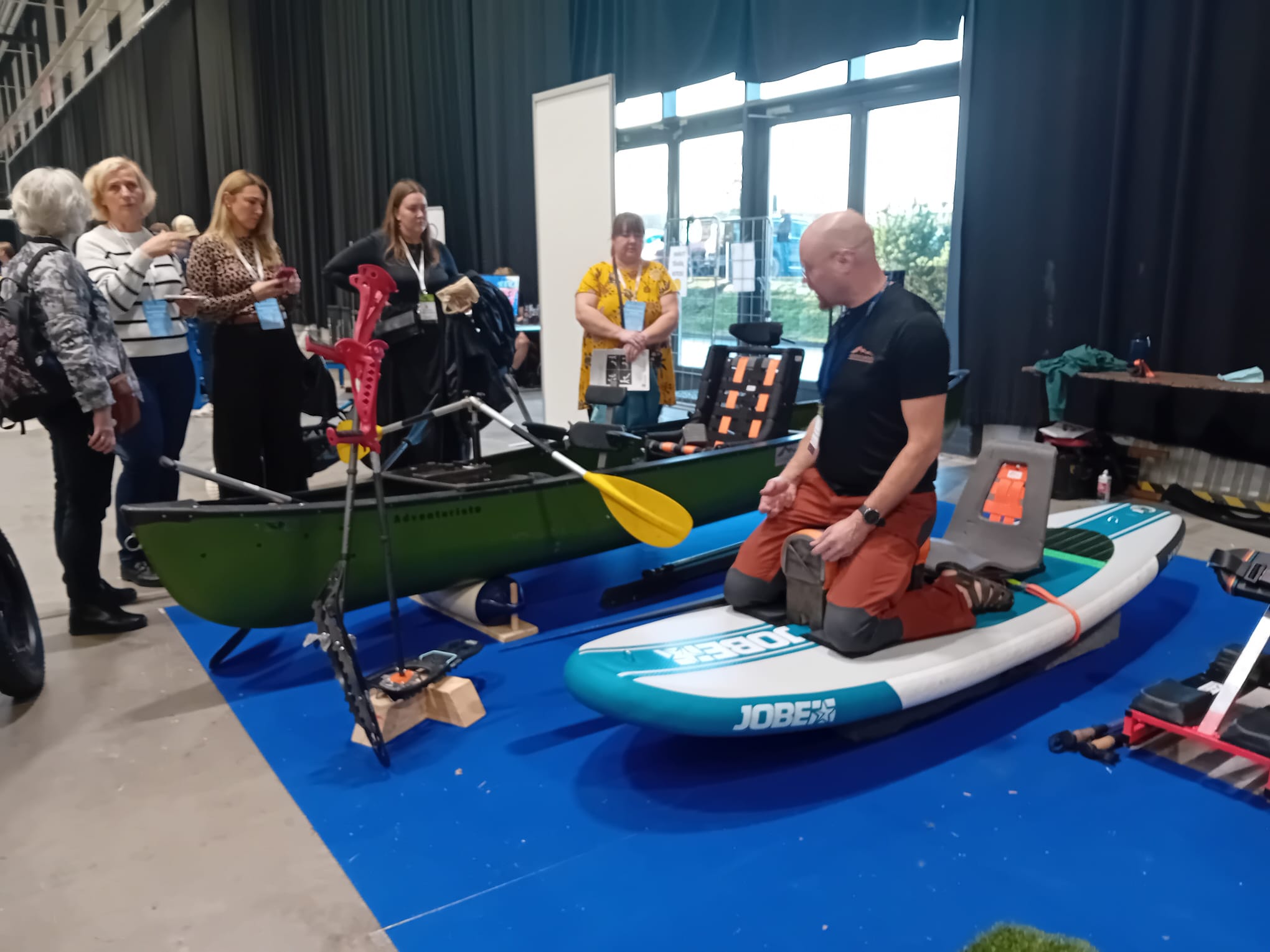
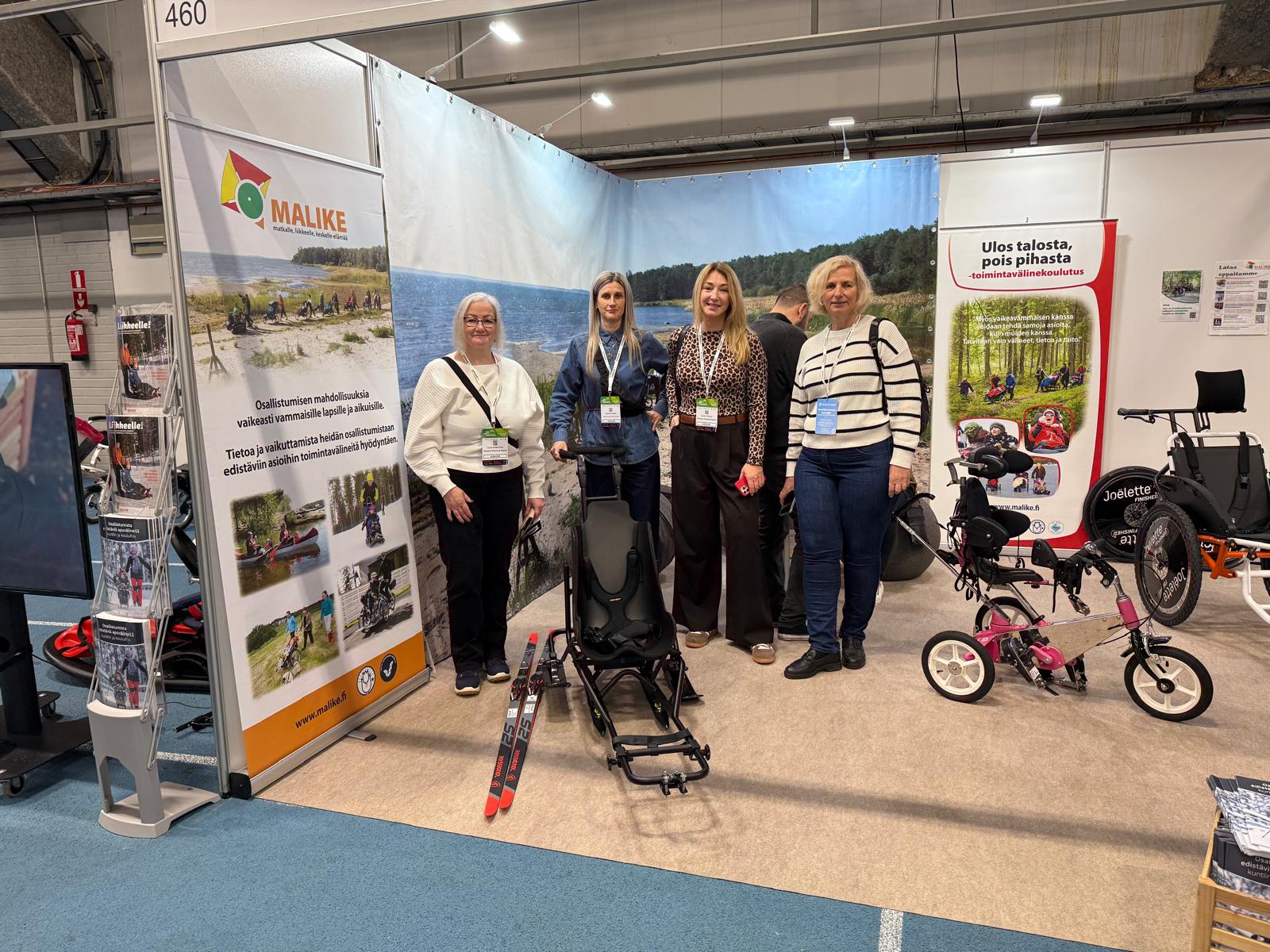
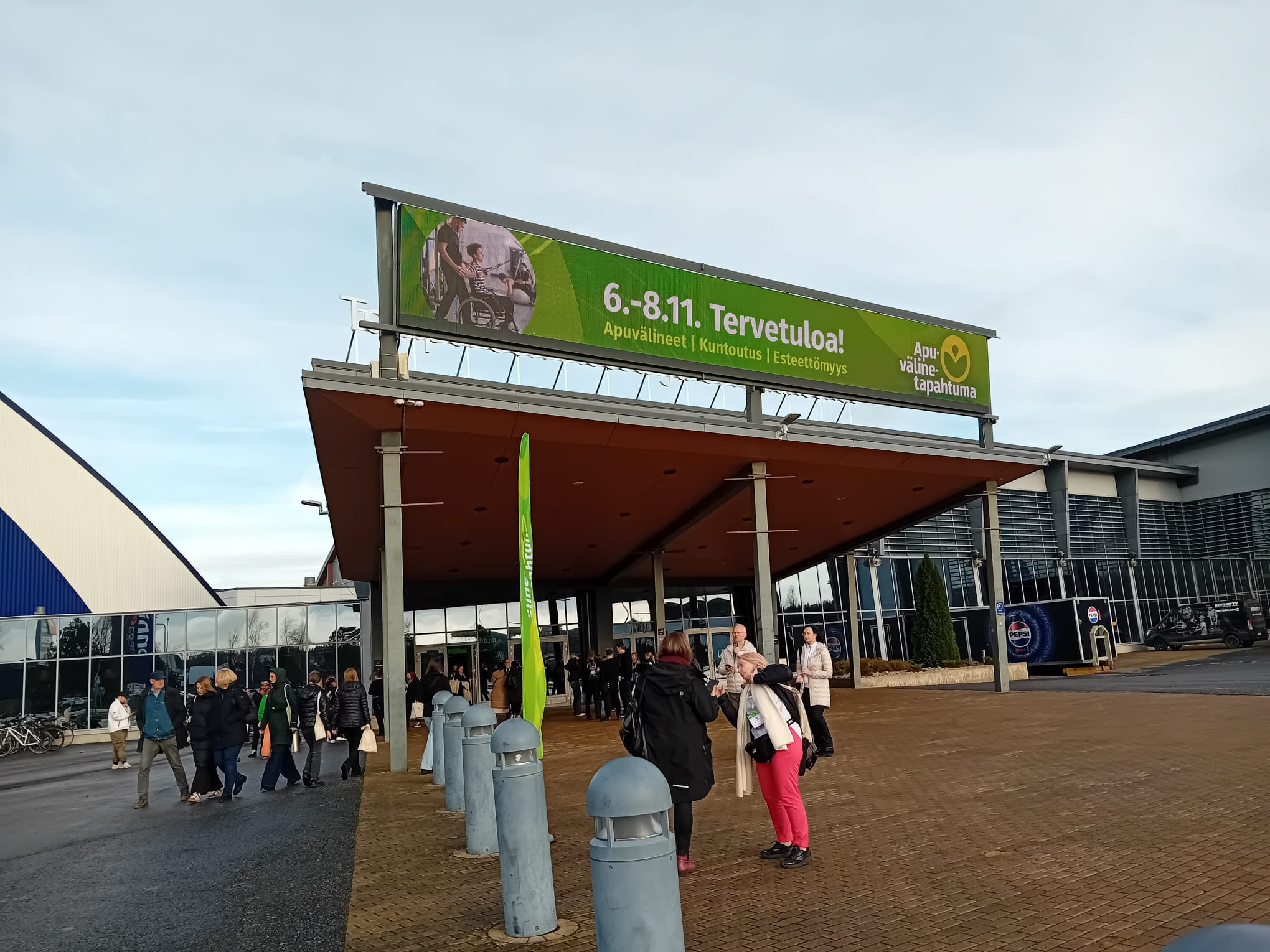
On November 6, Riverways II project partners visited the Apuväline assistive technology exhibition, dedicated to accessibility, personal assistive devices, assistive technologies and rehabilitation. The exhibition offered an opportunity to view a wide range of assistive devices and innovative technical solutions that enable people with disabilities and functional limitations to participate in activities in forests, mountains and on water, not only in summer but also in winter.
Participants were able not only to closely examine various wheelchairs, adaptive bicycles, and winter sleds, but also to learn which activities each device is designed for, how to use it correctly, and its limitations. The exhibition also featured solutions for boats and stand-up paddle boards, enabling a significant number of people with functional impairments to experience paddling independently. These exhibits attracted particular interest among participants, as they directly relate to the objectives of the Riverways II project. Numerous specific questions were addressed to the prototype manufacturer, who noted that such adaptations for water-based assistive devices are usually produced on an individual, custom-made basis.
Accessible tourism as a strategy: the Tampere experience
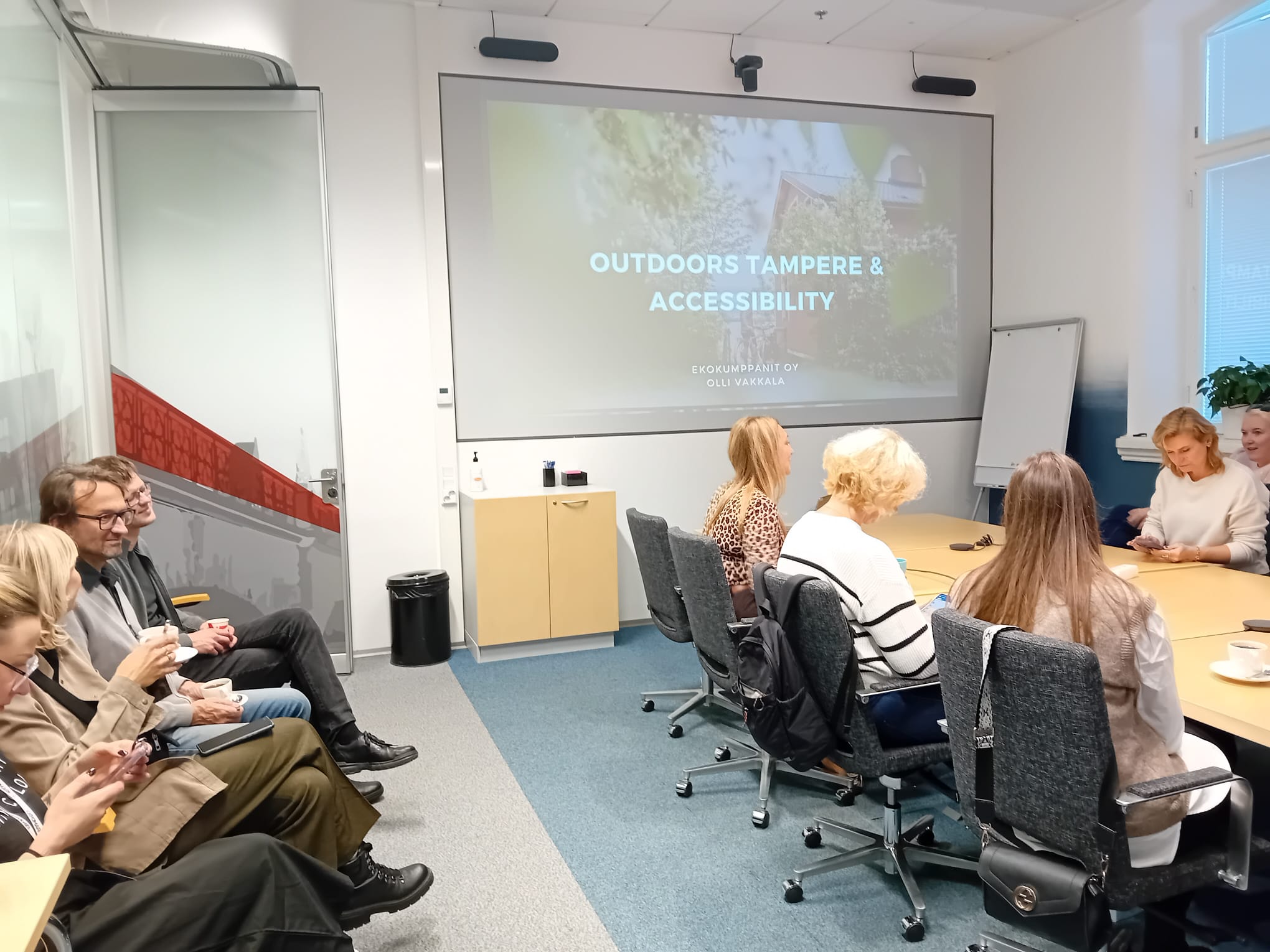
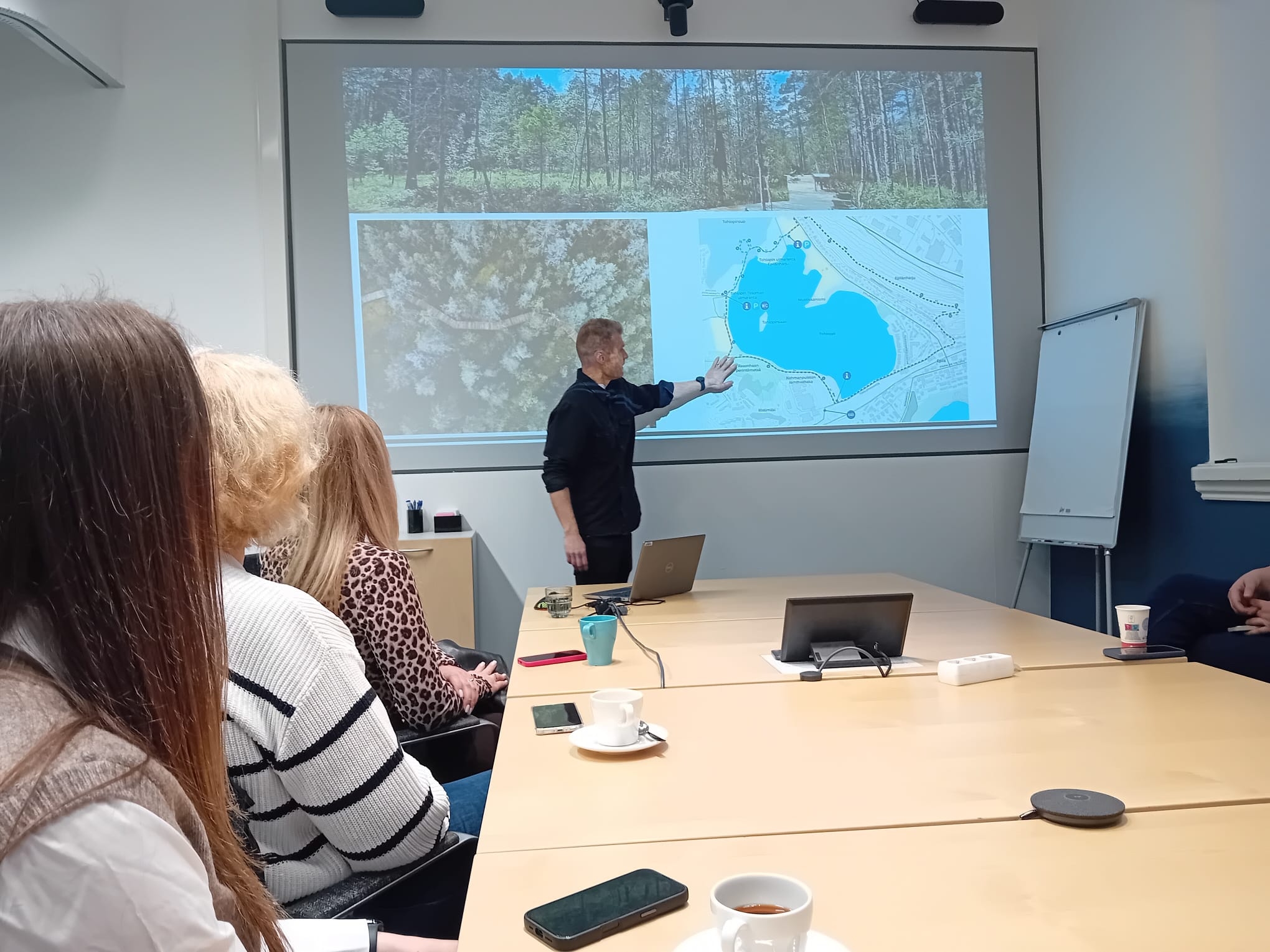
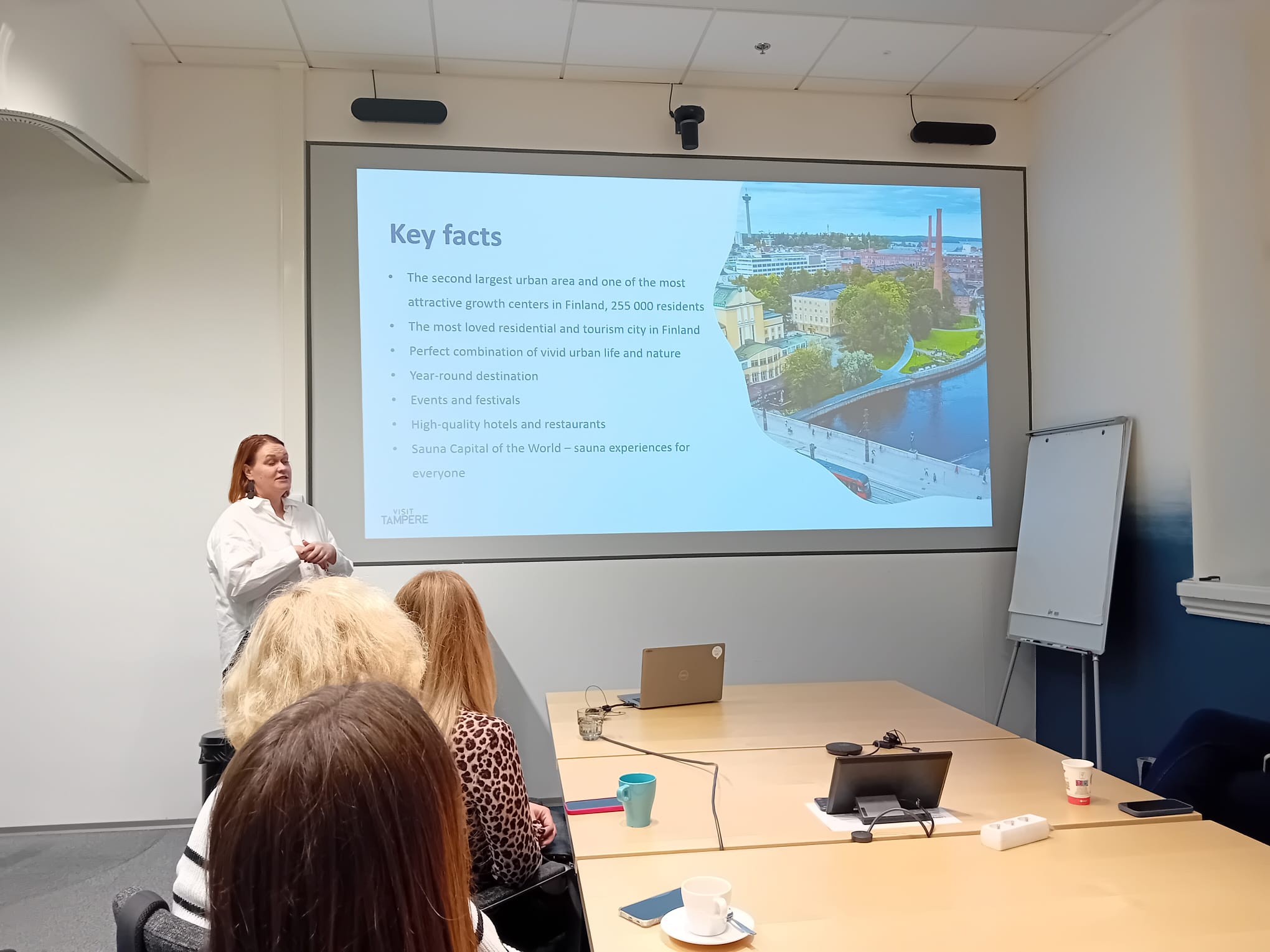
In the afternoon, participants met with developers of Tampere’s tourism offer. Olli Vakala, representative of the municipal non-profit organization Ekokumppanit (EcoFellows), spoke about how tourism products in the Tampere region are developed and organized, with a particular focus on nature trails, national parks and lakes, and how accessibility is integrated into these routes and tourism services. Meanwhile, Heli Jokela, Director of Marketing and Communications of the City of Tampere, introduced the key principles underpinning Tampere’s tourism offer and the communication strategies used to attract visitors.
Valuable insights for future work
The experience exchange visit to Finland provided practical insight into how accessibility can be ensured at the highest level in nature trails, bathing areas, tourism infrastructure and assistive technologies. Particularly valuable were the ideas for actively involving people with functional impairments in recreational and water sports, which directly align with the objectives of the Riverways II project.
The knowledge and experience gained will serve as a valuable foundation for implementing both this and other accessibility-related projects in the Vidzeme region.
For information: Since September last year, the Vidzeme Planning Region has been working on the implementation of the project “Facilitating Access to Watertourism Activities” (Riverways II). The primary objective of the project is to identify and enhance the accessibility of water tourism sites and products. The project is implemented with the support of the Interreg Estonia-Latvia Cooperation Programme 2021-2027.