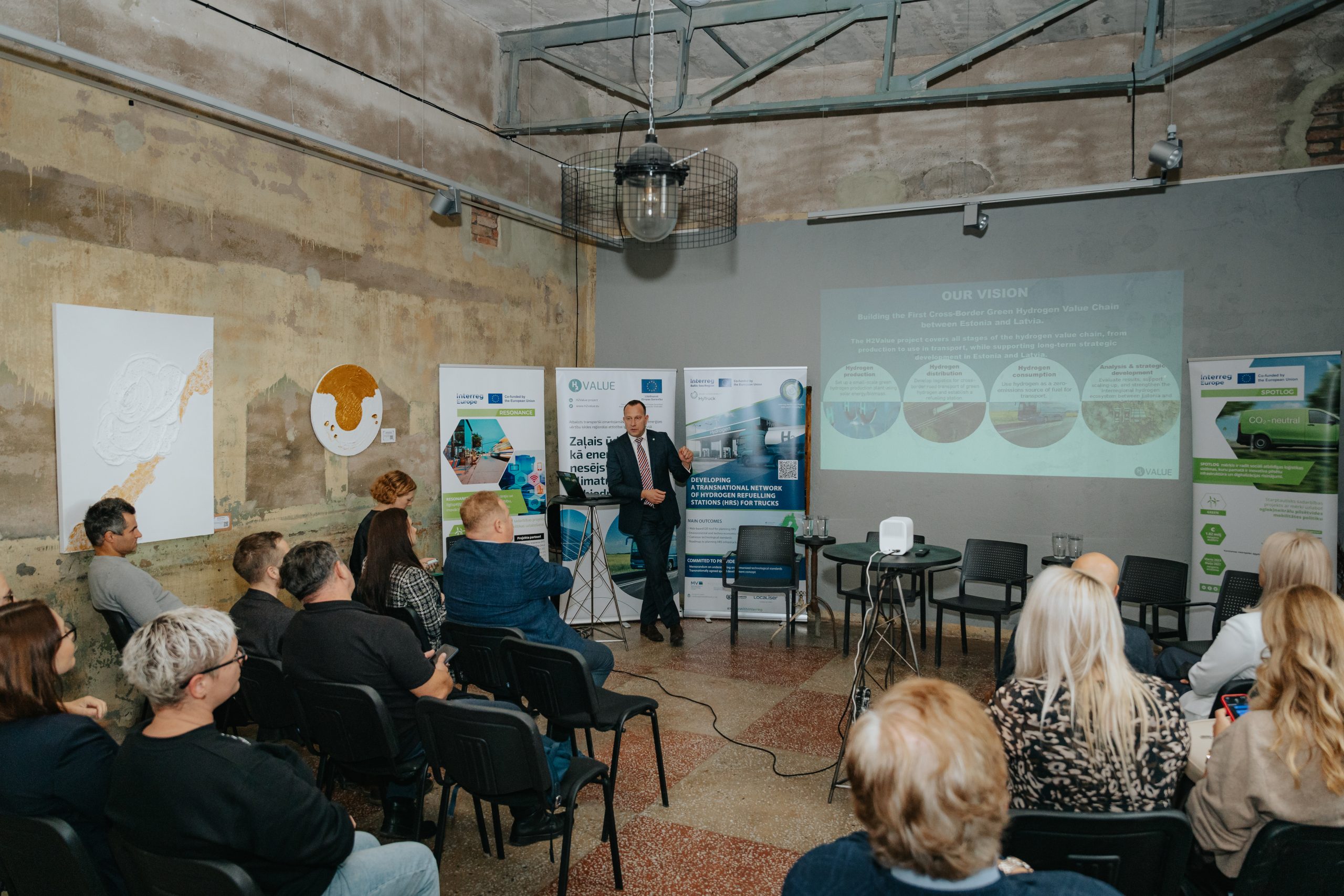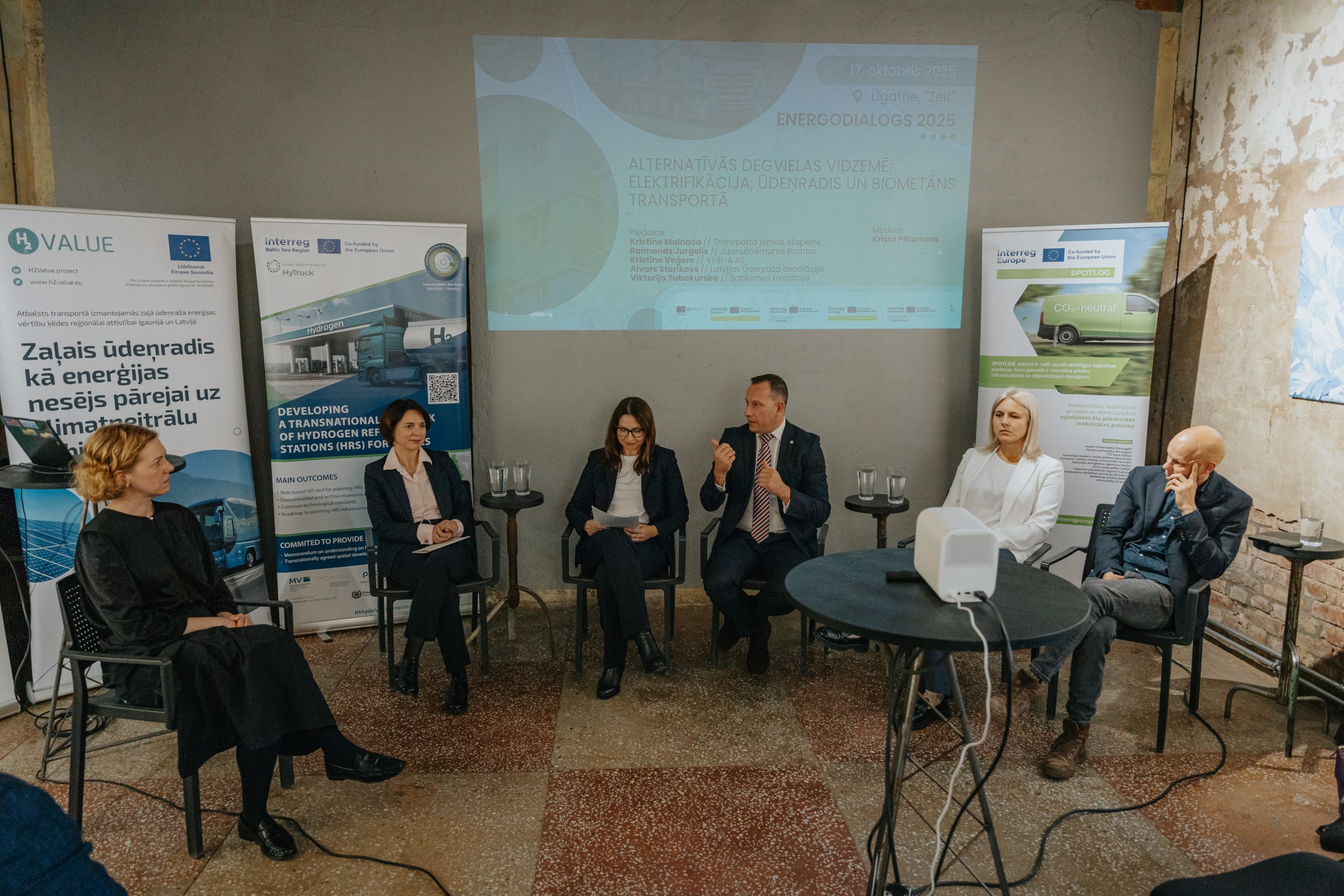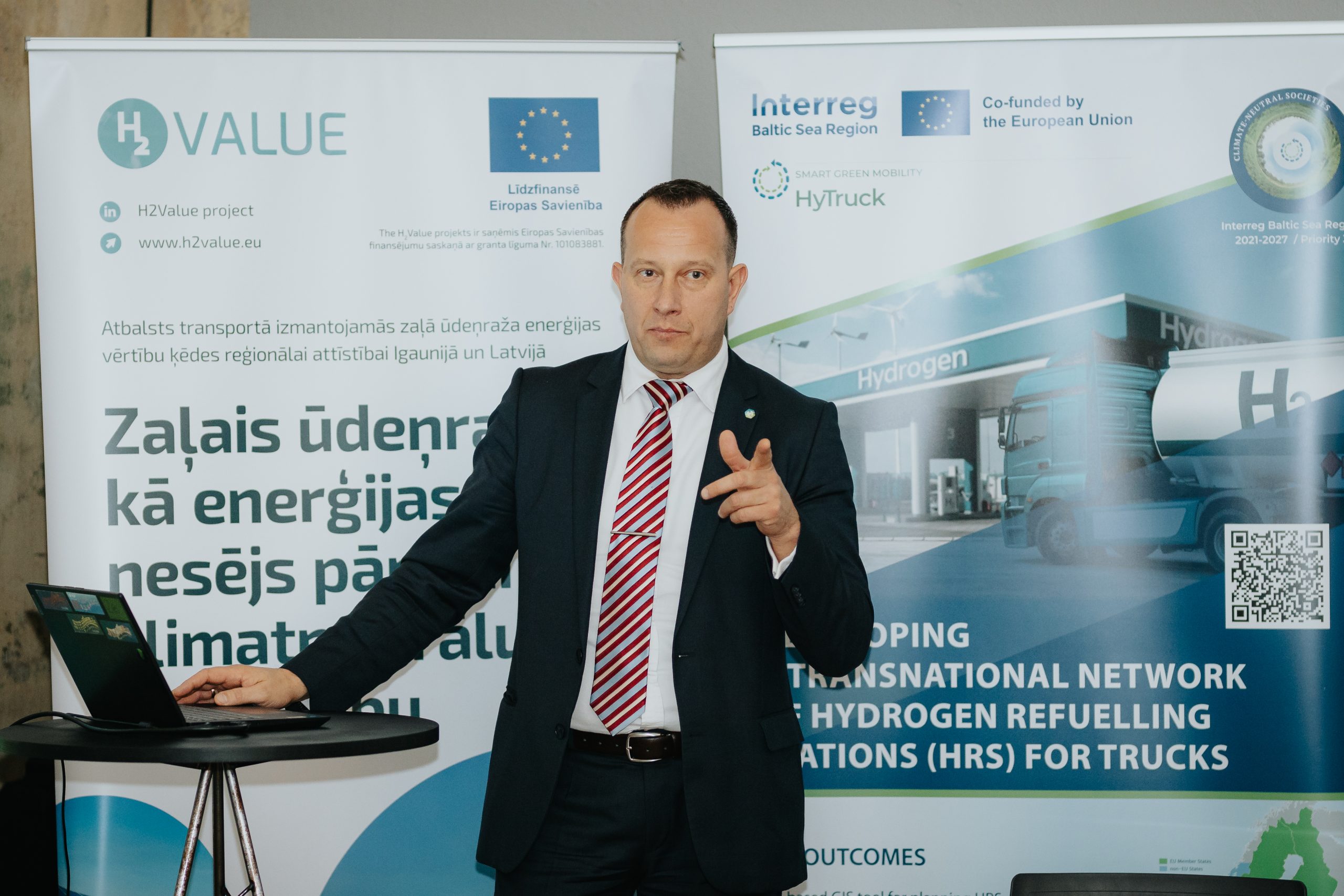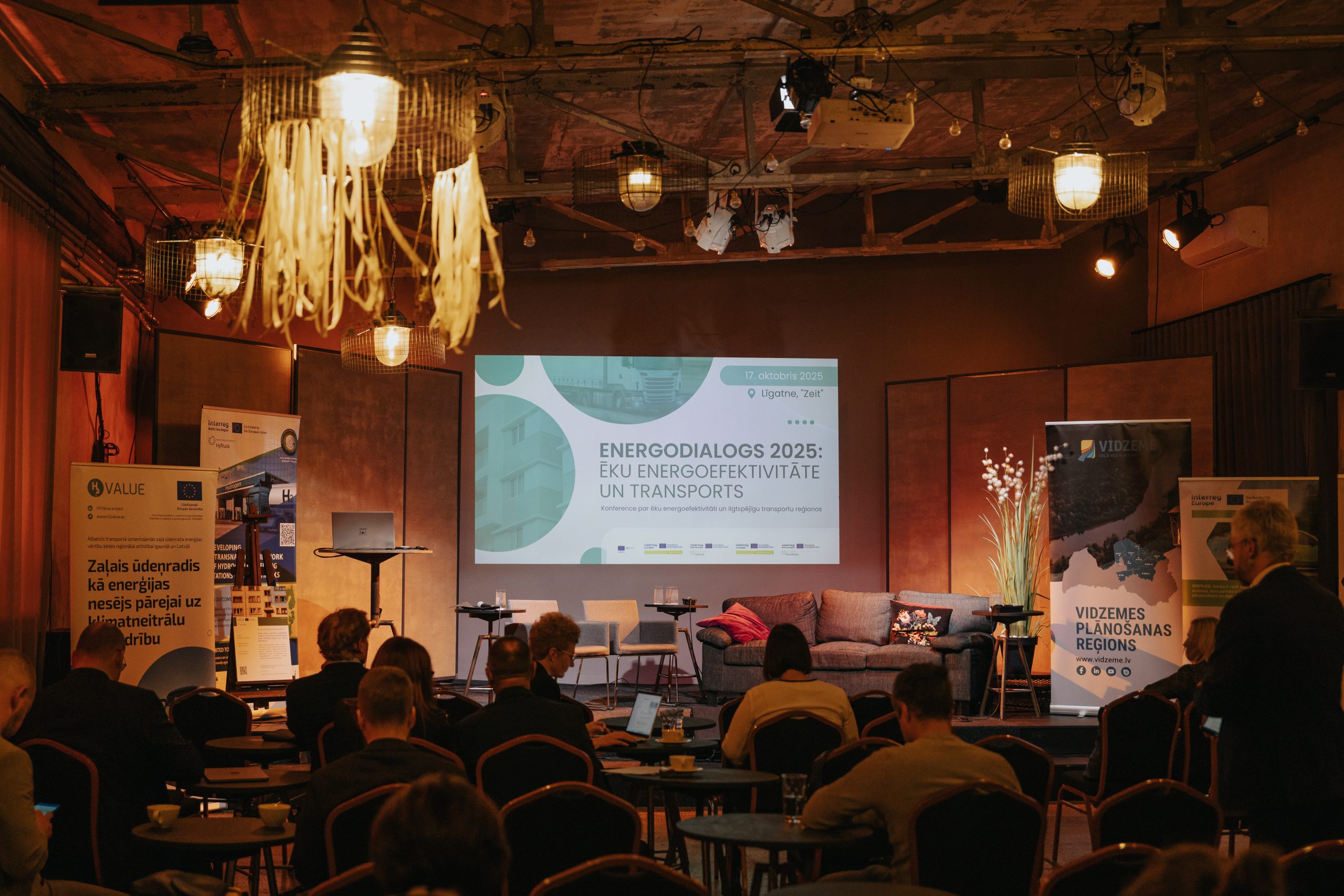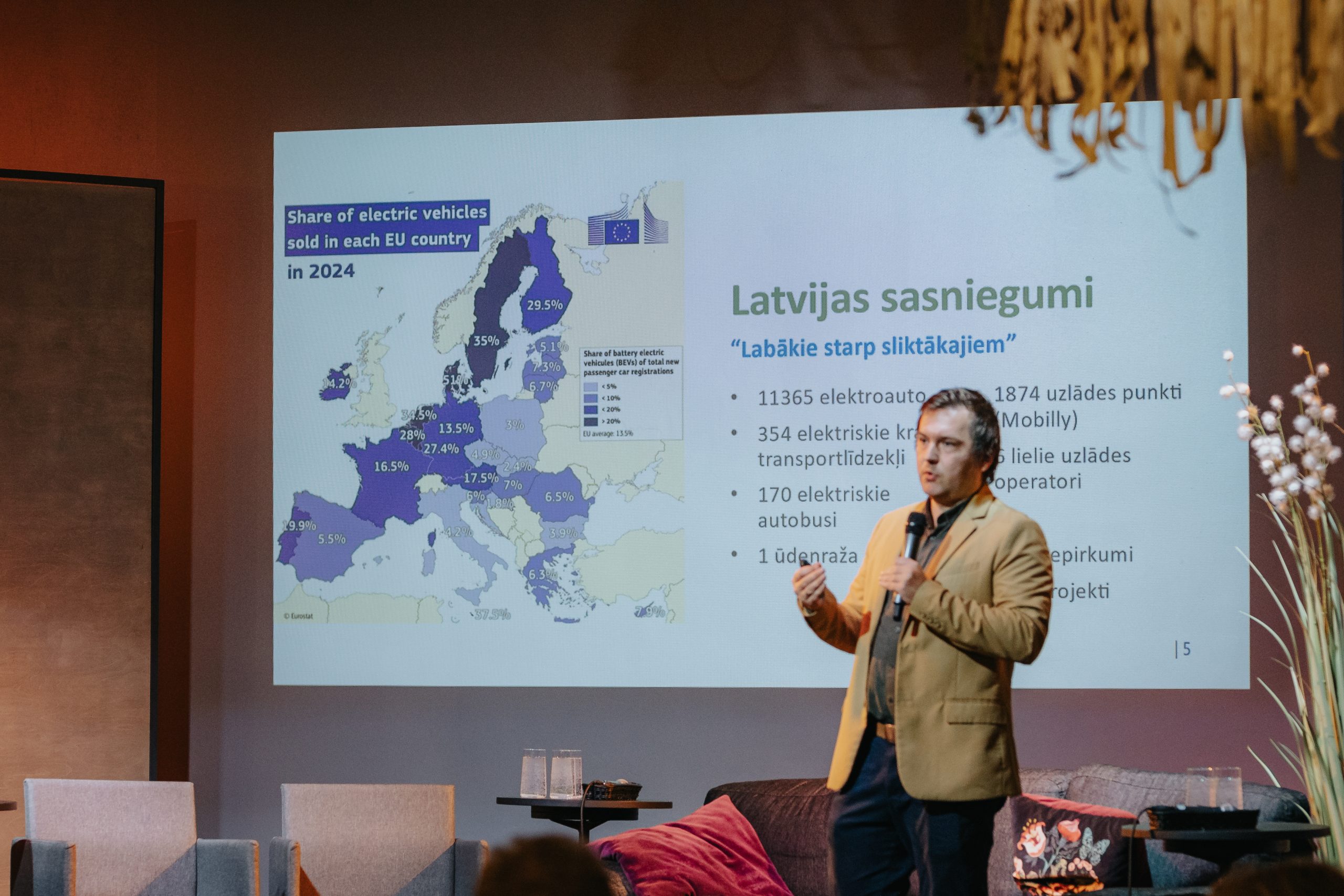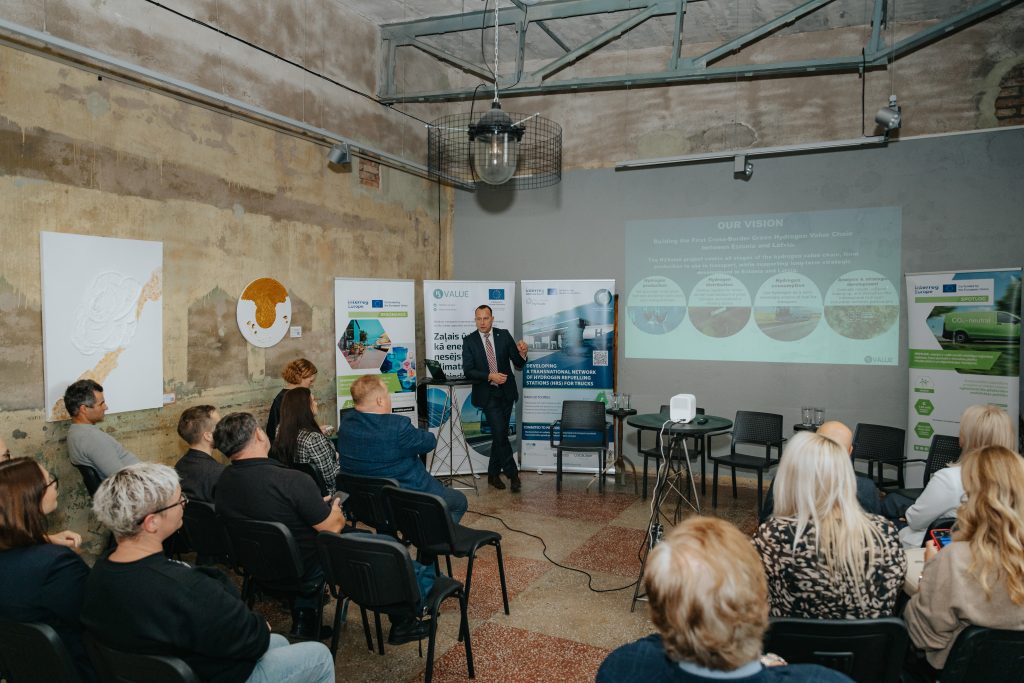
At the “Energy Dialogue 2025” conference organised by the Vidzeme Planning Region, experts gathered to discuss the role of clean technologies in transforming the transport sector and improving energy efficiency. The session “Alternative Fuels in Vidzeme: Electrification, Hydrogen and Biomethane in Transport” brought together representatives from the public and private sectors to share their perspectives on the future of sustainable mobility.
The discussion, moderated by Krista Pētersone, featured Kristīne Malnača, transport sector expert; Raimonds Jurgelis from the startup Bruntor; Kristīne Veģere representing the energy company Virši; and Aivars Starikovs from the Latvian Hydrogen Association. Together, they explored how Latvia and its regions can accelerate the shift towards clean and innovative transport solutions.
A cleaner transport future built on cooperation
The panelists agreed that the transition to clean transport technologies is not only vital for achieving Latvia’s climate policy goals and improving the quality of life, but also creates new opportunities for business development. However, they emphasised that even highly developed technologies need a stable political framework, investment security, and effective cooperation between public and private actors.
The link between energy and transport systems is becoming increasingly evident — both in infrastructure development and in achieving sustainability objectives. Ongoing debates among policymakers focus on identifying the most suitable alternatives to replace fossil fuels and reduce Latvia’s dependence on energy imports. As noted during the discussion, large-scale transport electrification will require not only financial and technical solutions but also the integration of digital systems for efficient energy and fleet management.
Regional projects testing real-world solutions
In the Vidzeme region, several cooperation projects are currently focusing on heavy-duty transport, both in the public and freight sectors. Compared to passenger vehicles, this segment still faces greater challenges in terms of charging infrastructure and vehicle availability.
Among the examples shared during the discussion were the hydrogen bus pilot project in Jelgava, presented by Aivars Starikovs from the Latvian Hydrogen Association; electric cargo scooters for urban delivery developed by Bruntor, represented by Raimonds Jurgelis; and alternative fuel solutions offered by company Virši, introduced by Kristīne Veģere. These examples demonstrate how hydrogen, biomethane, and battery-electric systems can complement each other in building a cleaner transport ecosystem.
The experts agreed that the experience gained through cooperation projects should be expanded to more regions to compare technologies in real-life conditions and accelerate the uptake of proven solutions.
Public procurement as an innovation barrier
The discussion also touched upon challenges in public procurement, which often hinder innovation in zero-emission transport. As experts noted, the current focus on the lowest price does not always account for broader factors such as efficiency, investment risks, environmental impact, and life-cycle costs. A more innovation-oriented procurement approach would allow municipalities to adopt clean technologies more confidently and efficiently.
This discussion once again confirmed that hydrogen, alongside electrification and biomethane, plays a key role in the decarbonisation of Latvia’s transport system. Initiatives such as H2Value demonstrate how regional and cross-border cooperation can pave the way for a cleaner, more resilient, and future-ready transport sector in the Baltic region.