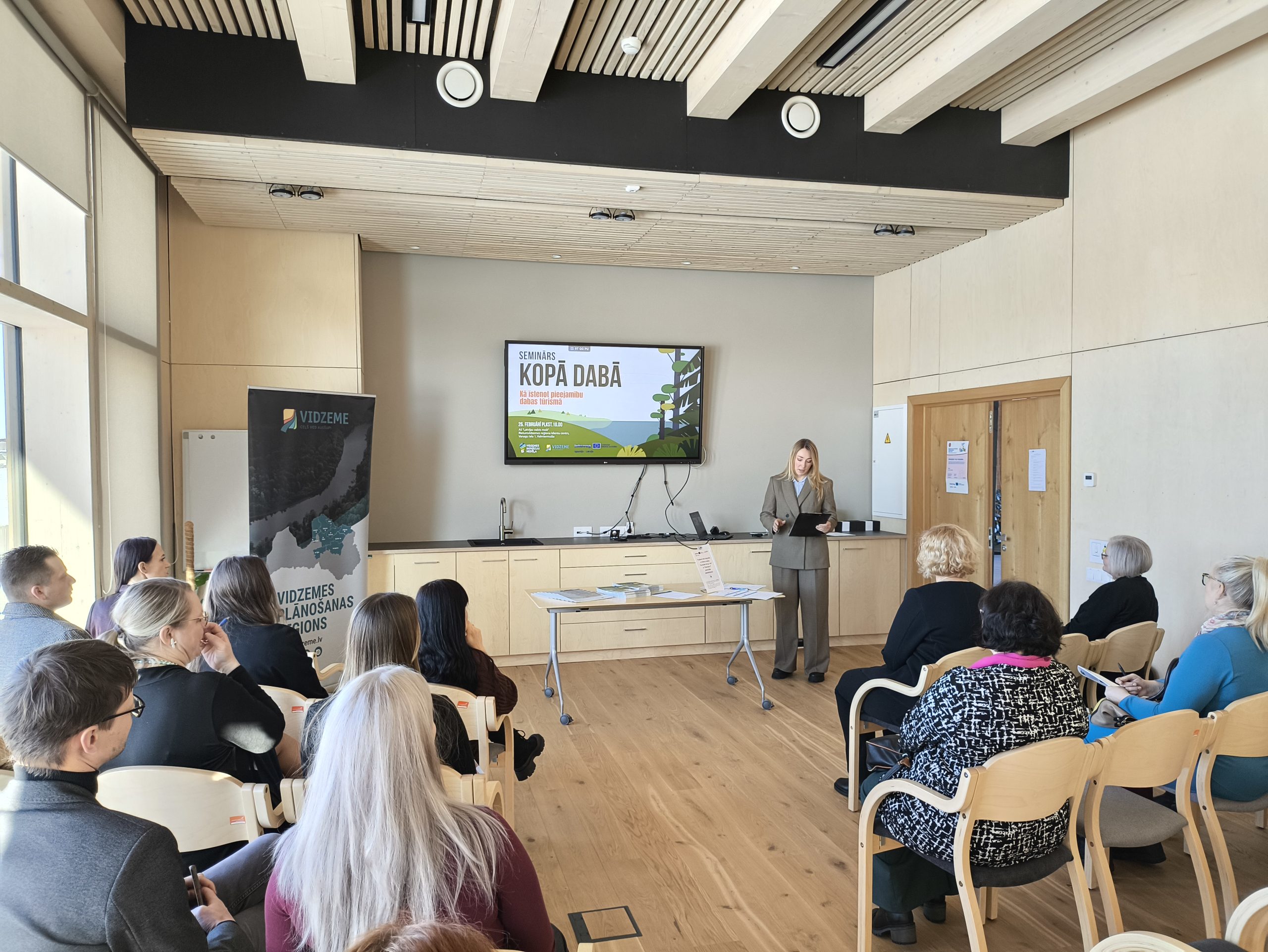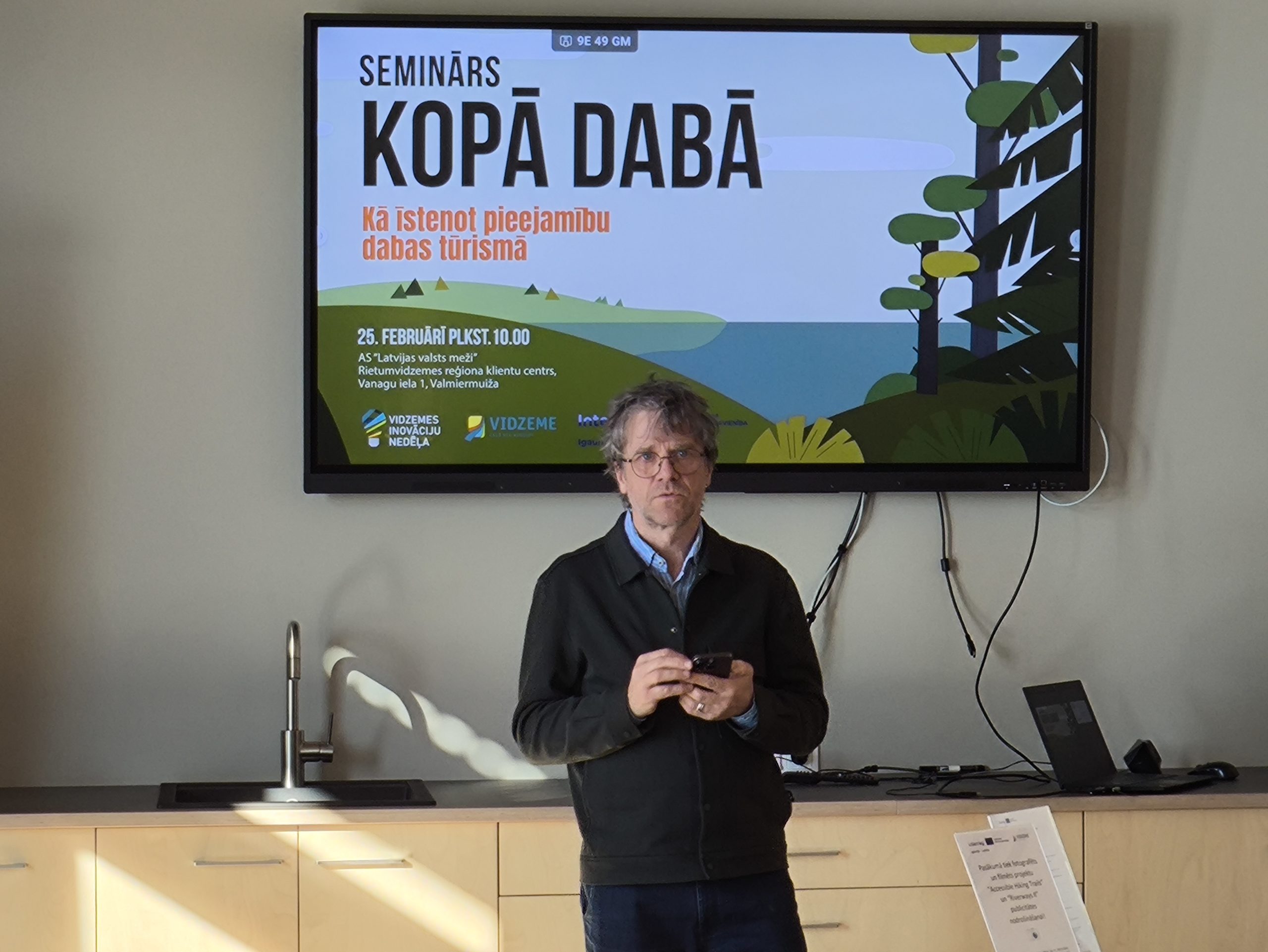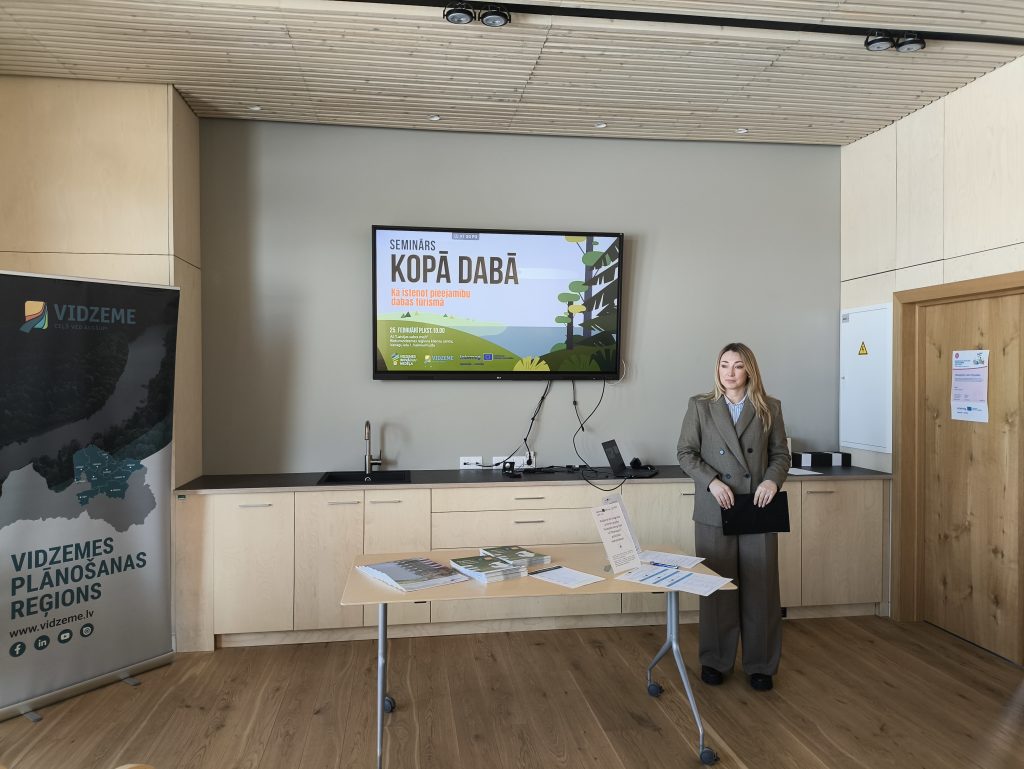
On February 25, a training seminar “TOGETHER IN NATURE: How to Implement Accessibility in Nature Tourism” organized by the Vidzeme Planning Region took place at the Latvian State Forests (AS “Latvijas valsts meži”) Western Vidzeme Regional Customer Center in Valmiermuiža. The seminar was attended by tourism entrepreneurs, guides, tourism specialists, as well as maintainers and managers of nature trails and other tourism infrastructure facilities, along with representatives of municipalities.
The aim of the seminar was to provide practical knowledge on how to make nature tourism experiences – especially on nature trails and near bodies of water – more accessible to different groups in society, including people with disabilities, seniors, and families with young children.
Accessibility principles and the diverse needs of users
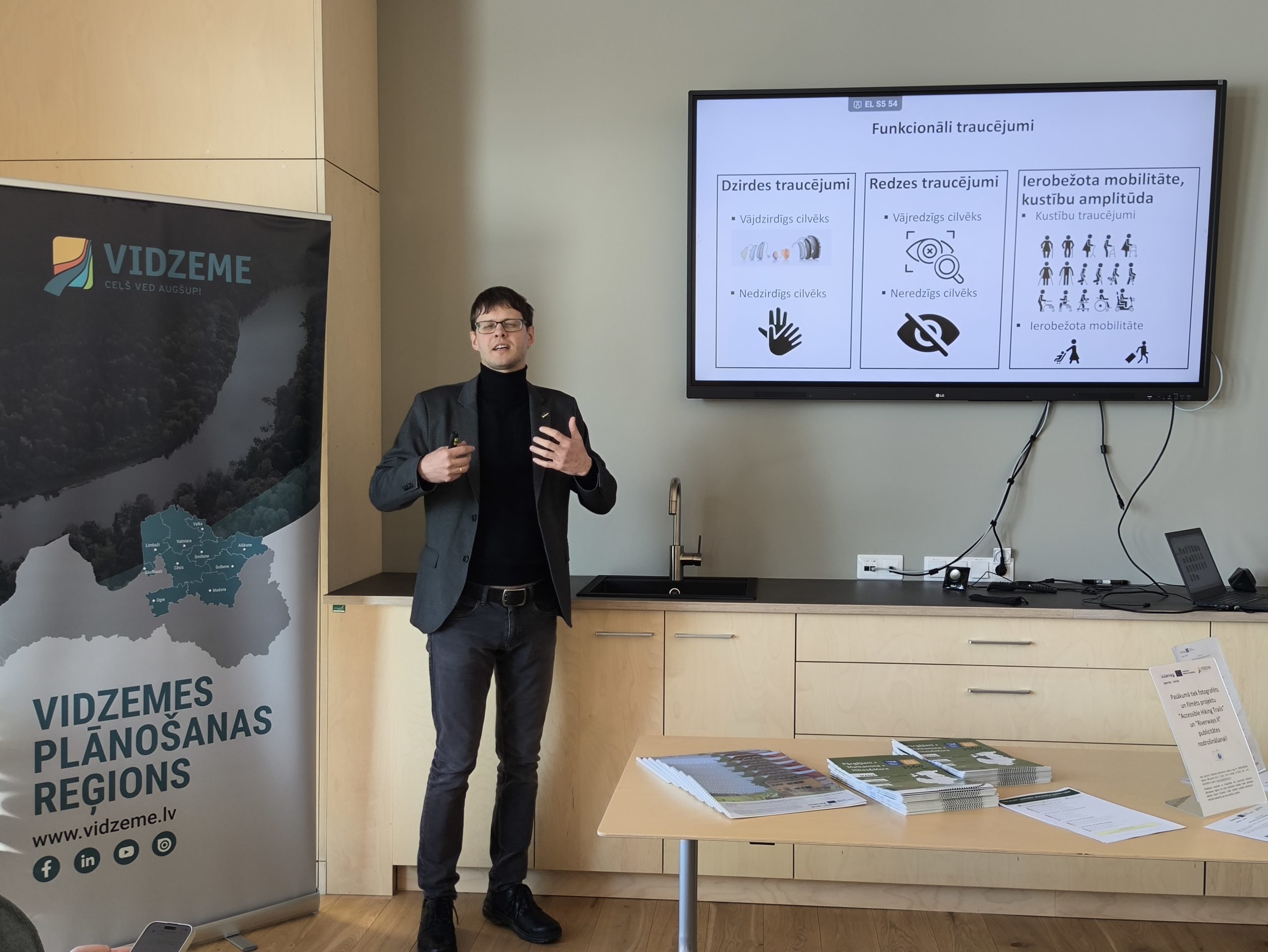
Environmental accessibility expert Jurģis Briedis from the association of people with disabilities and their friends “Apeirons” explained the legal status of people with disabilities and how different functional impairments affect people’s ability to use the environment. In Latvia, there are more than 221,000 people with disabilities, and for some of them, these impairments, such as various internal illnesses or cognitive disorders, are not immediately visible.
The expert emphasized that people with hearing, visual, mobility, or cognitive impairments perceive and use the environment differently. Therefore, when creating an accessible environment, it is important to consider the specific needs of different groups and to follow the principles of universal design whenever possible. During his presentation, the specialist also provided information on the current legal regulations, which are binding for all builders and infrastructure developers and require certain functional standards and the inclusion of accessibility aspects from the early stages of construction.
Good practice examples in water tourism
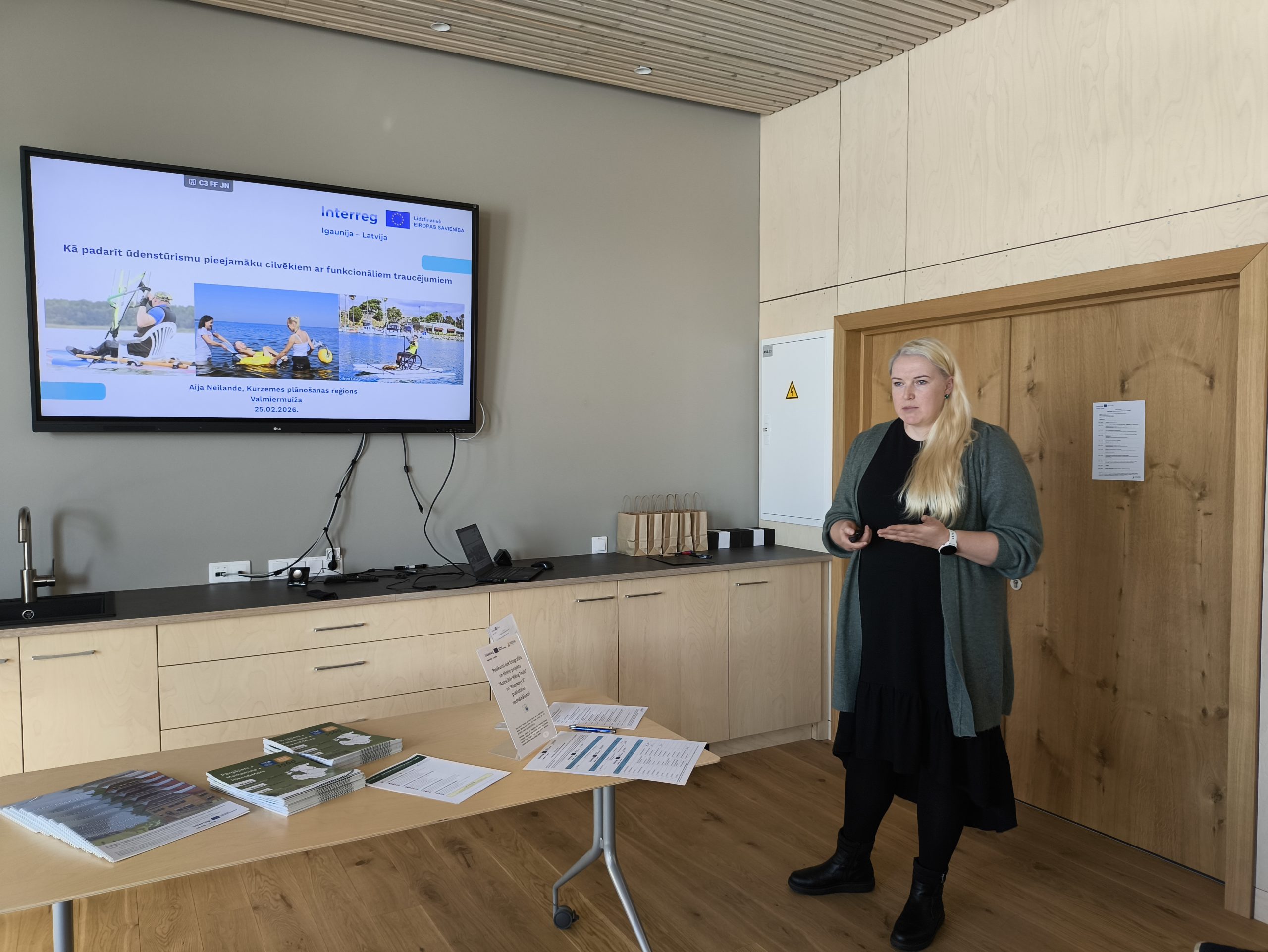
Aija Neilande, project manager for the Kurzeme Planning Region, presented good-practice examples to make water tourism more accessible to people with functional impairments. The presentation explored various solutions for improving access to water and ensuring opportunities for people with mobility impairments to participate in different water activities, including canoeing and using SUP boards
The lecturer not only presented good practice examples – such as adapted piers, mechanisms that help people get into watercraft, and other solutions already tested elsewhere in Europe, for example in Finland – but also emphasized that these solutions can be adapted to the specific needs of each location. She encouraged everyone to be creative and to look for the approaches that best address accessibility issues in each individual case.
Experiences of tourism entrepreneurs and travelers
Māris Olte, owner of “Ērgļu stacija,” spoke about creating accessible recreational activities near water and shared his experience in organizing inclusive activities in nature. He emphasized that it is important not only to adapt infrastructure but also to design activities so that people with different abilities can participate together. Māris Olte noted that often it is enough to simply provide the basics – an idea, an opportunity, or tools (for example, fishing rods and instructions on how to use them) – and people will create an adventure that suits them best. The speaker also highlighted the importance of communication when working with different tourist target groups.
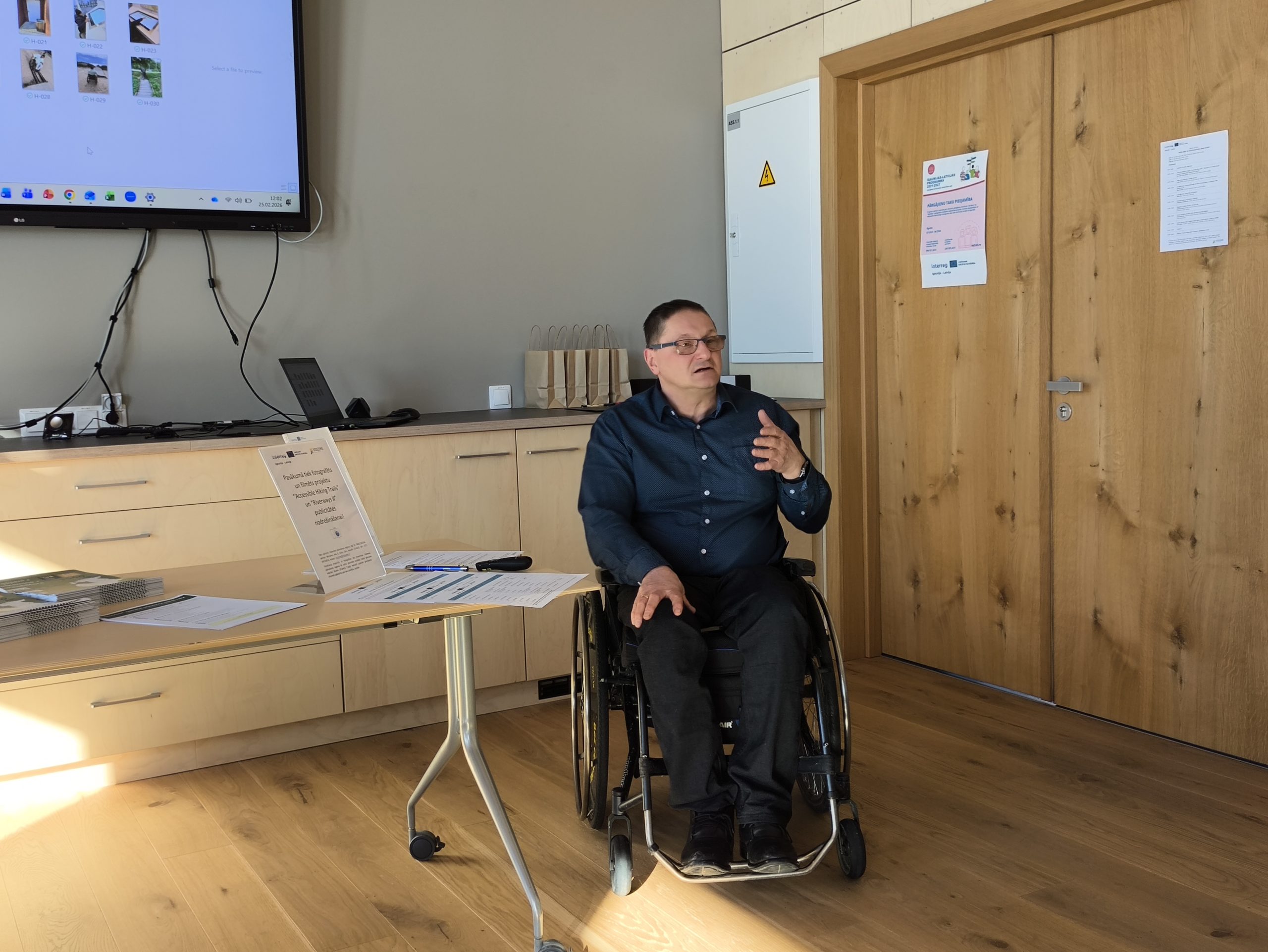
Meanwhile, traveler Aleksandrs Jevdokimovs, who uses a wheelchair, shared his personal experience of environmental accessibility not only in Latvia but also abroad. He drew attention to practical details that often determine whether infrastructure is actually usable for people with mobility impairments. Using photographs, he clearly demonstrated that formal compliance with requirements does not always make a solution practically usable. The most common difficulties for wheelchair users are surface types in parking areas and elsewhere (small stones, long grass, sand, gravel, paving stones, etc.), ramp slopes that are too steep, thresholds and curbs, and the equipment in sanitary facilities.
Hiking in nature with children
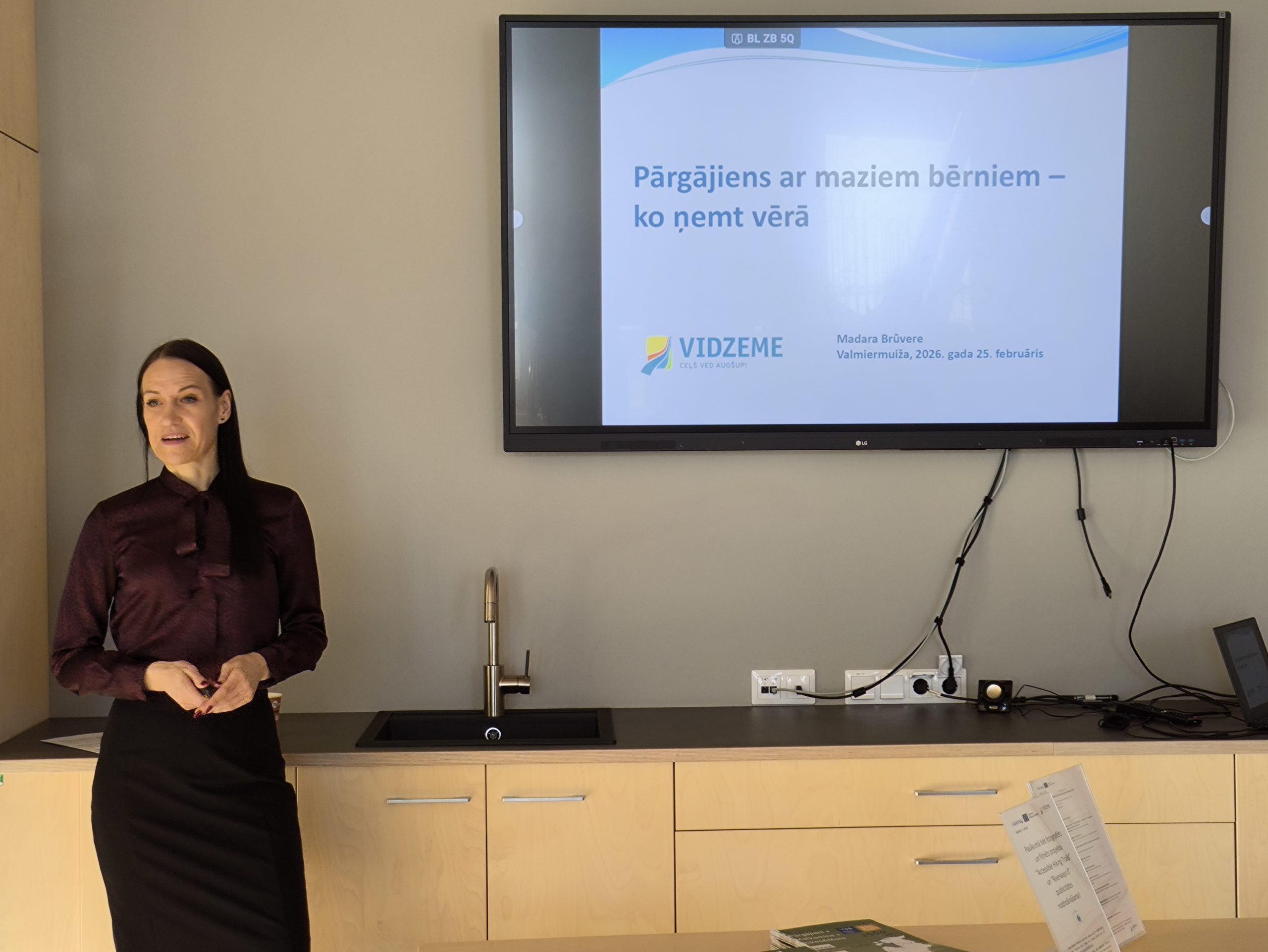
Madara Brūvere, Conference Department Manager at the travel agency “Estravel Latvia,” spoke about planning hikes for families with young children, emphasizing that one of the most important aspects is the ability to move along the route with a stroller. On many nature trails, the main challenges are narrow boardwalks, unstable surfaces, or sections where it is difficult to pass other visitors. Therefore, clear information about trail suitability in different weather conditions is especially important, for example, whether it is passable with a stroller, whether the trail becomes muddy in spring and autumn, and whether alternative ways of getting around (such as sleds) can be used in winter. She emphasized that it is important for tourism service providers not only to warn about limitations but also to offer alternatives, which help families better plan their outdoor activities.
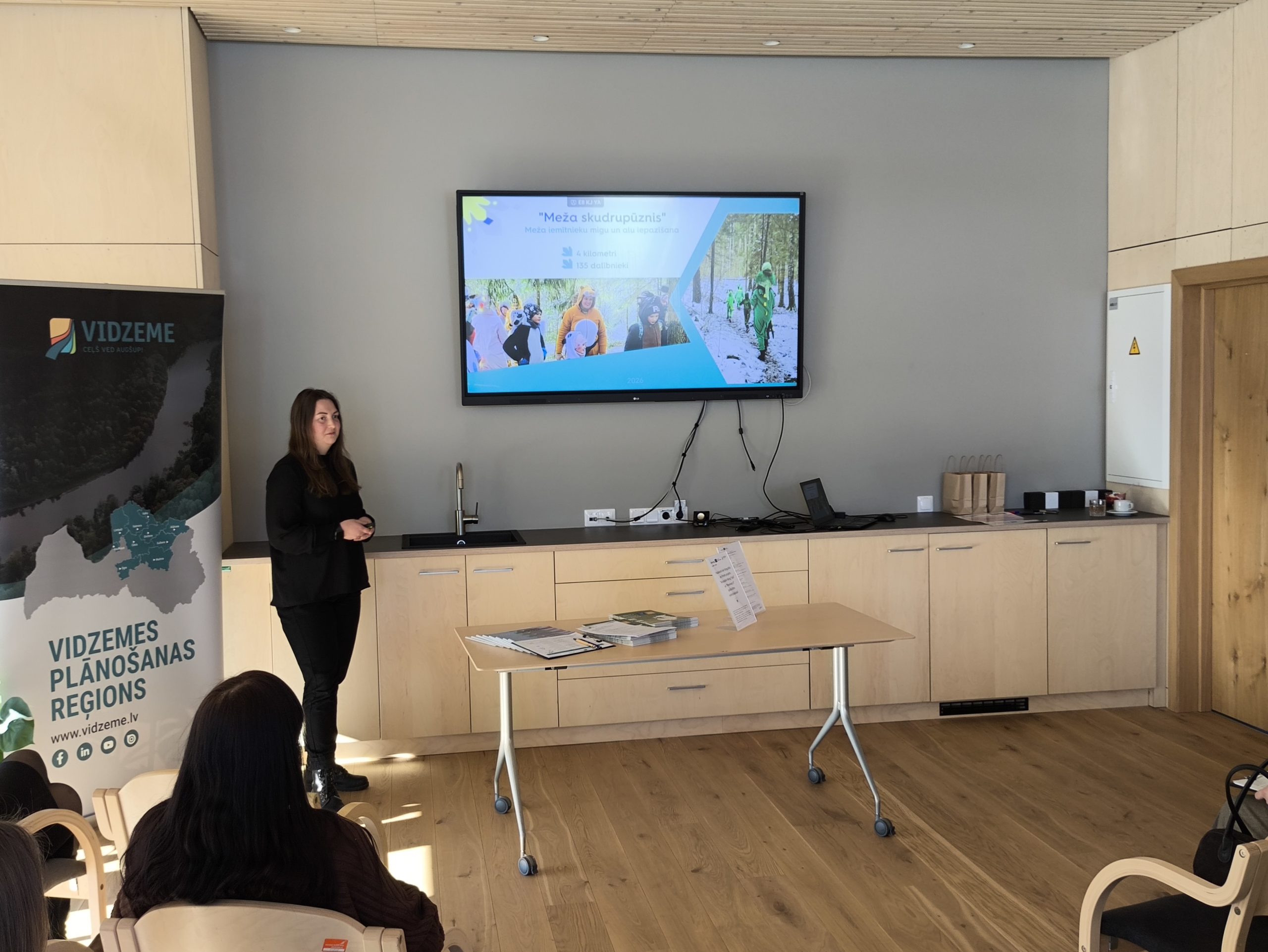
Meanwhile, Rūta Brakovska, Tourism Work Organizer at the Entrepreneurship and Tourism Department of Smiltene Municipality, shared her experience in organizing family-friendly hikes in Smiltene Municipality, particularly when working with groups of children. She emphasized that for children, both spending time together and the educational aspect are very important during hikes, so nature activities should be engaging and adapted to children’s perception. In practice, simple organizational solutions also work well, for example, the possibility to transport tired participants back from the more distant points of the hiking route, as well as various simple methods that help the group move safely and stay together. Such solutions help make nature hikes more accessible and enjoyable for younger participants.
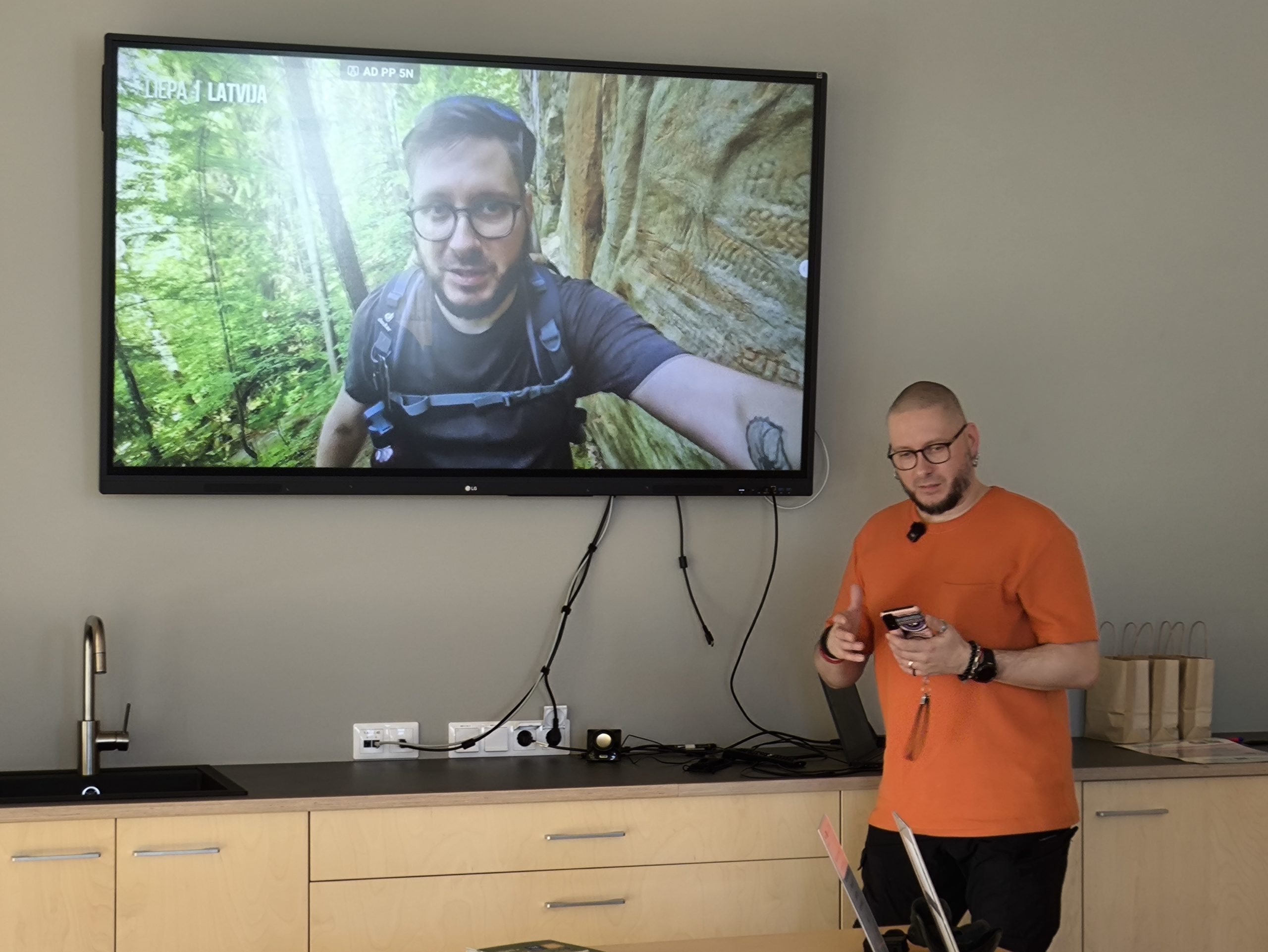
Traveler and “Ervīna Video Blogs” author Ervīns Elliņš also spoke about his experience of hiking and traveling with children. Together with his family, he actively travels both in Latvia and abroad. He shared how his family plans hikes and what solutions help make these activities more comfortable and accessible. While traveling in different countries, Ervīns has noticed several good examples of infrastructure and information accessibility, such as well-designed rest areas, clear signage, opportunities to conveniently stop and rest along the way, and other solutions that make nature hikes more pleasant and accessible for families. The speaker emphasized that many of these practices could be relatively easily adopted in Latvia. At the same time, he described situations where plans did not work out in practice, highlighting the importance of careful planning for hikes and trips and the need to keep the daily schedule flexible.
During the seminar, it was repeatedly emphasized that when planning and implementing accessibility solutions in nature tourism, it is very important to involve the target groups. The speakers encouraged infrastructure planners and tourism service providers to actively consult with the people who will use these solutions in practice – people with disabilities, wheelchair users, seniors, and families with young children. Such dialogue helps to better understand real needs and ensures that the planned solutions are truly functional, convenient to use, and beneficial for as wide a segment of society as possible.
At the end of the seminar, participants tested their knowledge in the quiz “Together on Trails, Rivers and Lakes”, and continued discussions and exchanging experiences.
The event was organized within the framework of Vidzeme Innovation Week 2026, with support from the Interreg Estonia–Latvia Programme projects “Accessible Hiking Trails” and “Riverways II.”