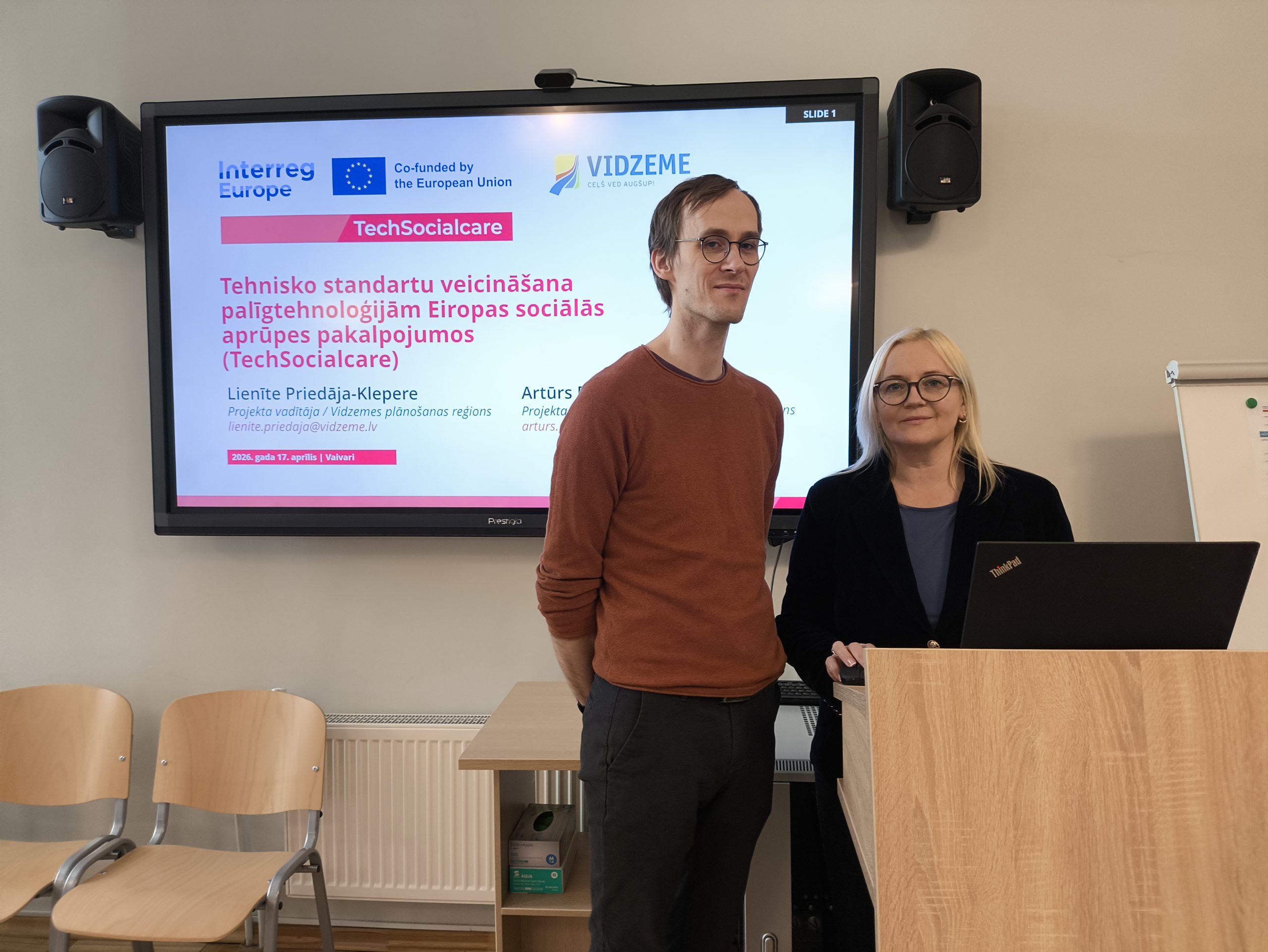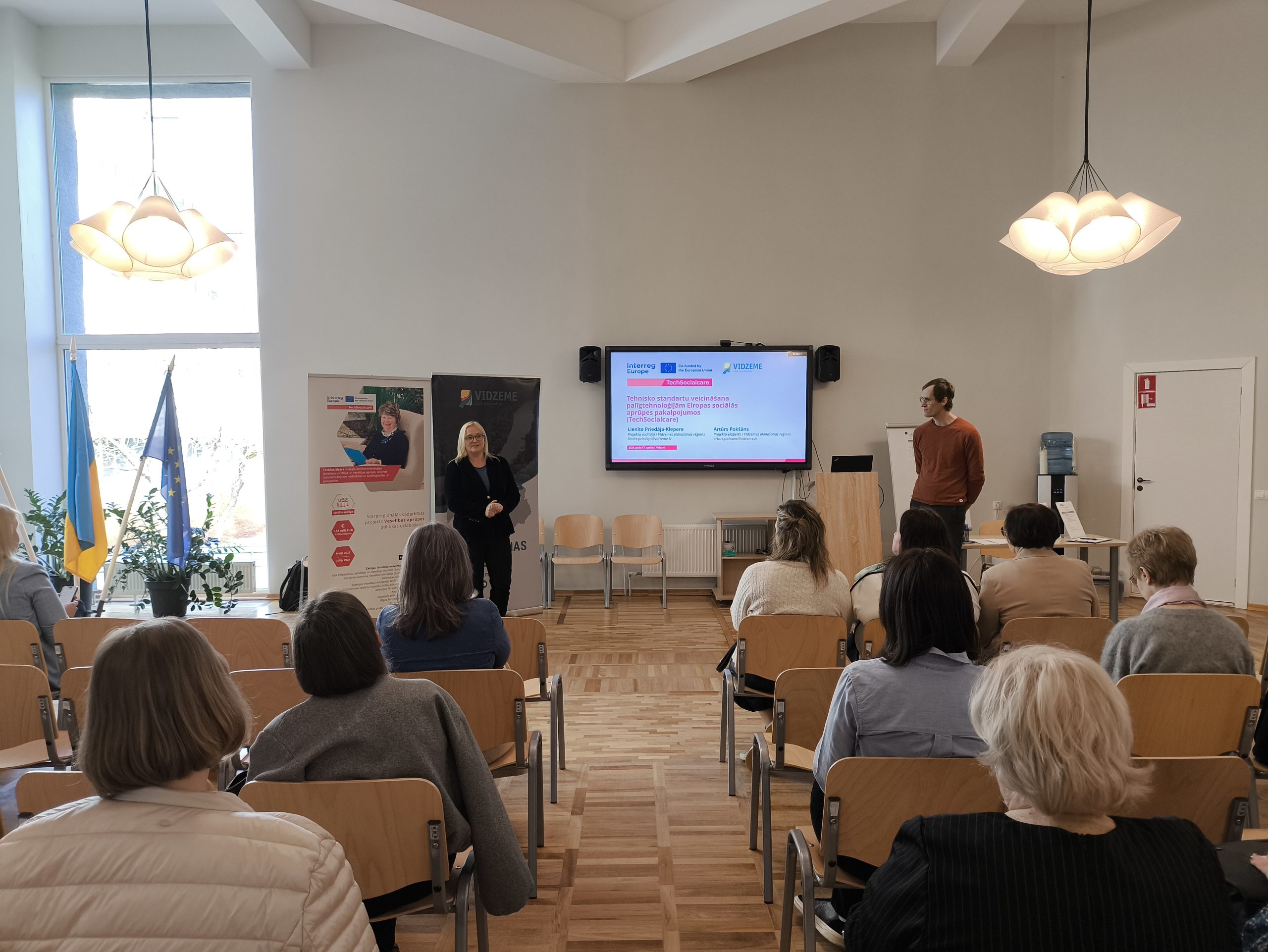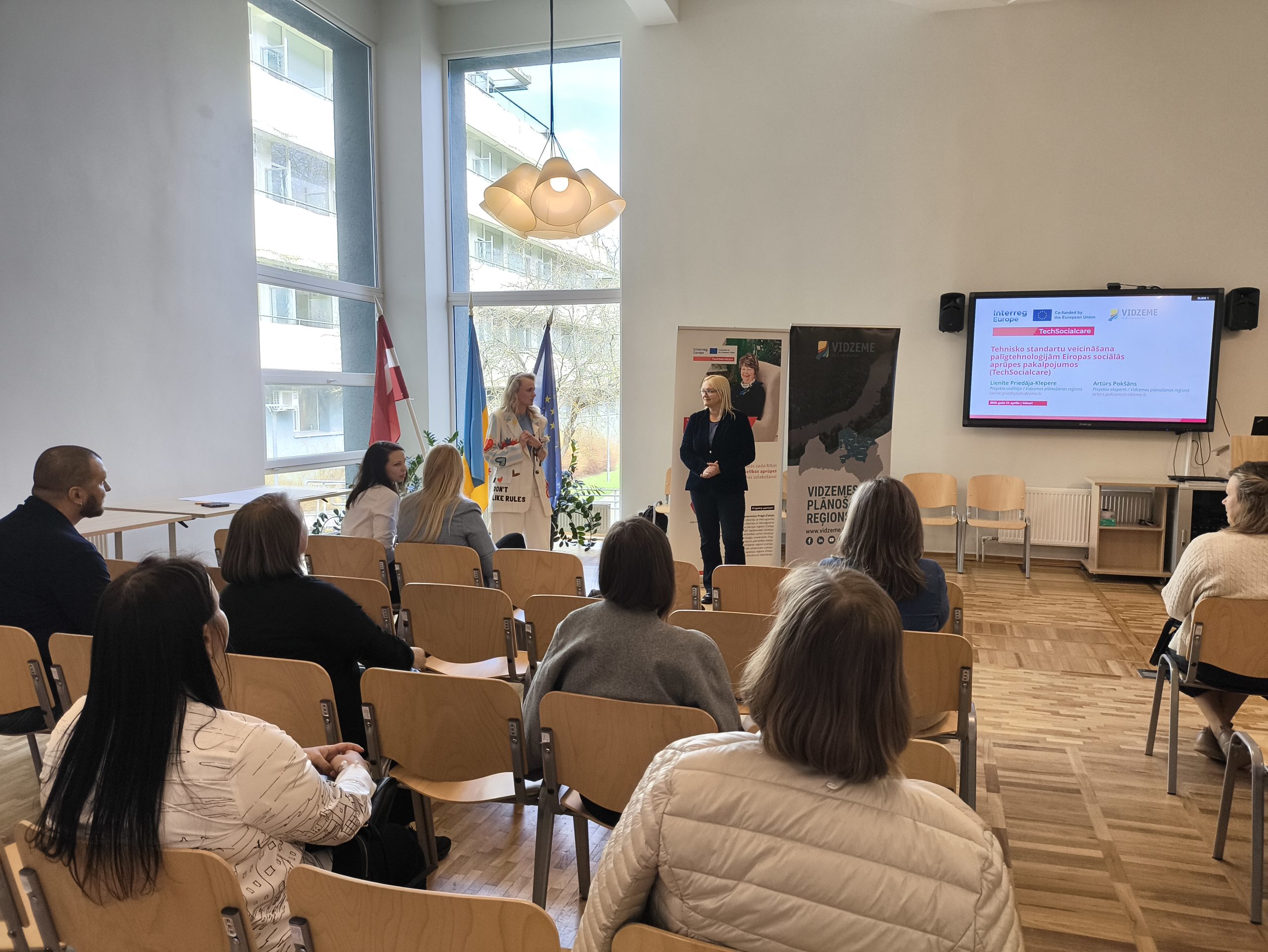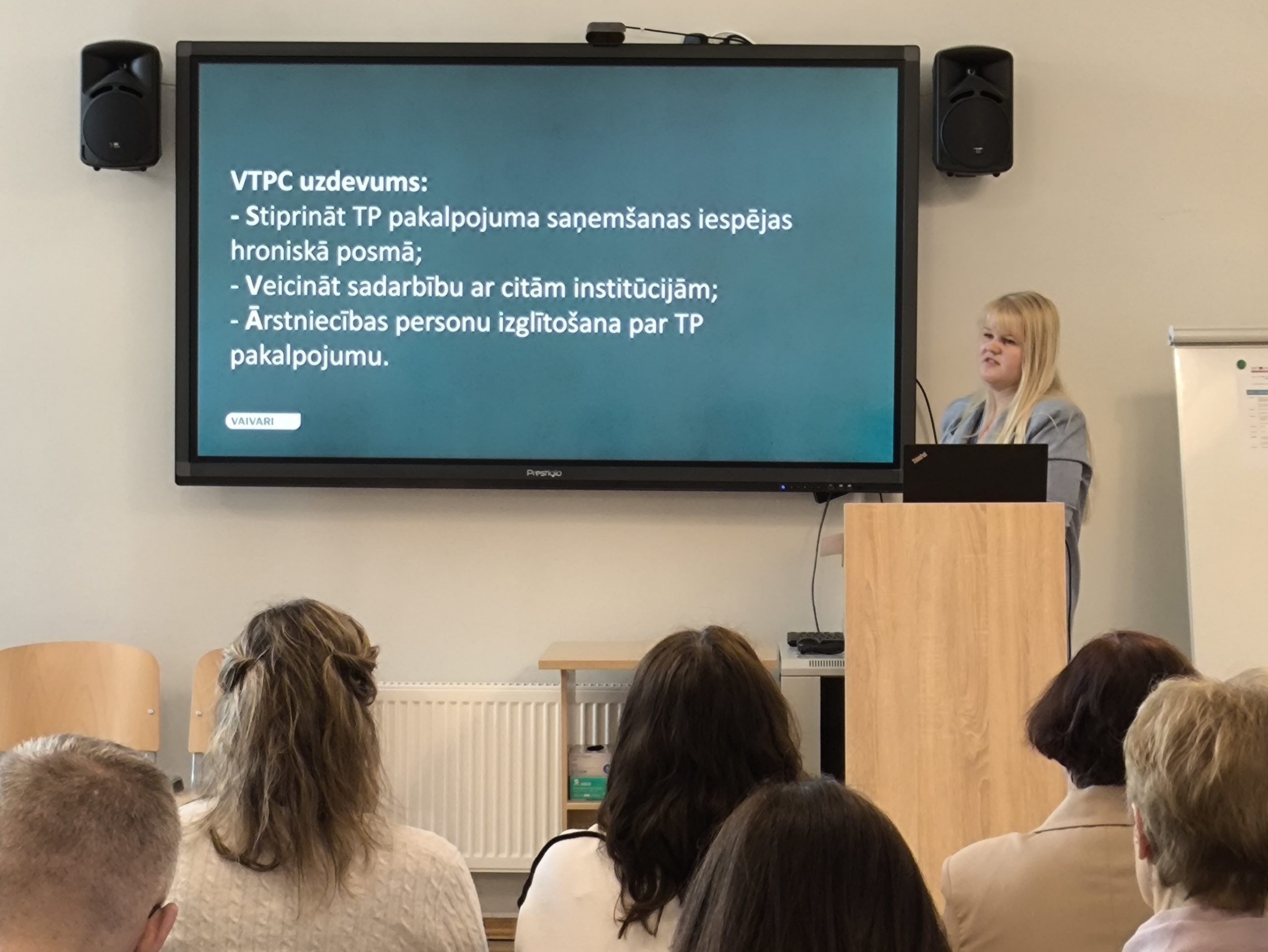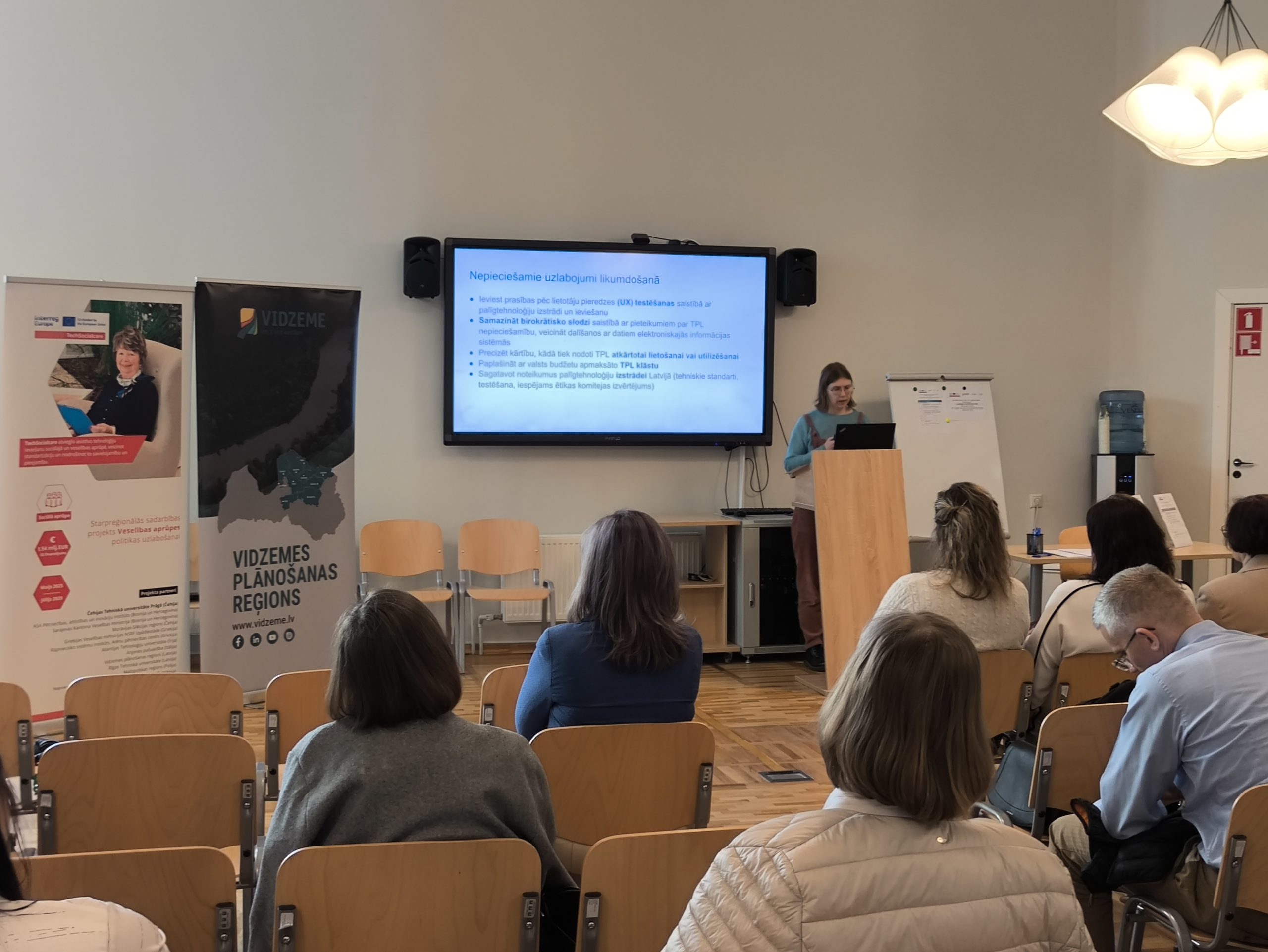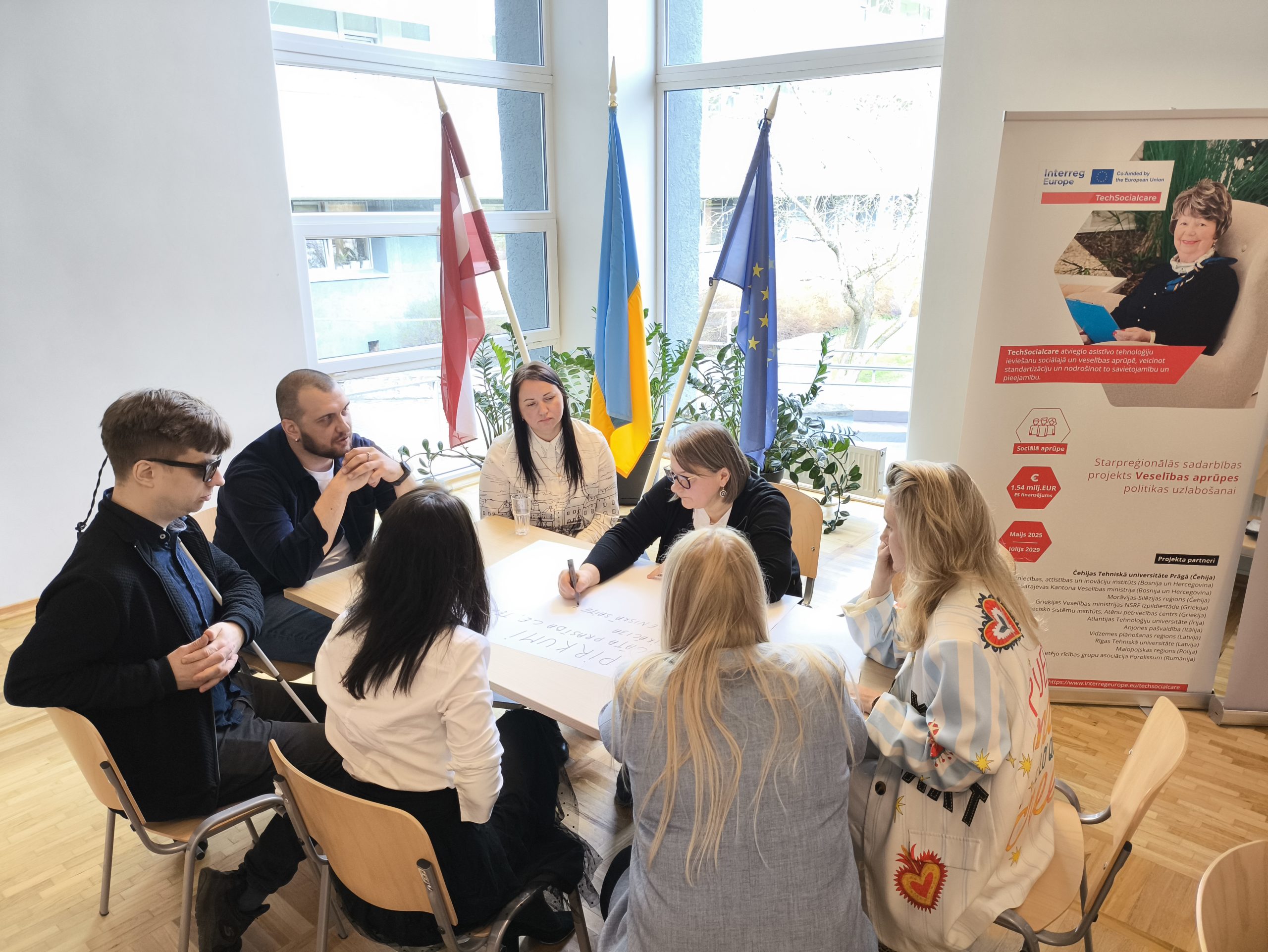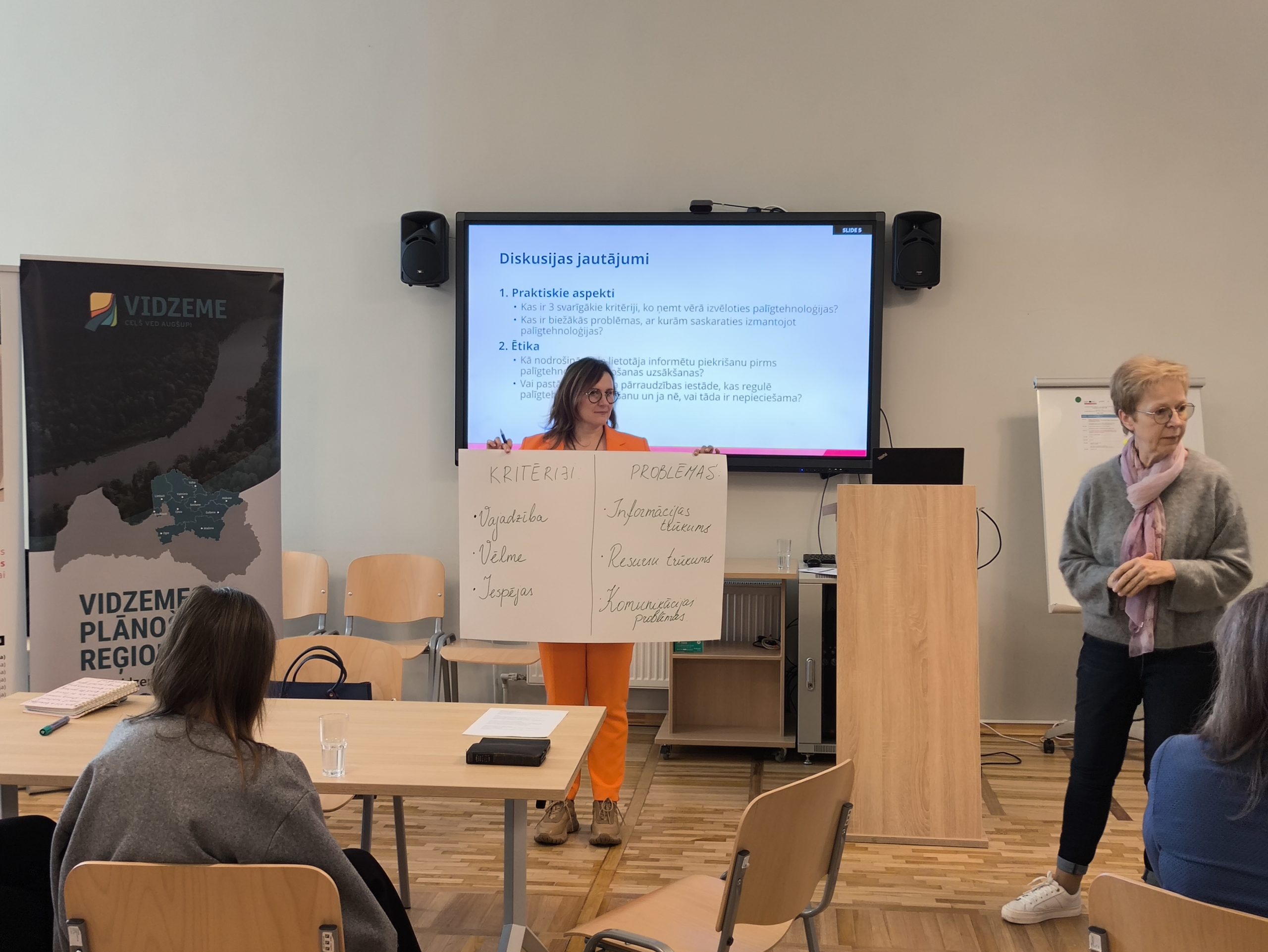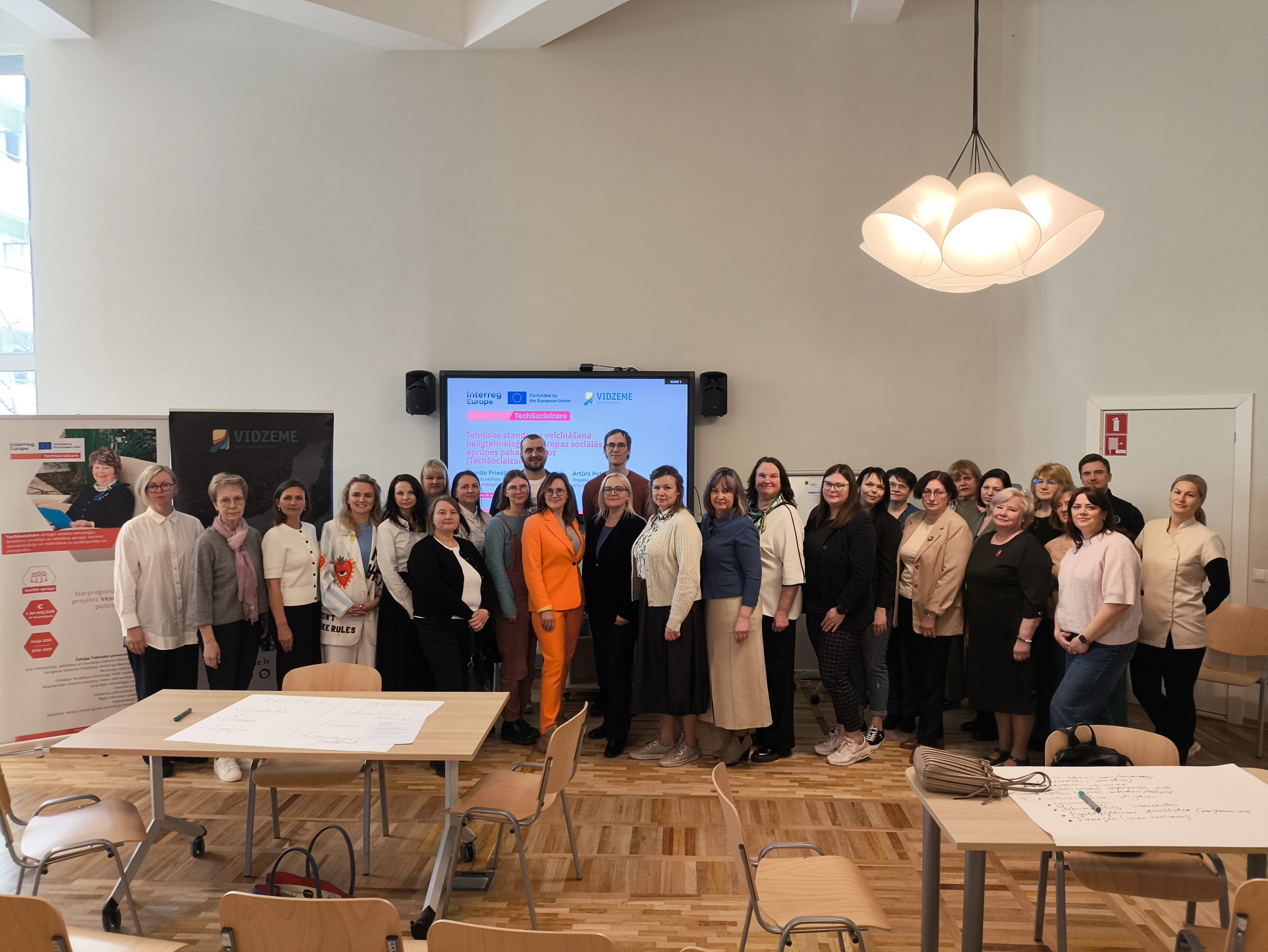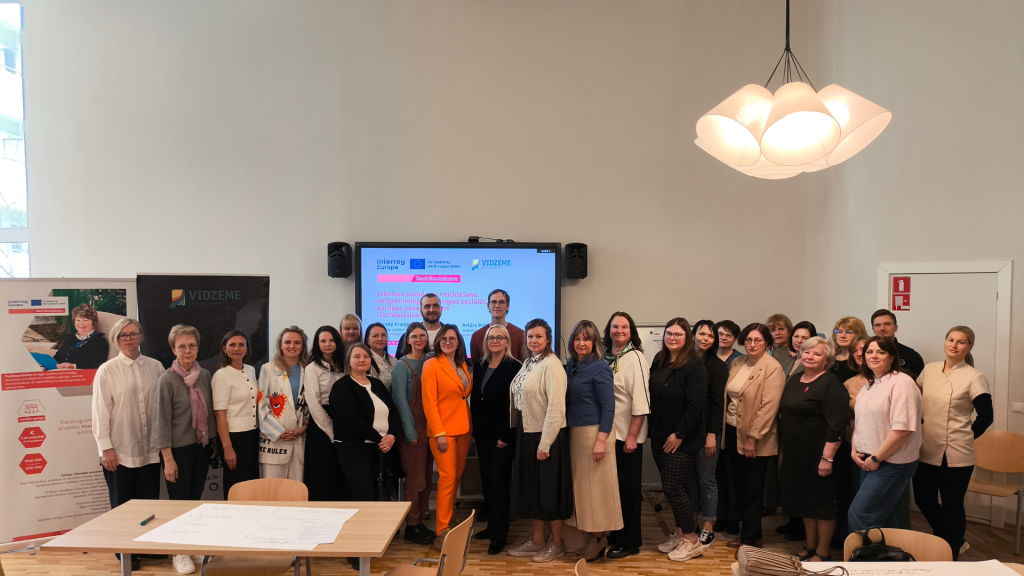
On 17 April, the Vidzeme Planning Region (VPR) organised the second TechSocialcare stakeholder meeting at the National Rehabilitation Centre (NRC) “Vaivari” in Jūrmala, Latvia. The event brought together representatives from national institutions, local governments, social service providers, care homes, patient organisations, and academia, reflecting the project’s commitment to multi-level governance and cross-sector collaboration.
Policy analysis points to systemic gaps
A key focus of the meeting was the presentation of a policy analysis report on assistive technology (AT) in Latvian social and health care. The report identifies several systemic gaps requiring legislative attention, including the need to reduce bureaucratic barriers in AT application processes, expand the range of state-funded devices, and develop technical standards and testing requirements for AT in Latvia. It also calls for stronger AT integration in public environments and clearer delineation between devices that support social inclusion and those that sustain vital medical functions.
The report highlights that many devices go unused after distribution due to insufficient follow-up, pointing to the need for repeated consultations and more targeted service delivery. It also notes that software for many technologies is unavailable in Latvian, underlining the importance of intermediaries between the medical and technology sectors.
Structural challenges in AT provision
Representatives from the Vaivari Technical Aids Centre outlined current operational challenges, including growing demand – over 22,000 devices were issued last year – against insufficient funding. Participants identified a clear gap in AT provision during the acute and sub-acute care phases, with no defined responsibility assigned to hospitals, municipalities, or the centre. A structured dialogue with the Ministry of Health, local governments, and social service providers was identified as a necessary next step.
Co-creation workshop and policy matrix
The meeting also featured a co-creation workshop covering four thematic areas aligned with TechSocialcare’s core objectives: practical aspects of AT use, ethics, procurement and maintenance, and safety, accessibility and ergonomics. A policy matrix developed within the project was also presented. The findings from both the report and the workshop will feed into policy-level recommendations applicable across all TechSocialcare partner countries.
About TechSocialcare
The project “Promoting Technical Standards for Assistive Technology in European Social care services” (TechSocialcare) is implemented under the Interreg Europe programme (2021–2027). It aims to engage national authorities, local governments, and social care providers in developing a unified legal framework and establishing baseline requirements and standards – including ergonomics, open communication, and usability – for ICT tools and assistive technologies in social and health care.