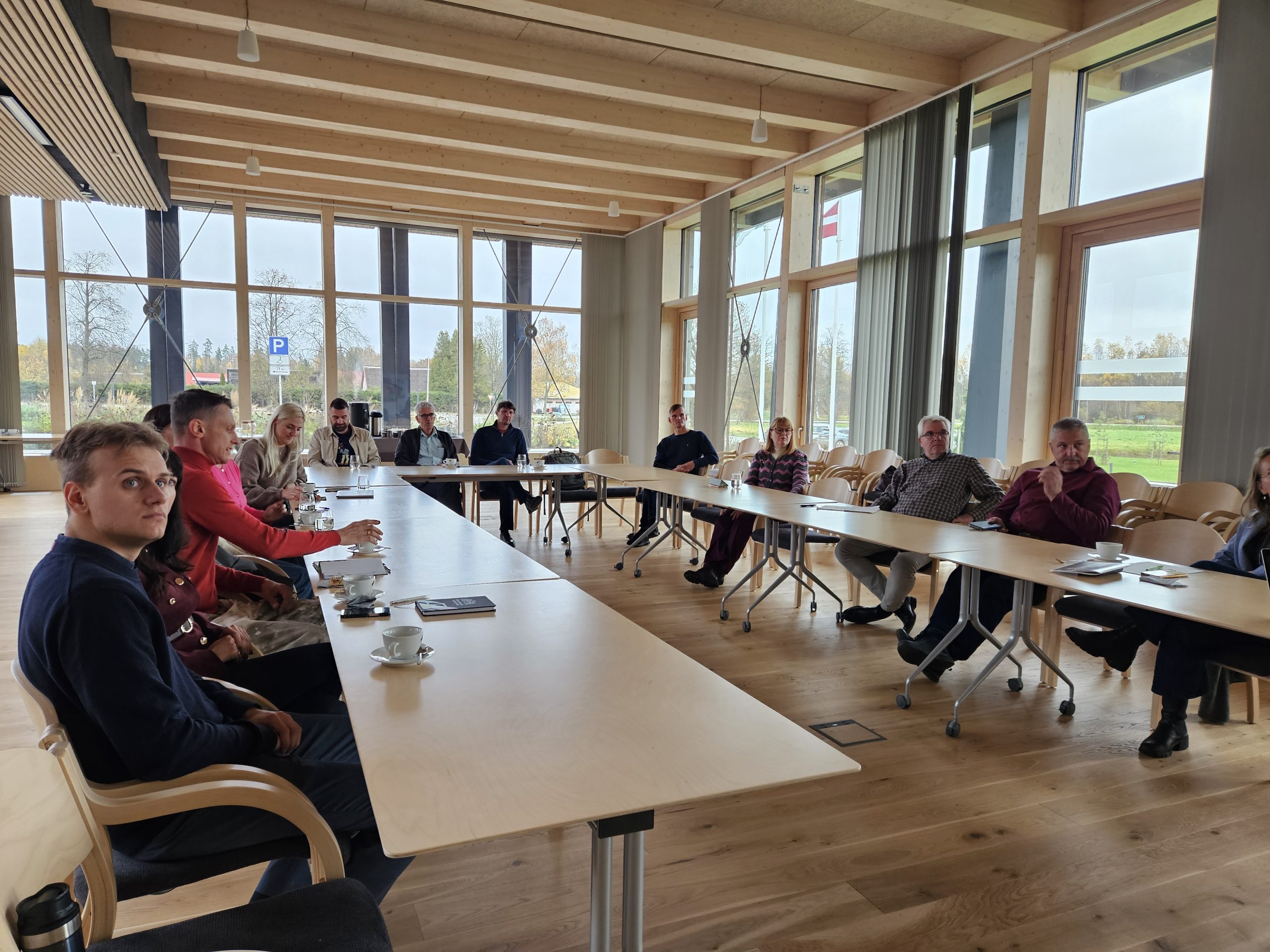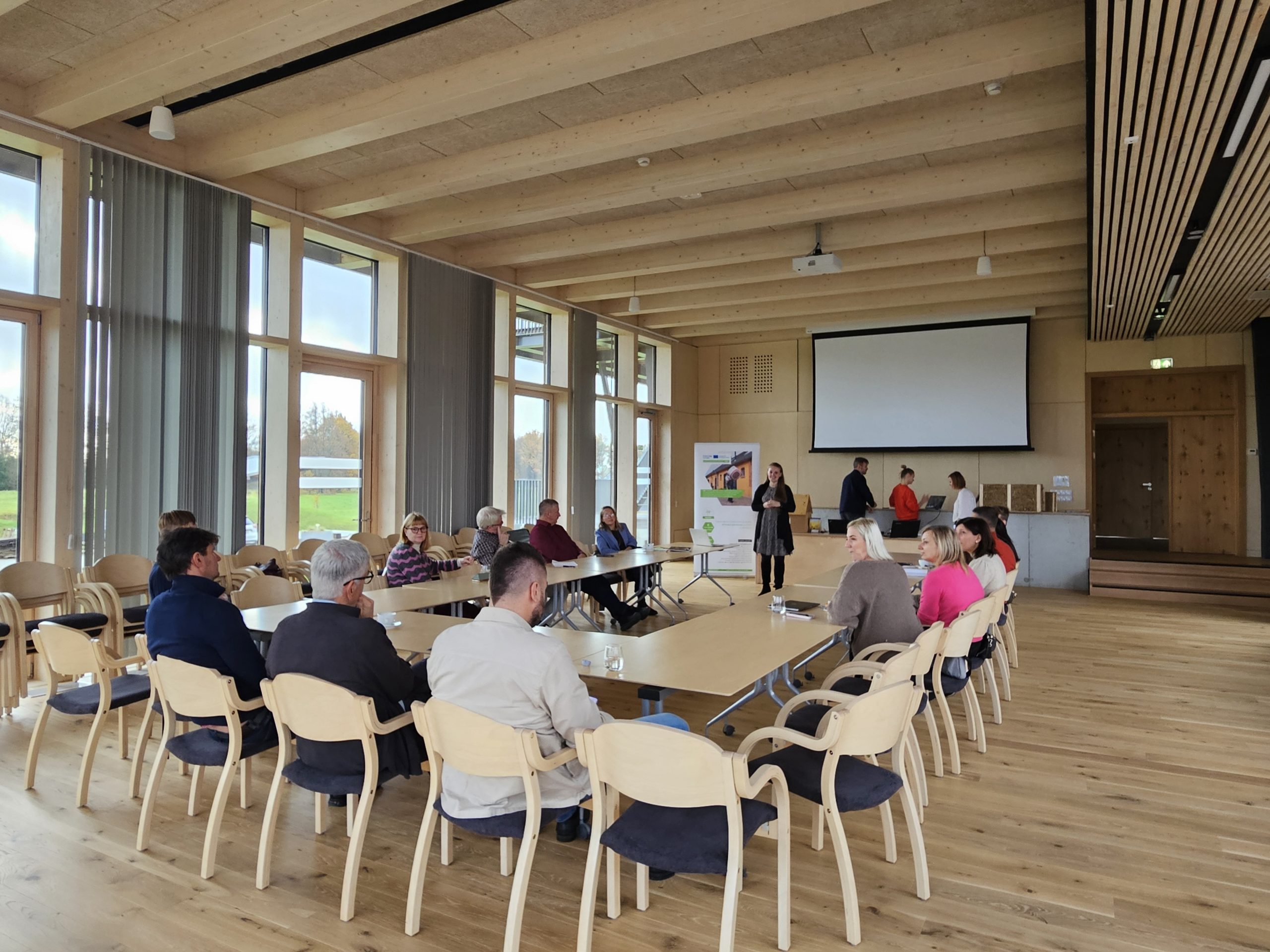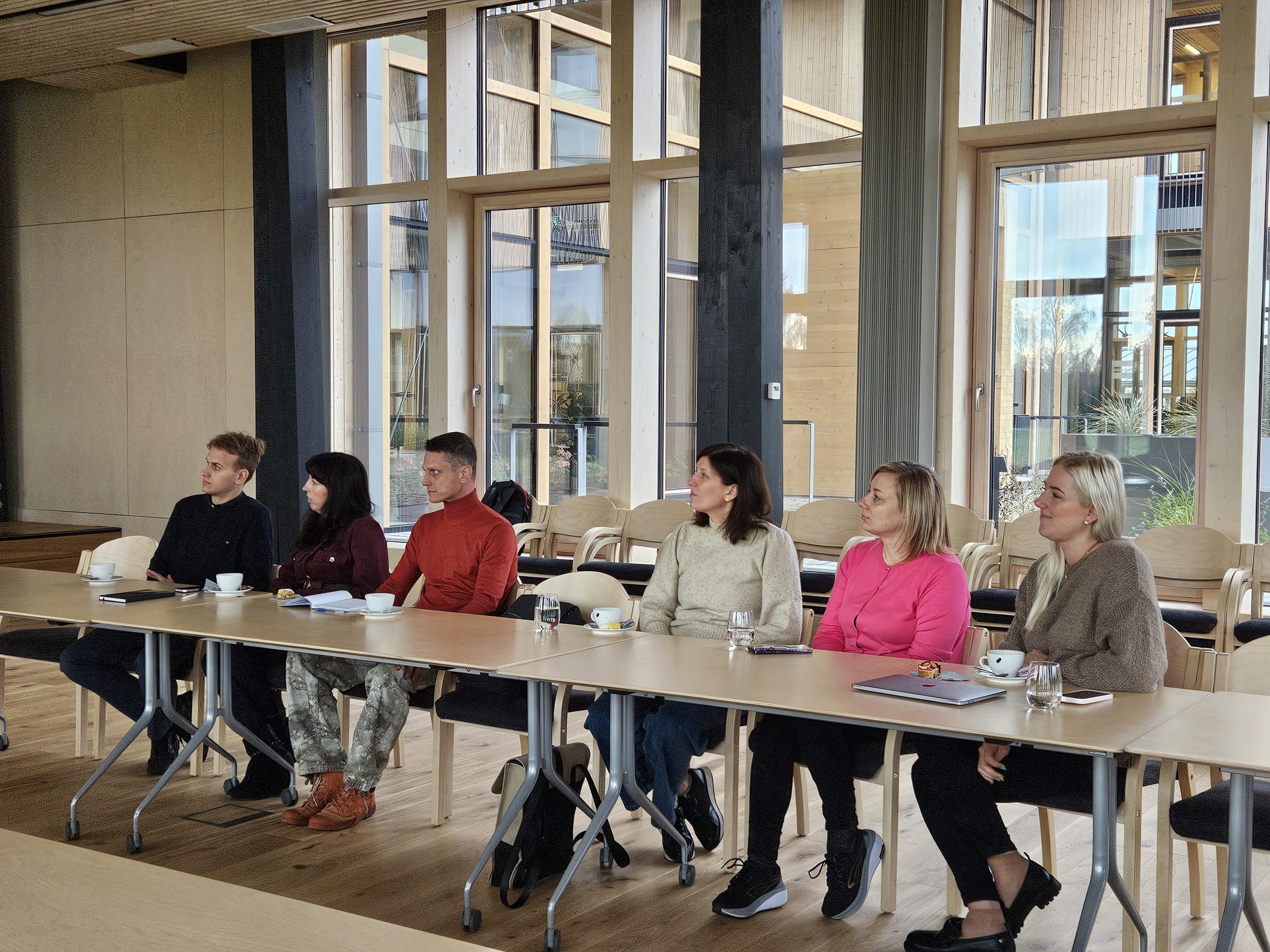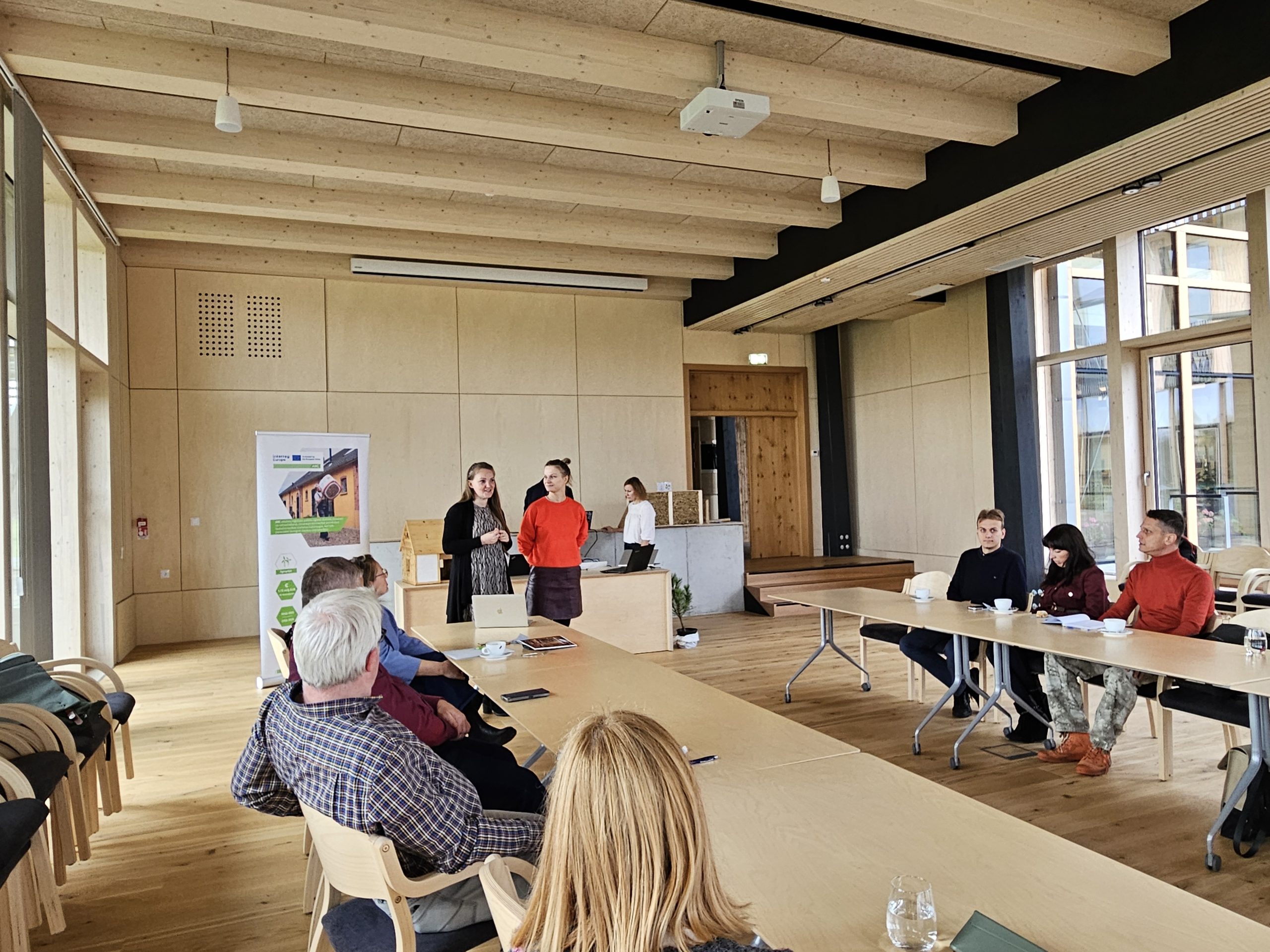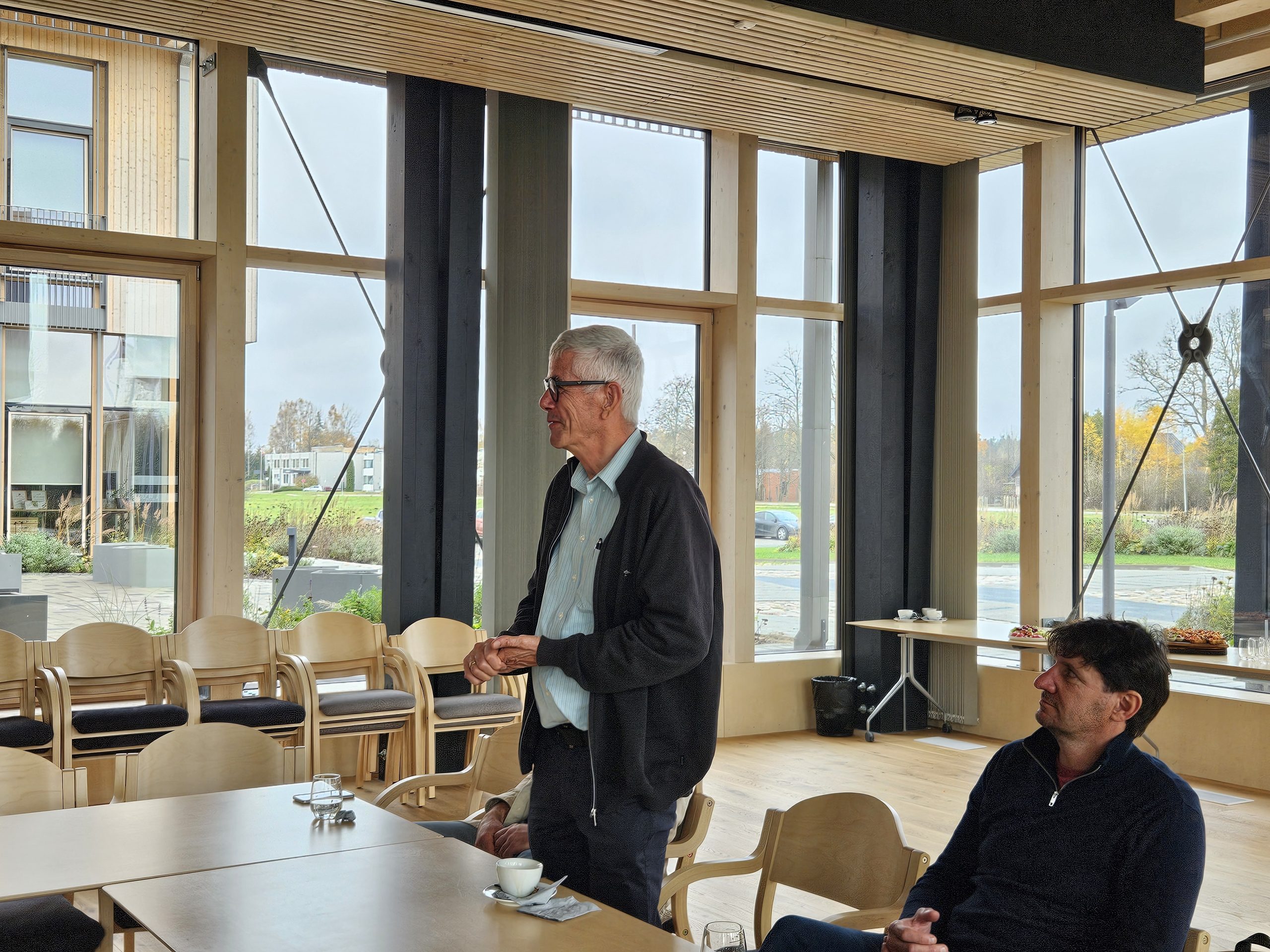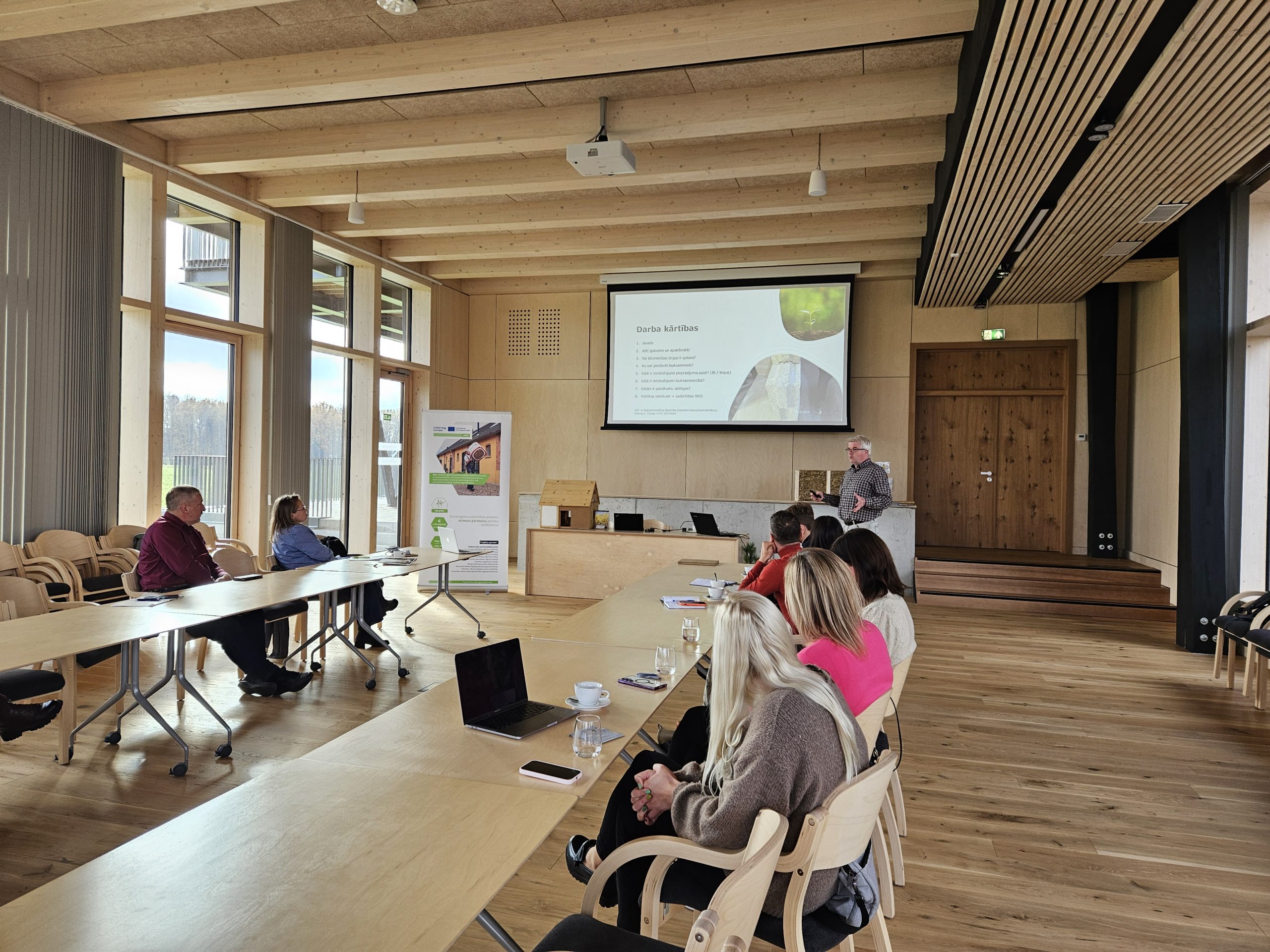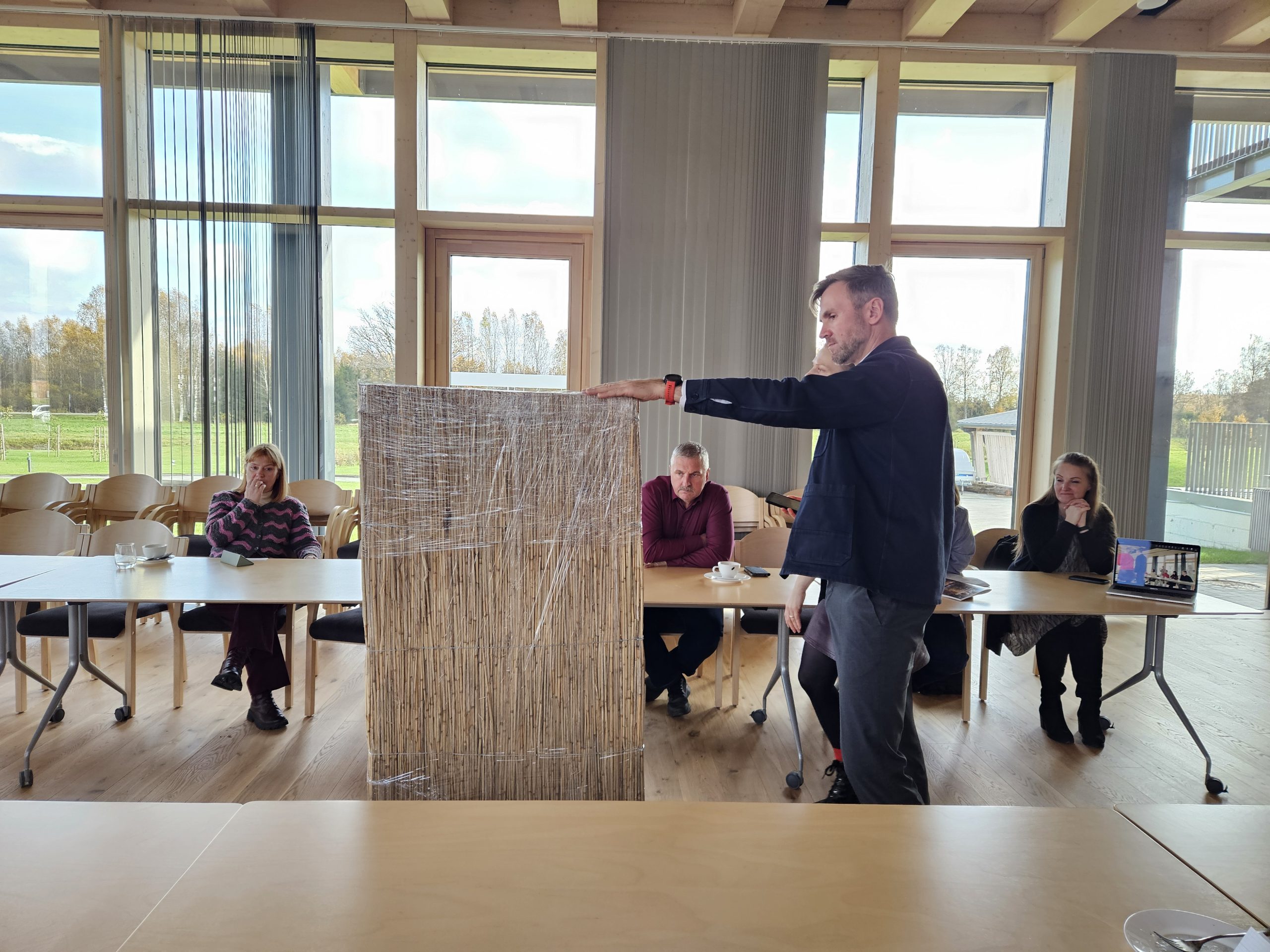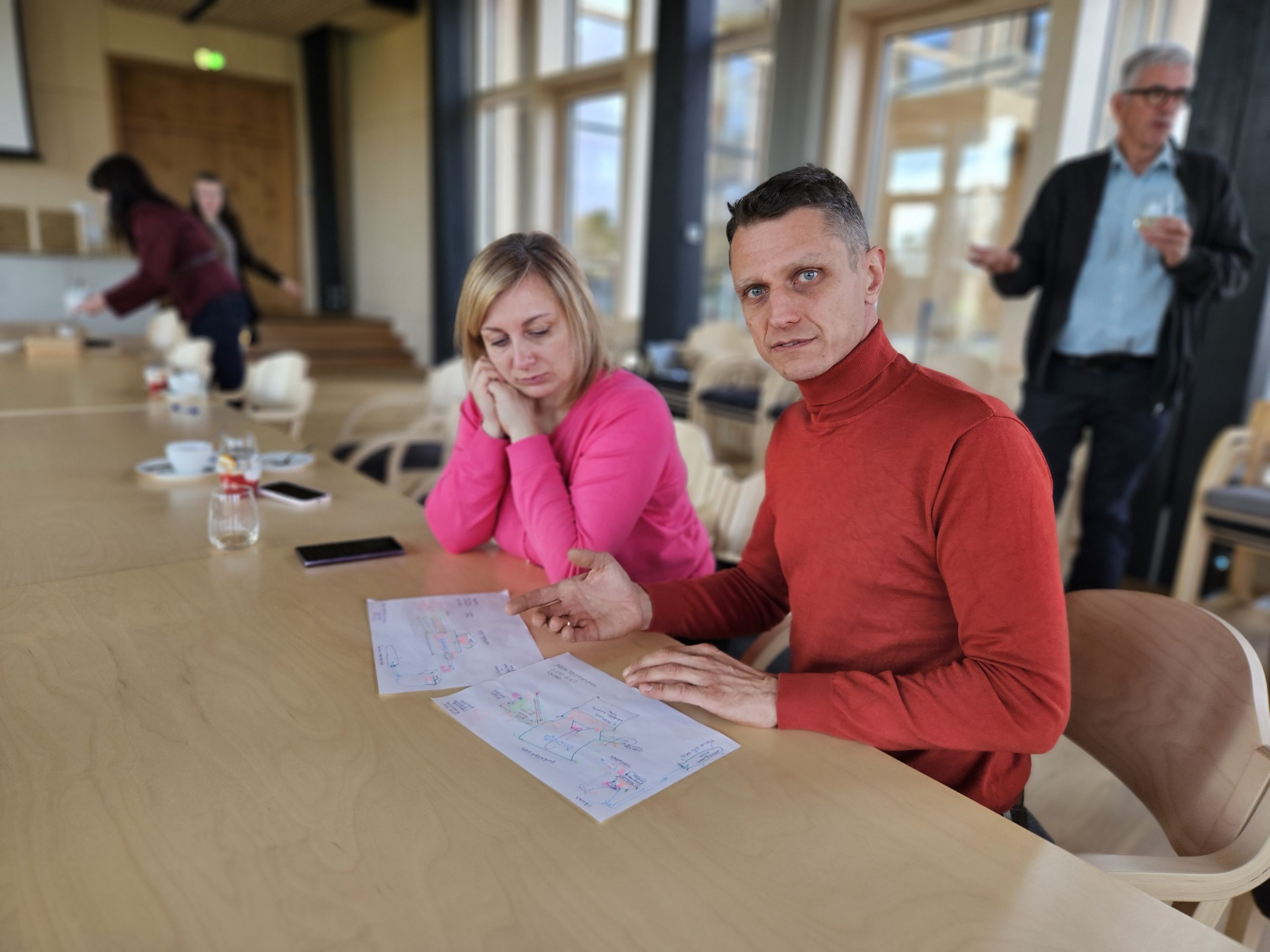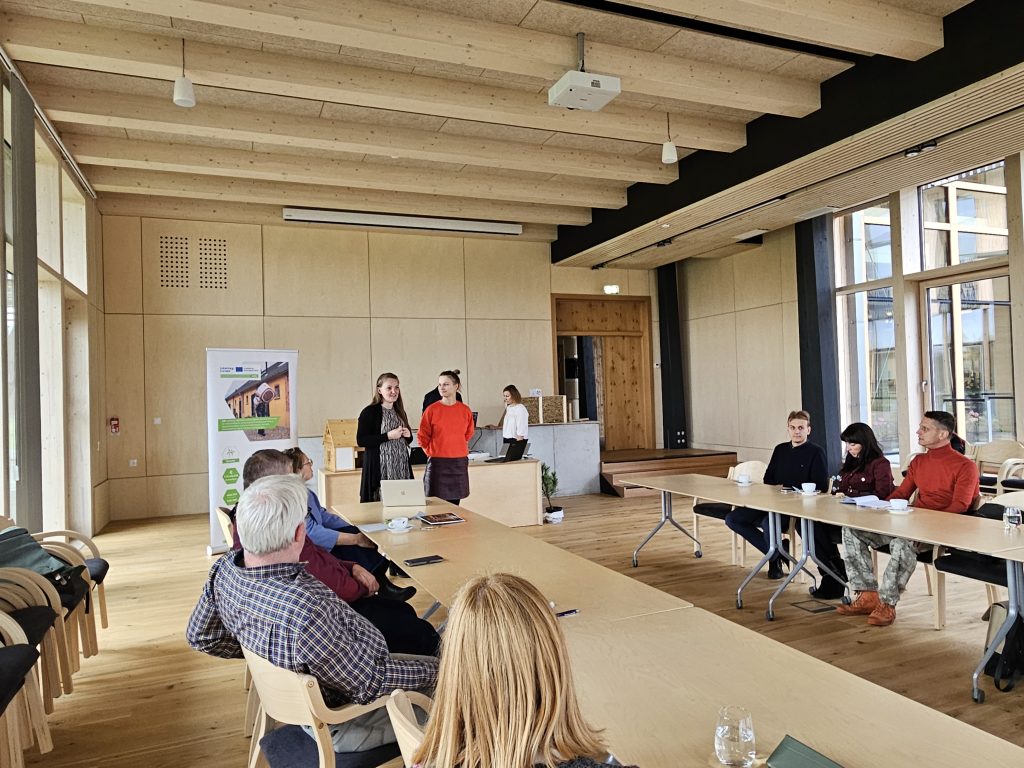
On October 28 in Valmiera, at the Rietumvidzeme Regional Client Centre of LVM, the Vidzeme Planning Region, in cooperation with the New Building School (JBS), organized the second stakeholder meeting of the project “Agro Building Carbon (ABC)”.
During the meeting, experts, entrepreneurs, and researchers discussed the potential and challenges of using agricultural-based building materials.
At the beginning of the meeting Inguna Kucina, Project Manager at the Vidzeme Planning Region and Gunita Ķiesnere, Head of the New Building School at Vidzeme University of Applied Sciences, presented the project’s overall objectives and the role of each partner, emphasizing the need to strengthen cooperation between researchers, farmers, and construction industry companies. During the meeting, participants agreed that such stakeholder sessions should take place at least once or twice per semester (every six months) to ensure regular information exchange and joint problem-solving. It was also recalled that the first project event in Riga brought together industry representatives in a broader format, demonstrating growing interest in agricultural-based building materials. This time, the discussions continued in a more focused group, analyzing the practical and policy prerequisites for the sector’s development.
Sustainable construction expert Jānis Butkevičs presented the latest developments related to the European Union’s climate goals and the new Energy Performance of Buildings Directive, which Member States must implement by May 2026. He emphasized that the European Commission increasingly highlights bio-based products, yet specific regulations that would facilitate their introduction to the market are still lacking.
“All the necessary prerequisites for the development of the agro construction industry in Latvia already exist – we have the knowledge, potential, and resources. However, there is a need for instruments and incentives, including solutions at the policy planning and regulatory levels,” noted Butkevičs.
He also reminded that biomaterials are not only wood, but also straw, hemp, and other crops capable of significantly reducing the construction sector’s carbon footprint by sequestering CO₂ in building structures and reducing dependence on fossil resources. Such an approach creates new economic opportunities for farmers, manufacturers, and regional development as a whole.
Ebbing Klaas Osinga presented his perspective on the development of value chains – from agriculture to building construction, emphasizing that interest in the use of hemp and straw is currently growing rapidly across Europe. He highlighted the experience of the Netherlands, where miscanthus is even used in asphalt production. According to Osinga, Latvia should introduce a similar program as soon as possible, since market trends clearly indicate a growing demand for bio-based solutions in the construction sector.
Dagnija Lazdiņa, leading researcher at the Latvian State Forest Research Institute “Silava”, acknowledged: “At the moment, we are facing a lack of system readiness – our foundation is not adapted to alternative solutions, as the necessary documentation and certification tools are not in place.” In her view, without parallel work on developing the certification process, it will be very difficult to introduce new practices in real life.
During the discussion, participants emphasized that the lack of standards is currently the biggest challenge – while such standards exist for timber materials, they are still missing for other biomaterials. However, an important question was also raised – are standards even necessary, or should new, more flexible approaches be explored instead? The participants agreed on the need for broader public and industry education to raise awareness about the potential of alternative crops – such as hemp, straw, and grasses – and their integration into construction processes. They also highlighted the importance of developing a pilot project as the next step, which would help test these ideas in practice and complete the value chain of biomaterials.
Project expert Liene Klišāne noted: “It is encouraging to see that several entrepreneurs in Latvia have already been active in the agro construction sector for years, producing building materials from hemp, straw, and reeds. Listening to the experience from the Netherlands, it becomes clear that, in many ways, we are still at the beginning of this journey. The development of the sector requires investment in companies, increased production volumes, and market growth. This process could be accelerated through public procurement by the state and municipalities, similar to how it has been done in the field of organic food for the public sector. The ABC project’s networking event is an excellent platform to identify current challenges – including those related to legislation – and to look for future solutions in agro construction. We are on the path toward a more ecological environment, both for homes and public buildings.”
At the conclusion of the meeting, Project Manager Inguna Kučina encouraged participants to continue the work that has been started and to think about initiatives at the national level: “It is important not only to discuss, but also to develop concrete proposals that would help Latvia make use of its potential in bioeconomy and sustainable construction.”