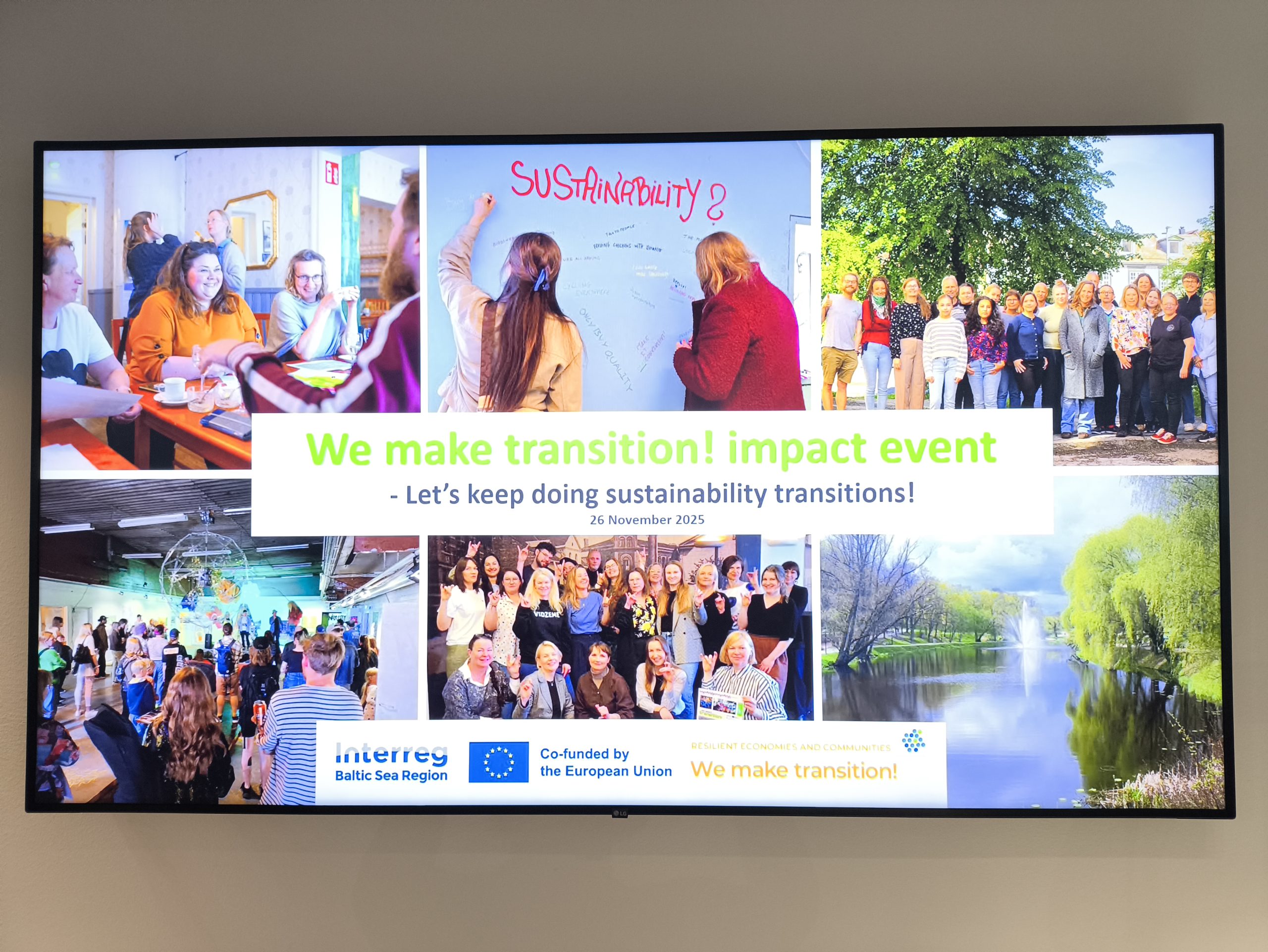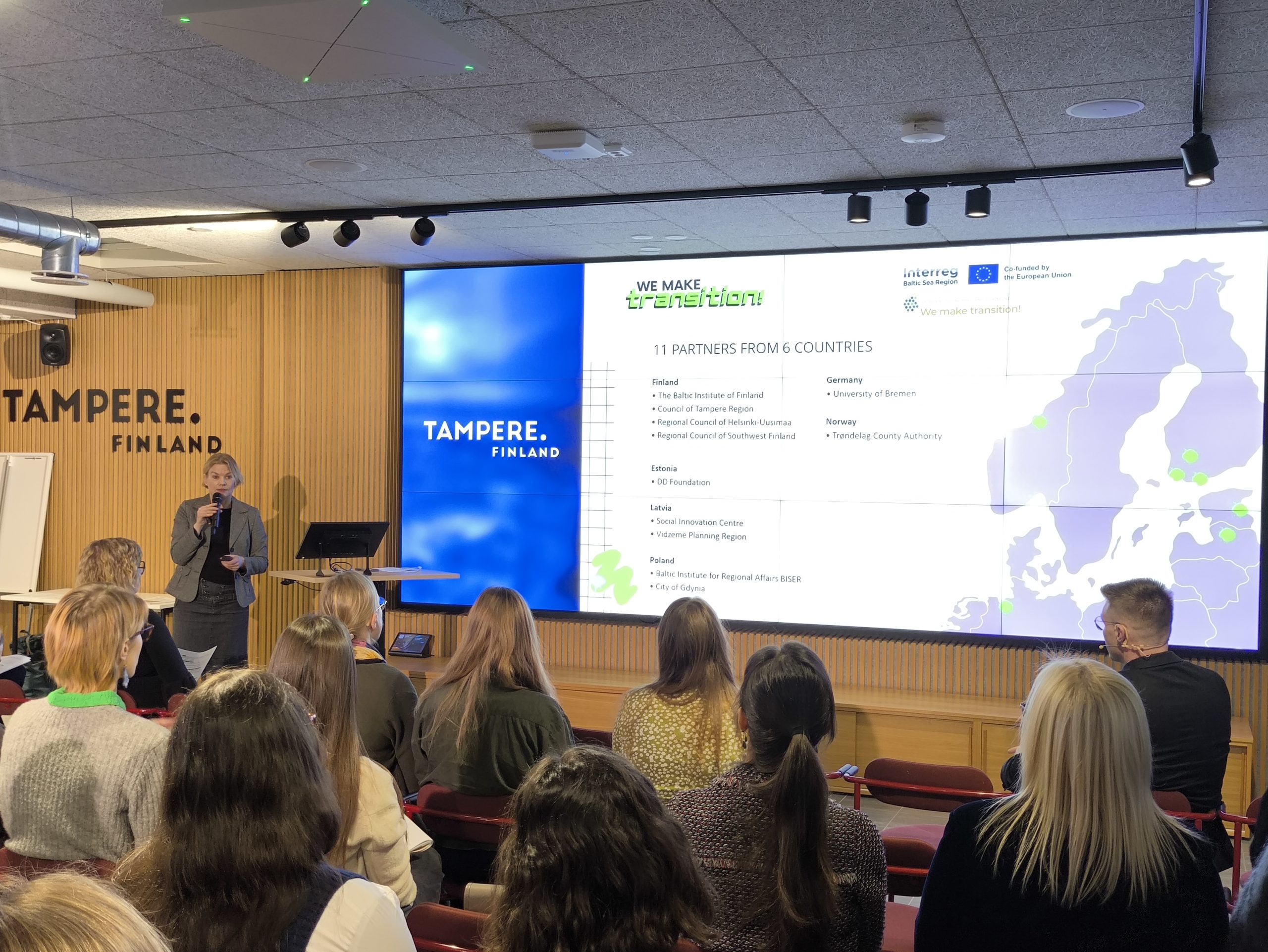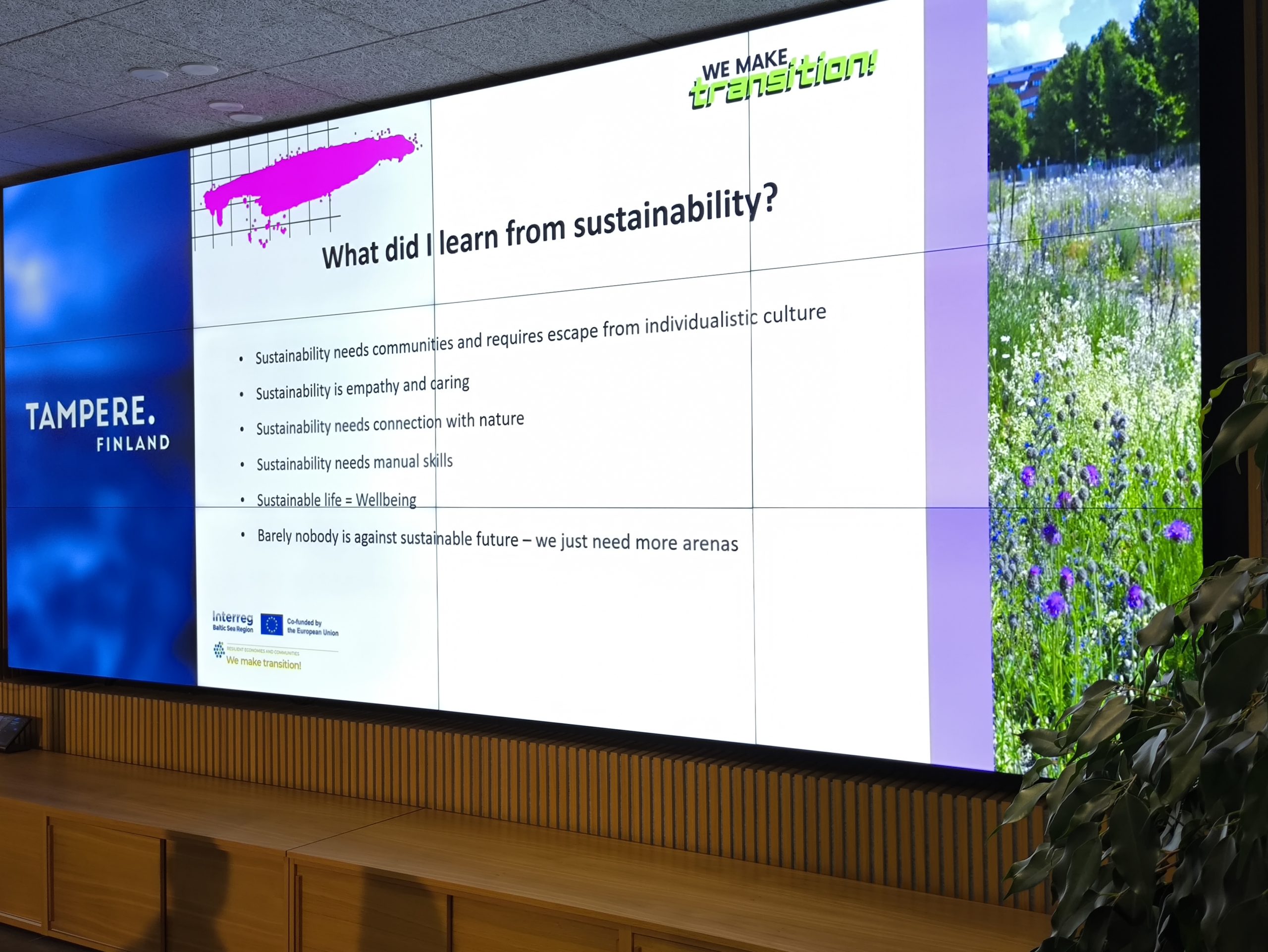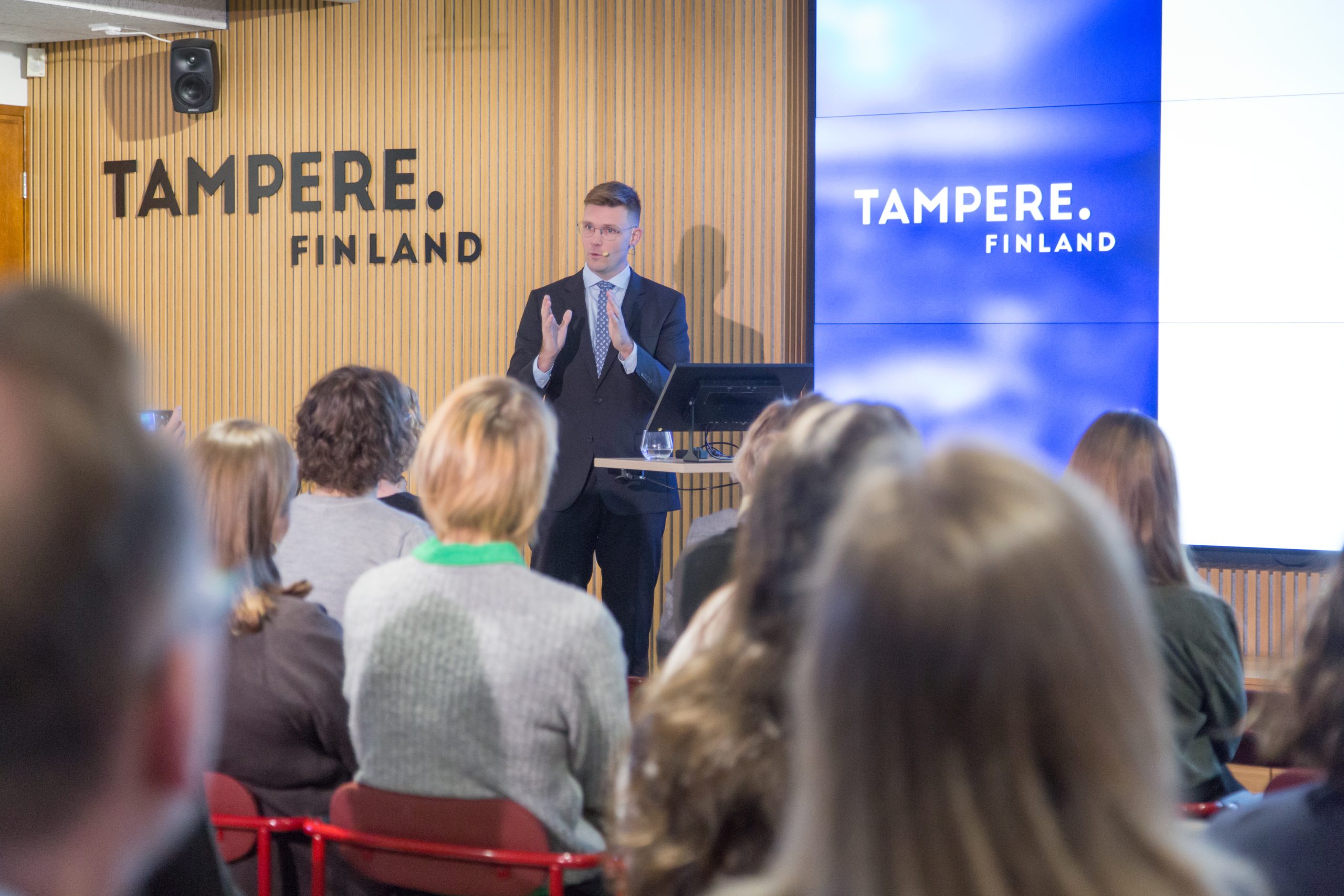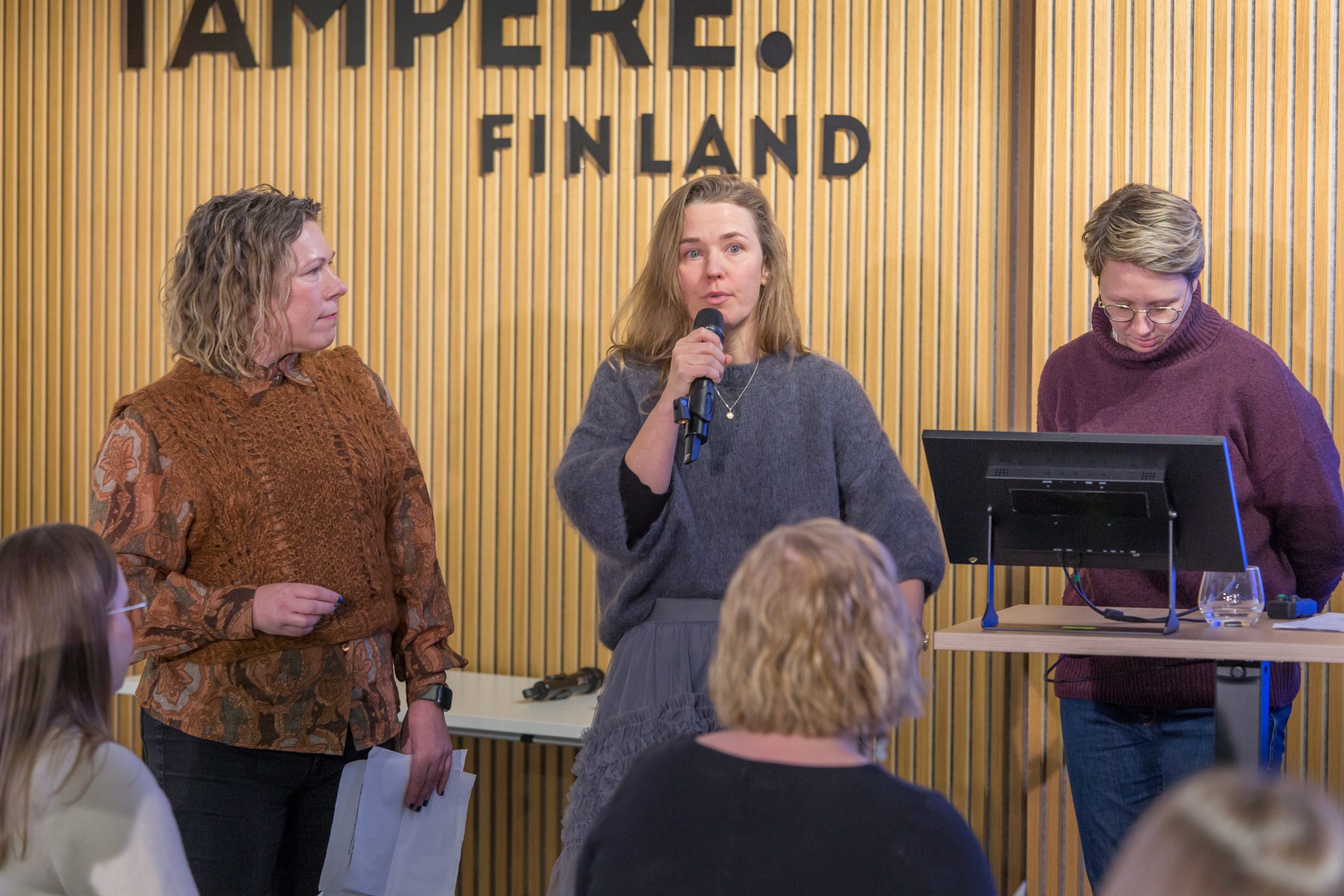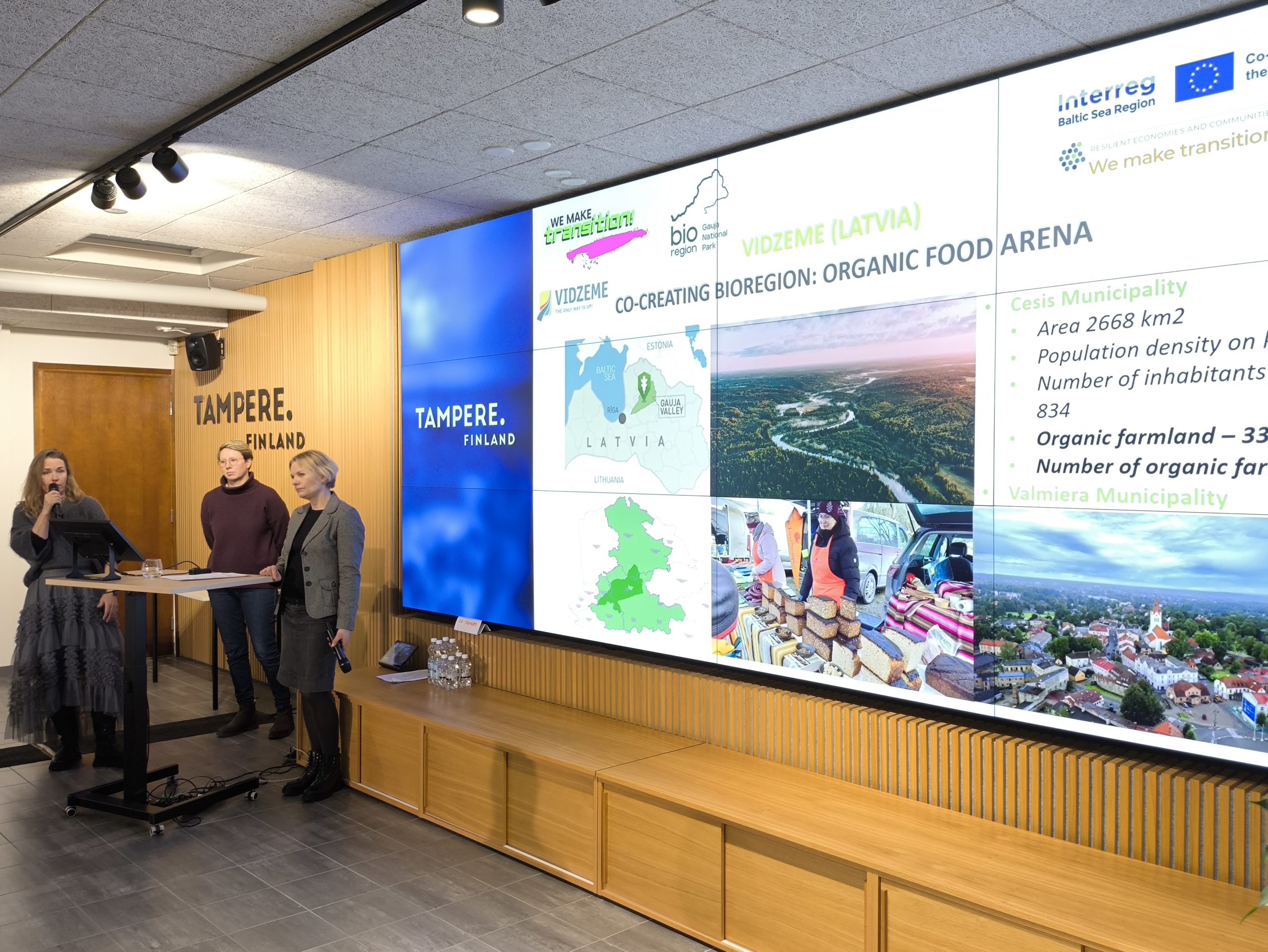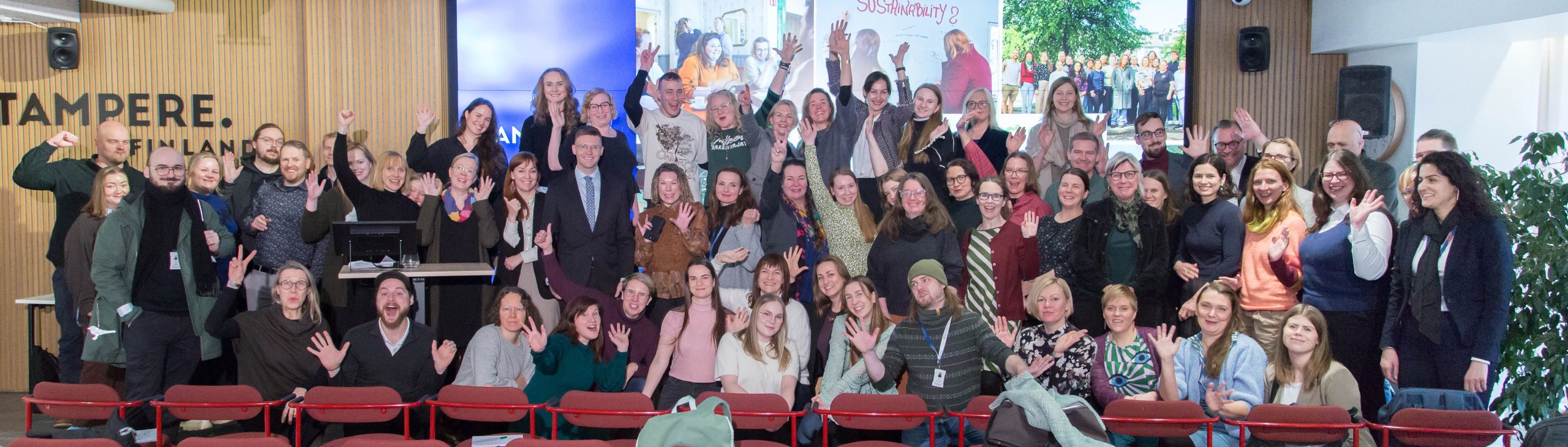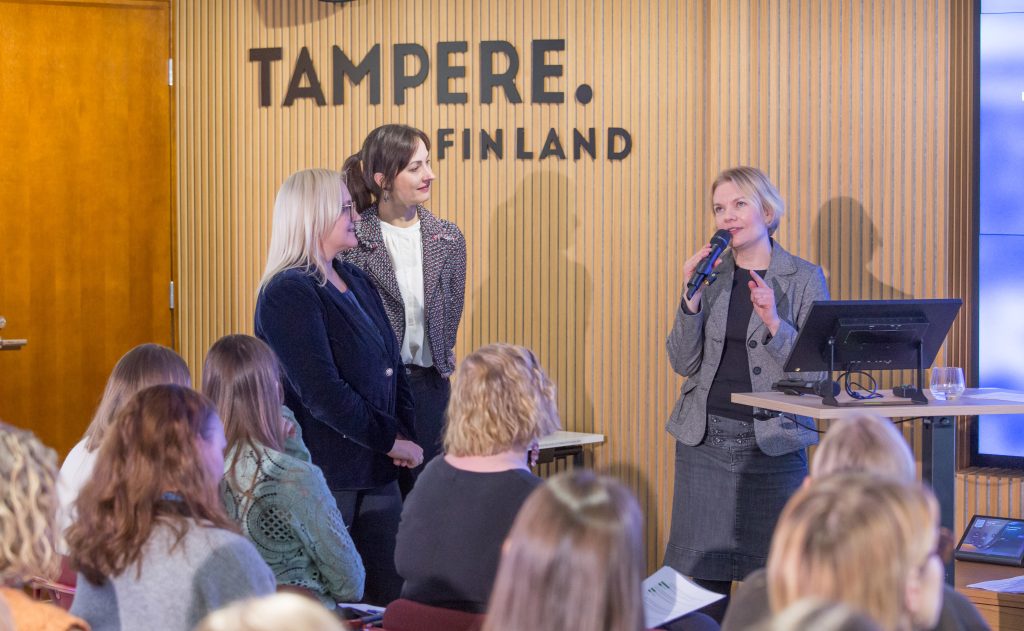
The development of the Gauja National Park Bioregion, the promotion of organic food consumption in educational institutions, and educational activities on organic food for primary school pupils – these achievements from Vidzeme were presented on 26–27 November at the final event of the Interreg Baltic Sea Region Programme project We Make Transition! in Tampere, Finland.
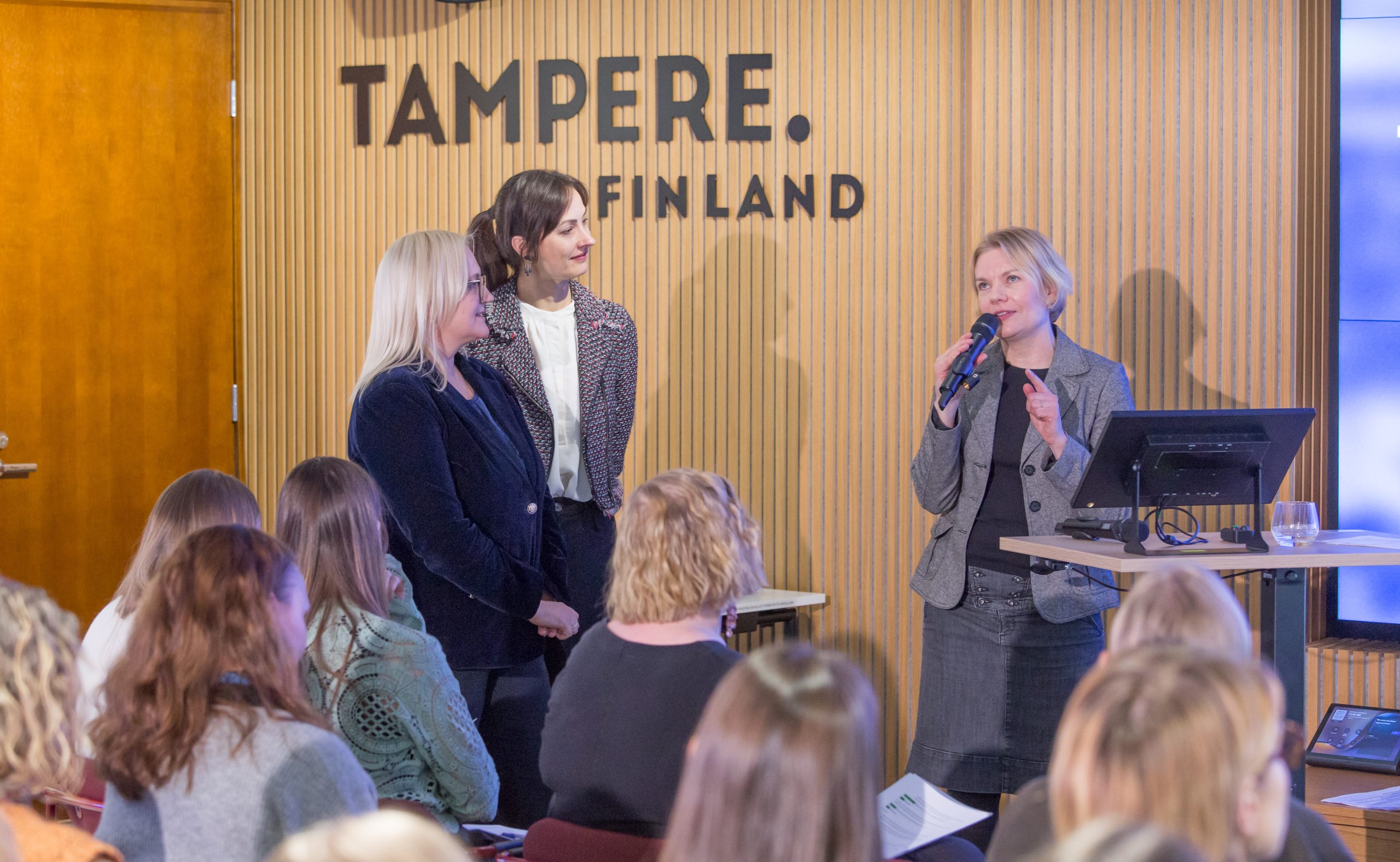
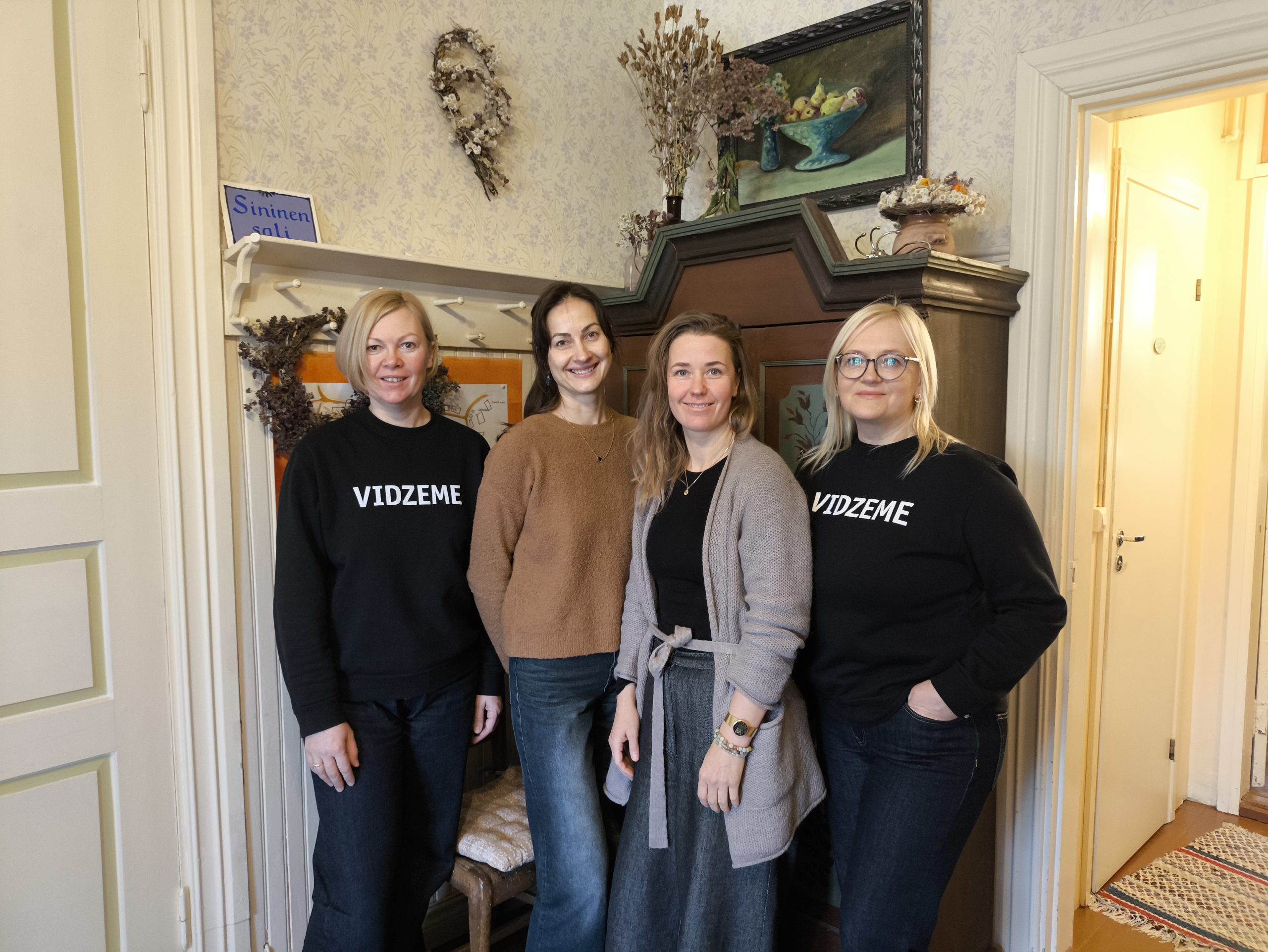
The experience was shared by Lienīte Priedāja-Klepere, Project Manager at the Vidzeme Planning Region (VPR), together with Change Agents Anda Briede and Lāsma Ozola.
Vidzeme’s initiatives, which emerged from the Transition Arena co-creation workshops, were recognised as among the most impactful results of the project and inspired partners across the Baltic Sea Region.
WMT! impact forum
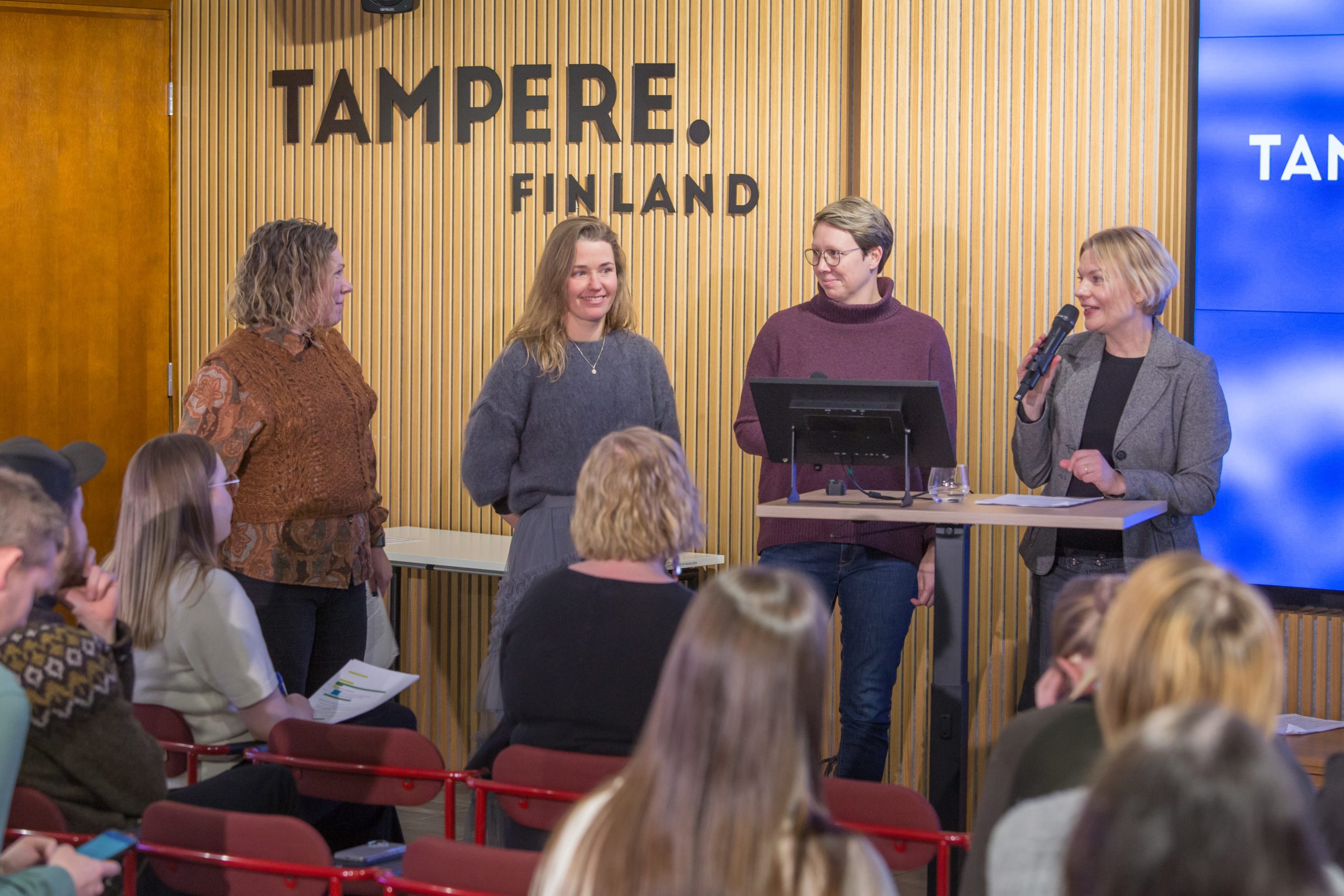
On the first day of the event, the Impact Forum focused on evaluating the impact of the public participation method Transition Arena, implemented in 12 cities and regions in Estonia, Latvia, Norway, Poland, Finland, and Germany.
This co-creation approach brings together representatives of municipalities, communities, entrepreneurs, and other stakeholders on a single platform to jointly envision a sustainable future. The method was applied to address a wide range of challenges – from promoting organic food and strengthening community engagement to advancing the circular economy and tackling biodiversity issues.
Representatives from Vidzeme emphasised that the co-creation process and the initiatives developed through it provided substantial support for Bioregion development and the promotion of organic food consumption in the region. The bottom-up approach of the Transition Arena in Vidzeme proved particularly effective, delivering some of the most influential outcomes of the project.
Impact in Vidzeme
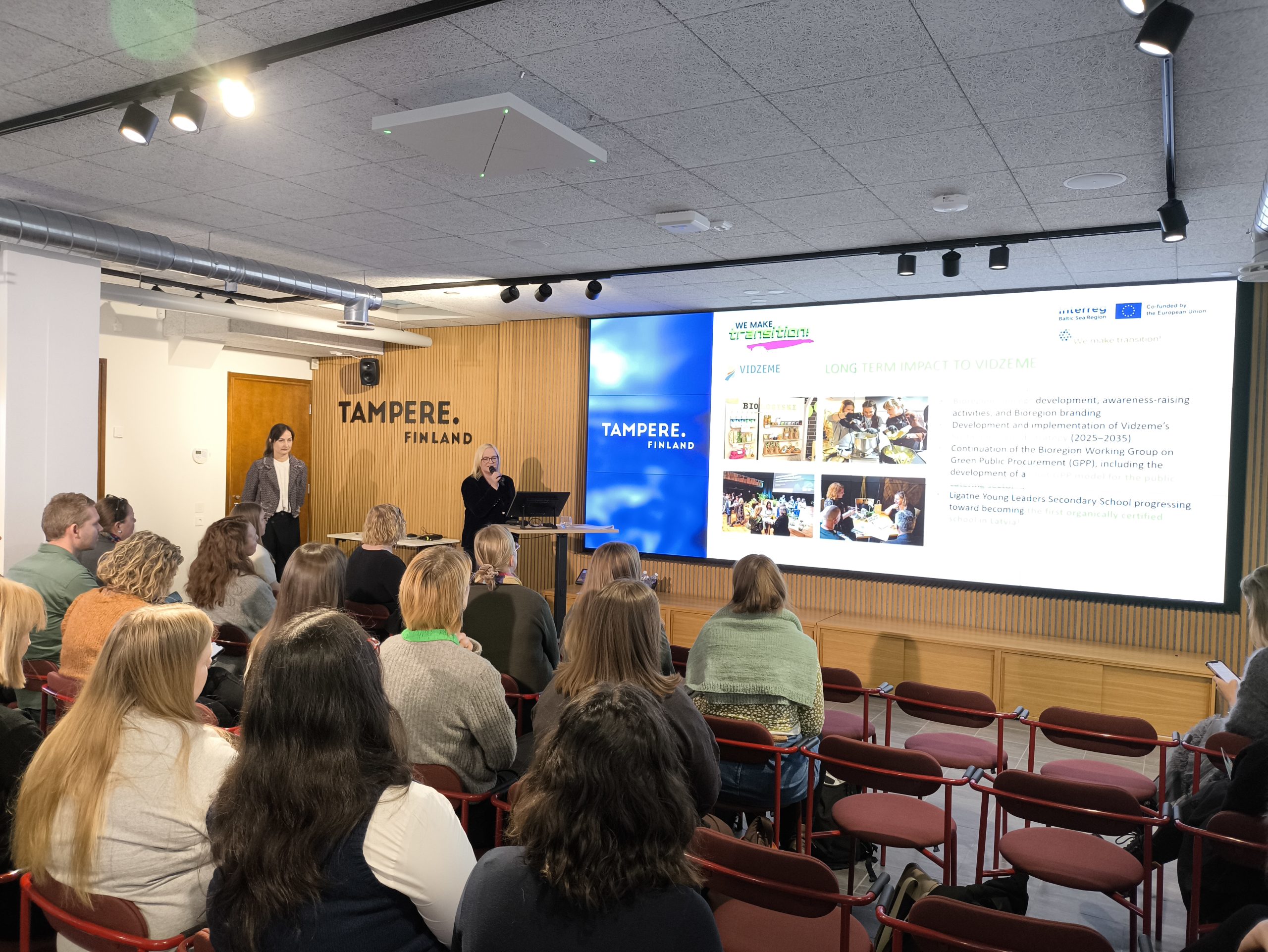
Activities implemented within the project in Vidzeme demonstrate how a systemic approach can lead to tangible change. Presentations were delivered by Lienīte Priedāja-Klepere, Project Manager at VPR, Anda Briede, Change Agent from the Cēsis District Rural Partnership, and Lāsma Ozola, Change Agent and Head of the Zero-Waste Community of Cēsis Municipality.
They introduced the international audience to the key achievements:
-
The Cēsis Municipality pupils’ competition “My Bio Product Recipe for School Lunch” encouraged reflection on the inclusion of organic products in school menus and engaged young people in discussions on healthy and sustainable diets;
-
A matchmaking event at the second Bioregion Forum facilitated direct cooperation between local organic producers and catering service providers, helping to establish short supply chains;
-
The educational event “Discover the Bioregion!” for primary school pupils, including farm visits and an organic food workshop, fostered understanding of the value of local and organic products from an early age;
-
The development of Vidzeme’s Sustainable Food Strategy 2025–2035 provides a long-term vision and concrete directions for the development of the regional food system;
-
The creation of a joint Green Public Procurement (GPP) model for the public catering sector makes it easier for municipalities and institutions to include organic products in public tenders;
-
The progress of Līgatne New Leaders Secondary School towards becoming the first organically certified school in Latvia demonstrates that change in educational institutions is achievable.
Project Manager Lienīte Priedāja-Klepere highlighted: “The We Make Transition! project is coming to an end at the end of 2025, but in the case of the Bioregion, everything is only continuing!”
Examples from Finland
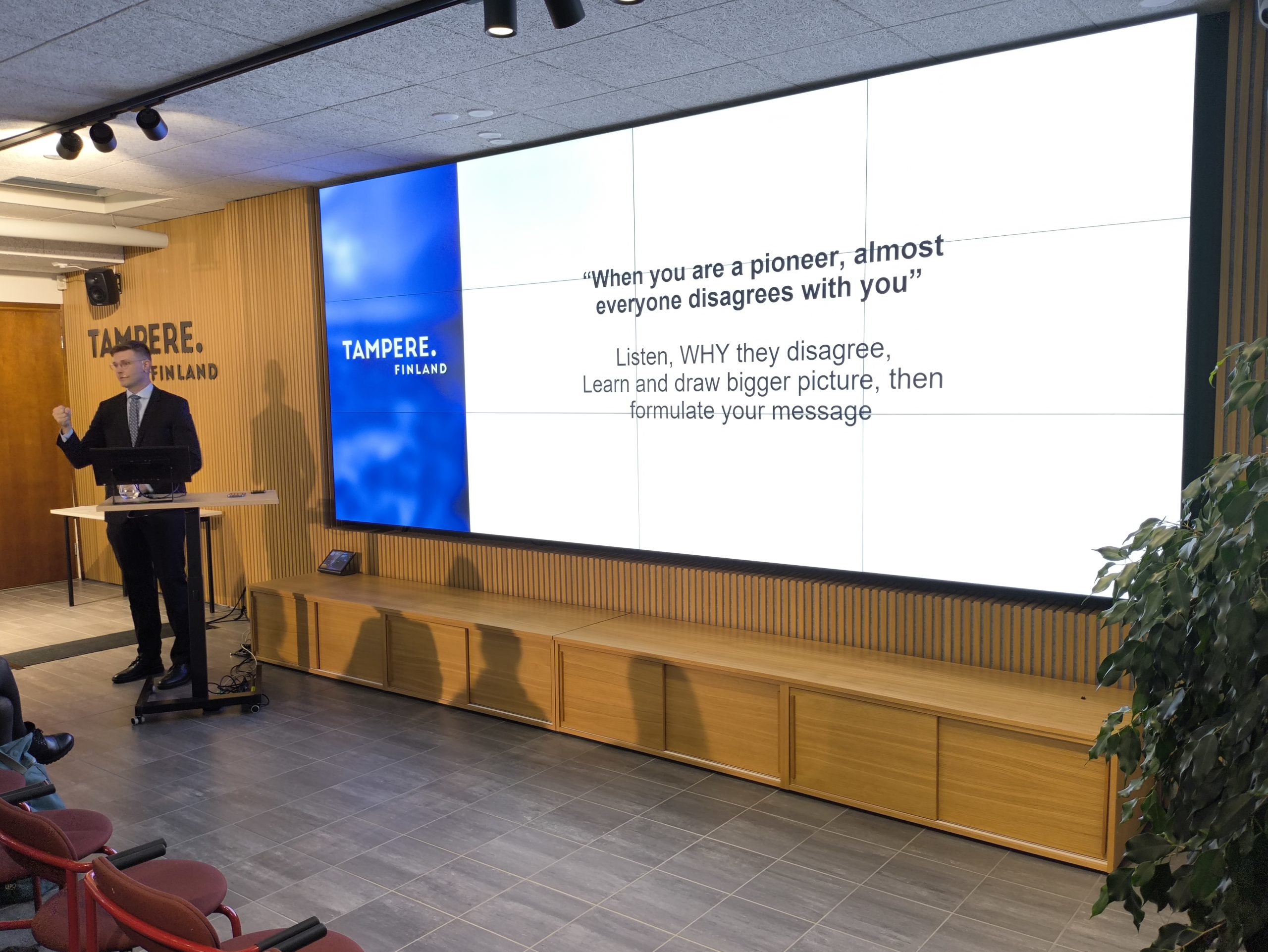
At the Impact Forum, an inspirational keynote speech was delivered by circular economy expert and EU Climate Pact Ambassador Timo Huhtamäki. He emphasised that a shift in societal thinking and values is crucial for the development of a circular economy – it is not enough to reuse, recycle, and regenerate; attitudes towards consumption and resource use must change as a whole.
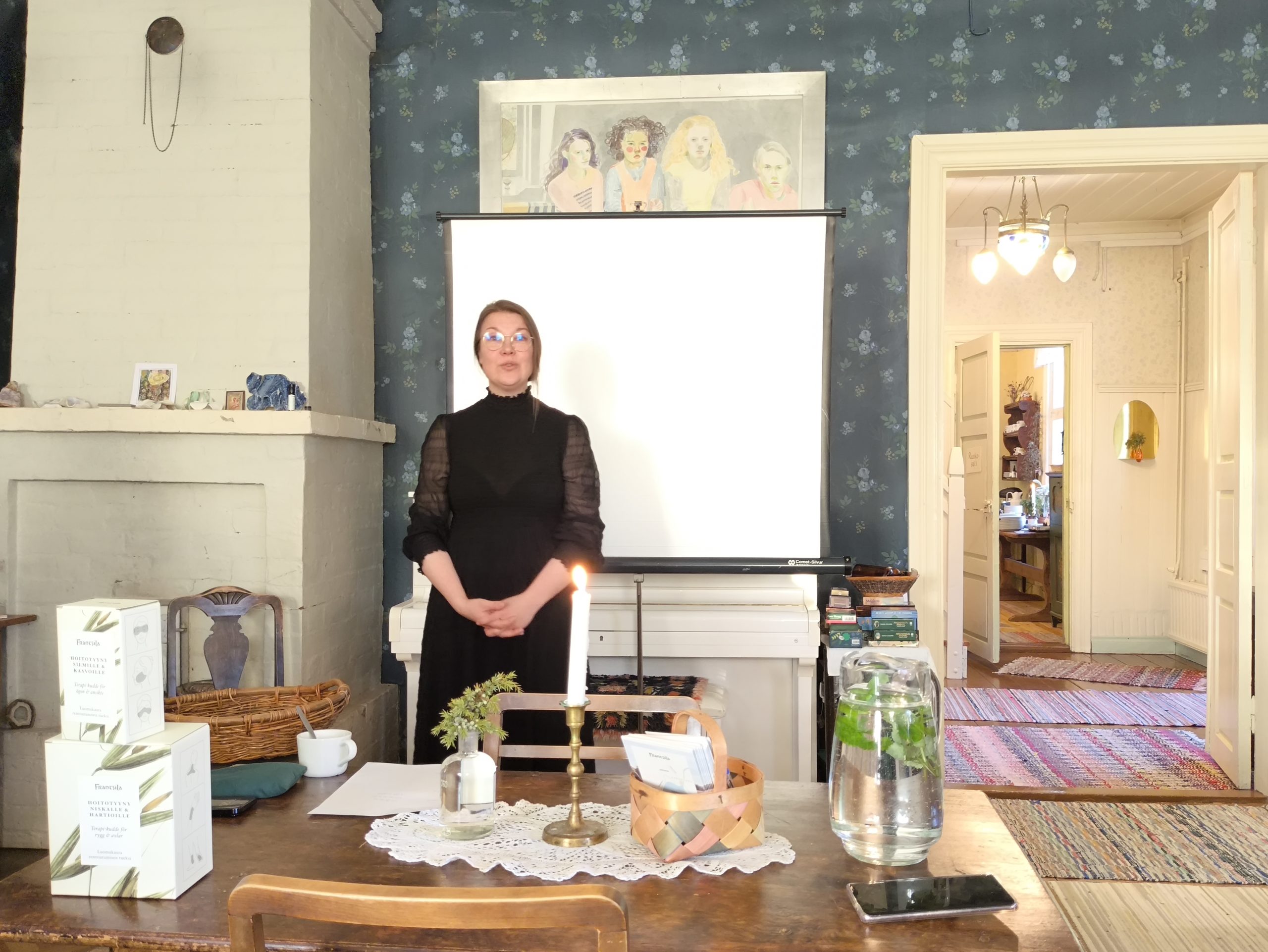
On the second day, participants visited the family-owned herbal farm Frantsila in Hämeenkyrö Municipality. With more than 40 years of experience in cultivating medicinal plants and producing health and beauty products, the hosts demonstrated how organic farming can be a successful business model. The farm also operates a vegetarian restaurant using organic ingredients and offers a variety of well-being services.
Family representatives shared their guiding philosophy: the goal is to promote well-being and happiness in society by making the world a better place, while staying true to their principles and showing courage in decision-making. This philosophy aligns closely with the values of the We Make Transition! project and illustrates that a sustainable lifestyle can be both inspiring and practically achievable.
About the project We Make Transition!
The project “Towards sustainable and resilient societies through empowered civil society and collaborative innovation” (We Make Transition!) is part of the Interreg Baltic Sea Region Programme 2021–2027. It brings together partners from six countries with the shared goal of fostering sustainable change at the local level through the innovative public participation method Transition Arena. The project will conclude on 31 December 2025, but the initiatives developed within it will continue to evolve and have an impact in the future.
Photos by Tuomas Jaakkola, VPR