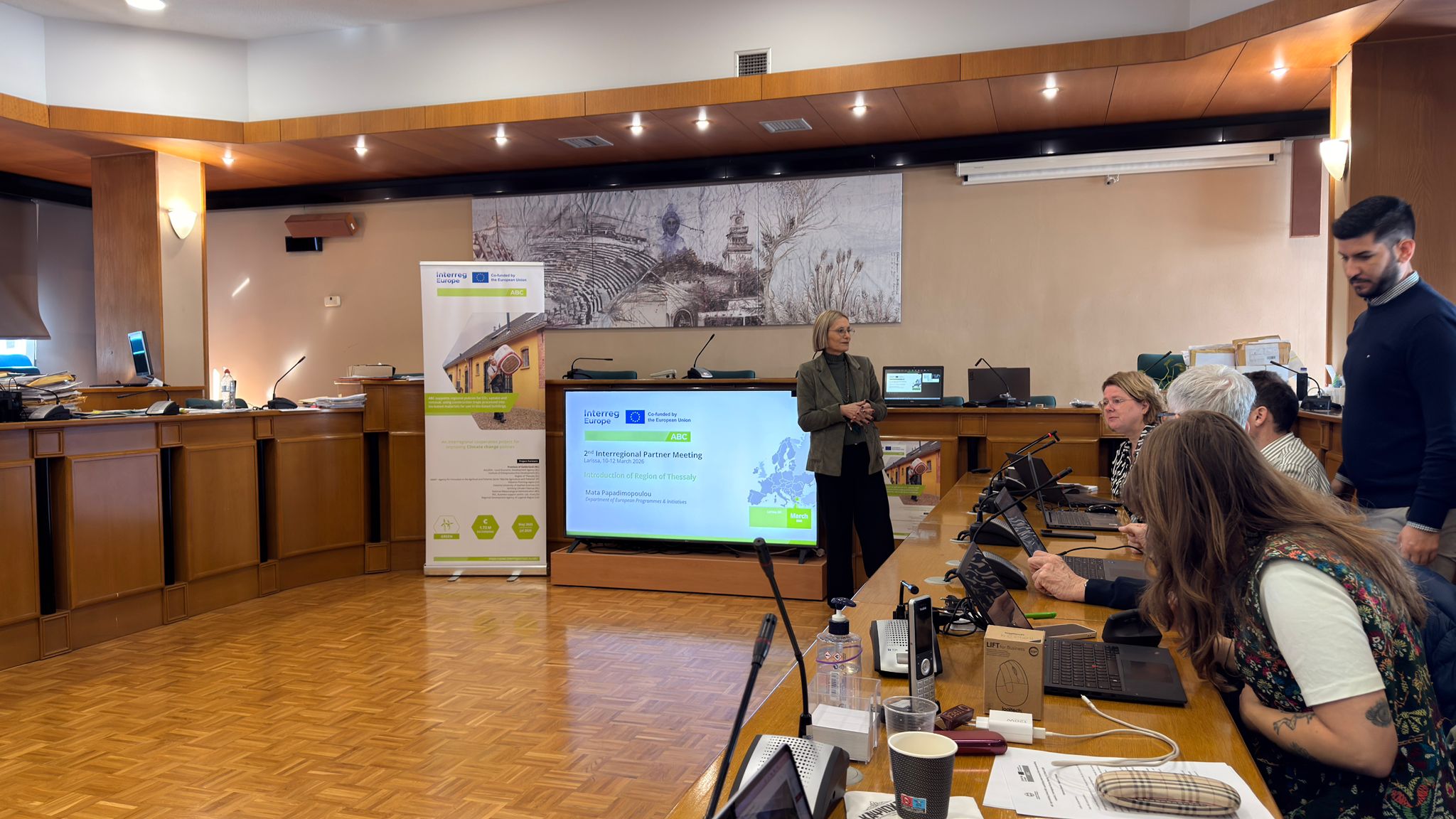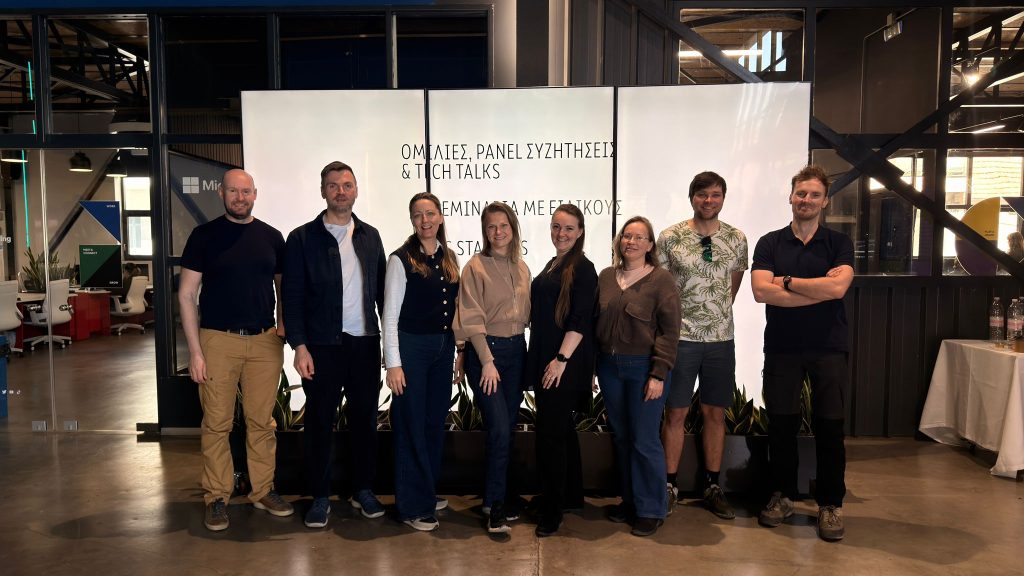
From 9 to 13 March, an interregional exchange visit of the project “Agro Building Carbon/ABC: Quantifying Carbon Removal in Farm-Sourced Building Materials” took place in Larissa, Greece, bringing together project partners and experts from eight European countries. The aim of the visit was to discuss the preservation and restoration of soil health in the context of growing materials for agro-based construction, as well as to explore practical examples of building value chains from agriculture to construction while promoting carbon sequestration and soil health.
The visit was organised by the Institute of Entrepreneurship Development (IED) in cooperation with local partners. The three-day programme combined thematic workshops, partner meetings and study visits to organisations working with bioeconomy solutions, renewable energy and bio-based construction materials.
During the first day of the visit, project partners discussed the importance of crop rotation within regenerative agriculture systems and the potential of carbon sequestration in the bioeconomy and construction sectors. By focusing on good practice examples from project partners, participants gained insights and new ideas that could be transferred and adapted in their own countries.
Field visits to bioeconomy initiatives
On the second day, project partners visited several locations in the Thessaly region to explore practical examples of how bioeconomy and sustainable construction solutions are implemented at the local level.
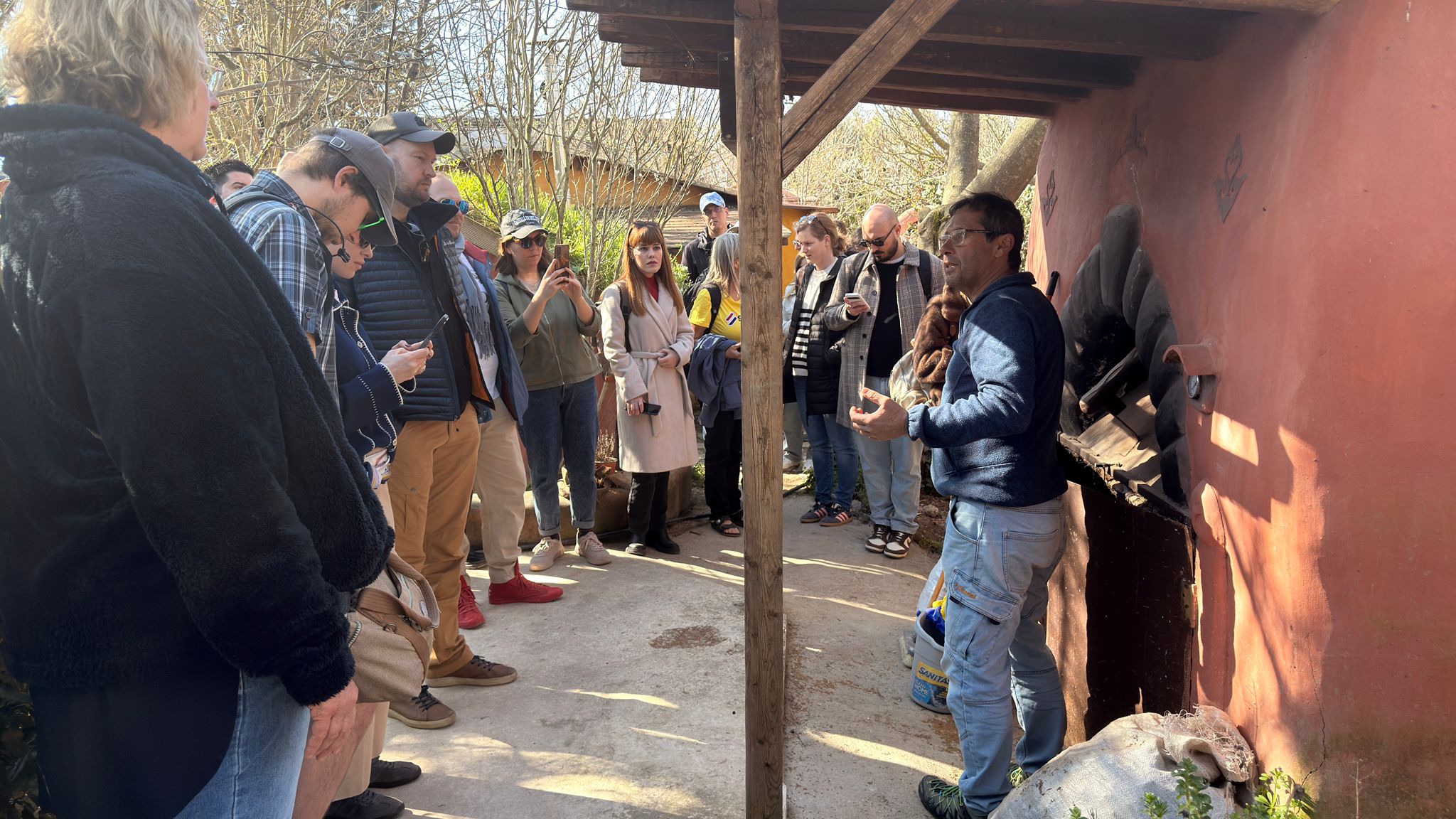
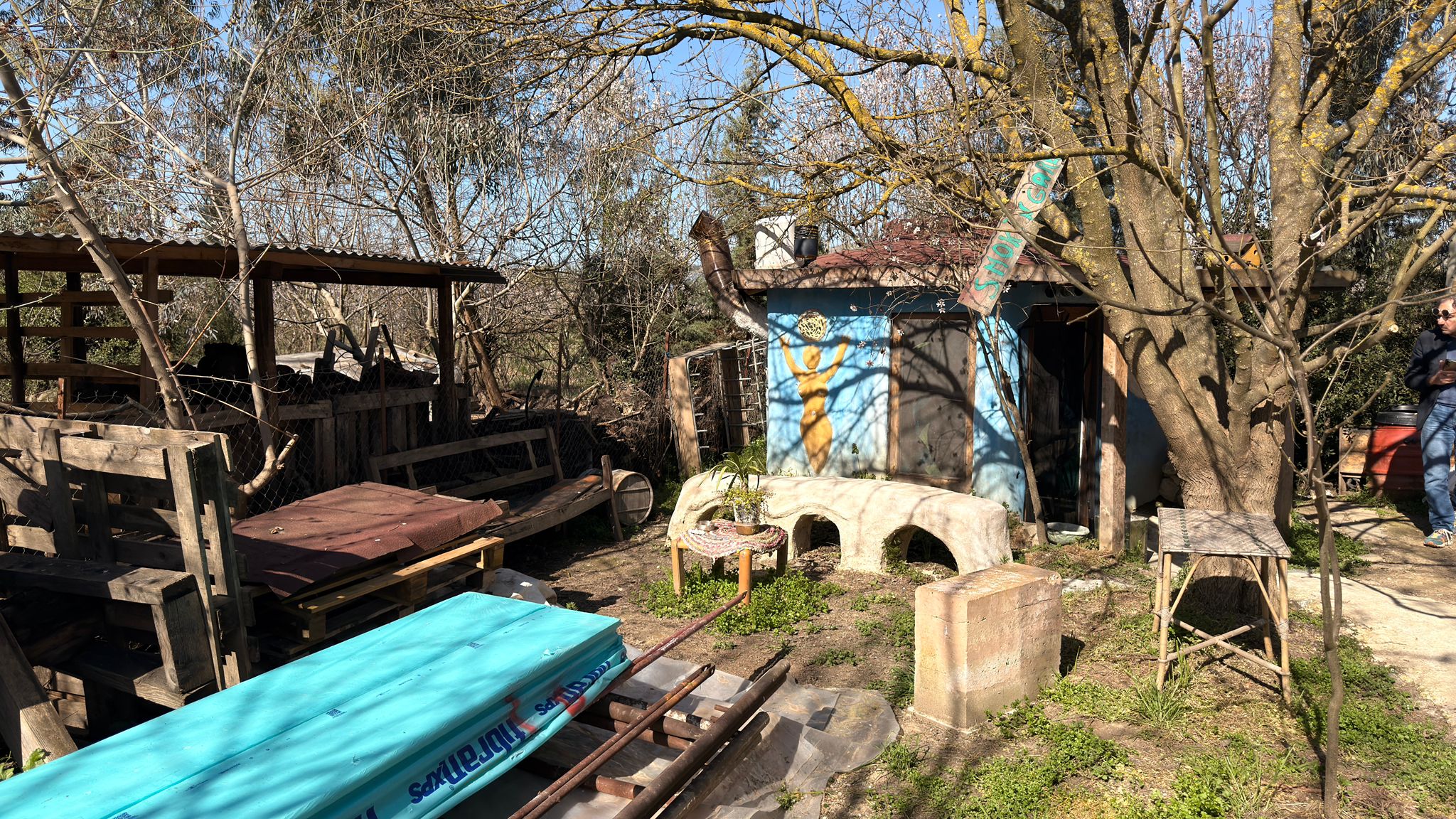
The first stop was Nesson Ecovillage – one of the first ecovillages in Greece developing approaches to natural building and regenerative agriculture. During the visit, partners learned about the village’s development concept, which combines sustainable lifestyle practices, the use of local resources and environmentally friendly construction methods.
Natural building technologies are used in the ecovillage, including structures made from clay, wood, straw and other biological materials. These materials help reduce the carbon footprint of buildings while improving indoor microclimates. Participants had the opportunity to visit several buildings constructed using both traditional and modern natural building techniques.
In addition to construction activities, regenerative agriculture is practised within the ecovillage territory. This approach focuses on restoring soil fertility, promoting biodiversity and supporting sustainable food production. Methods such as permaculture principles, diversified crop systems and circular use of natural resources are applied. The main products produced in the village include nut butters, jams and muesli.
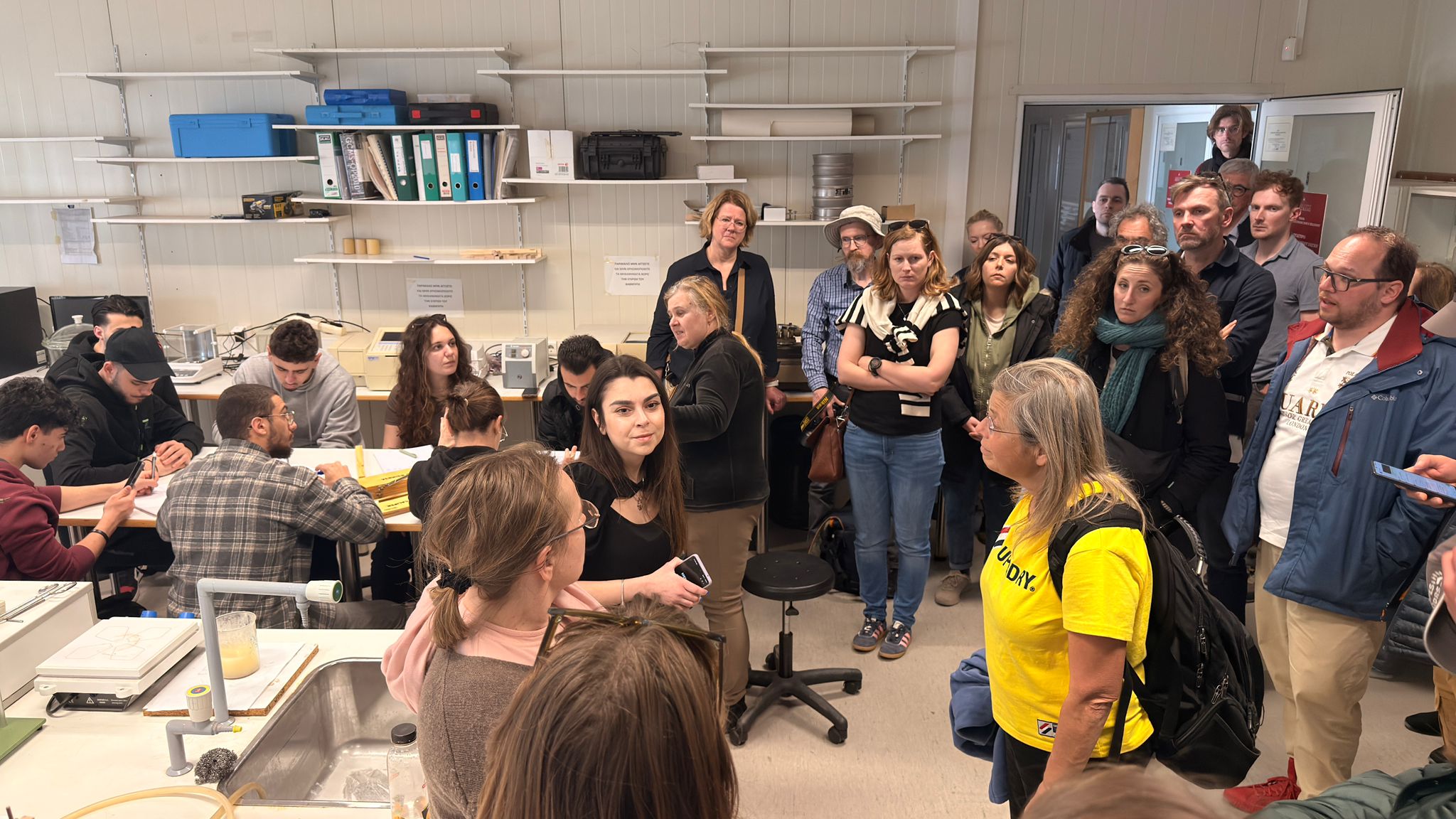
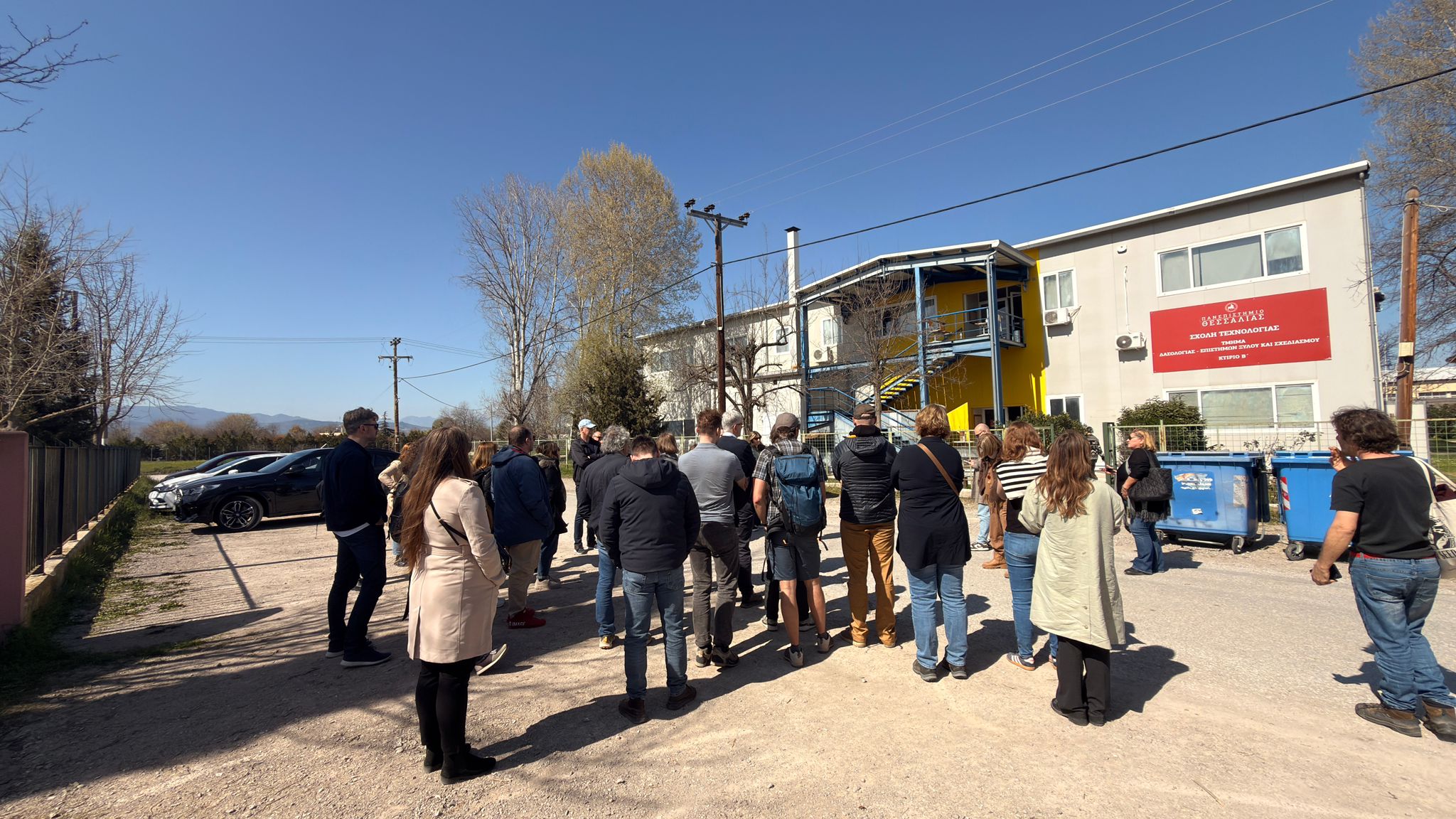
The delegation then continued to Karditsa, where they visited the Department of Forestry, Wood Sciences and Design of the University of Thessaly. This research centre studies the use of biomass in construction and the integration of agricultural by-products into building materials. The institute provides the necessary equipment for students and researchers to develop prototypes and analyse materials. Panels made from wood combined with sheep wool and other natural materials are developed here, and some of these materials later reach industrial production.
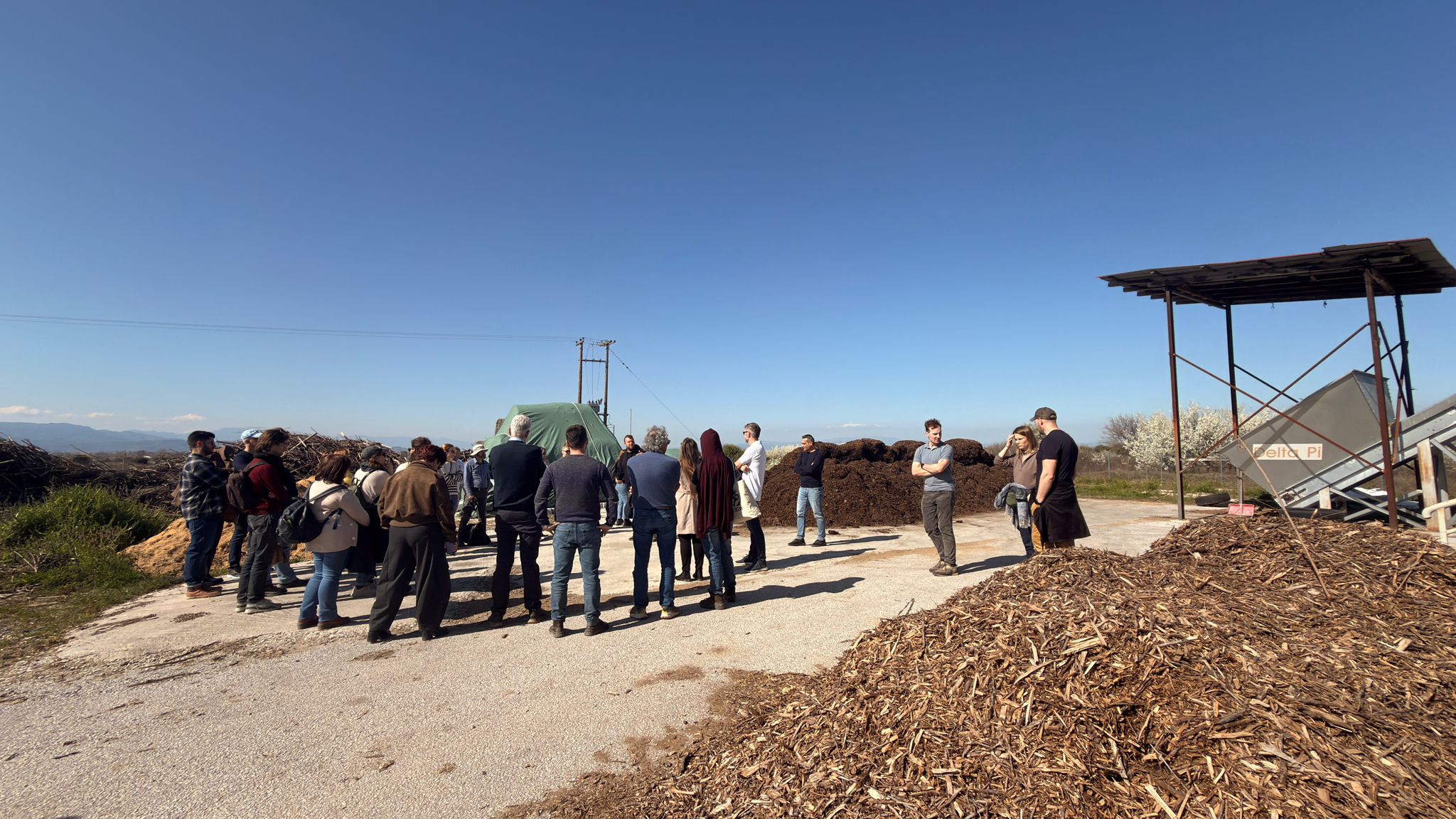
During the visit, project partners also visited the Energy Community of Karditsa – an experimental energy community that brings together around 400 members, including residents, companies and other local partners. A representative of the organisation introduced the community’s approach to using local resources for energy production, with particular focus on agricultural biomass residues.
“Our goal is to mobilise local resources and use them to produce energy for our own needs – both for households and for industry. As we are located in an agricultural region, we have access to a significant amount of biomass, such as cotton cultivation residues, straw and other crop by-products. We cooperate with farmers and cooperatives to collect this biomass, process it and use it as fuel for energy production,” explained a representative of the Energy Community of Karditsa, highlighting that this approach helps reduce agricultural waste while strengthening local energy independence.
Experience exchange for policy improvement
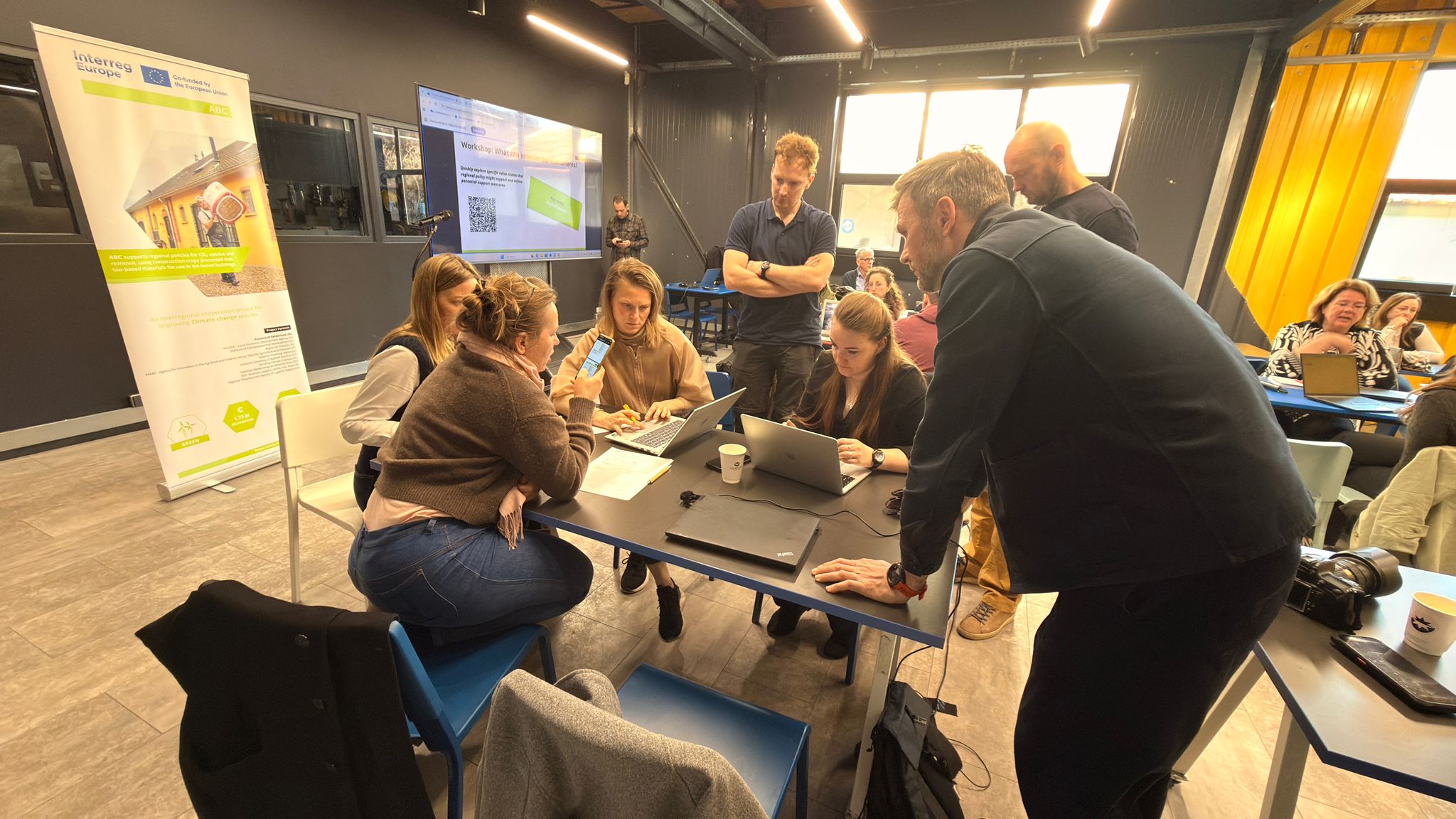
At the end of the visit, project partners participated in discussions and working sessions analysing the examples observed during the visit and discussing opportunities to replicate similar solutions in other European regions. Participants emphasised that interregional experience exchange is essential for developing sustainable bioeconomy approaches and promoting the use of bio-based construction materials in the building sector.
About the project
This visit was organized within the framework of the INTERREG EUROPE Programme 2021–2027 project Agro Building Carbon/ABC. The project aims to improve regional policy instruments to create economic opportunities for the production of bio-based building materials and the associated value chain. This goal is to be achieved by adopting good practice examples regarding these materials and related support policies, particularly carbon sequestration certification.