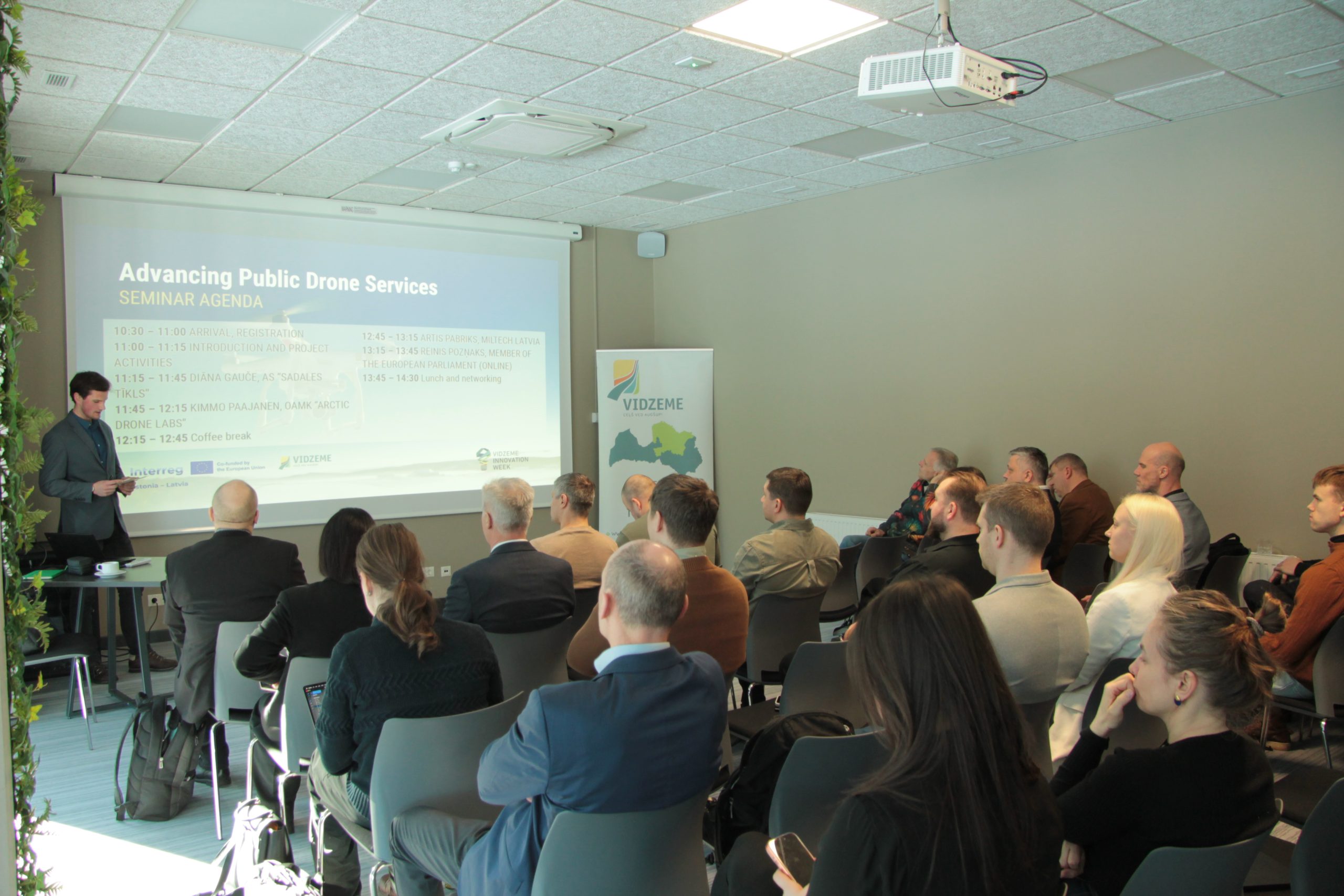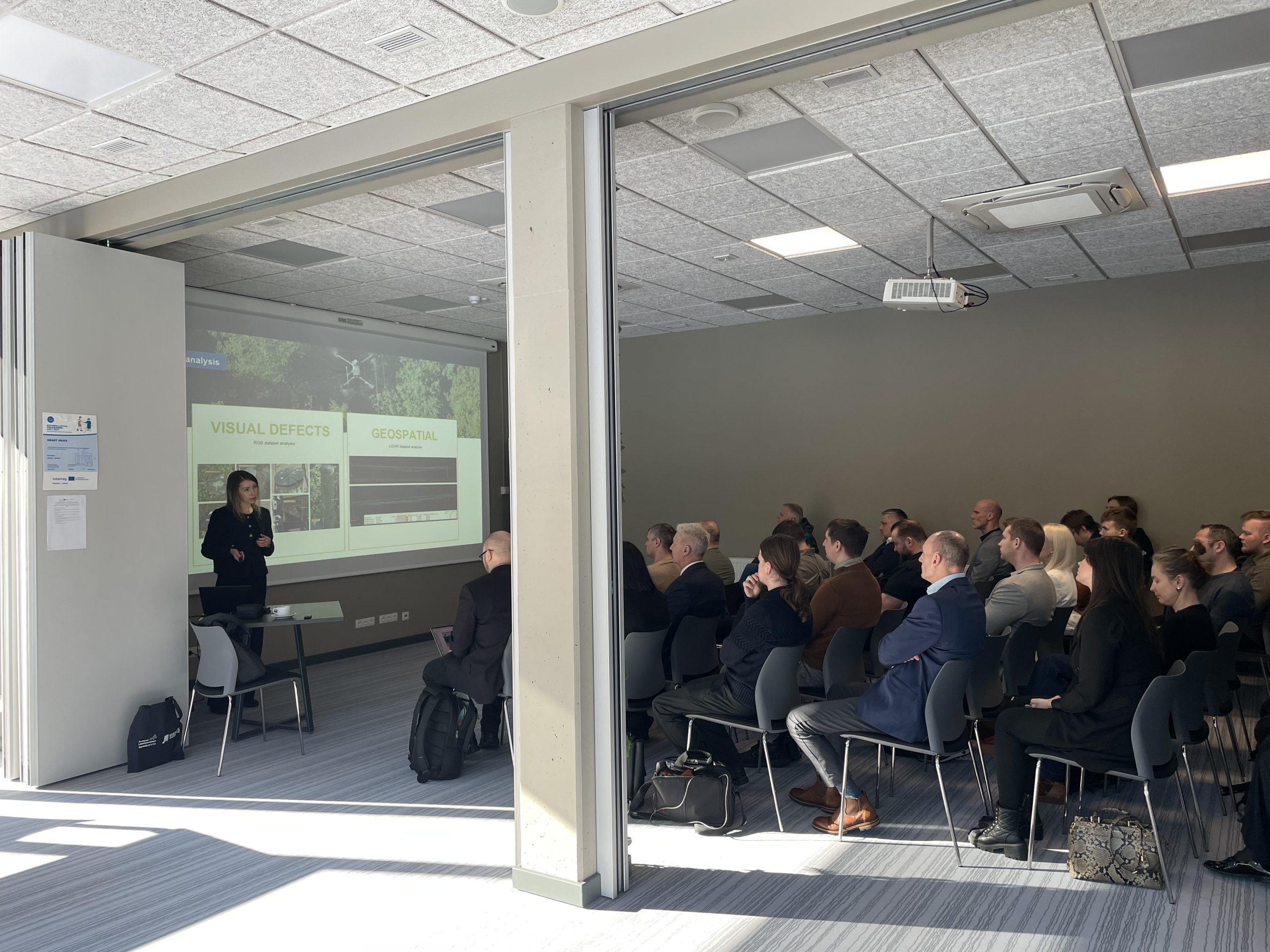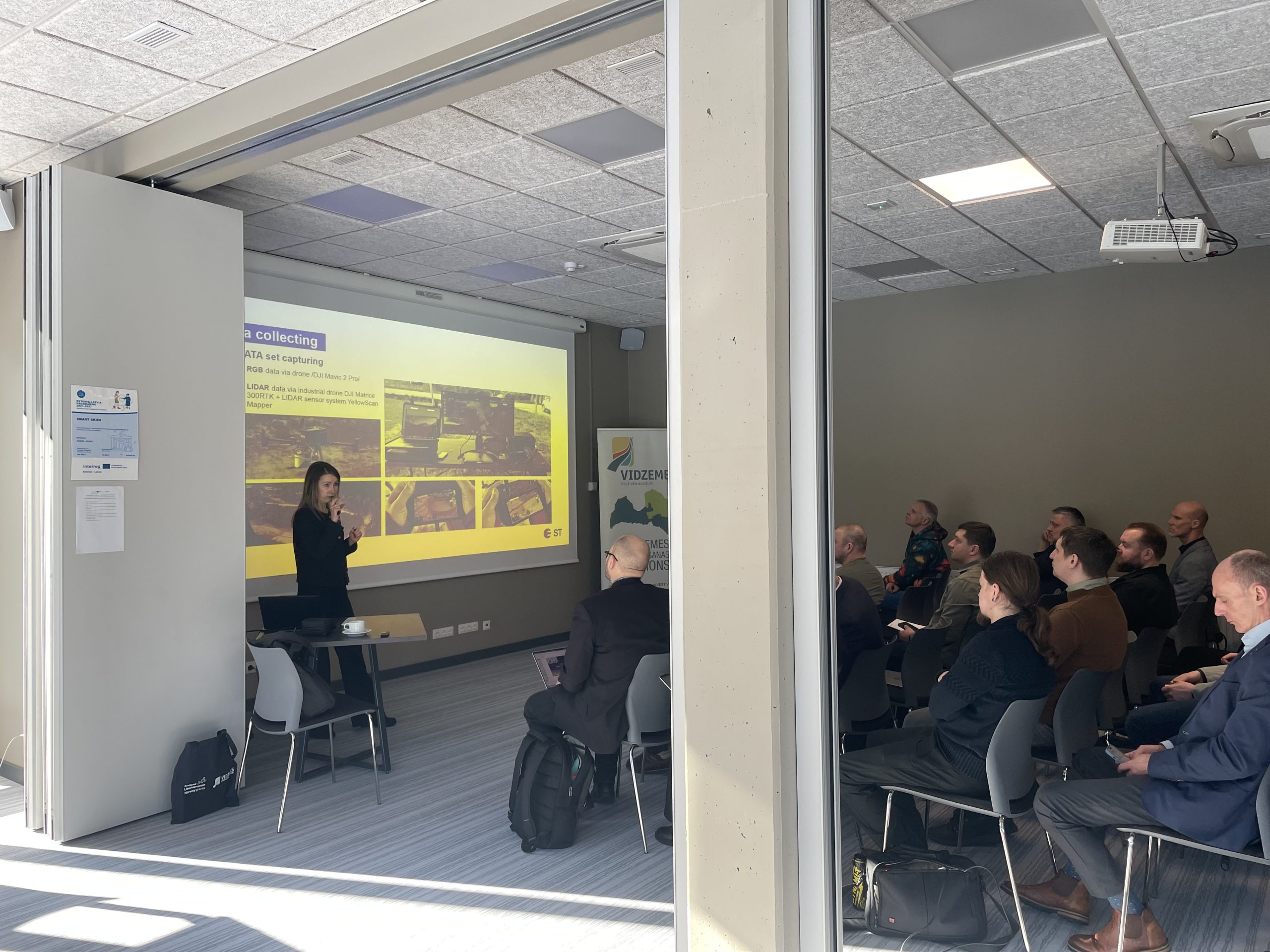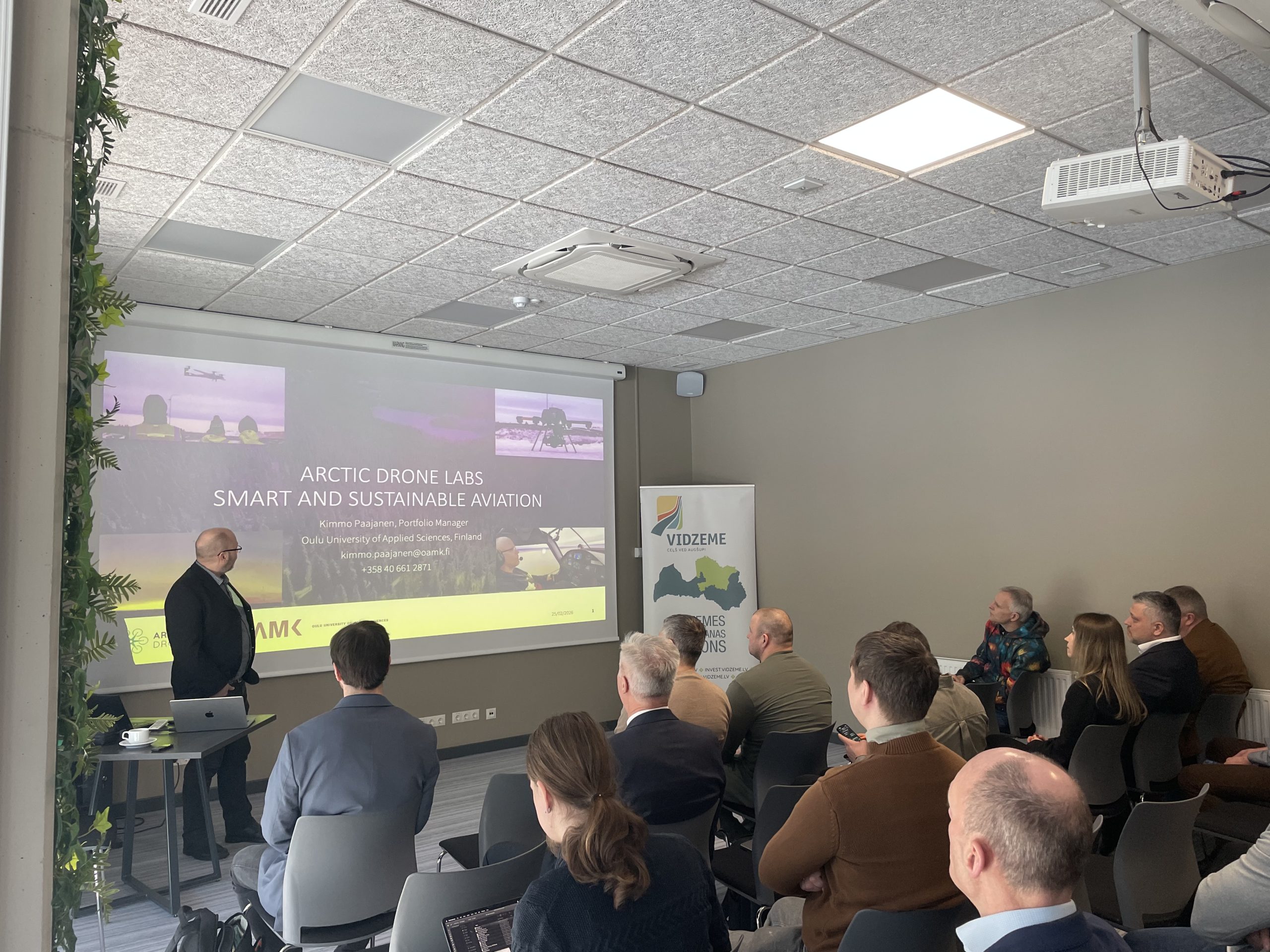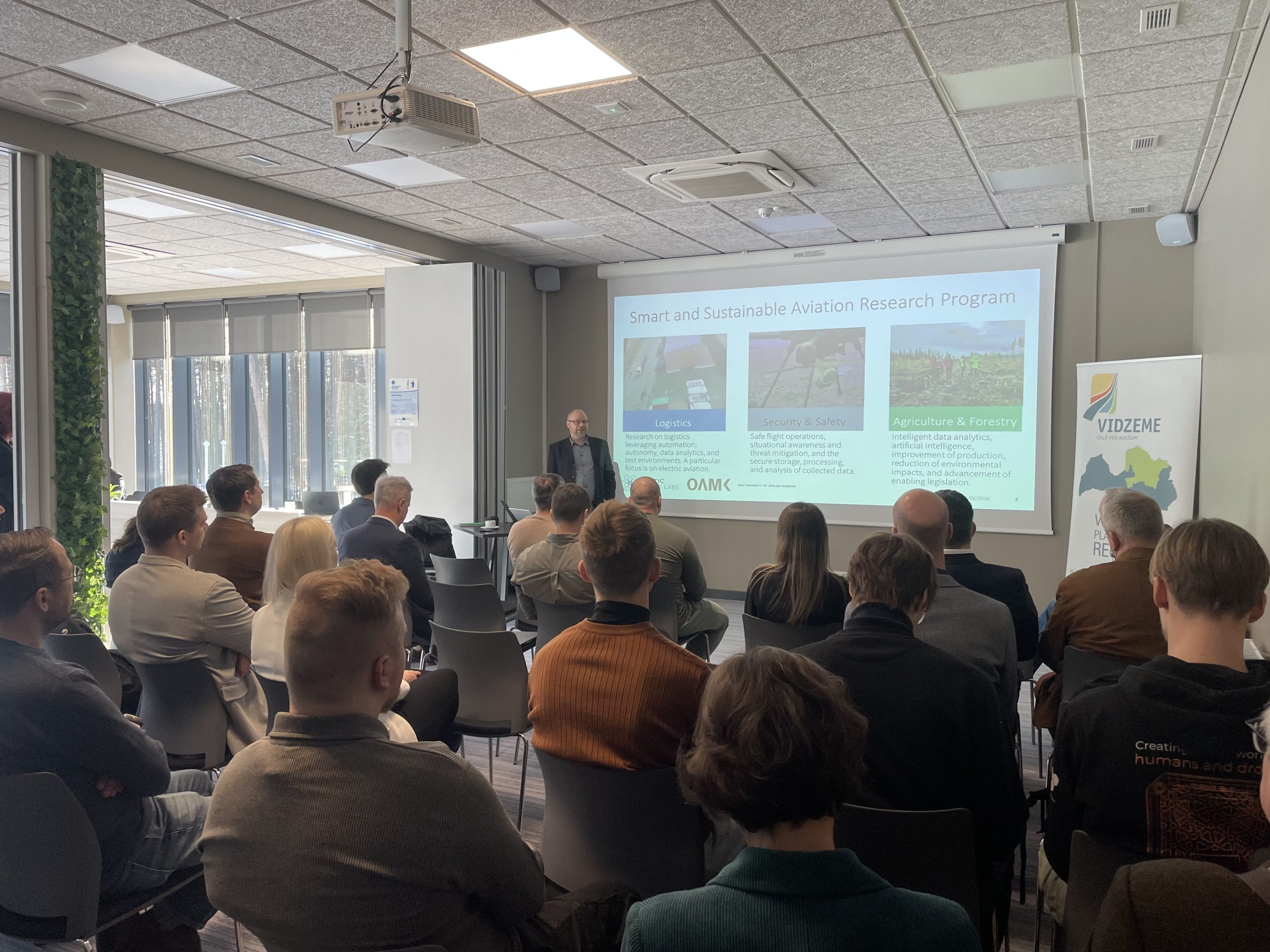
On 25 February, the fifth Smart Skies seminar, “Advancing Public Drone Services,” was held at the Jānis Daliņš Stadium Conference Hall in Valmiera as part of Vidzeme Innovation Week.
The event was organised by the Vidzeme Planning Region (VPR) and brought together approximately 33 participants, including representatives of national and local government institutions, industry experts, researchers, and entrepreneurs from Latvia, Finland, and Estonia.
The seminar aimed to showcase existing examples of drone applications in public service delivery and to explore their integration into municipal services, infrastructure management, and security-related solutions. Participants exchanged experiences and discussed the latest developments in drone technologies and their practical implementation.
Smart Skies: from strategy to real-world testing
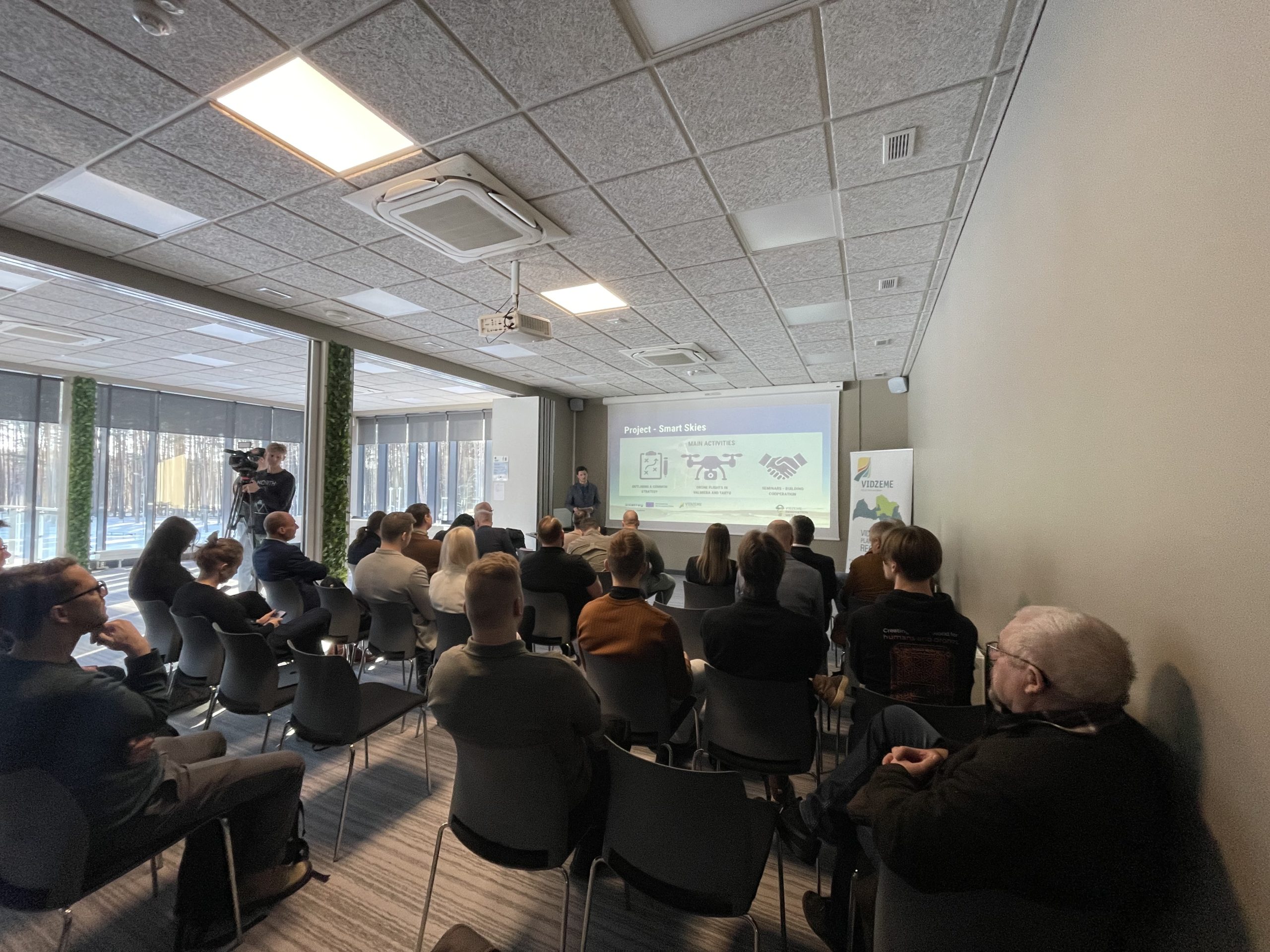
The seminar opened with a presentation by Krišjānis Pundurs from the Vidzeme Planning Region, who provided an overview of the progress achieved within the Smart Skies project. Key milestones include the development of a five-year strategy for drone service development in both Valmiera Municipality and Tartu, as well as the signing of a contract with SIA Ģeodēzists to carry out drone operations in Valmiera Municipality.
The drone flights are designed to collect spatial data for territorial planning and inspections, including the creation of 3D models and mapping materials. Over an eight-month period, public buildings, drainage systems, and cemetery areas will be surveyed using drones. The pilot activities will evaluate the efficiency, cost-effectiveness, and time-saving potential of drone technologies compared with traditional inspection methods. The resulting data will provide a foundation for more informed territorial management and decision-making in municipalities.
Drones in power grid inspections: from manual checks to data-driven management
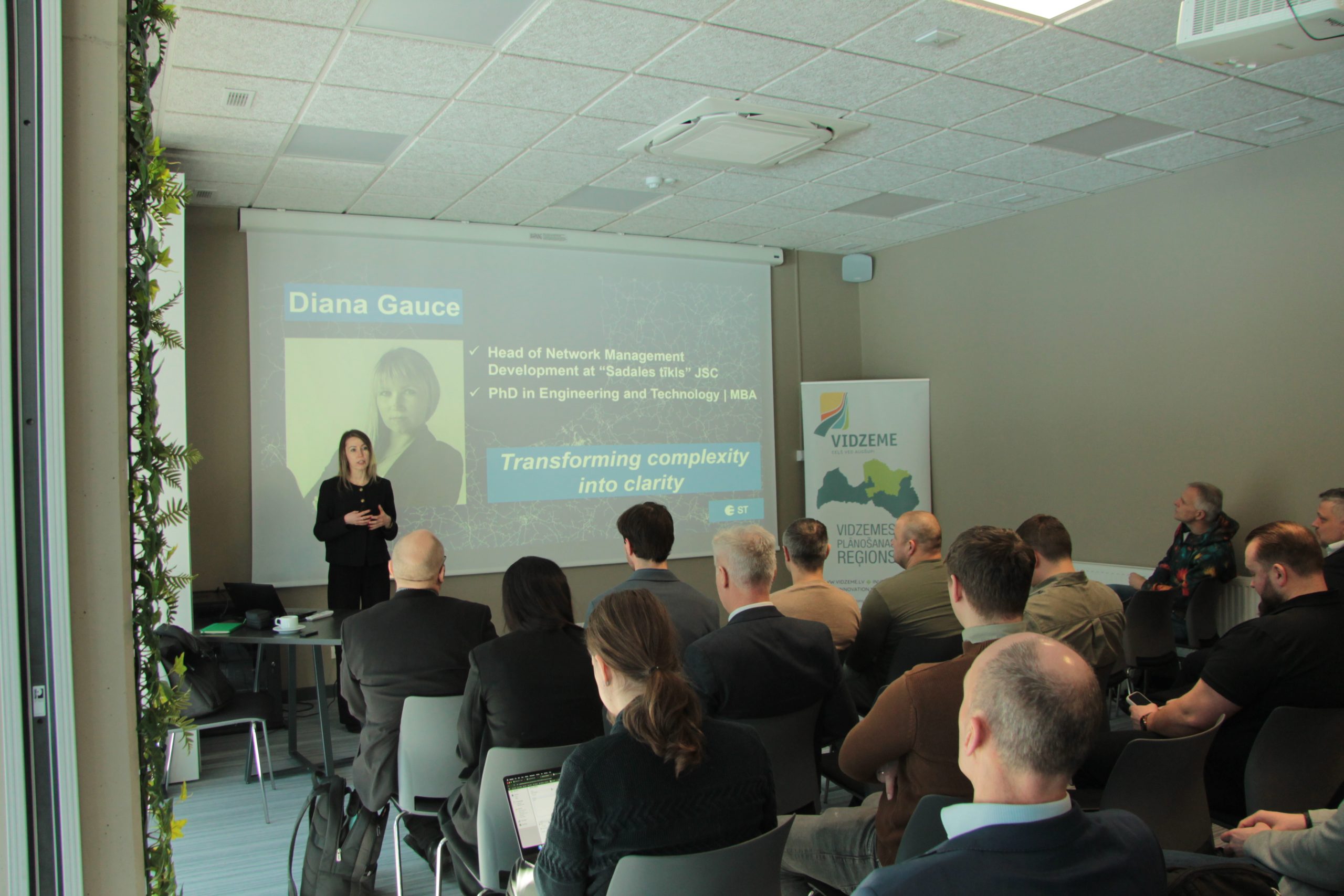
Diāna Gauče, Head of Network Management Function Development at Sadales tīkls, shared the company’s experience of using drones for electricity network inspections. Sadales tīkls manages an extensive electricity distribution network consisting of more than 93,000 kilometres of power lines and over one million infrastructure elements, which were previously inspected largely through manual processes.
The introduction of drones has enabled the company to significantly accelerate inspections, identify faults at an early stage, analyse vegetation-related risks, and create three-dimensional models of network infrastructure. The collected data supports the development of a digital representation—or digital twin—of the electricity network, enabling more accurate planning of maintenance activities and data-driven decision-making regarding network development and safety.
According to Gauče, drone technology has allowed the company to gradually transition from labour-intensive manual inspections to a hybrid approach that combines field inspections with digital data analysis. This improves operational efficiency, enhances employee safety, reduces costs, and helps prevent power outages before failures occur.
At the same time, she highlighted several ongoing challenges, including weather conditions, lighting, seasonal vegetation changes, public awareness of drone operations, and the need to ensure high-quality data collection and properly trained operators.
Drones in future aviation and research
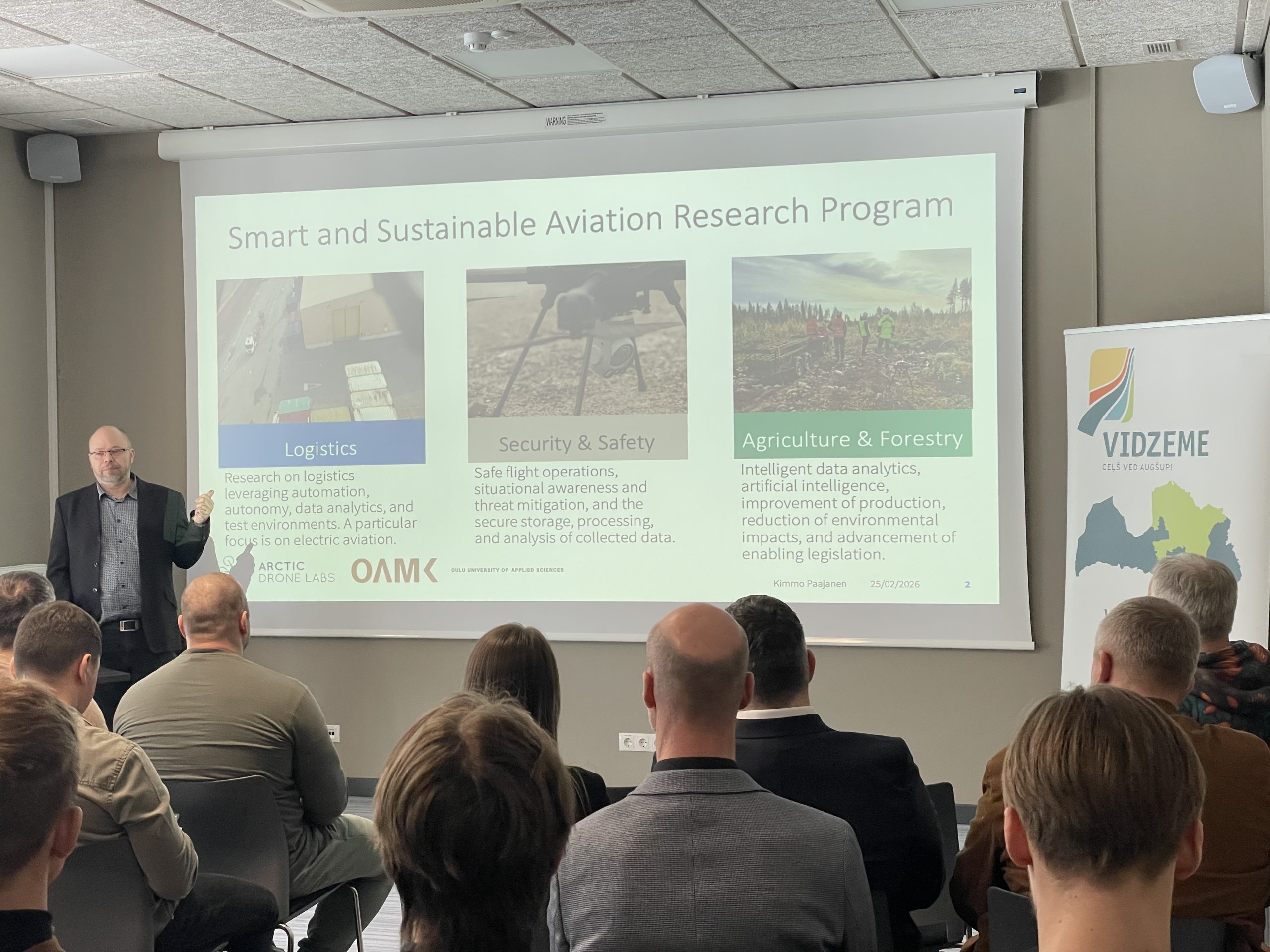
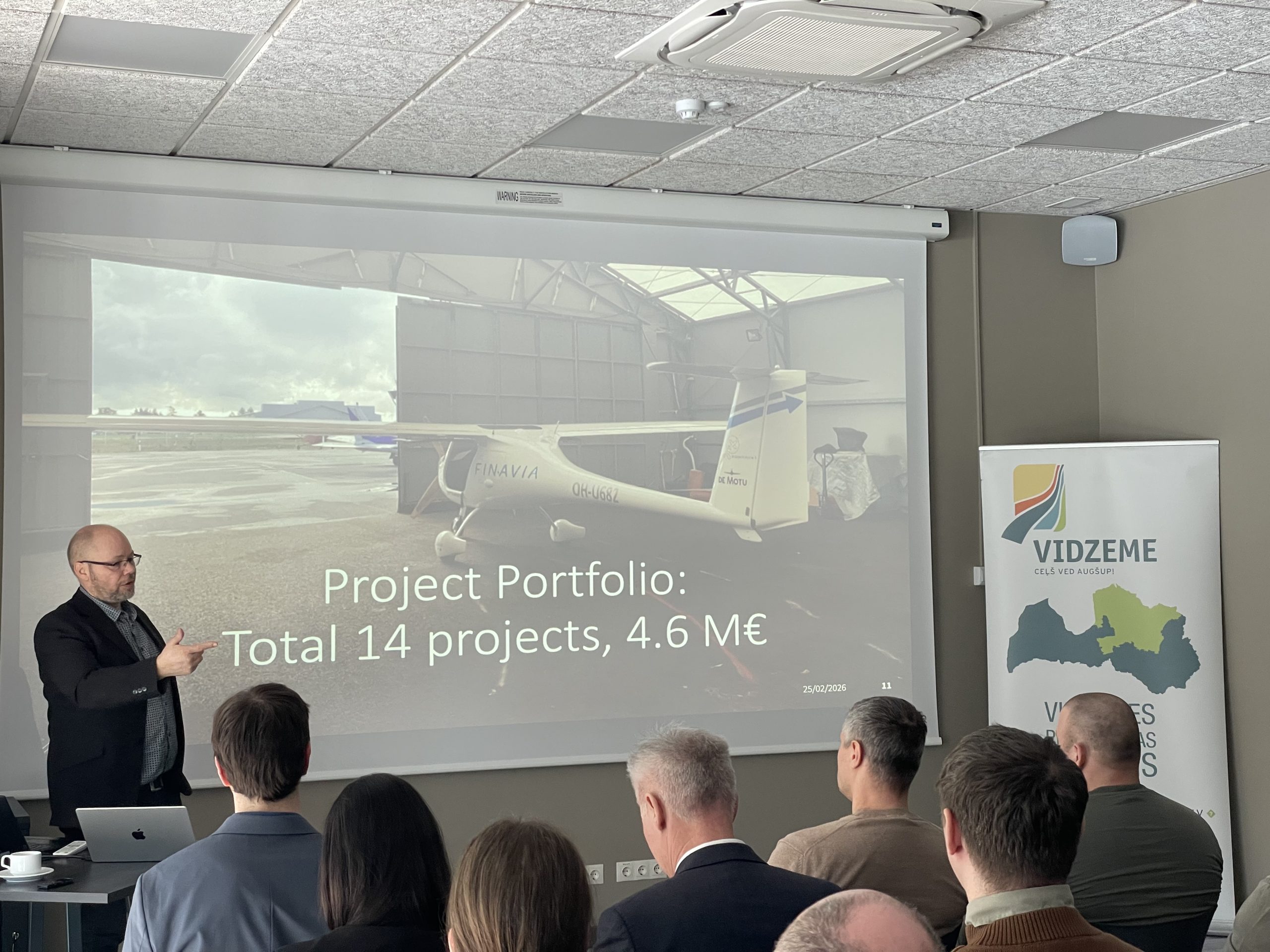
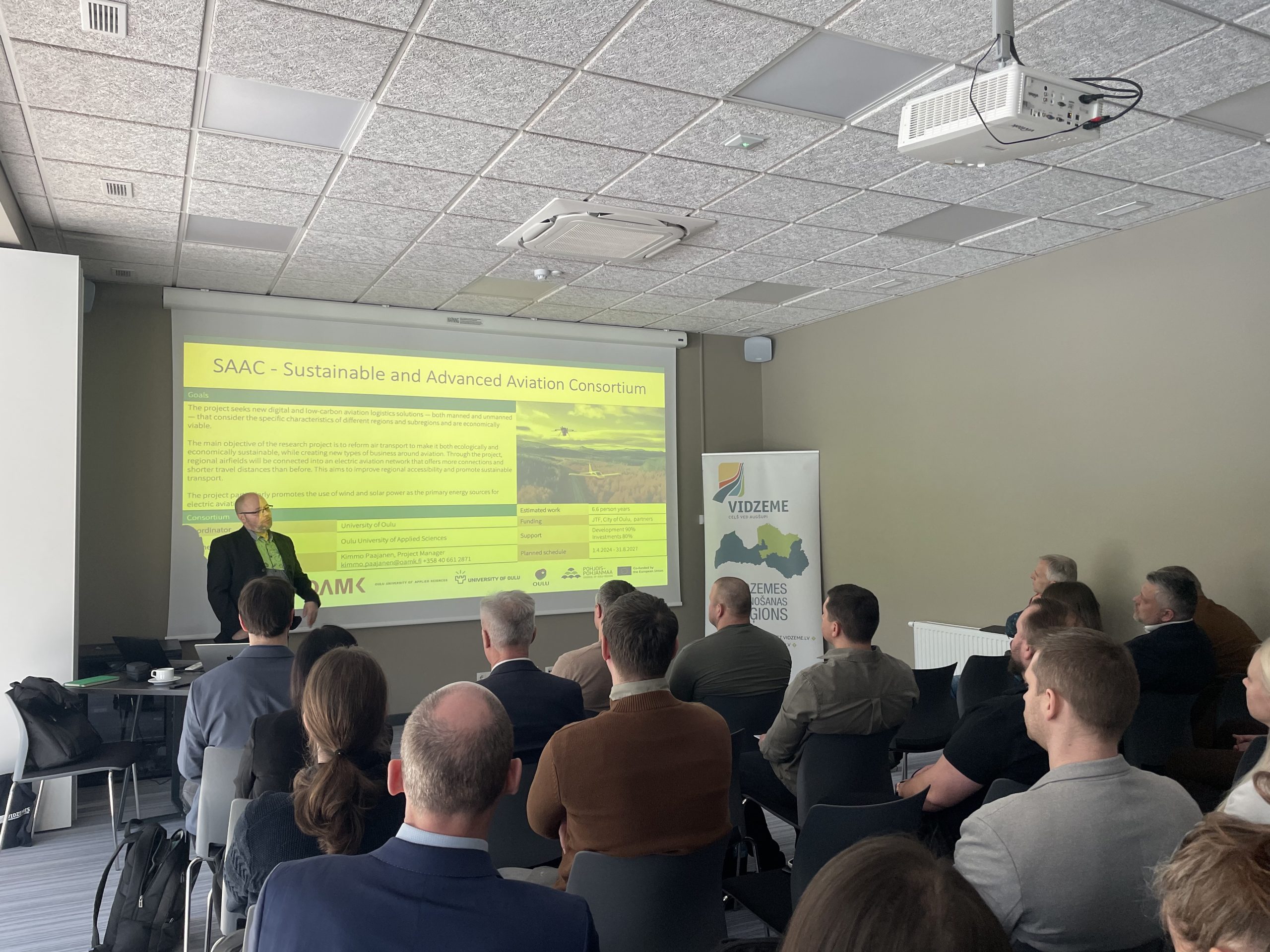
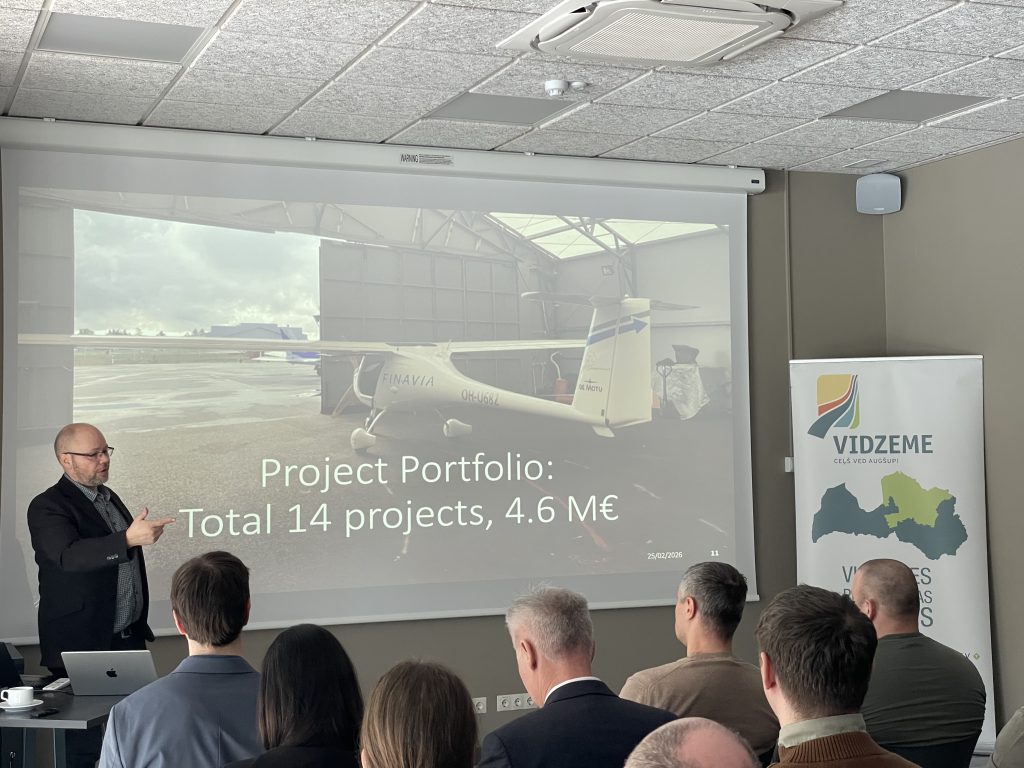
Kimmo Paajanen, Senior Researcher at Arctic Drone Labs of Oulu University of Applied Sciences (Oamk), introduced the work of the university and its digital innovation centre. He explained how collaboration between businesses, researchers, and drone manufacturers supports the development of new drone services, prototype testing, technology validation, and data collection activities.
Paajanen emphasised the extensive testing infrastructure available in northern Finland, which allows unmanned technologies to be tested in diverse environments, including urban areas, rural regions, coastal zones, and remote territories.
The activities of Arctic Drone Labs focus on practical solutions for logistics, public safety and rescue services, agriculture and forestry, and sustainable aviation. Researchers are particularly engaged in advancing autonomy and automation technologies, artificial intelligence applications for data analysis, and drone operations in challenging climatic conditions.
As an illustrative example, Paajanen described northern Finland as the opposite of locations such as Dubai when it comes to technology testing. While warm climates and densely populated environments can provide favourable conditions for introducing new technologies, drone systems in northern Finland must operate reliably in cold temperatures, strong winds, over long distances, and in areas with limited infrastructure. Technologies that prove effective under these demanding “anti-Dubai” conditions can generally be deployed successfully elsewhere in the world.
His presentation also highlighted the importance of close cooperation between academia, industry, and the public sector in accelerating innovation and supporting the safe and sustainable development of unmanned aviation.
European security, and the convergence of civilian and military drone technologies
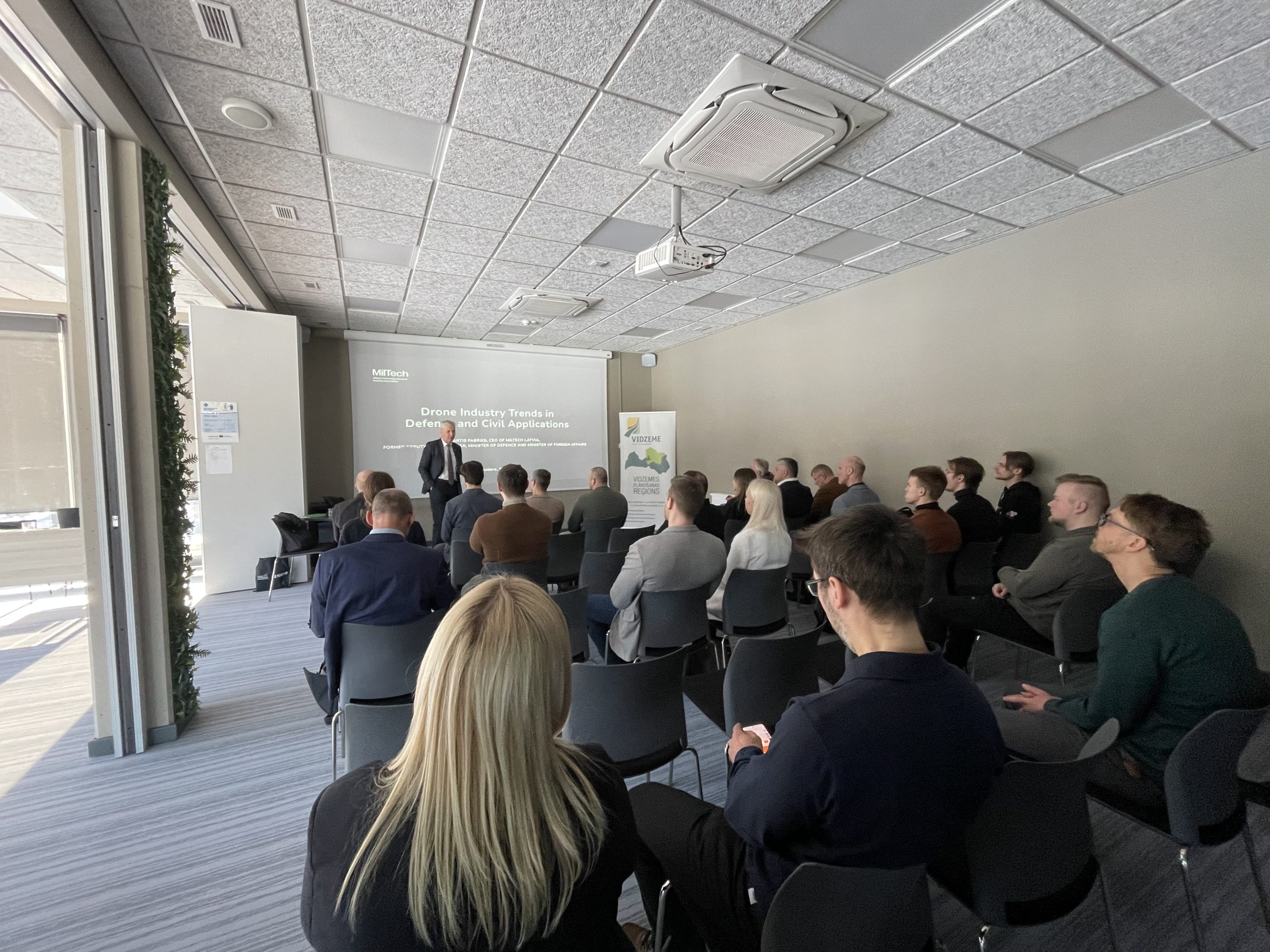
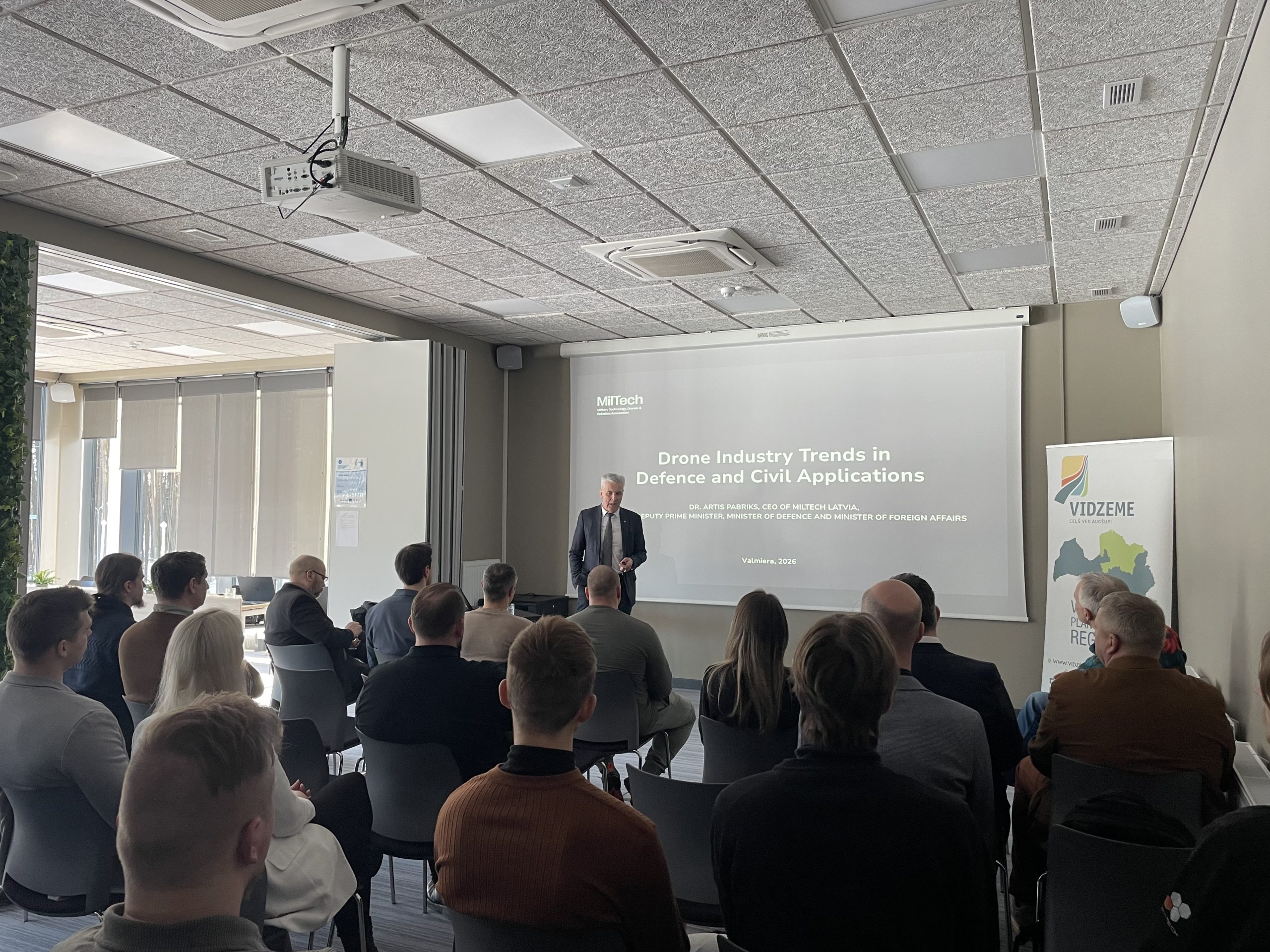
A broader perspective on the role of drone technologies in national security, economic development, and technological innovation was provided by Artis Pabriks, Executive Director of the military technology, drone, and robotics association MilTech Latvia.
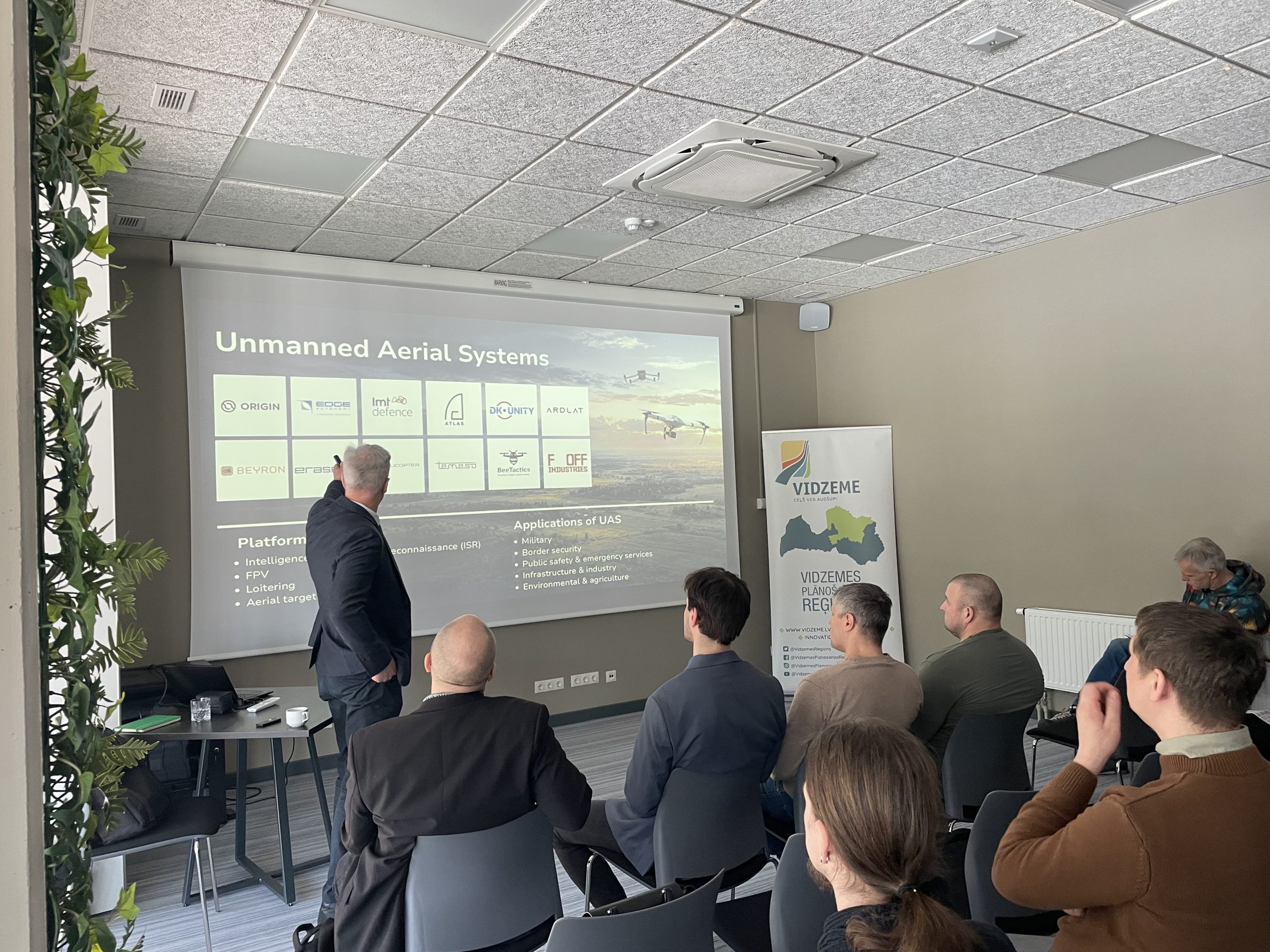
Pabriks noted that Latvia has emerged as one of the region’s most important centres for drone technology development. More than 50 military technology companies currently operate in Latvia, approximately 20 of which specialise in drone development, producing aerial, ground-based, and maritime unmanned systems. Around 15 additional companies focus on components and software development.
He emphasised that many drones developed in Latvia are no longer merely prototypes but operational technologies tested in real-world conditions, including in Ukraine. This demonstrates their technological competitiveness at the international level.
Pabriks also highlighted the broader economic benefits of the drone industry, including export growth, technological innovation, job creation, and increased technological independence. Recent crises—including the COVID-19 pandemic and the current security situation in Europe—have demonstrated the limitations of relying solely on global supply chains for critical goods and technologies.
According to Pabriks, drone technologies offer smaller countries with limited resources, such as Latvia, an opportunity to significantly strengthen their security capabilities. He argued that the distinction between military and civilian drone applications is becoming increasingly blurred. Technologies initially developed for defence purposes are now widely used in infrastructure monitoring, emergency response, border control, logistics, disaster management, and environmental monitoring.
As he noted, the civilian sector is effectively becoming part of the broader security ecosystem: the more people and businesses use drones in everyday activities, the greater society’s overall competence and preparedness in times of crisis.
Drones and Europe’s security future
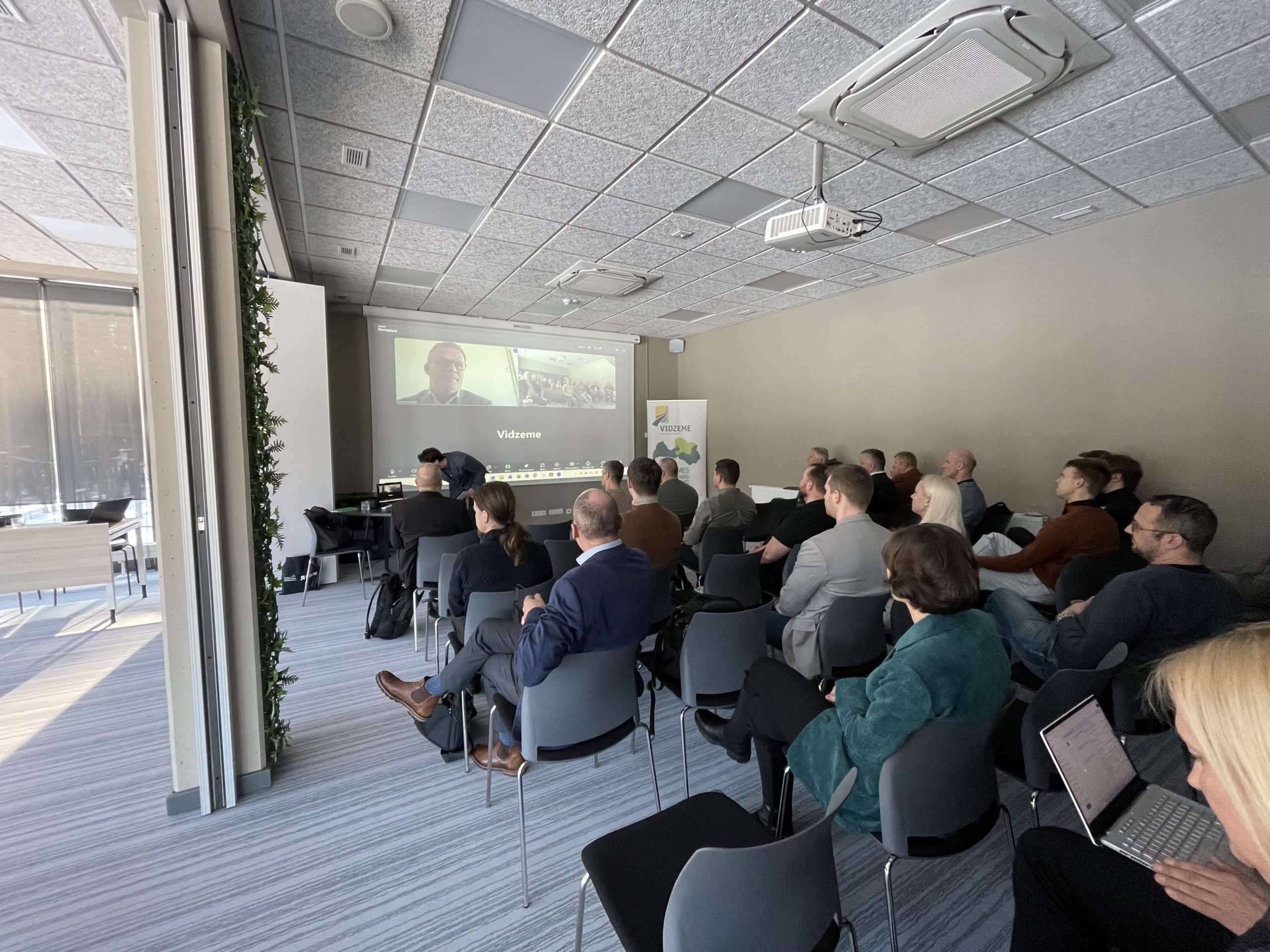
The seminar concluded with a remote presentation by Reinis Pozņaks, Member of the European Parliament (MEP), who addressed current security challenges in Europe and Latvia. Pozņaks highlighted the growing importance of unmanned systems in modern European security and stressed the need to support the rapidly expanding drone industry through simplified regulatory processes and more flexible financing mechanisms.
As a member of the European Parliament’s Security and Defence Committee, Pozņaks recently authored the report “Drones and New Warfare Systems: The Need for the EU to Adapt to Modern Security Challenges,” which was adopted by a strong majority in Parliament on 22 January.
He emphasised that Russia’s war against Ukraine has clearly demonstrated the strategic importance of drones in modern conflicts and has shown that industrial capacity, logistics, and the timely availability of critical technologies will play a decisive role during future security crises.
At the same time, Pozņaks argued that decision-making processes concerning critical technologies often move too slowly compared with the rapid pace of technological development and evolving security threats. For this reason, both Europe and Latvia must strengthen their technological and manufacturing autonomy by investing in domestic industry and building the capacity to produce strategically important technologies locally.
Key takeaways
The discussions throughout the seminar highlighted several common conclusions. In an increasingly dynamic technological environment, there is a growing need for more flexible technology procurement mechanisms, highly skilled specialists, and stronger cooperation between the public sector, industry, and research institutions.
Participants also emphasised the importance of public preparedness and strengthened civil protection systems, recognising that complete protection against drone-related threats is not possible. Drone technologies are becoming an increasingly important factor in both economic development and security, further connecting civilian and military sectors and making technological independence a strategic priority for both Latvia and Europe.
The project “Joint development of drone-based municipal services” (Smart Skies (EE-LV00141)) is implemented with the financial support of the EU Interreg Estonia-Latvia program for 2021–2027.
This message reflects the author’s opinion. The program’s managing authority is not responsible for the possible use of the information contained therein.