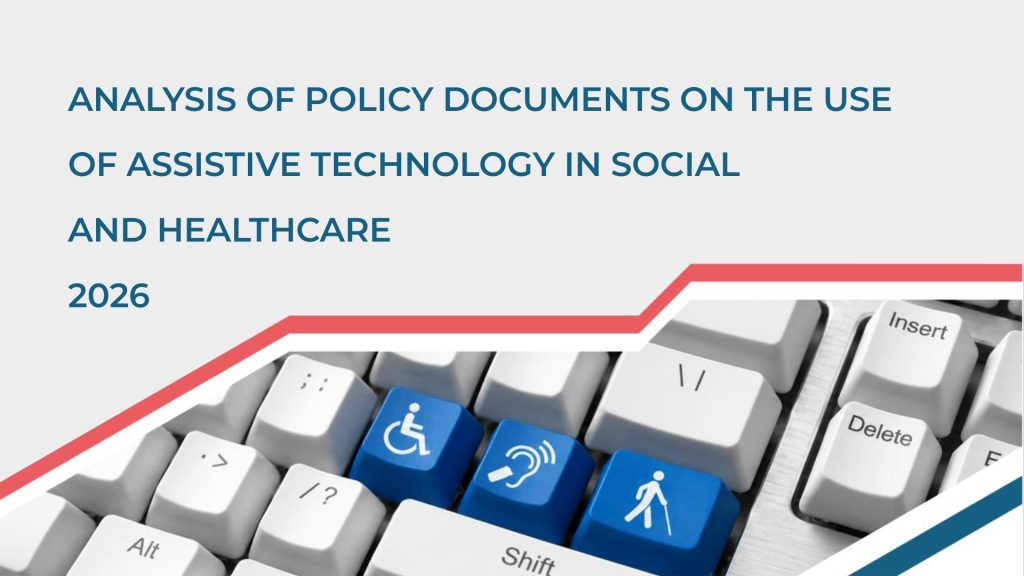
The Vidzeme Planning Region, Latvia’s TechSocialcare partner, has published a policy assessment on the use of assistive technology (AT) in social and health care in Latvia. The report was produced by social anthropologist Līna Orste, drawing on a review of policy documents and in-depth input from professionals, service providers across the sector and users.
Key findings: communication gaps and mismatched needs
The assessment identifies a recurring problem at the heart of Latvia’s AT provision: insufficient communication between the parties involved at different stages of the process – from initial assessment and allocation through to day-to-day use.
As Orste notes, this breakdown has practical consequences: the process of obtaining an assistive device can take longer than necessary, and the devices themselves may prove uncomfortable or unusable, either because those involved lack the knowledge to use them correctly or because the technology does not match the actual needs of the user.
Recommendations spanning policy and practice
The report offers a broad set of recommendations – from strengthening coordination between the health and social care sectors to addressing ethical questions in the adoption of new technologies. Key directions include improving communication between all parties involved in AT provision, ensuring that devices are matched to actual user needs, and building knowledge and support structures around their use.
The aim is to identify what changes are needed – both at the policy level and in everyday practice – to make assistive technologies more accessible and effective in care settings. As population ageing and the rising prevalence of chronic conditions drive growing demand for care services, getting these right matters beyond Latvia’s borders.
Next steps within TechSocialcare
“The review confirms that assistive technologies can be a meaningful support for both care recipients and professionals – but their successful implementation requires closer collaboration between institutions and a more joined-up approach,” says Lienīte Priedāja-Klepere, project manager at the Vidzeme Planning Region. “In the next phases of the project, we will focus on working more closely with sector experts and international partners to turn the identified solutions into practical recommendations and long-term improvements.”
The analysis of policy documents on the use of assistive technology in social and health care is available in both Latvian and English. Read the English version here.