Hemp and timber structures, natural insulation and other bio-based materials are already being used in various construction projects across Latvia. However, for their use to become more widespread and competitive, technological development must be accompanied by growing demand, increased production capacity and supportive policies.
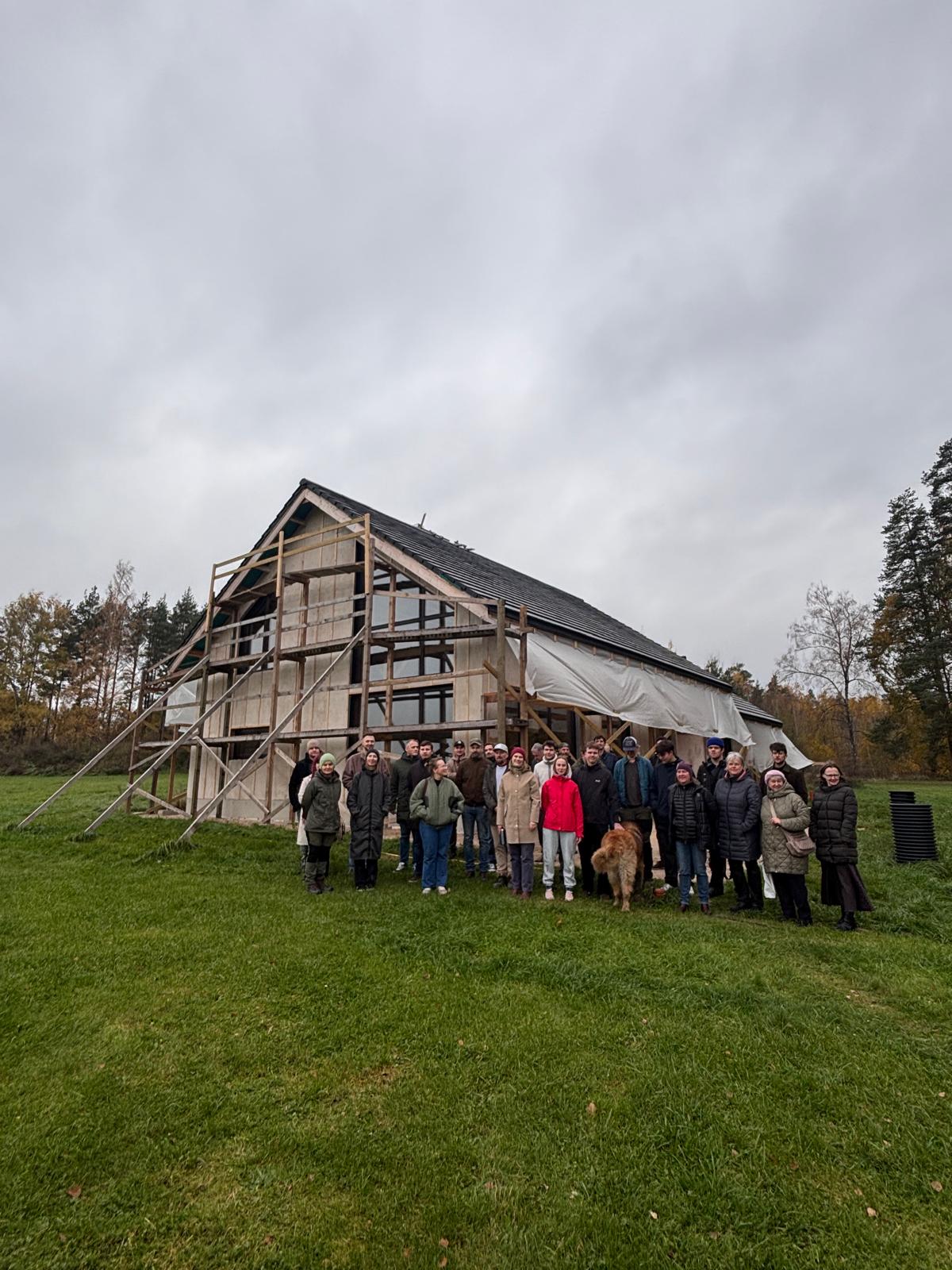
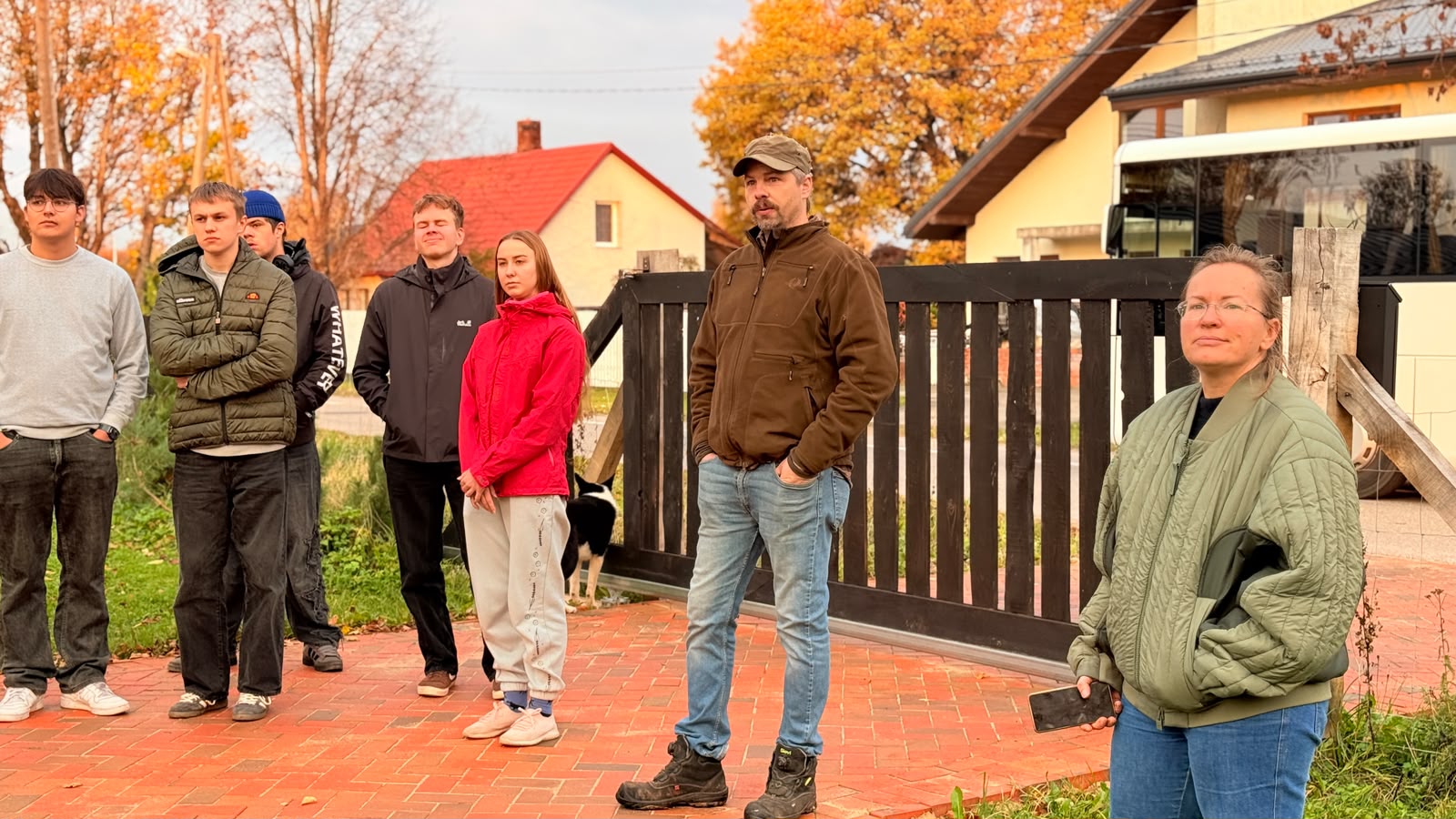
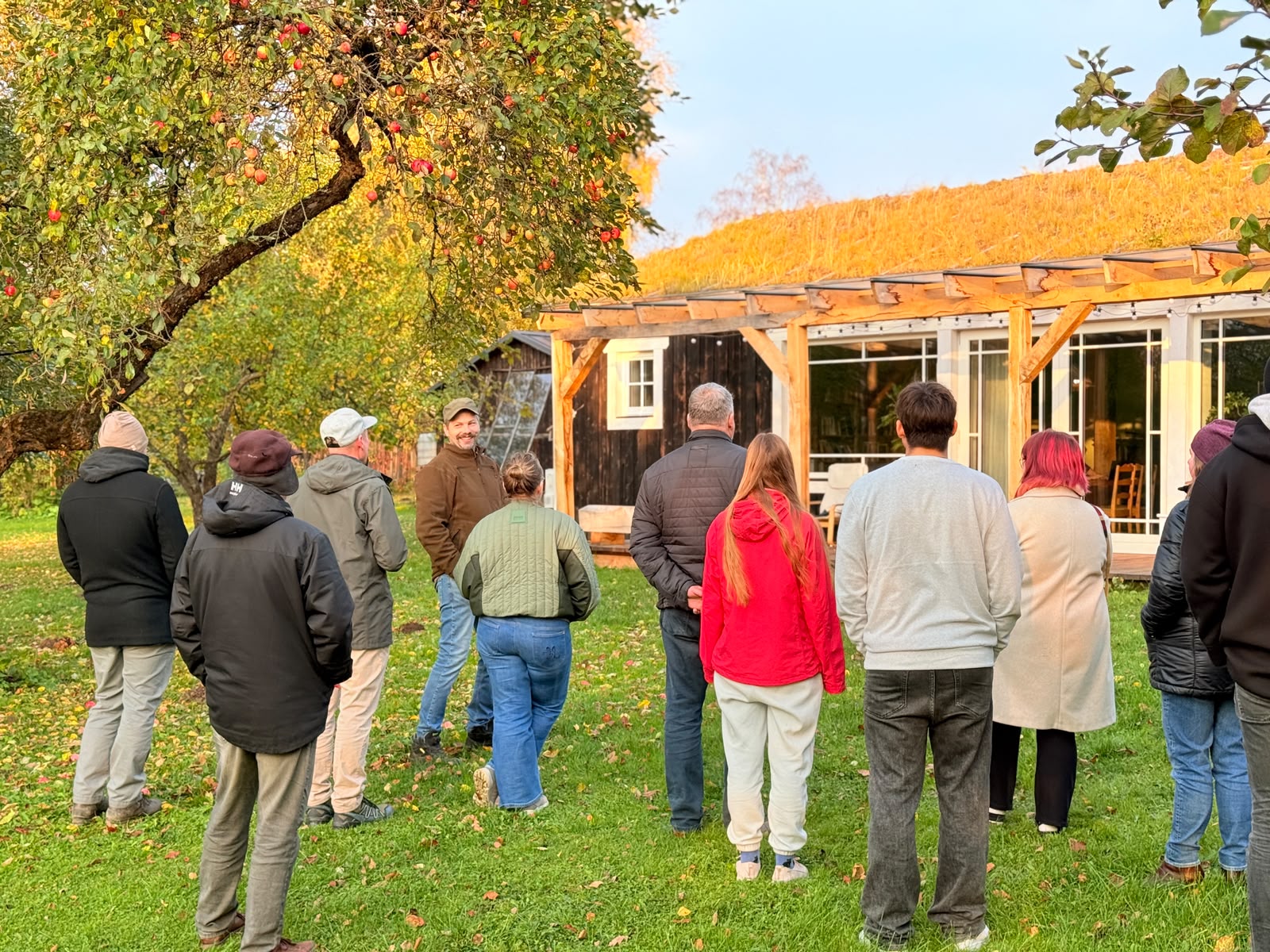
On 23 October, a construction study visit was organised as part of the “ABC” project. Participants visited several construction sites and met with industry practitioners to explore the opportunities, advantages and challenges associated with the use of bio-based building materials. Particular attention was paid to the use of hemp and timber in construction, sustainable structural solutions and the development prospects of bio-based materials in Latvia’s construction sector.
From Hemp Houses to the Renovation of Historic Buildings
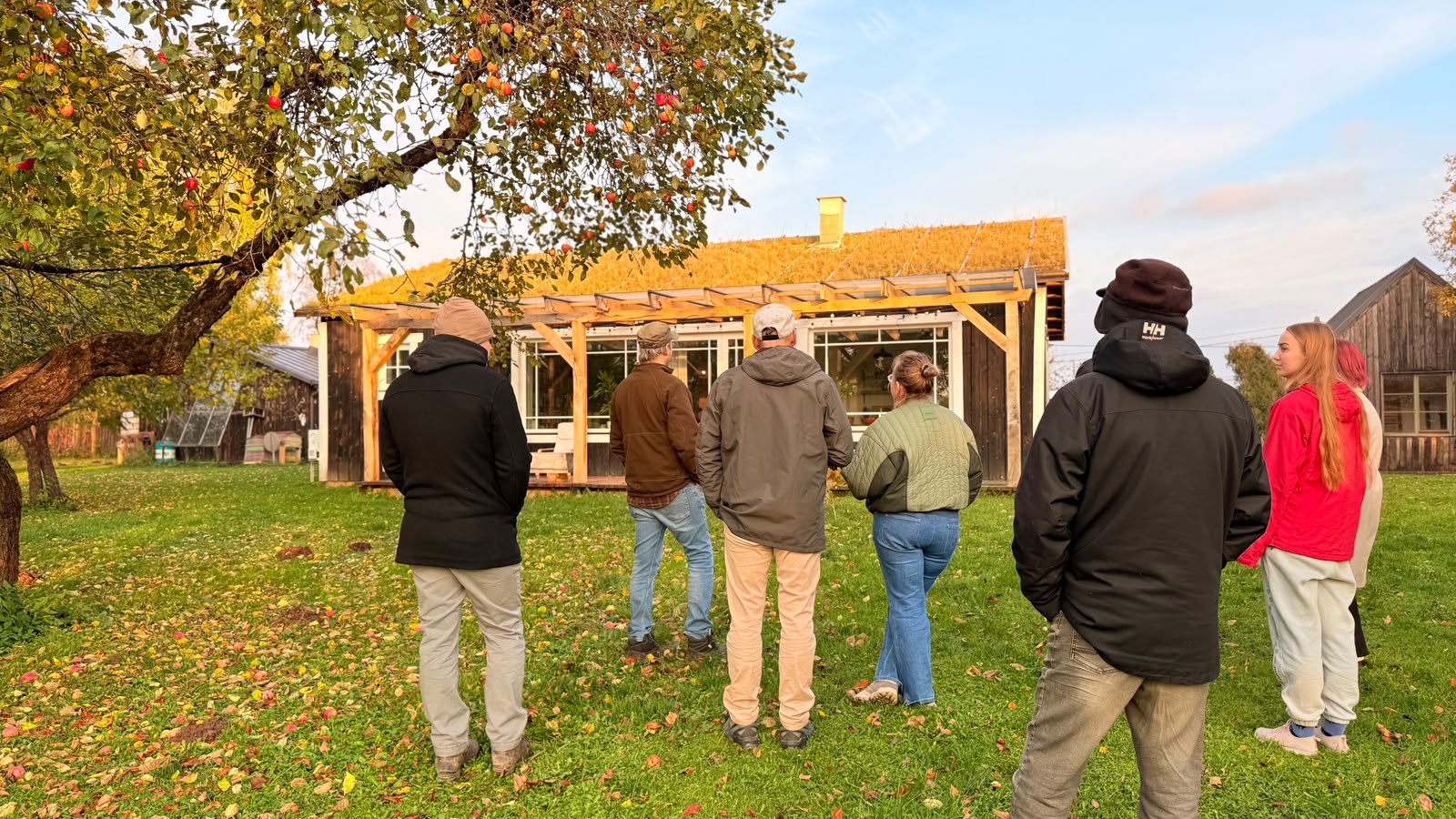
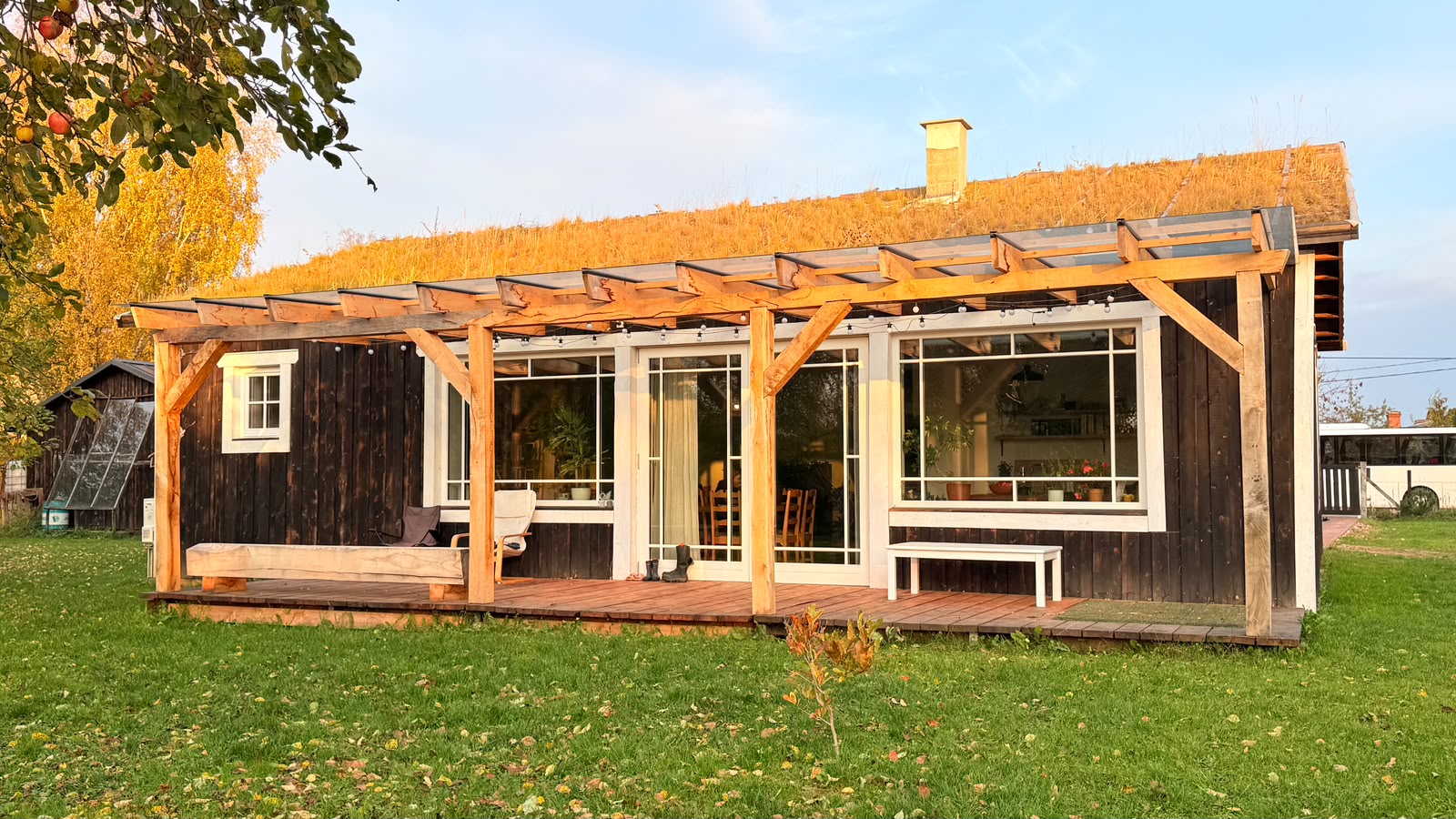
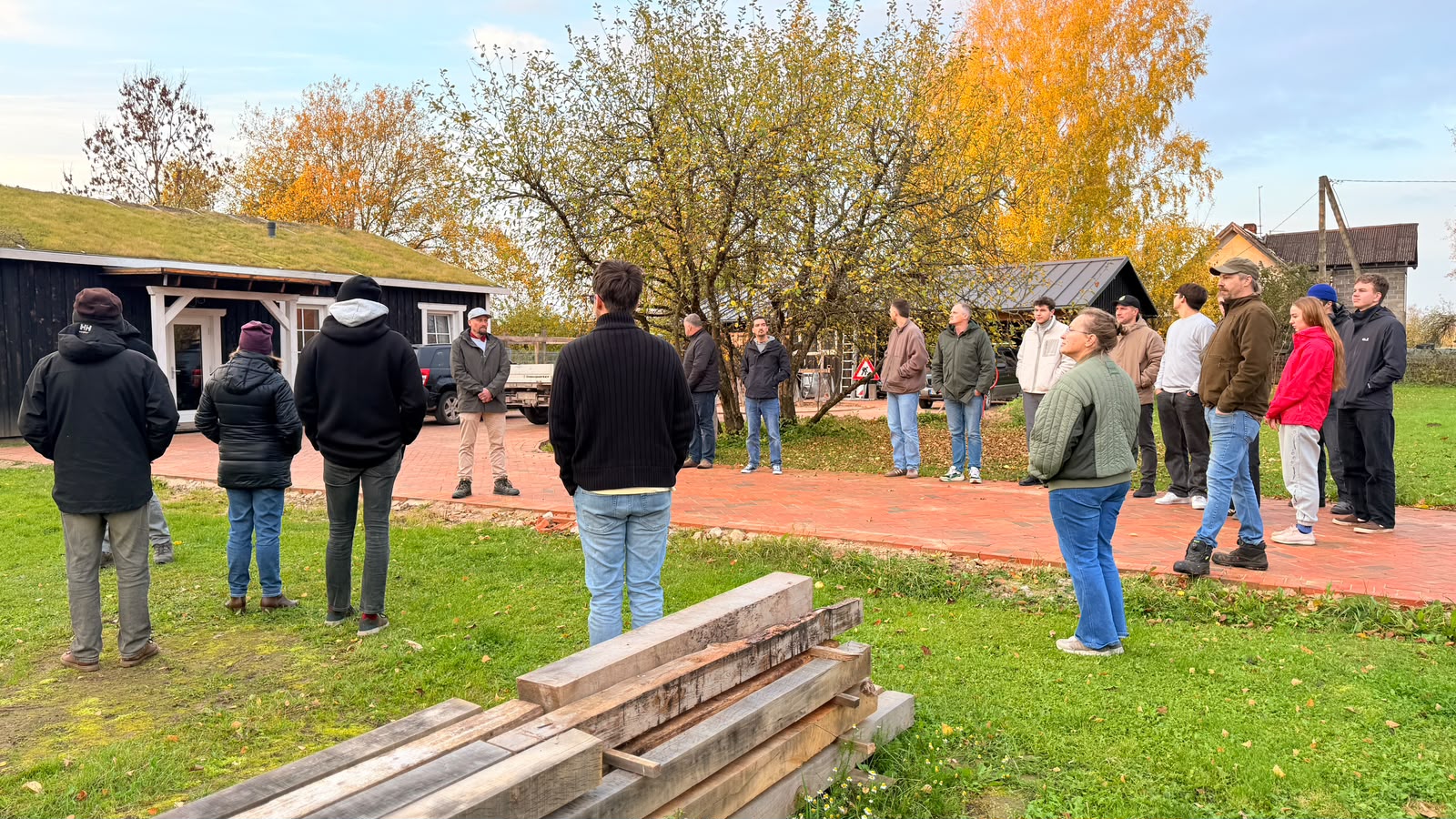
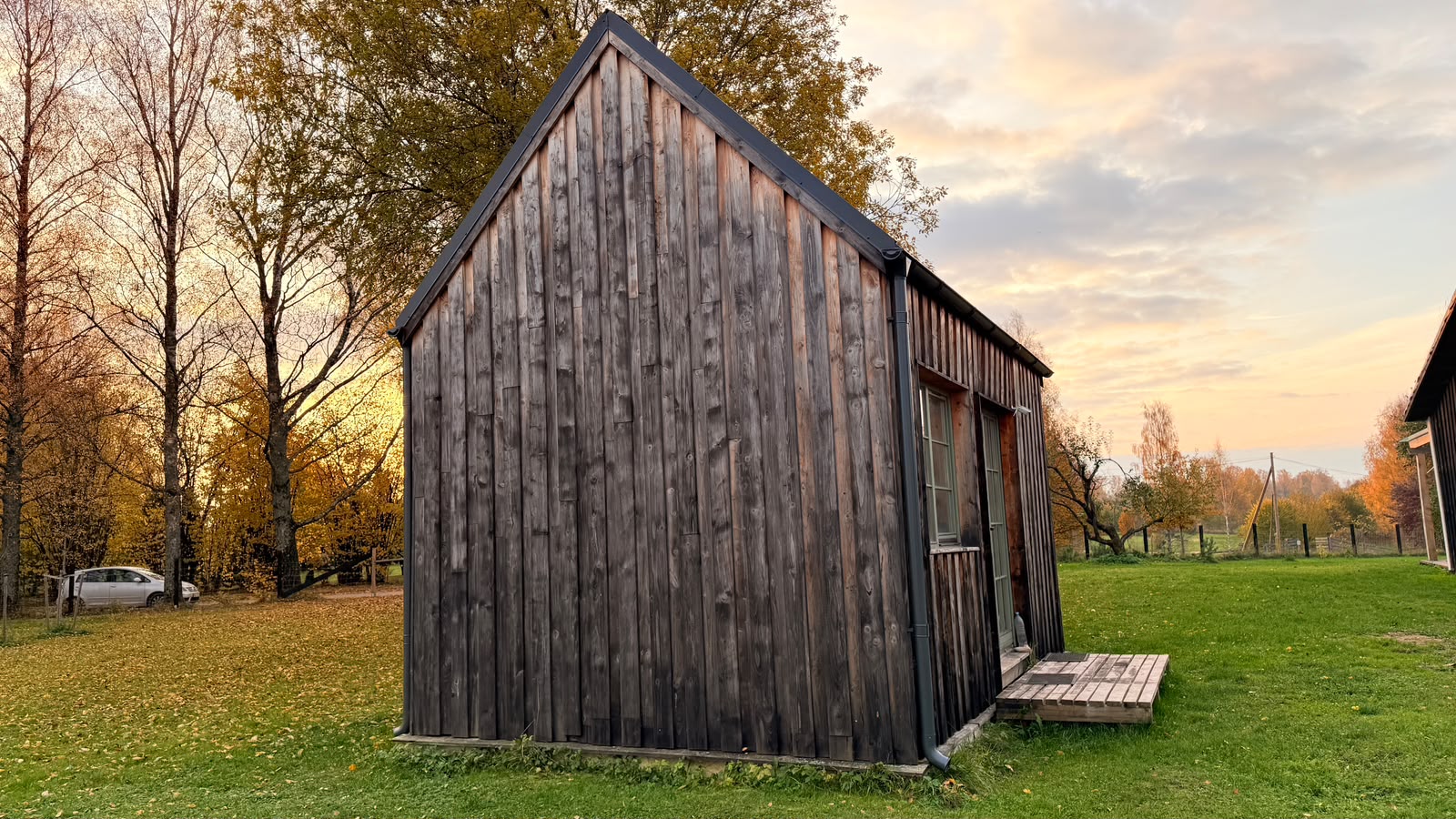
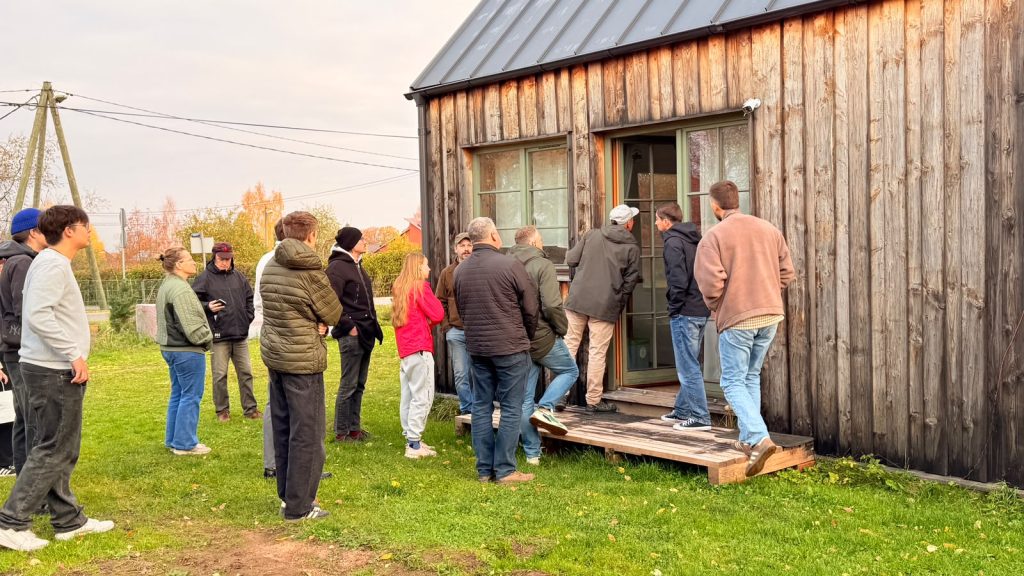
The study visit began in Cēsis, where participants visited a hemp house built largely by its owner, Kristaps Liepiņš. He shared his experience of designing the building, selecting materials, working with lime plaster and installing a green roof.
While searching for suitable natural materials for his family home, Kristaps had also considered straw bale construction. Before building the main house, he constructed a small experimental building of approximately 25 m² to test different materials and construction techniques. This experience helped him understand both the advantages of hemp-based mixtures and the practical challenges involved in their preparation, application and drying.
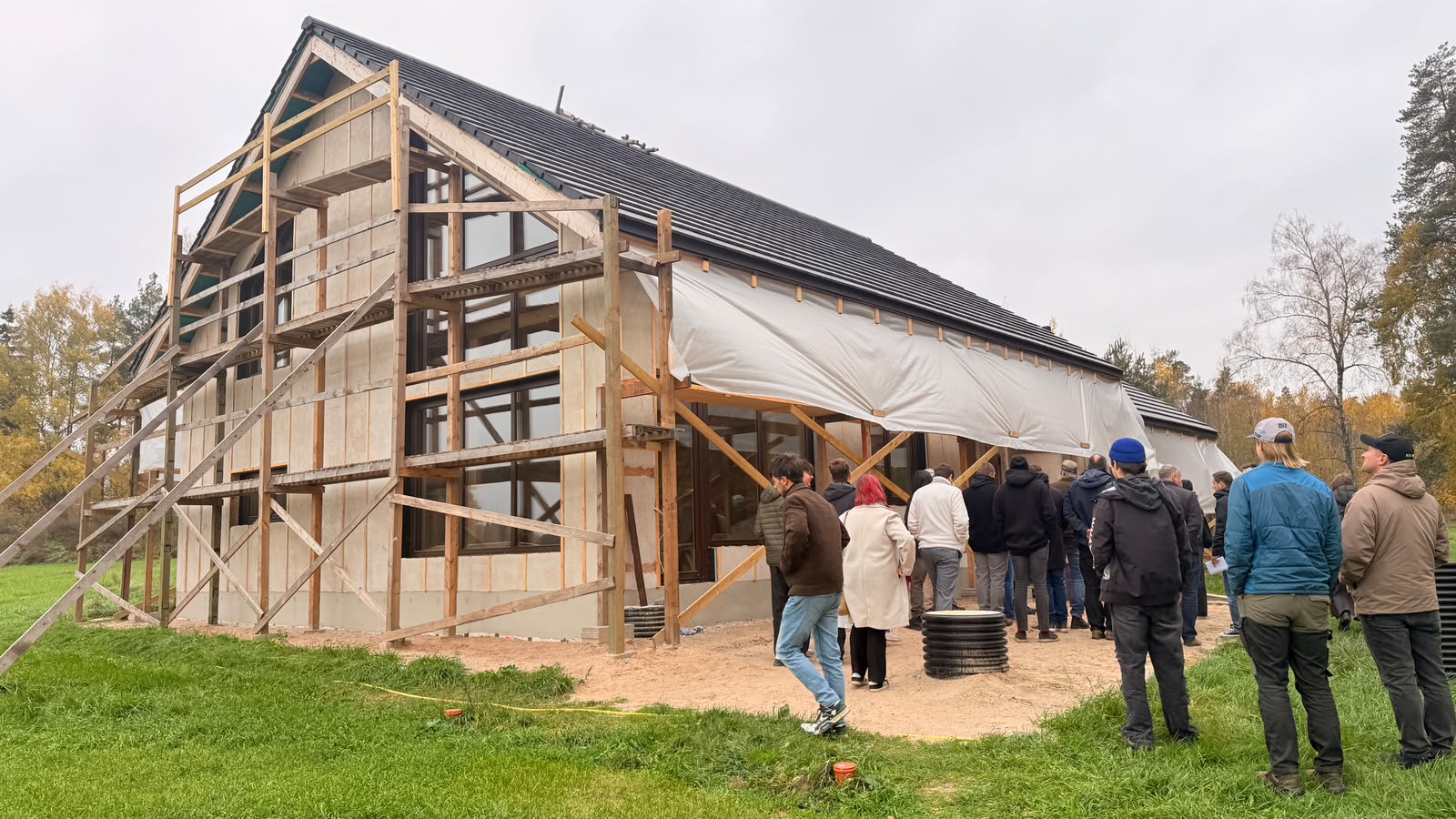
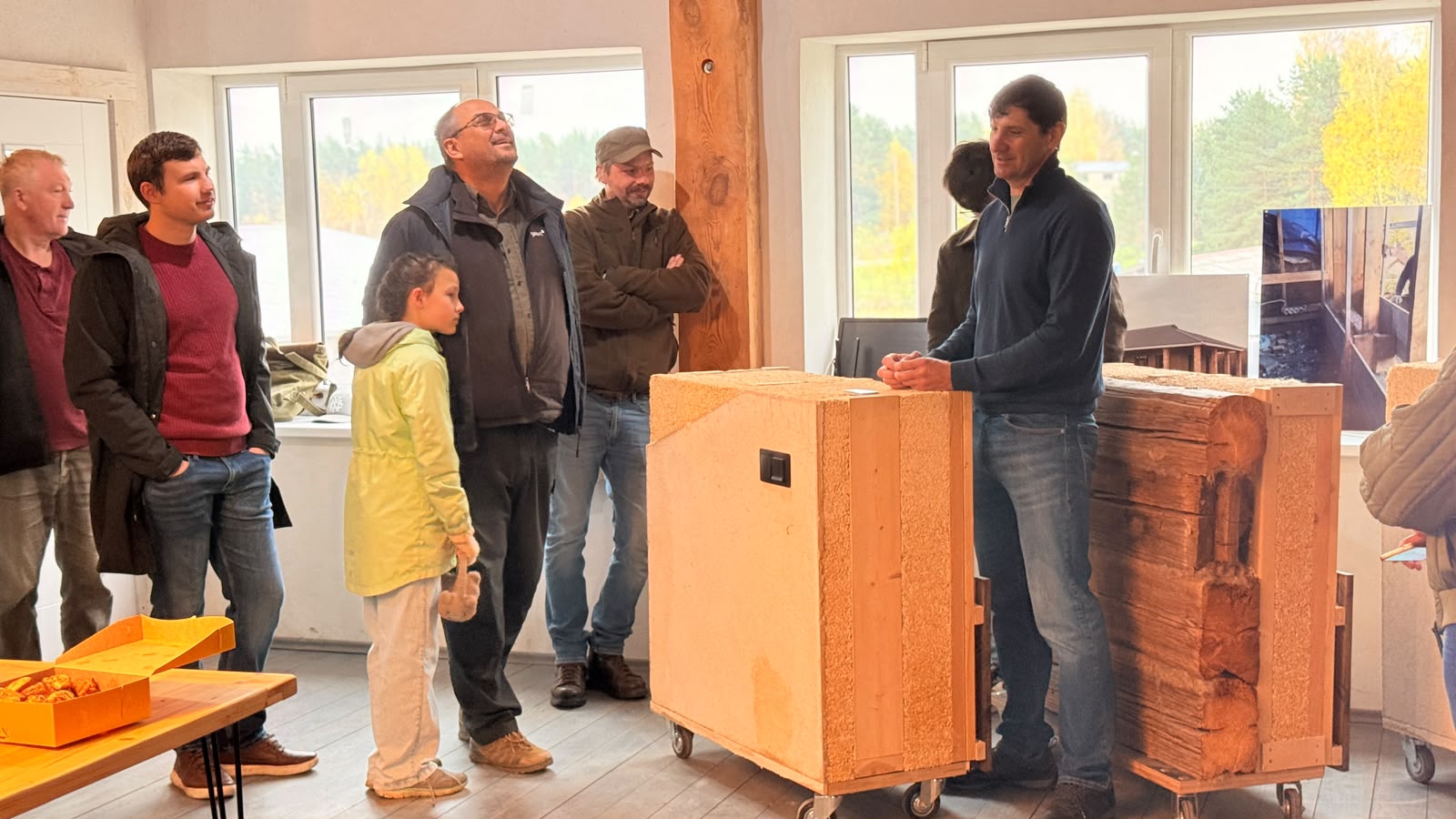
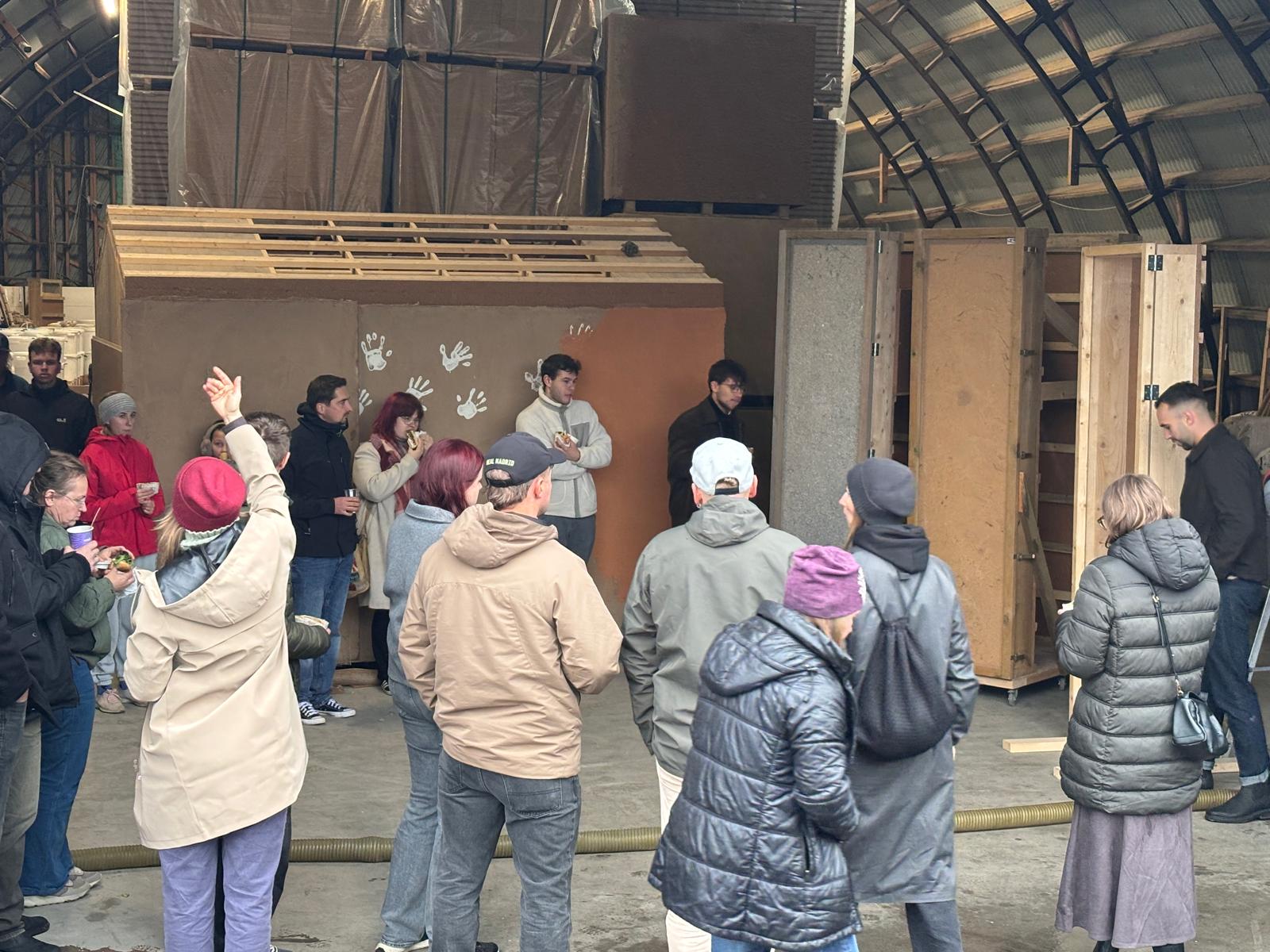
In Ikšķile, Uģis Pauriņš, head of the “Nature Nest” brand, introduced participants to the properties of hemp-based building materials and their potential applications. The company has been operating both locally and internationally for more than 15 years, including involvement in the construction of public buildings in Switzerland. During the site visit and discussions, participants explored the thermal insulation properties of these materials, their ability to regulate moisture and their applications in both new construction and the renovation of historic buildings, including internal insulation.
Particular attention was paid to the thermal insulation properties of hemp-based materials and their ability to regulate indoor humidity. Uģis Pauriņš emphasised their considerable development potential, as they can be used in both new buildings and the renovation of historic structures. One example discussed was the possibility of using hemp-based materials to insulate buildings that are several hundred years old from the inside.
The discussions also addressed challenges facing the sector. To encourage wider use of bio-based building materials, it is necessary to stimulate demand and create more favourable conditions for their entry into the construction market. Participants highlighted that private sector initiatives alone are insufficient to drive industry growth and that targeted policy support is also essential.
These examples demonstrate that the application of bio-based materials is not limited to new or experimental buildings. They can also provide solutions for improving the existing building stock, provided that appropriate materials and technologies are selected.
Timber Structures for Multi-Storey Residential Buildings
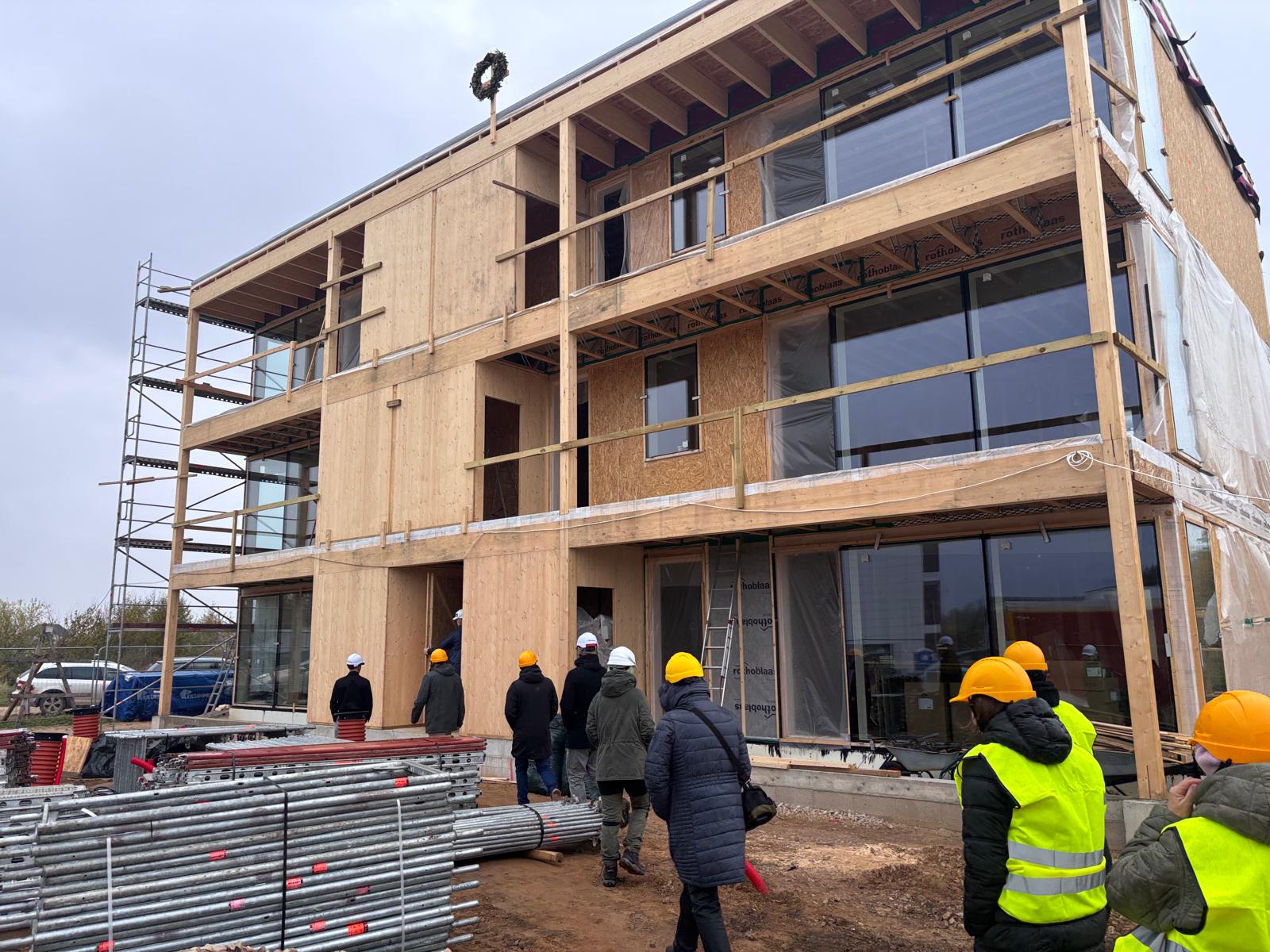
The next stop was Tilderu Quarter in Salaspils, where participants explored timber construction solutions developed by SIA “MM Properties”. The company specialises in the design and construction of various types of timber buildings, offering solutions for both private houses and multi-apartment residential buildings.
A company representative introduced the development concept of the residential quarter, the choice of materials and the combination of different construction technologies. Tilderu Quarter incorporates a hybrid construction approach that combines several technologies. One of the project’s distinctive features is the combination of timber and concrete structures in a three-storey building.
When discussing the advantages of timber buildings compared with traditional concrete structures, the company representative highlighted construction quality, speed and energy efficiency. Timber construction can shorten construction times and, in some cases, reduce costs. At the same time, such buildings provide a pleasant living environment characterised by warmth, the presence of natural materials and a comfortable indoor climate.
The discussion also addressed challenges related to providing sustainable housing in the real estate market. As the company representative pointed out, price, location and reliability are important considerations for buyers, while environmental aspects are not always the main deciding factor, particularly when purchasing apartments in multi-storey residential buildings.
This raises an important question: how can construction solutions be developed that reduce environmental impact while also meeting residents’ needs?
Material Selection and Proper Installation Are Crucial
The study visit concluded at “RB&B” in Katlakalns, where Hardijs Tučs introduced participants to the use of cellulose insulation and other thermal insulation solutions for improving building energy efficiency.
The company specialises in insulating buildings with cellulose insulation, a thermal insulation material used in walls, ceilings and floors. Its work is based on practical experience and insulation solutions that help improve building energy efficiency and ensure a healthy indoor environment.
Company representatives emphasised that high-quality insulation depends on selecting appropriate materials, ensuring their compatibility and applying the correct installation techniques. By combining different insulation materials, solutions can be adapted to the specific needs of individual buildings, helping achieve high levels of energy efficiency. Over the course of its operations, the company has insulated more than 2,000 buildings in Latvia and elsewhere in Europe.
From Individual Examples to a Competitive Industry
The study visit enabled participants to compare different approaches to using bio-based materials and learn directly from construction practitioners. The sites visited demonstrated that a wide range of solutions using hemp, timber and other natural materials are already being implemented in Latvia. At the same time, further development of the sector requires knowledge sharing, the exchange of practical experience and a supportive environment for the wider adoption of sustainable building materials.
These issues are particularly relevant when assessing the potential of Latvia’s agricultural resources to create higher value-added products and develop new value chains.
The study visit was organised within the framework of the Interreg Europe Programme 2021–2027 project “Agro Building Carbon/ABC: quantifying carbon removal farm-sourced building materials”, implemented in Latvia by the Vidzeme Planning Region in cooperation with Vidzeme University of Applied Sciences.
The ABC project aims to improve regional policy instruments to create economic opportunities for the production of bio-based building materials and their associated value chains. Particular attention is paid to learning from good practices and support policies, especially those related to carbon sequestration certification.