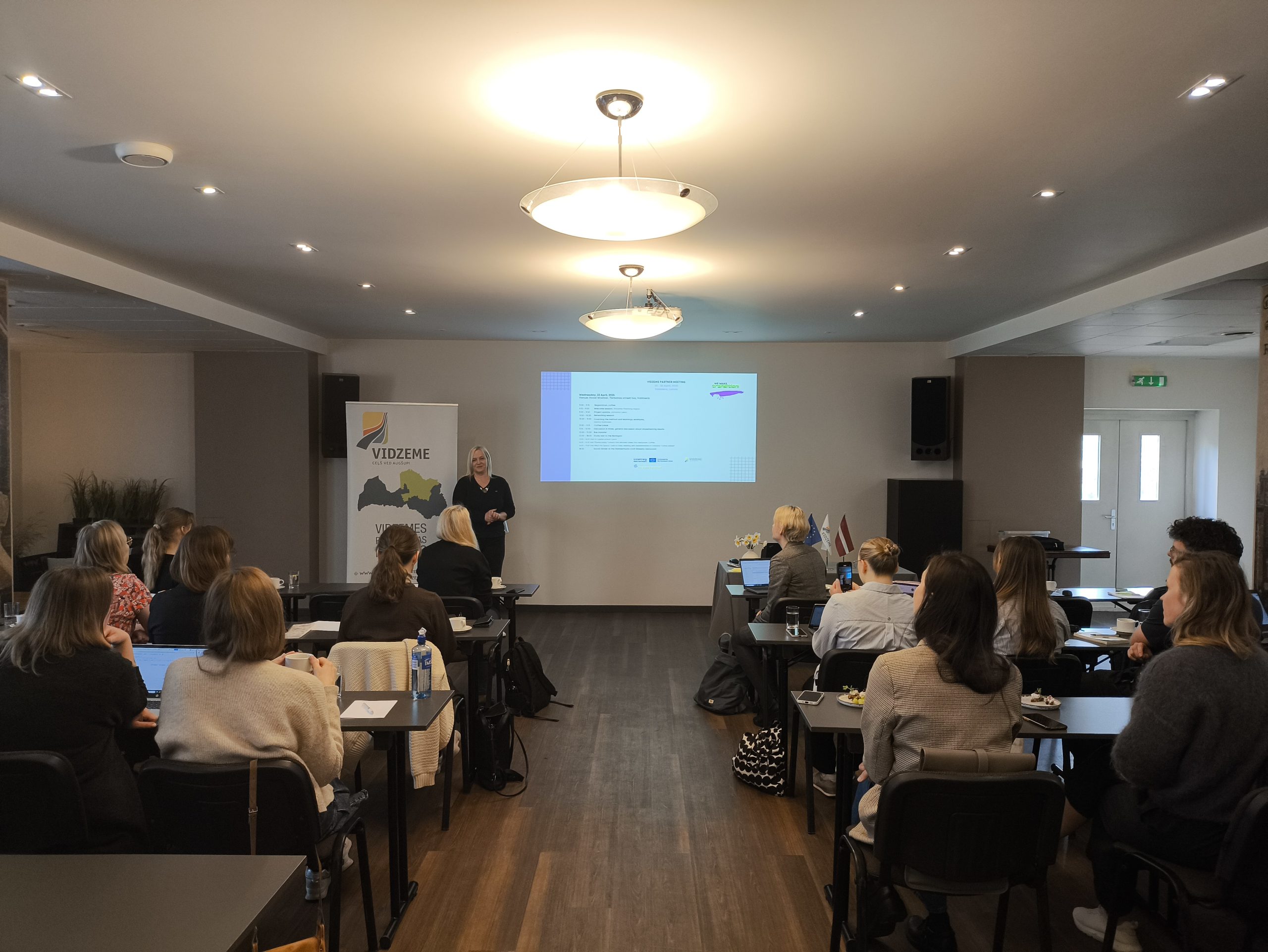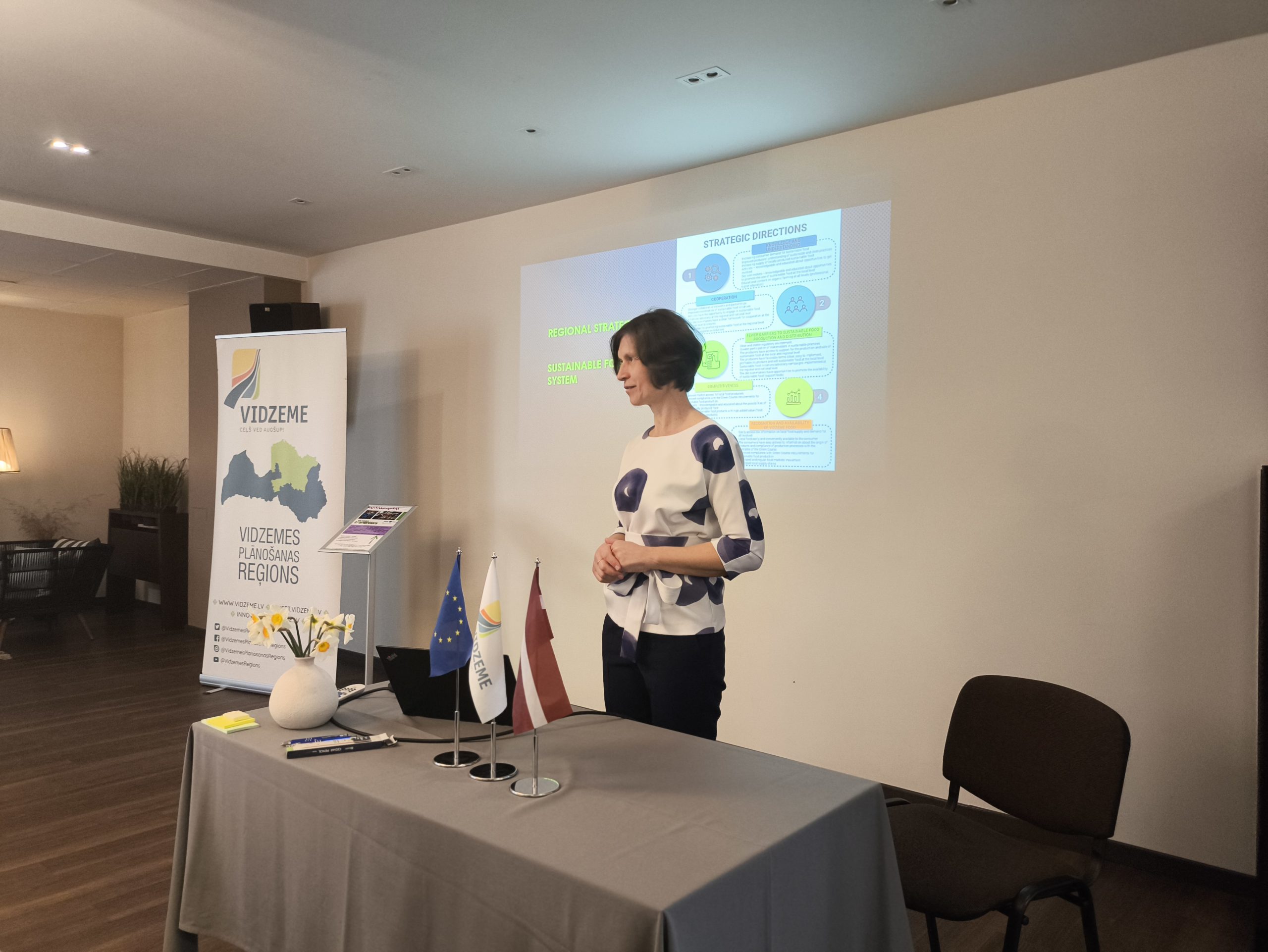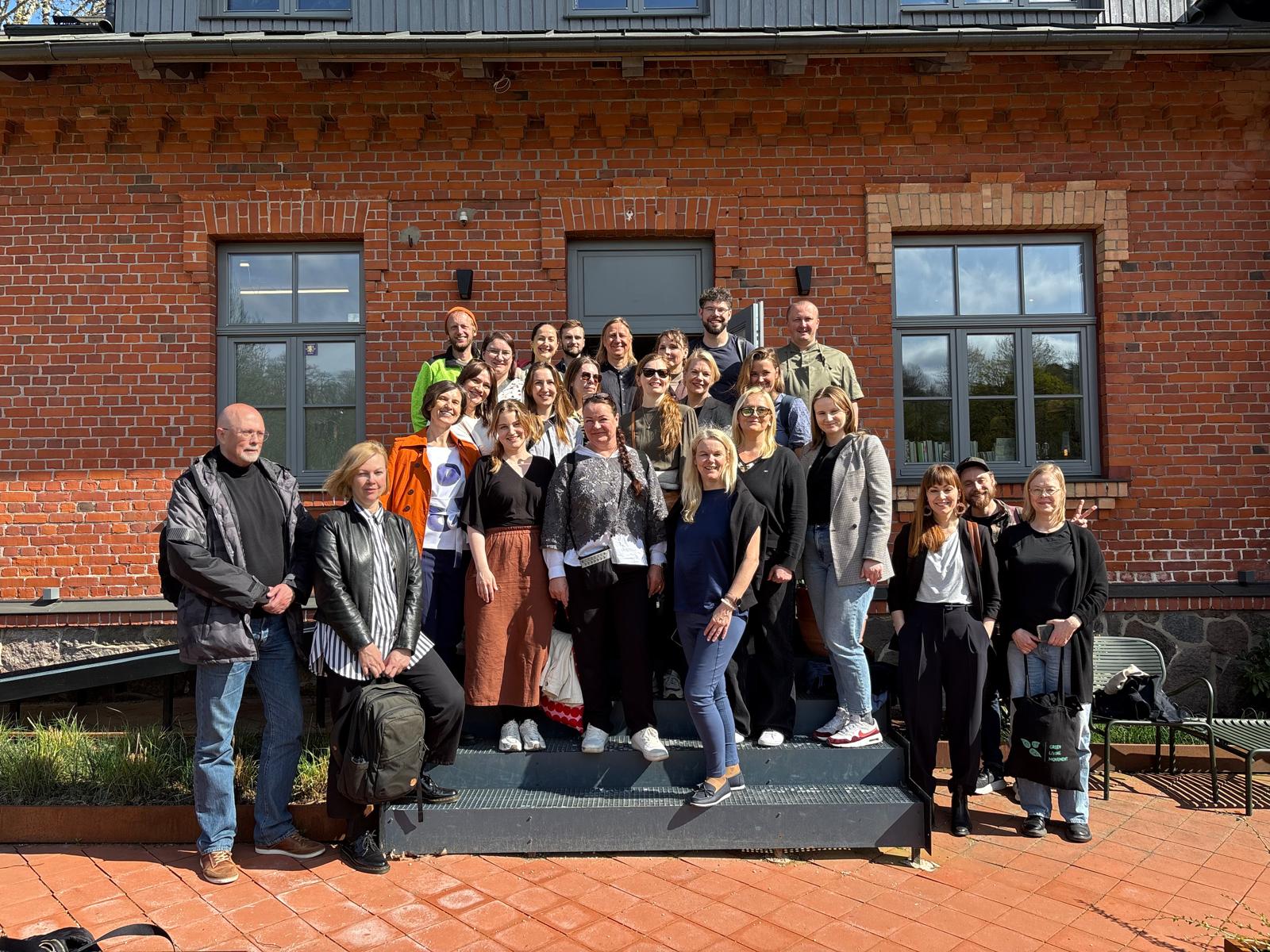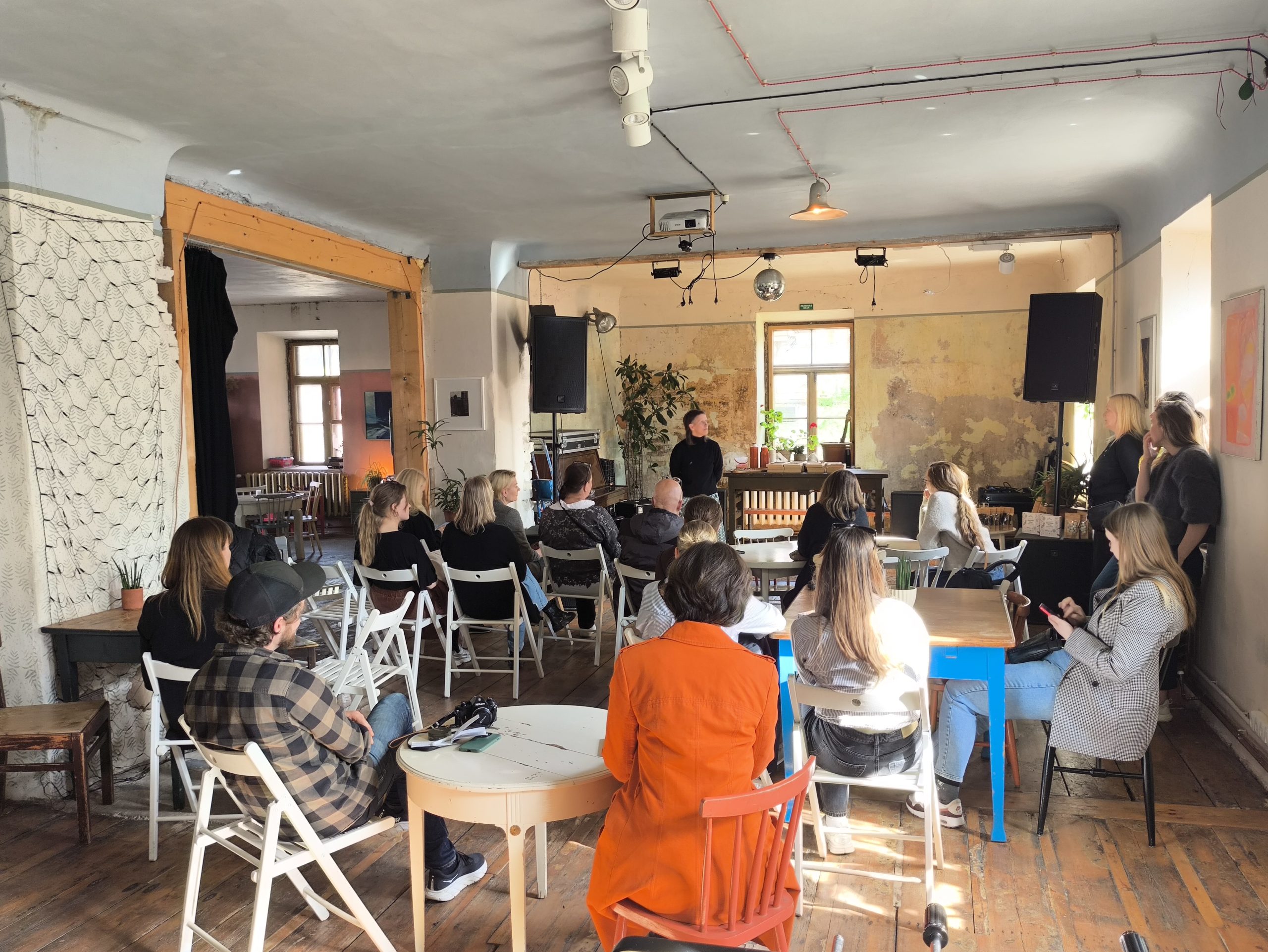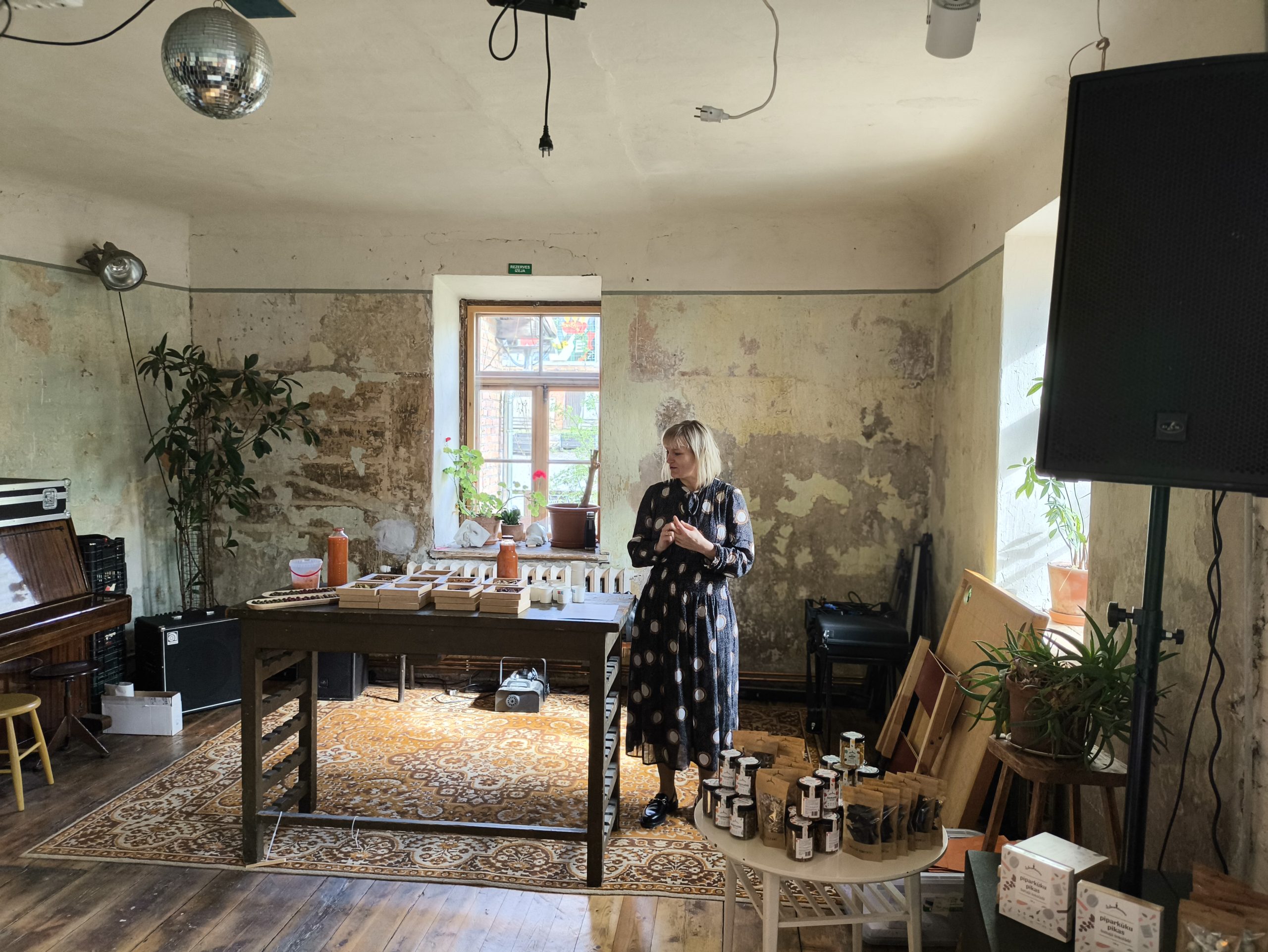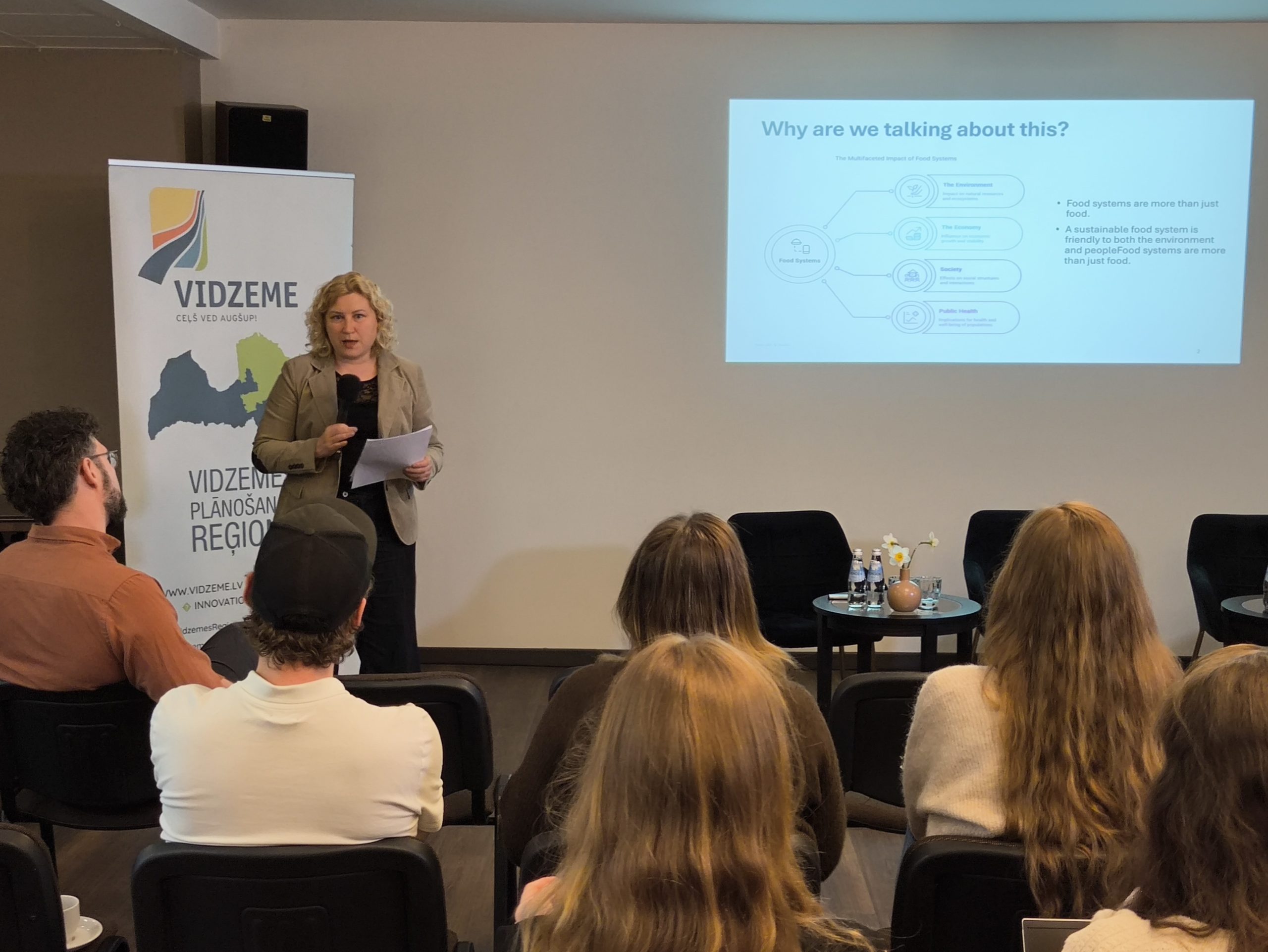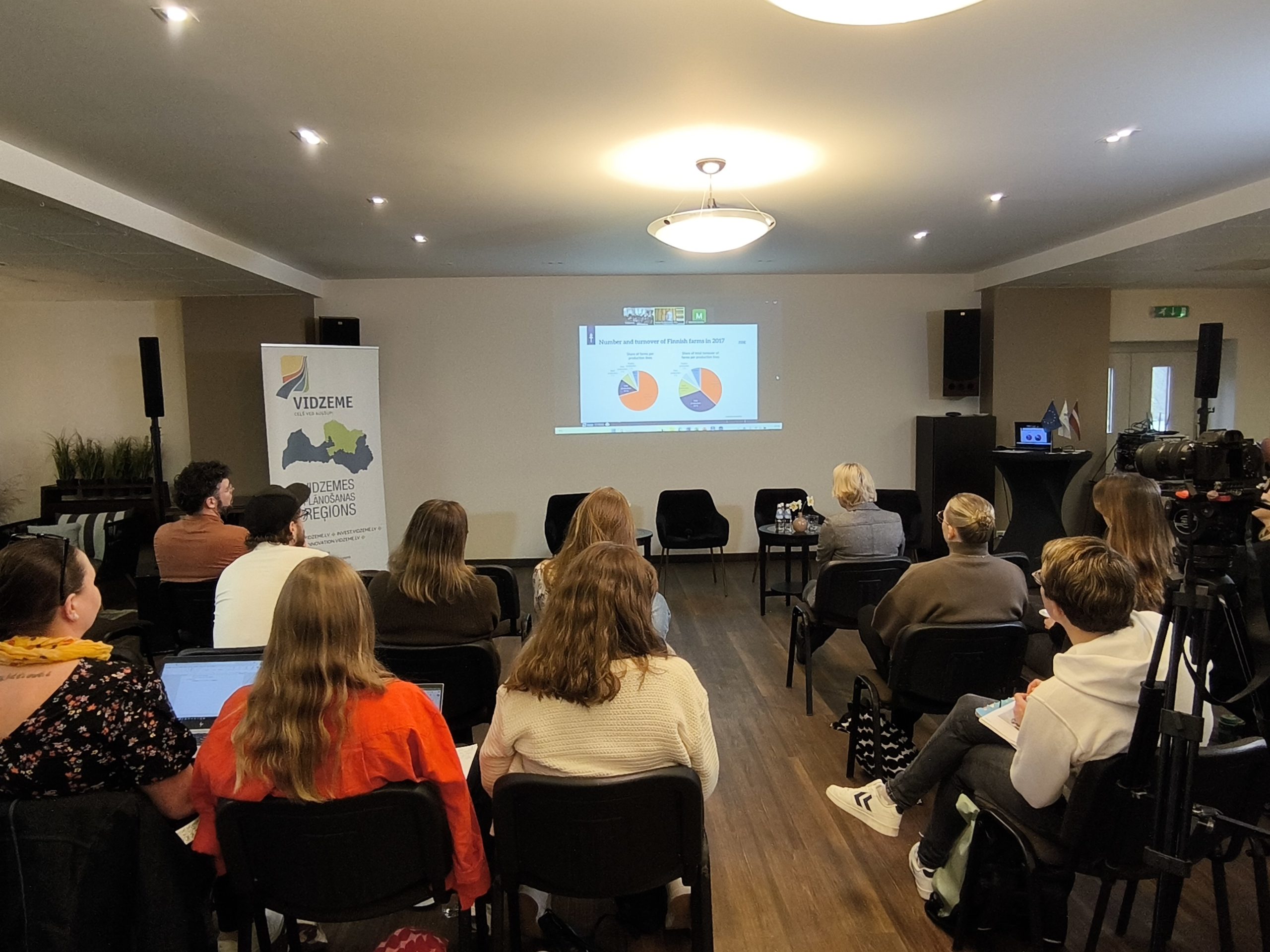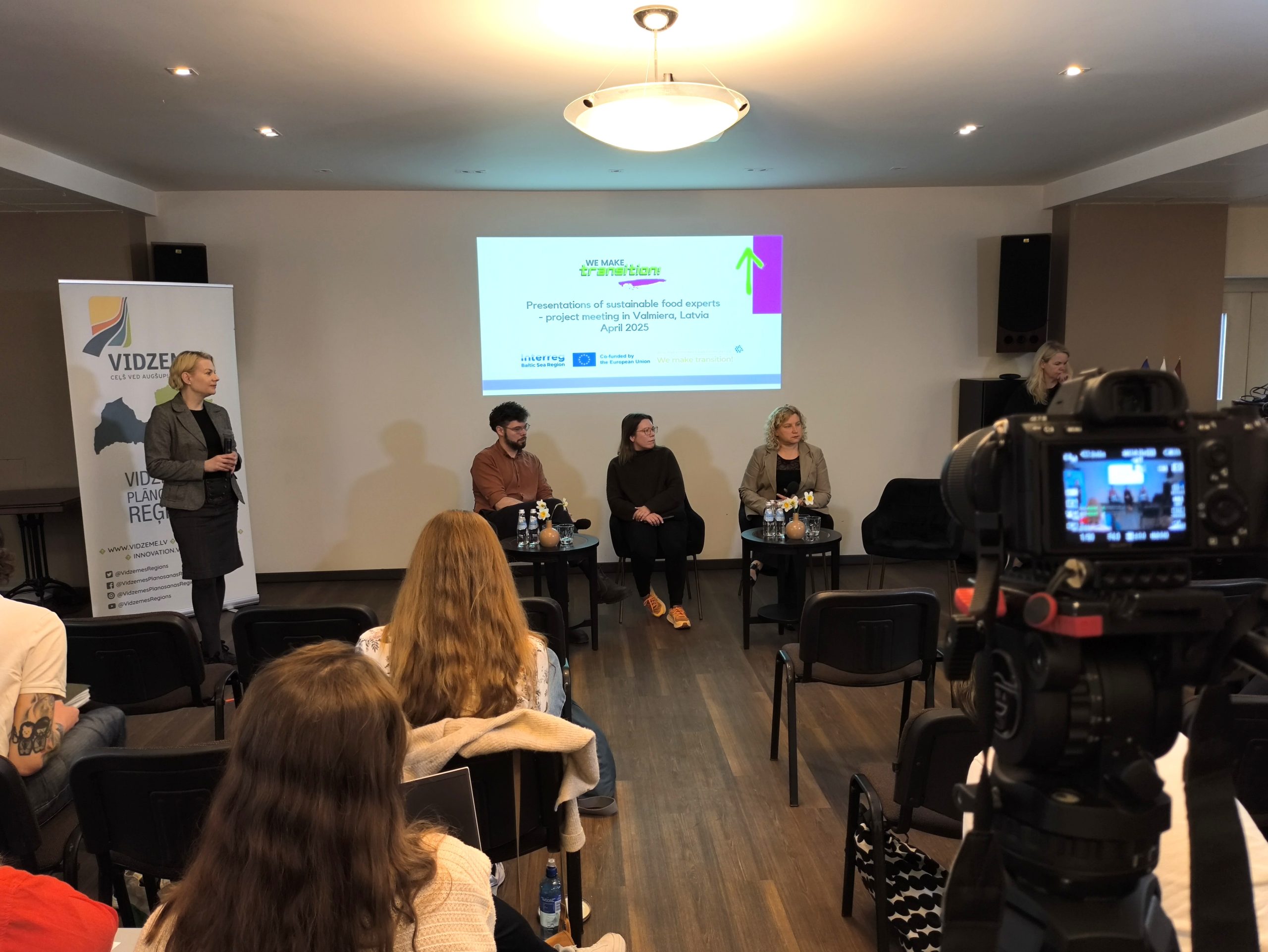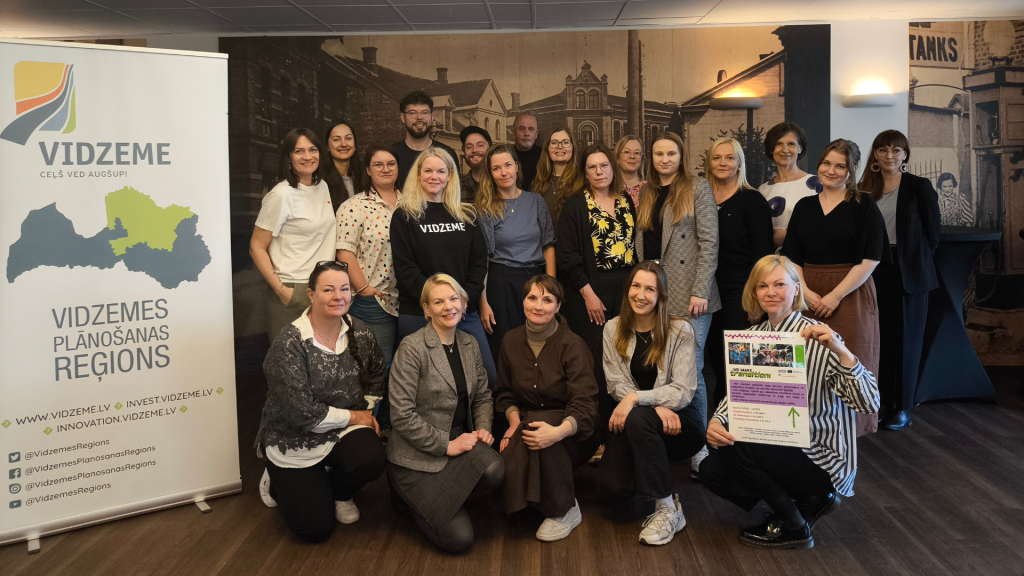
From April 23 to 24, partners of the “We Make Transition!” project from Finland, Poland, Germany, Estonia, Norway, and Latvia held an in-person meeting in Valmiera. The aim was not only to discuss project updates, but also to introduce foreign partners to the Bioregion established within Gauja National Park. The concept embraces sustainable and high-quality living environments, healthy nutrition, and the practical implementation of circular economy approaches.
A year ago, within the project, a new citizen participation method called the “Transition Arena” was tested over three consecutive co-creation workshops in Vidzeme. During these workshops, participants developed a vision for promoting a healthy lifestyle and increasing the consumption of organic food within the bioregion. Organic food and sustainable food systems were the central themes of both this in-person meeting and the subsequent study visits, connecting all the places and people involved.
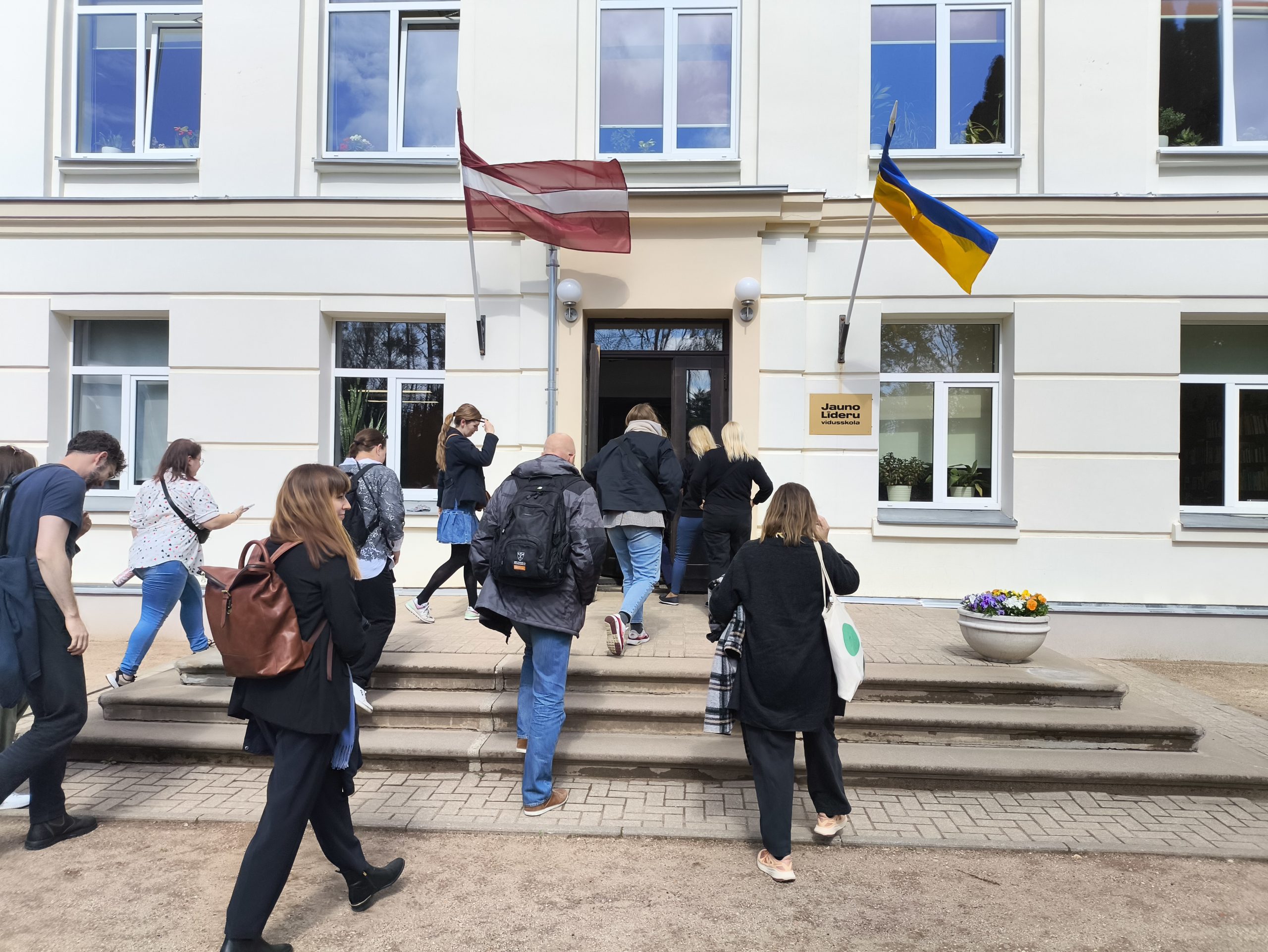
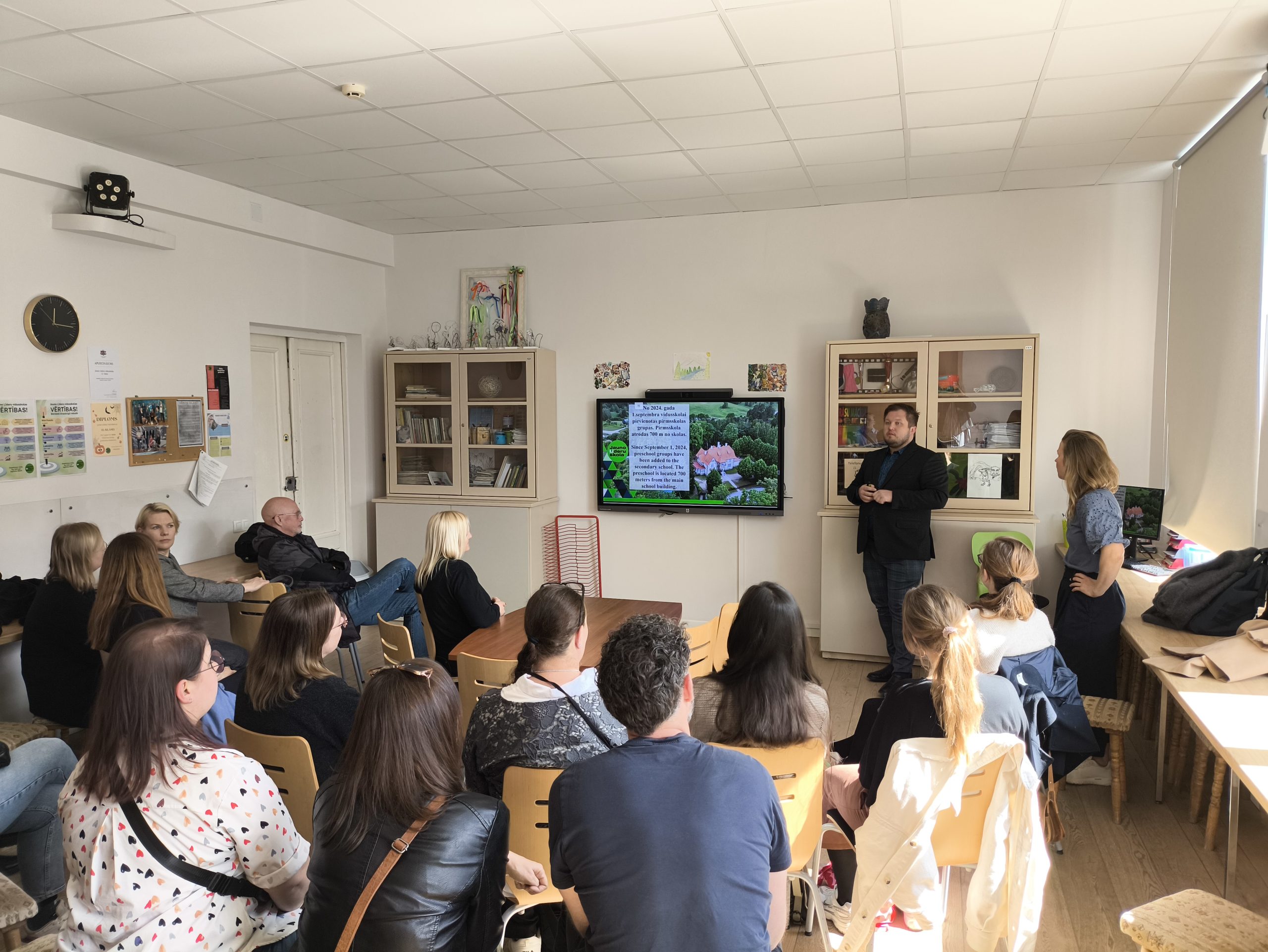
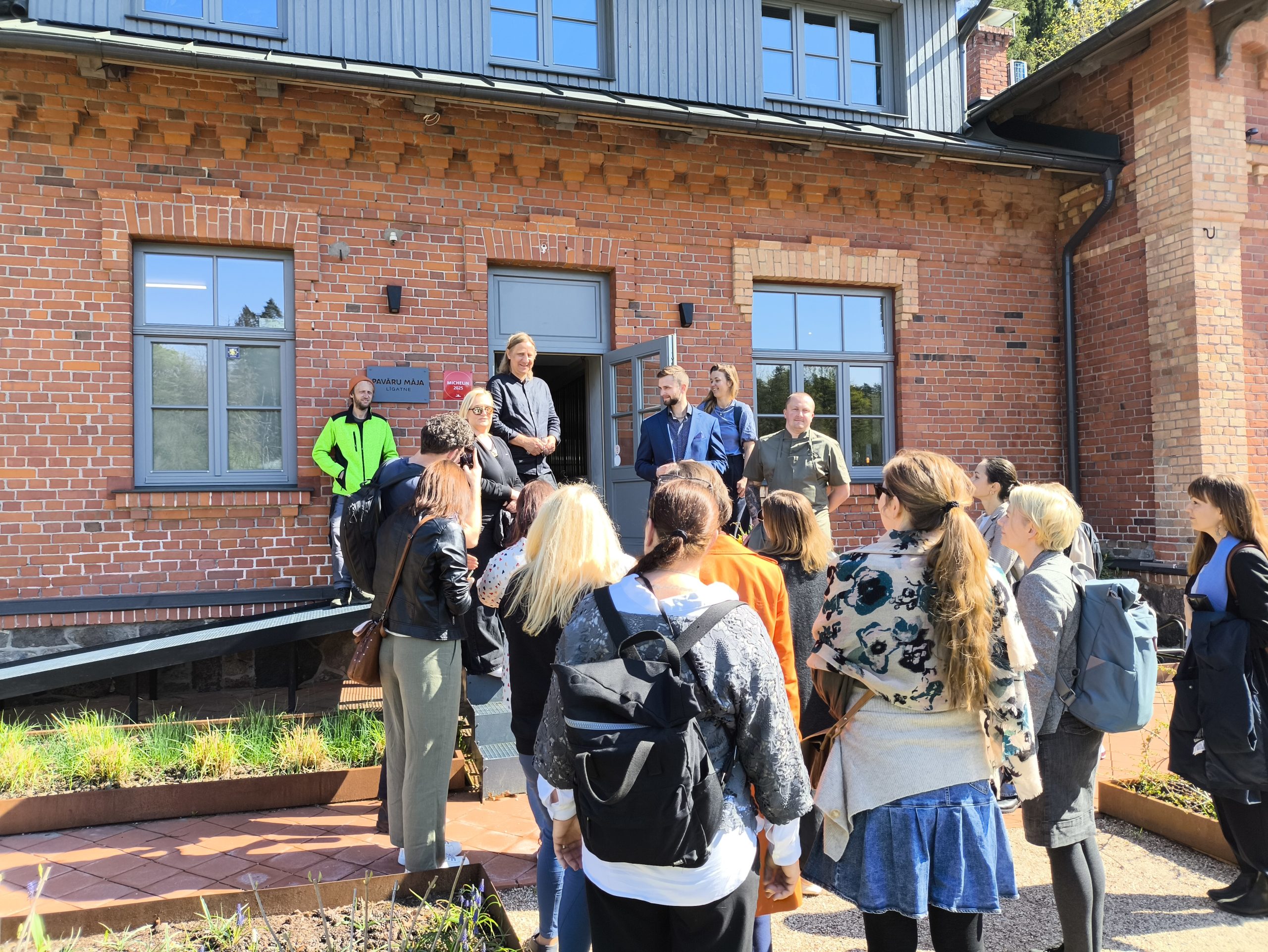
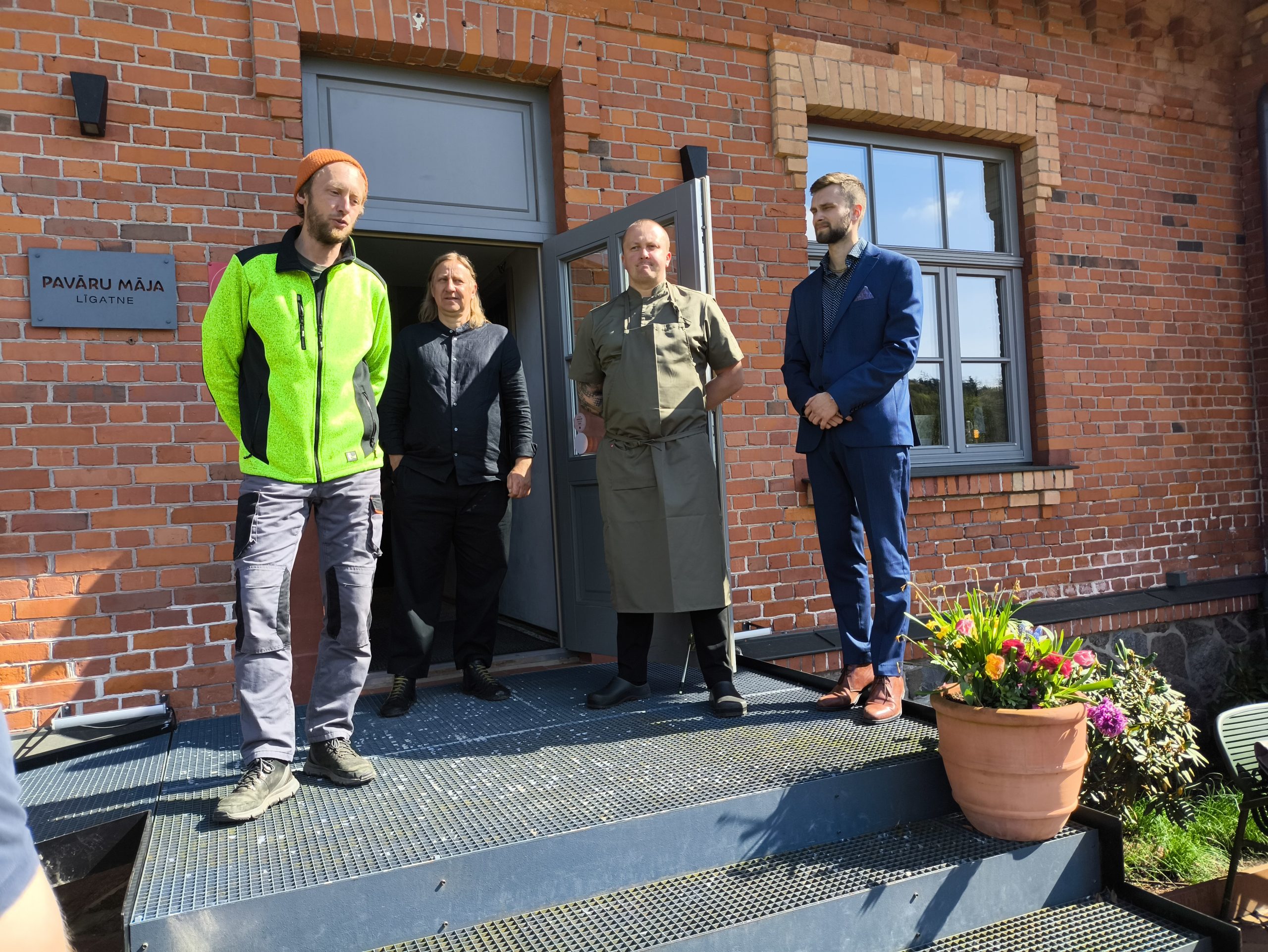
On April 23, international guests and project partners visited Līgatne New Leaders Secondary School in Vidzeme, where it was emphasized that good food is an essential component of a quality education. The school has set a goal: 30% of meal ingredients should be locally sourced and organically grown. Steps are being taken for the school kitchen to obtain organic certification. Afterwards, the guests went to the restaurant “Pavāru Māja” (“Chefs’ House”), which received the Michelin Green Star for its sustainable approach. Hosts—owner Ēriks Dreibants, head chef Juris Dukaļskis, and service manager Artūrs Kļaviņš—introduced attendees to the principles of circular restaurant management, collaborations with local farms, and initiatives supporting the local community. The group also heard from Edgars Ricevs, owner and restorer of the Līgatne Paper Mill and CEO of association “GreenFest”. The next stop was in Cēsis at the art space MALA, where hosts actively foster the city’s cultural life. Daina Eglīte‑Antone of the family business “Labas Saknes” shared her experiences and treated the group to snacks made from berries, fruits, and vegetables grown by her or nearby farms. The day concluded with a visit to Valmiermuiža brewery, where participants learned about its operating principles—one of which emphasizes sustainability.
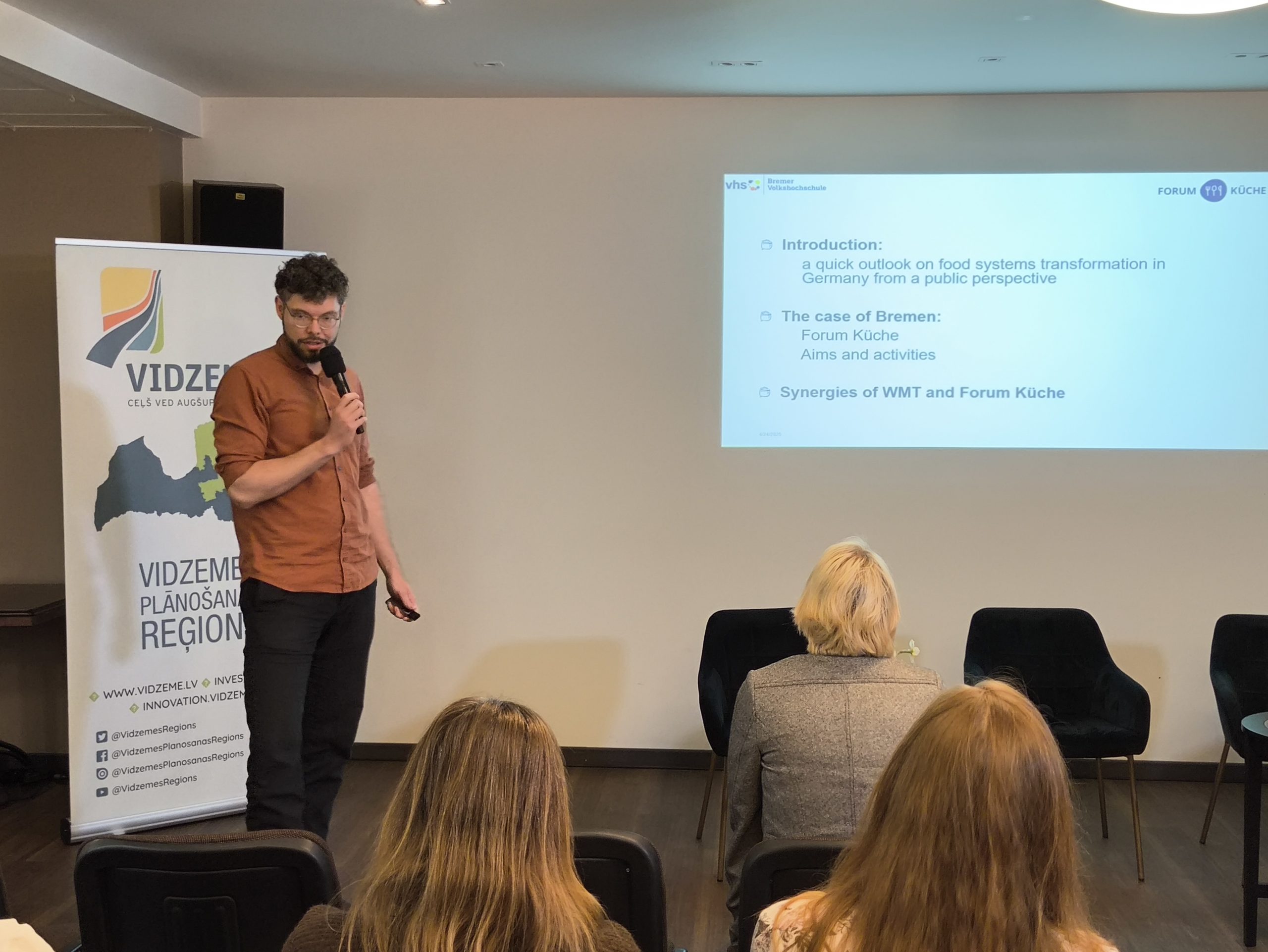
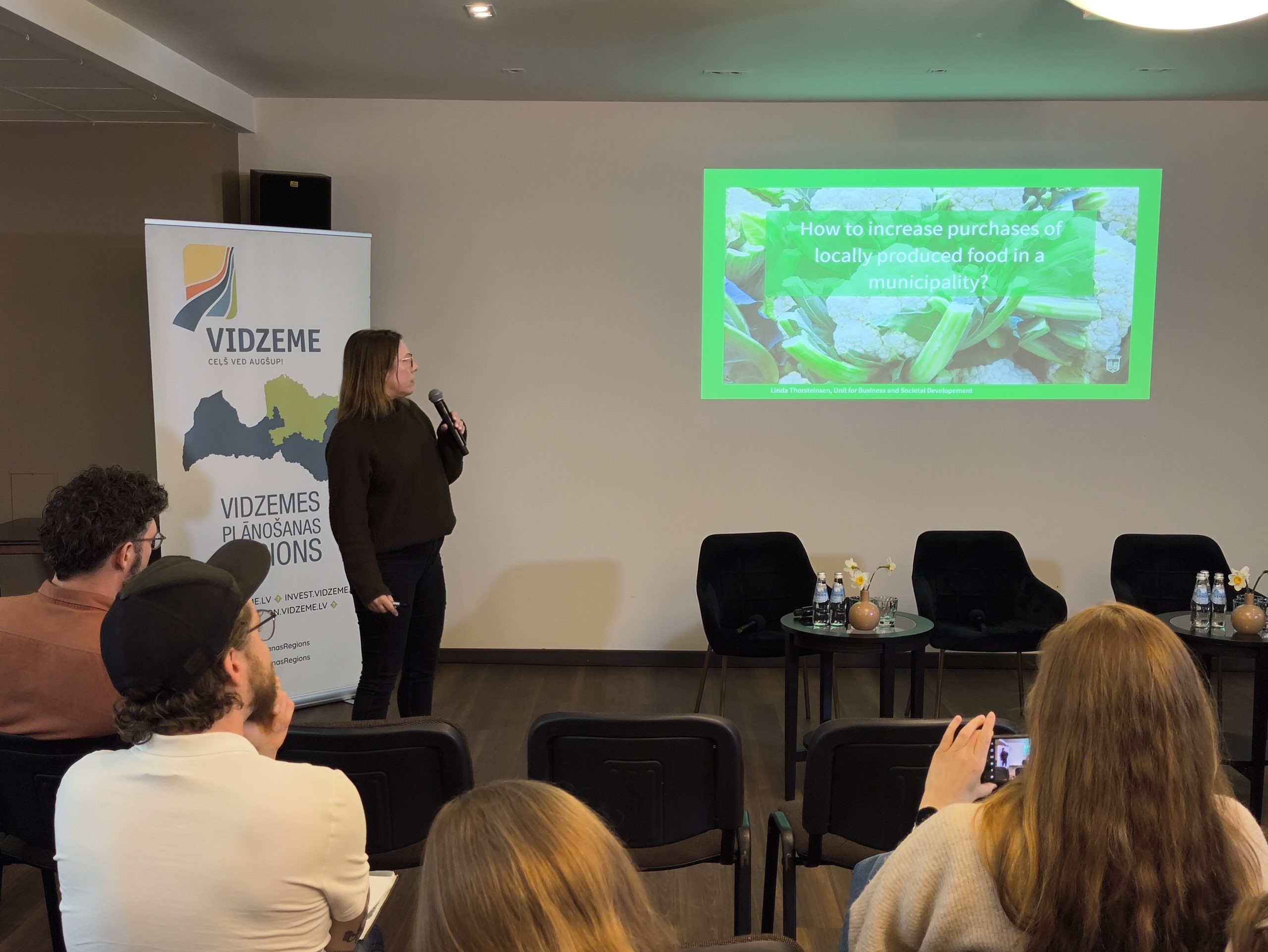
On April 24, food experts from four countries delivered presentations and led discussions about opportunities to strengthen the role of local products in local food systems and make them more sustainable. They stressed that food systems are more than just food—they need to be friendly to both the environment and people. Vidzeme Planning Region’s expert Līga Proškina presented the strategic guidelines “Vidzeme Region Sustainable Food System 2025–2035.” Meanwhile, experts from Bremen (Germany), Trondheim (Norway), and Jyväskylä (Finland) shared their countries’ experiences in promoting local food cycles, including in school meals.