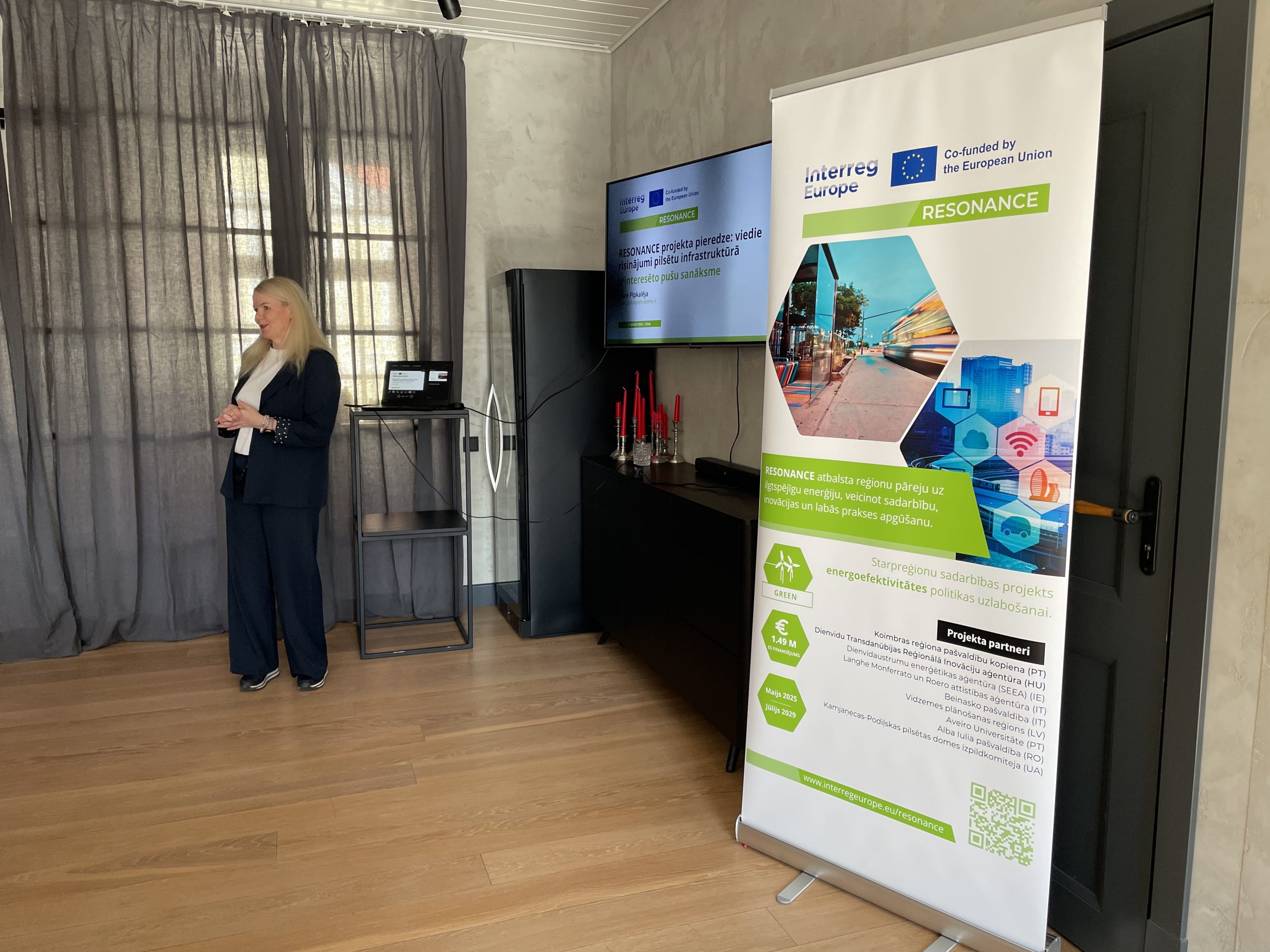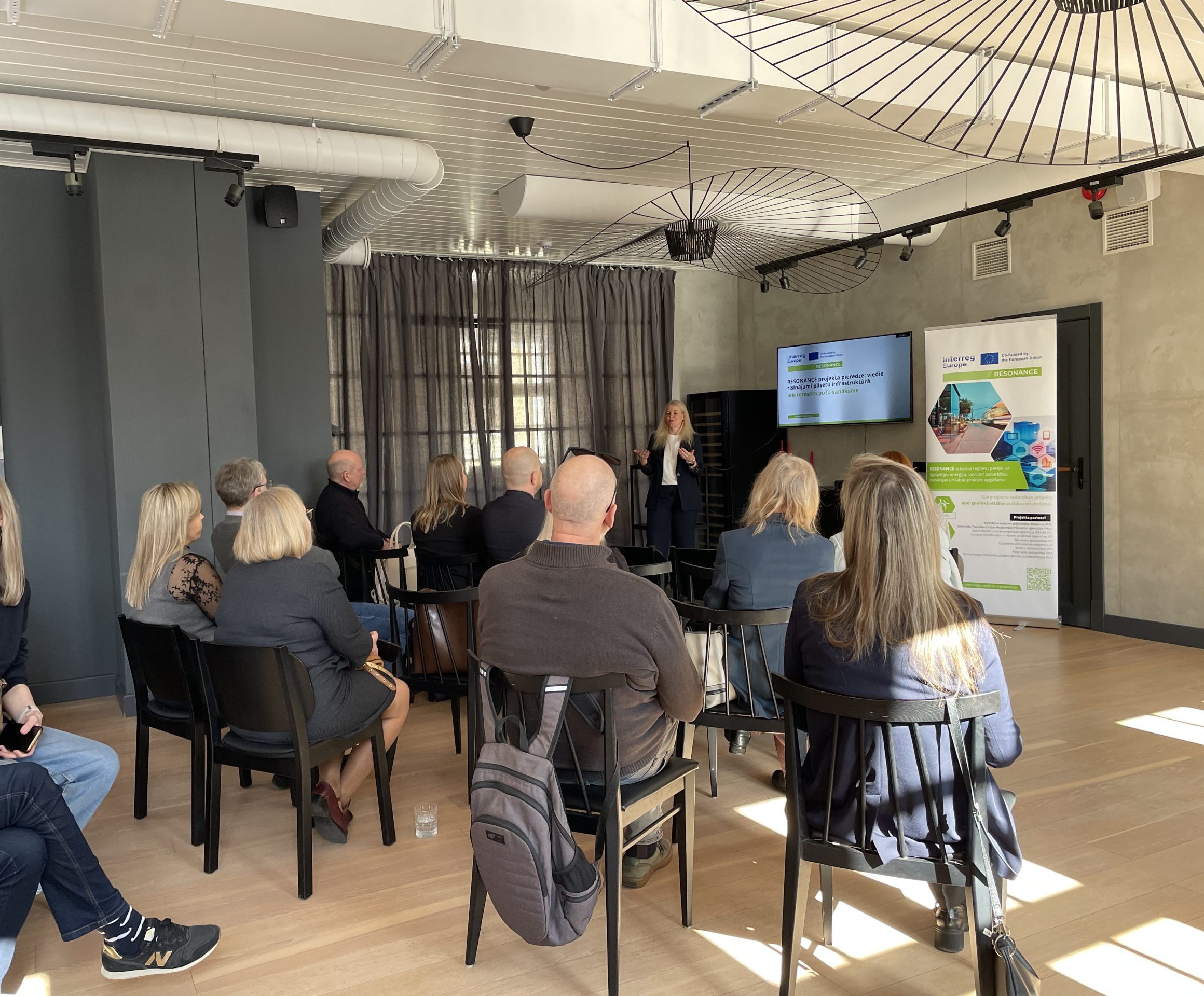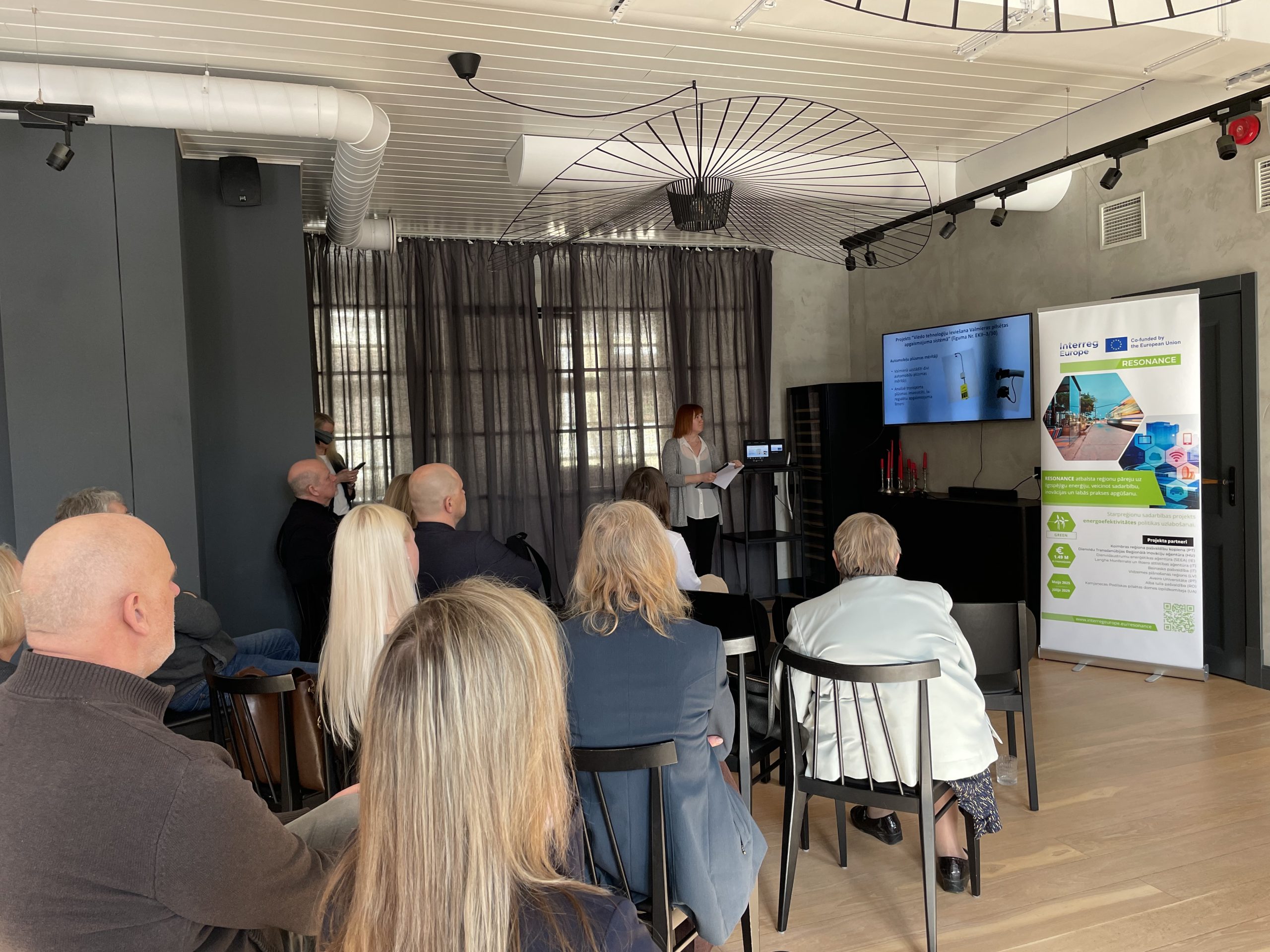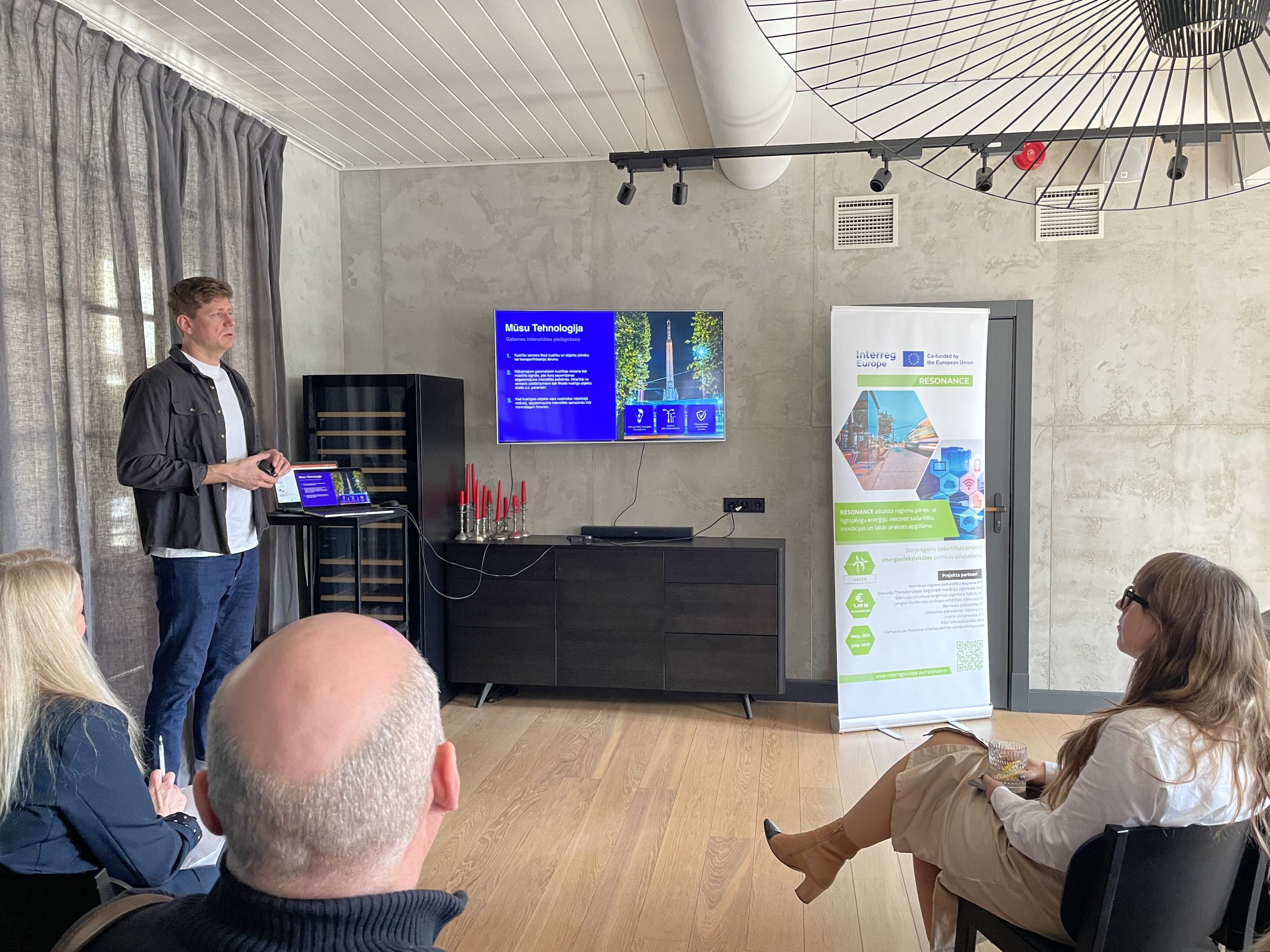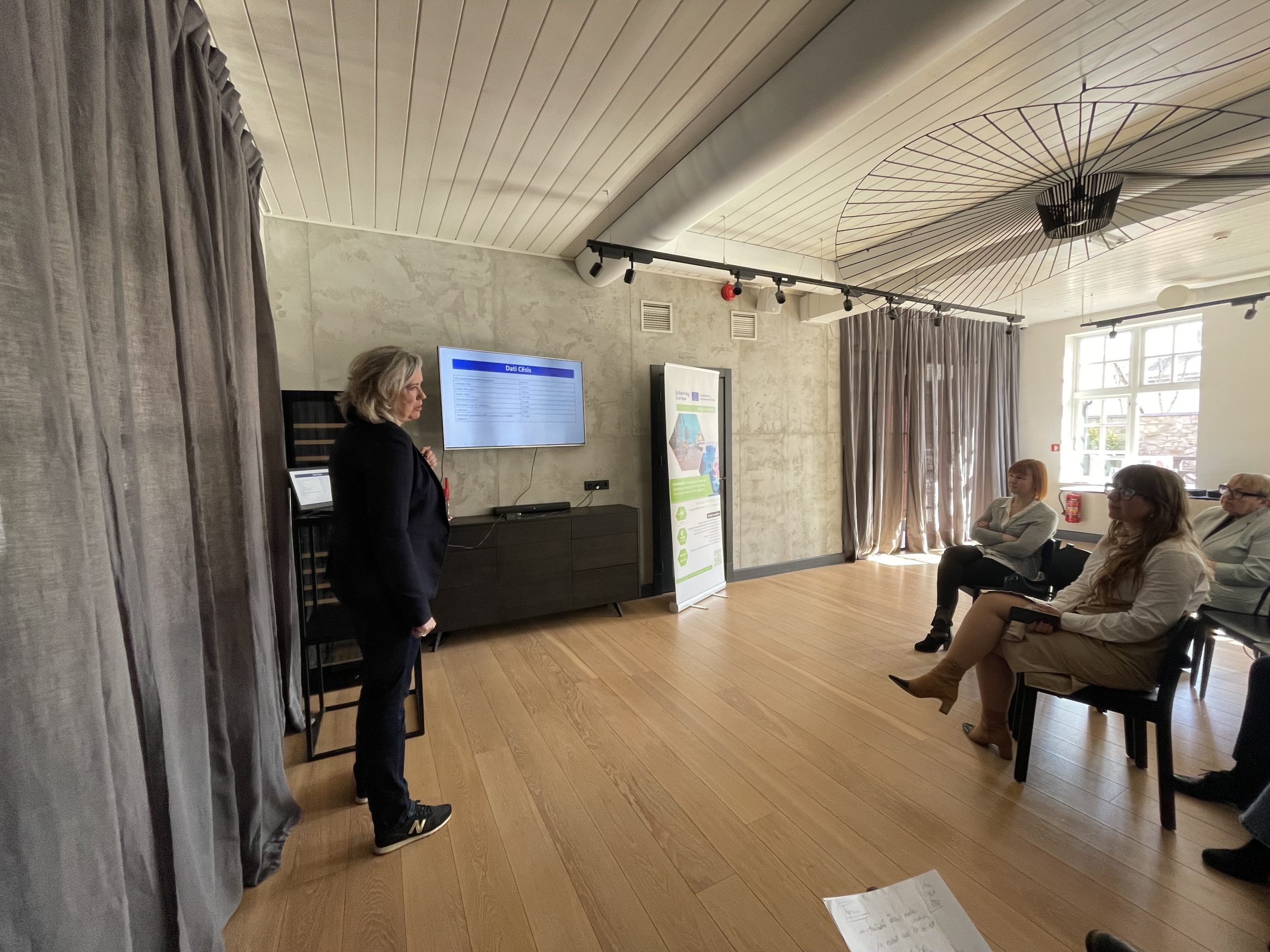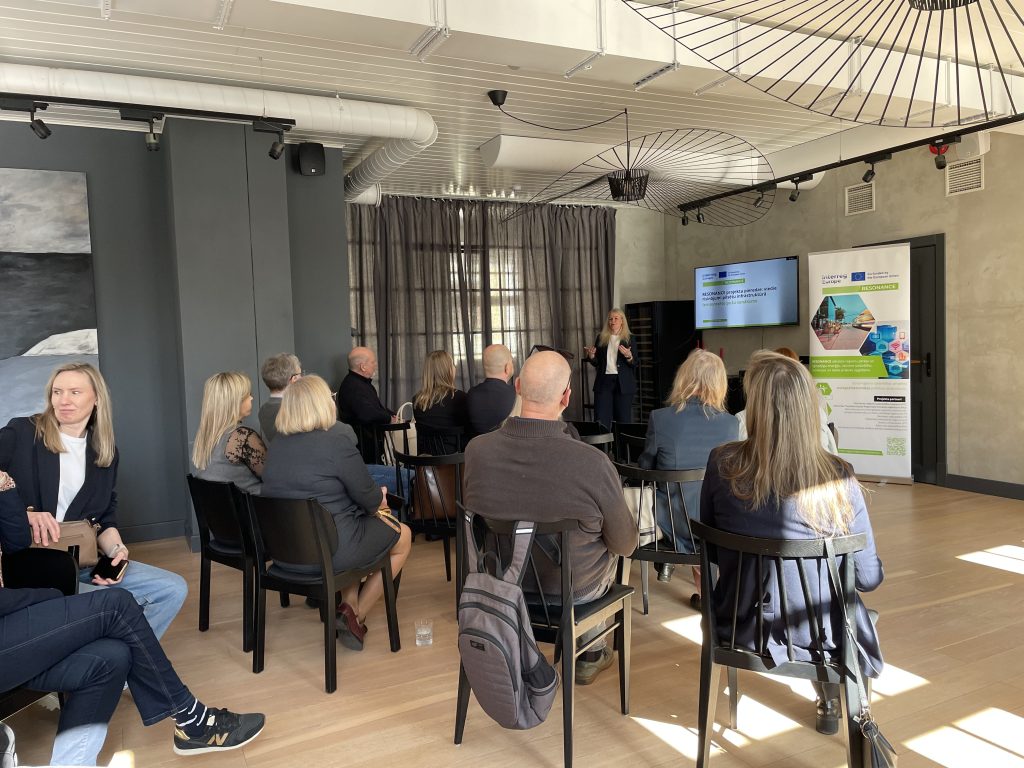
On March 27, a stakeholder meeting of the RESONANCE project took place in Cēsis, where representatives of municipalities and industry from the Vidzeme Planning Region (VPR) discussed smart street lighting solutions, their role in the development of a sustainable urban environment, and shared experiences regarding their implementation, benefits, and challenges.
The event was opened by VPR representative Zane Pīpkalēja, who introduced the RESONANCE project, its objectives, and the opportunities it offers municipalities in planning urban infrastructure. Emphasizing the project’s importance in the region, she highlighted its key directions: promoting energy efficiency through smart lighting solutions, exchange of experience, development of innovation, and strengthening cooperation. She noted that currently smart street lighting accounts for approximately 15% of the total infrastructure in Vidzeme, but by 2030, in line with the implementation of the European Green Deal, this figure is expected to reach 40%. Achieving this goal is influenced by several challenges, including adapting existing infrastructure, availability of funding, and procurement processes. At the same time, smart lighting is a crucial component of sustainable urban planning on the path toward climate neutrality. Research shows that such solutions can be implemented faster and more effectively in smaller cities due to closer cooperation with local communities and stakeholders.
Valmiera’s experience: from modernization to savings
Madara Ūdre, Project Manager at the Project Management Division of the Development Department of Valmiera Municipality, shared Valmiera’s experience. She presented the implementation of smart technologies in the city’s and municipality’s lighting systems, with several projects carried out since 2019 to improve energy efficiency. These projects included the modernization of street lighting by replacing hundreds of outdated luminaires with LED lighting equipped with sensors and smart control systems, enabling the adjustment of lighting intensity according to pedestrian and traffic flow.
The implemented solutions provide remote lighting management, real-time information about system performance and failures, and significantly reduce electricity consumption—street lighting energy use in Valmiera has decreased several times. At the same time, the municipality continues to develop lighting infrastructure beyond the city, installing it in rural areas and implementing projects aimed at energy savings and reducing greenhouse gas emissions, demonstrating the importance of smart solutions in sustainable urban development.
Cēsis experience: gradual transition to smart solutions
The Cēsis Municipality is currently working on the gradual modernization of its street lighting network by connecting it to the remote management system C-BOX, which enables centralized control and monitoring of the entire lighting infrastructure. The goal is to achieve up to 40% energy savings while moving toward smarter and more efficient urban management.
However, as noted by Iveta Herbsta, Project Manager at the Development Department of Cēsis Municipality, the municipality faces significant challenges, particularly in procurement processes and the development of technical specifications, which have repeatedly delayed project progress. Despite this, pilot projects are being implemented—for example, in the Pirtsupīte area, where smart lighting is combined with sensors and future digital solutions. These examples illustrate a shift from basic lighting provision to multifunctional infrastructure that can be integrated with other smart city systems in the future.
The event also featured solutions developed in Latvia. The company IdeaLights, represented by its CEO Toms Stālmans, presented smart street lighting technologies that allow lighting intensity to be adjusted to real-time conditions, such as movement or fluctuations in electricity prices. The company’s solutions provide remote control, data analytics, and significant energy savings, while improving urban functionality and safety.
It was emphasized that such solutions can be easily integrated into both new and existing infrastructure and are particularly important for smaller municipalities, where energy savings are directly noticeable. The company is also developing multifunctional lighting poles with additional features such as sensors and charging infrastructure, contributing to the development of smart cities in Latvia and exporting solutions internationally.
At the end of the event, participants were invited to take part in a workshop using a “policy clinic” approach to identify the main barriers to the implementation of smart lighting poles, evaluate them, and develop recommendations for improving policy documents and operational processes. Survey results indicate that the main barriers are institutional and financial rather than technological.
The most frequently mentioned challenges included fragmented responsibilities across sectors (energy, mobility, ICT), high initial investment costs, lack of standardization for sensors and IoT platforms, and limited technical capacity of municipalities. Key priorities identified were improving cross-sector coordination, modernizing lighting infrastructure with energy-efficient and sensor technologies, and integrating these solutions into urban data platforms. The main enabling factors highlighted included political commitment to developing climate-neutral and digital infrastructure, availability of EU funding, cooperation with the private sector, and strengthening municipal capacity, all of which can contribute to the wider adoption of smart infrastructure solutions.
About the project
The project “smaRt polEs aS driver Of greeN And eNergy effiCient communitiEs” (RESONANCE) is implemented within the Interreg Europe cross-border cooperation programme for the period 2021–2027.