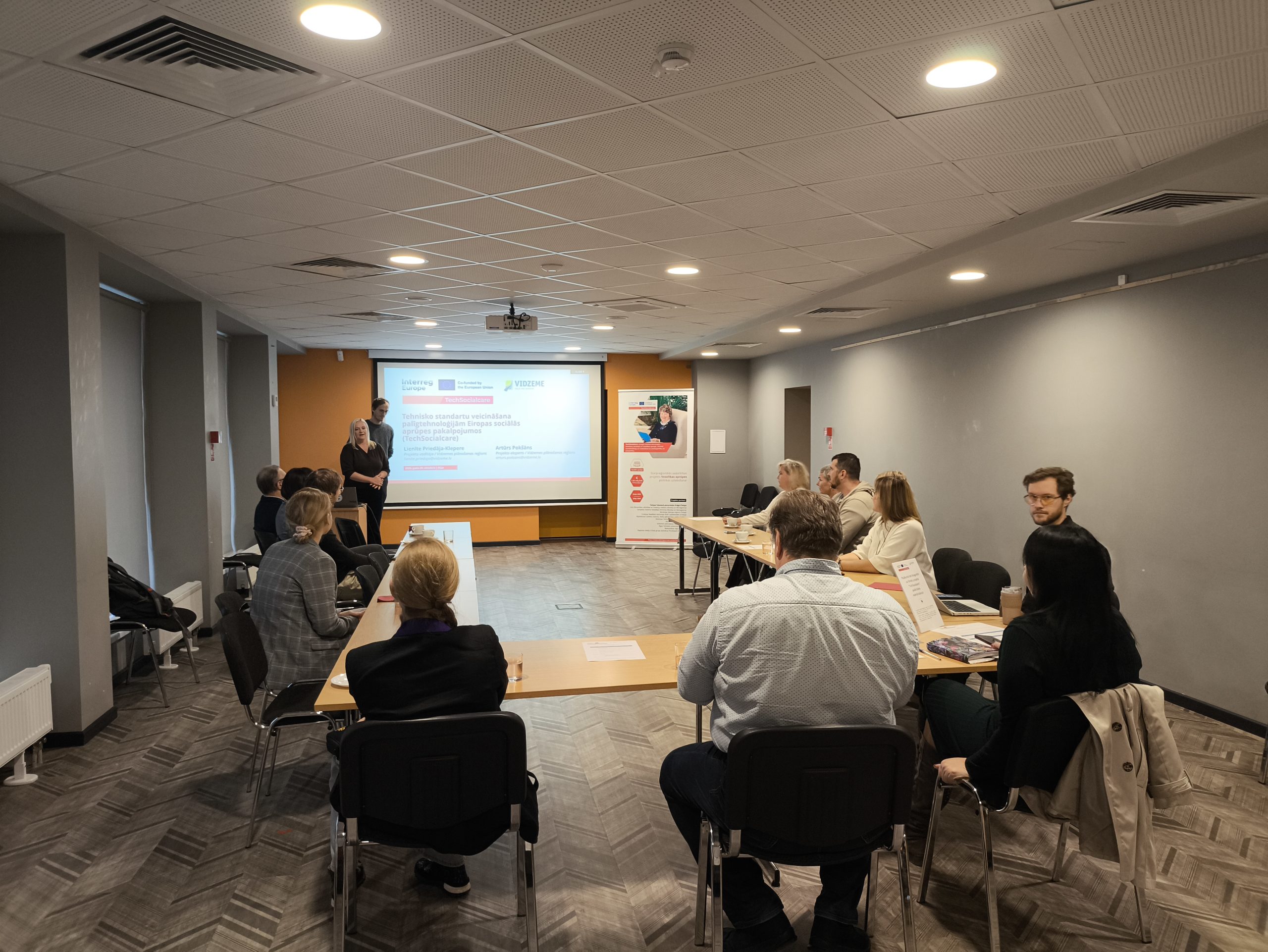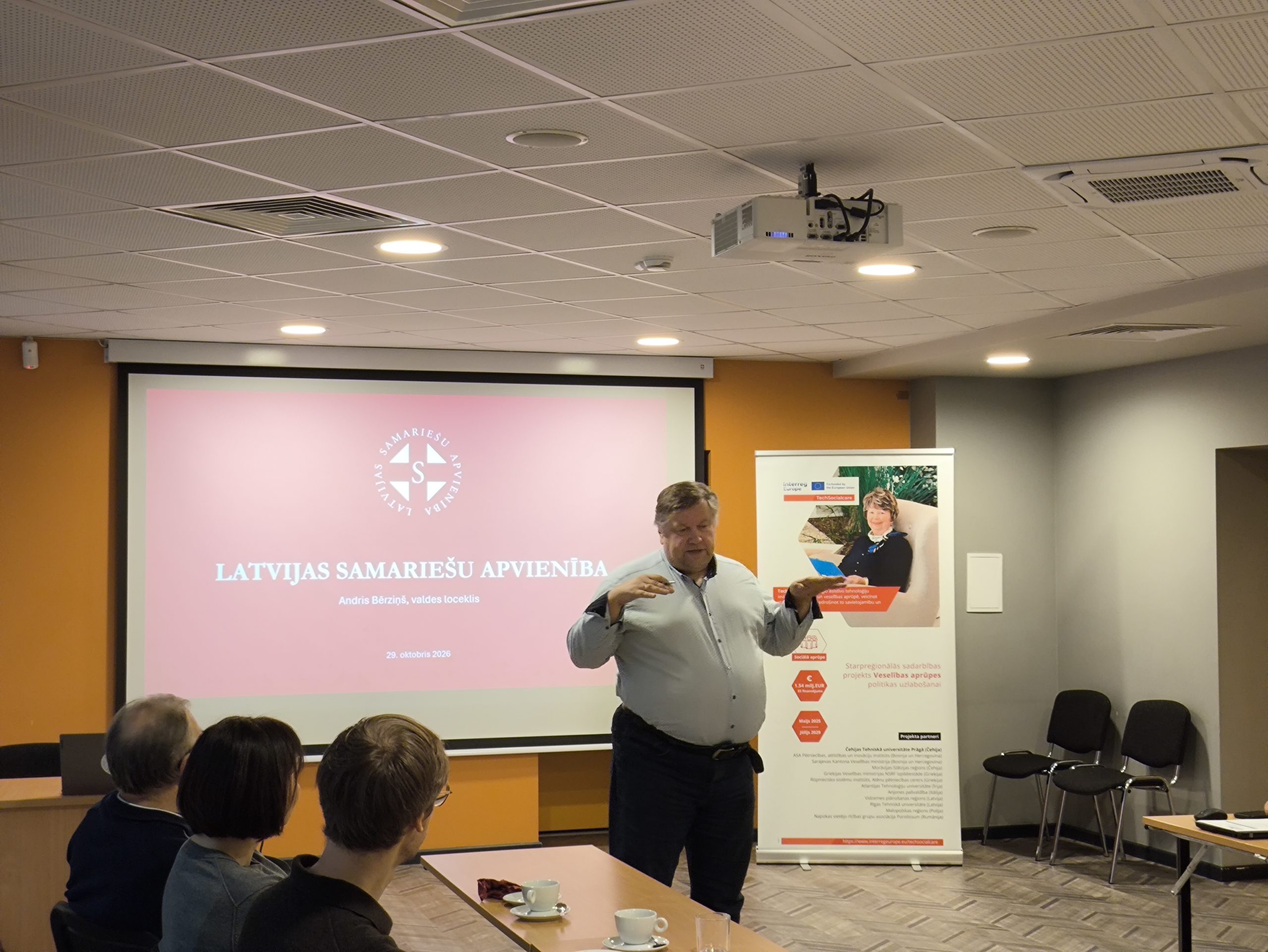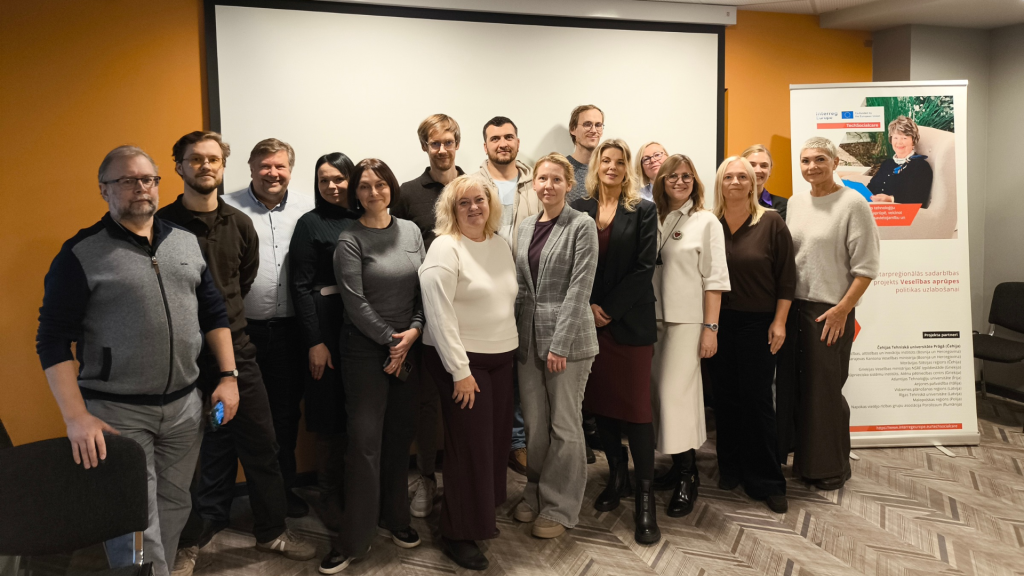
On 29 October, the third stakeholder meeting of the TechSocialcare project took place in Riga, Latvia. It was organised by the project’s two Latvian partners, Vidzeme Planning Region (VPR) and Riga Technical University (RTU). Project partners met representatives of institutions that organise and oversee social and health care services in Latvia to discuss current issues in the use and standardisation of assistive technologies.
Such meetings give participants a chance to exchange ideas, share good practice and consider how it can be adopted in their own context. This meeting combined policy discussion with first-hand insight into solutions already in use.
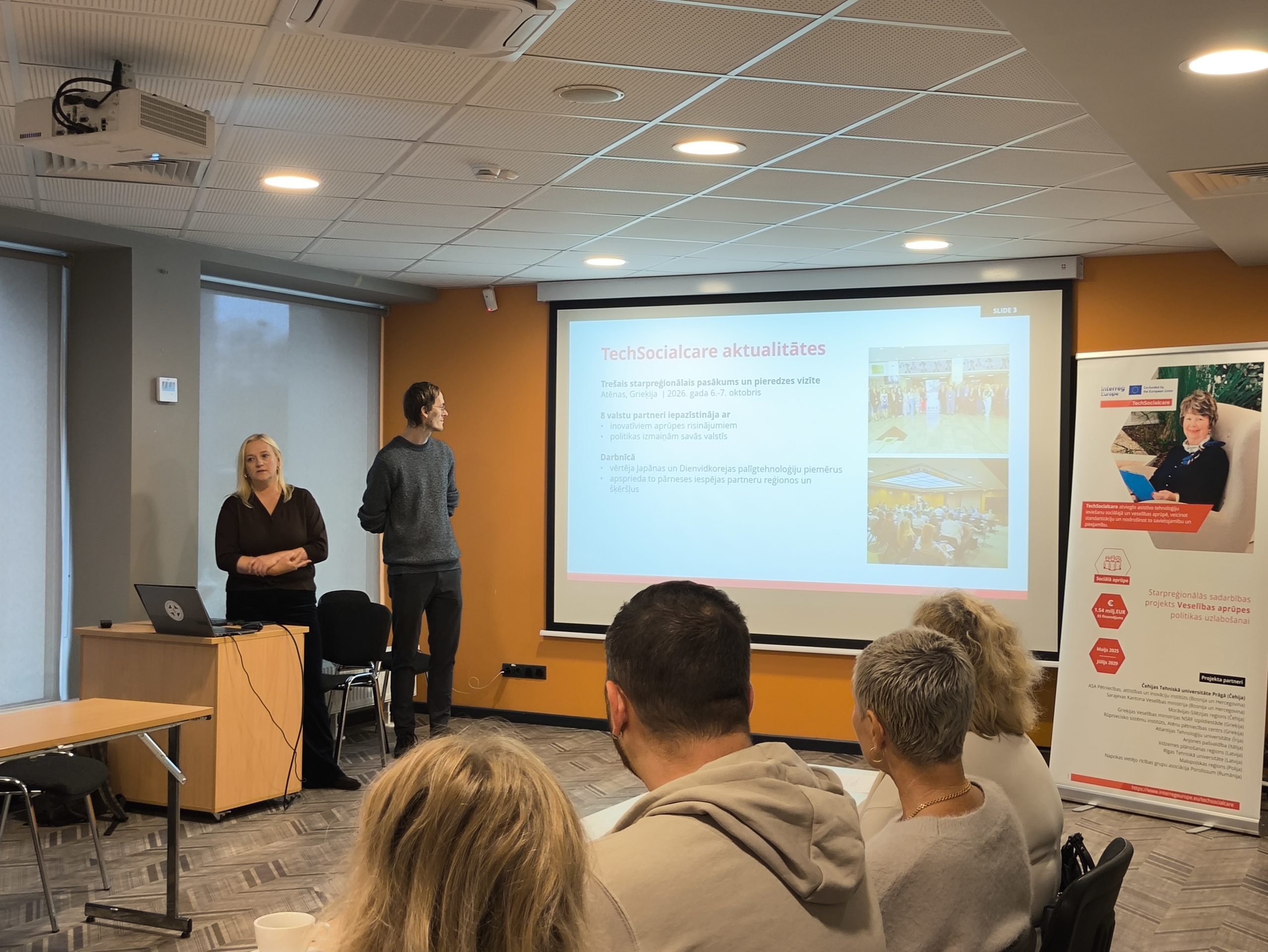
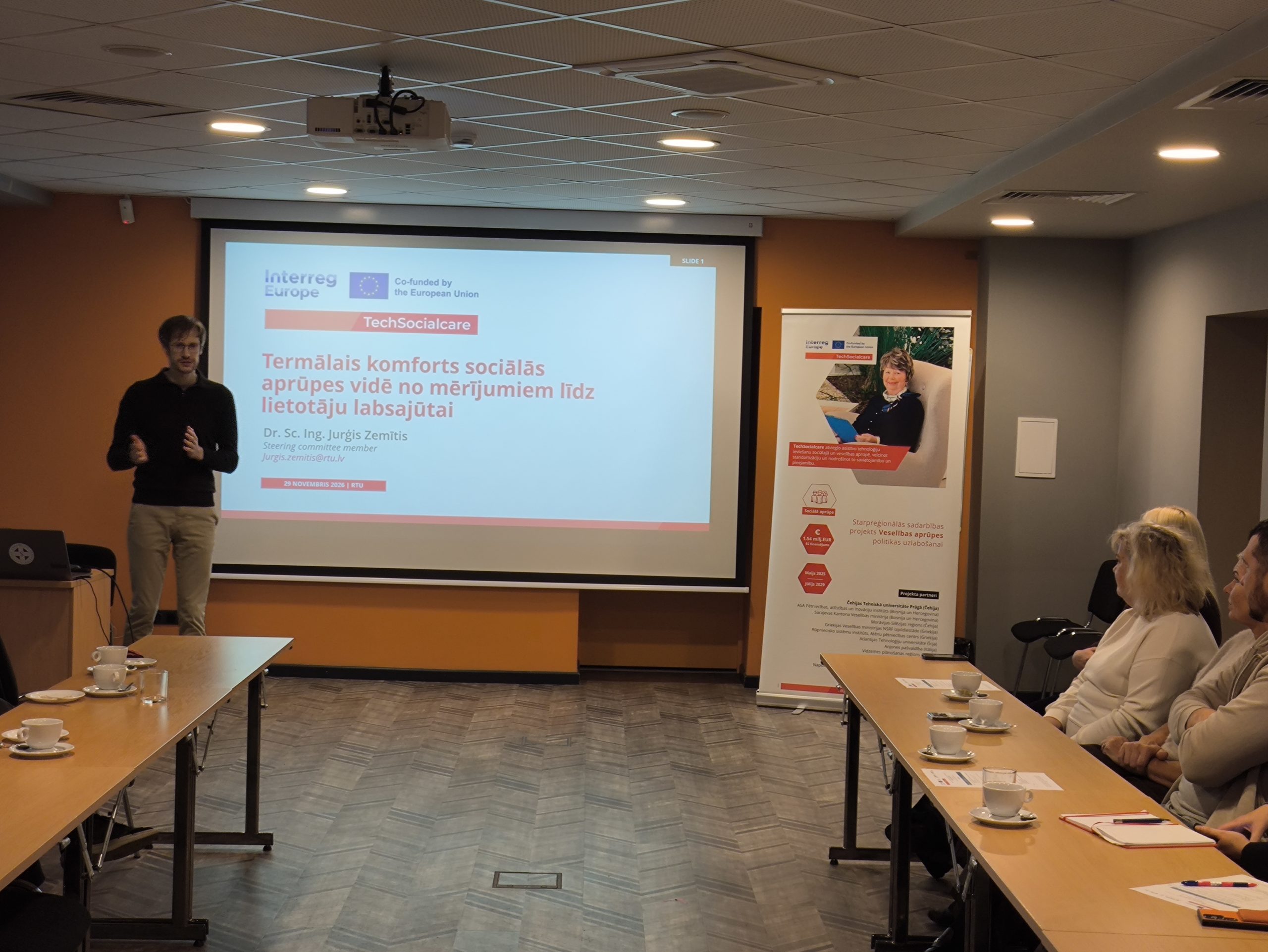
Participants first heard about the project’s third interregional event, held in Athens, Greece, on 6 and 7 October, and showed interest in the examples presented there. Local objectives in Vidzeme linked to policy changes in the field of assistive technologies were then discussed. These were presented by VPR project manager Lienīte Priedāja-Klepere and VPR expert Artūrs Pokšāns. Jurģis Zemītis, researcher at RTU and Doctor of Engineering Sciences, spoke about thermal comfort in social care environments.
The meeting was hosted by the Latvian Samaritan Association, the largest provider of social services in Latvia, which also offers integrated home care. At the Association’s care centre, its director, Andris Bērziņš, described how assistive and information technology solutions are being introduced in its services. Rihards Andris Bērziņš, also of the Association, presented e-care delivered through the “APSis” system, which allows client care to be planned electronically. Participants also discussed where access to assistive devices remains overly complicated for clients and what improvements are needed.
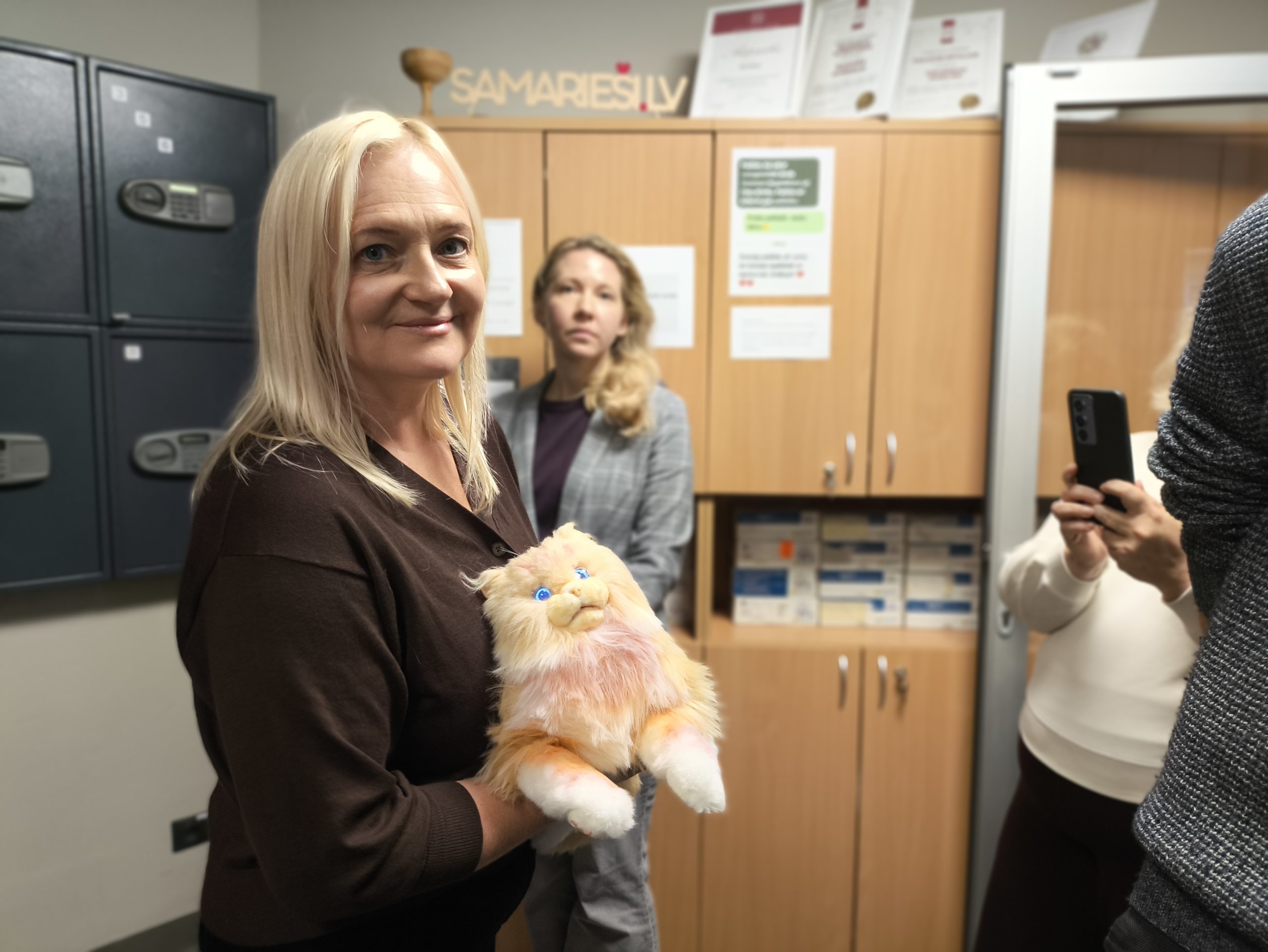
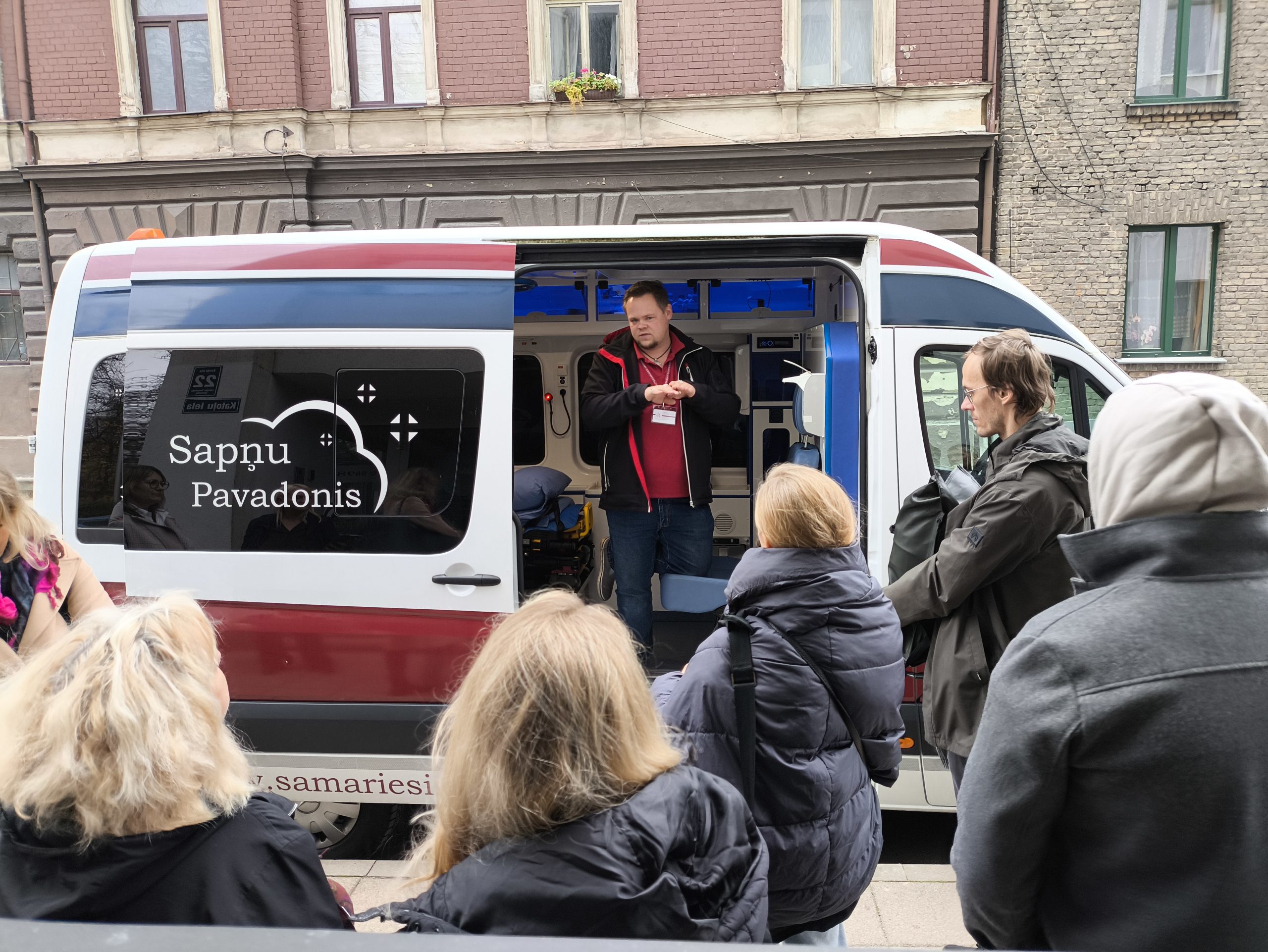
Participants visited the “Safety Button” call centre, which provides round-the-clock monitoring and access to emergency assistance, as well as a sensory room and a robotic cat, an interactive pet for people with cognitive impairments. They also saw the “Dream Companion” minibus, which helps fulfil the wishes of terminally ill people.
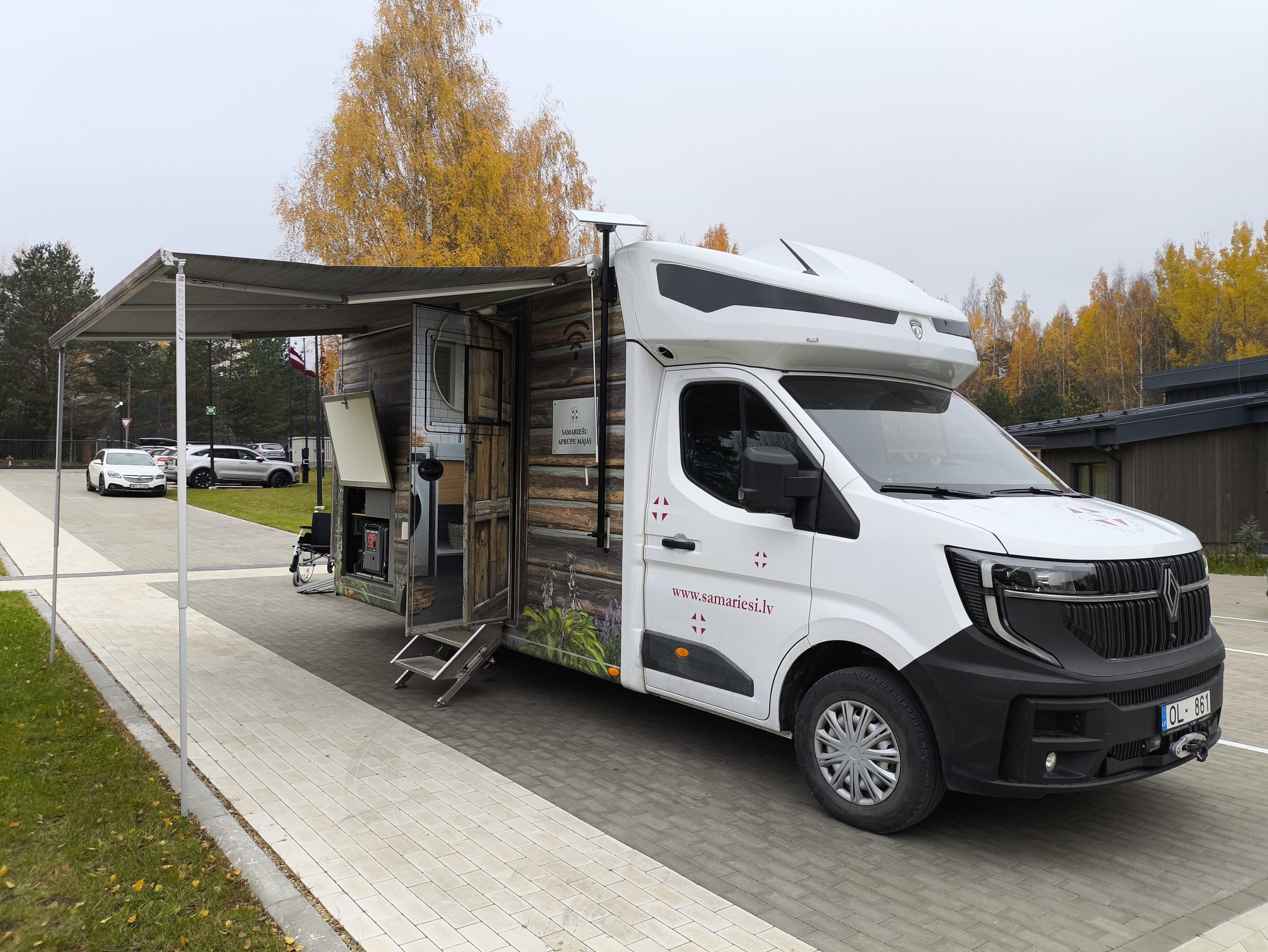
The meeting concluded at Bišumuiža, where participants visited the care home and learned about its technological solutions. They also saw the Samaritan project UPE (Universal Service Express), a minibus providing mobile showers, laundry and other everyday support for older people and people with disabilities in rural areas. It is one of the good practice examples that Artūrs Pokšāns presented to international partners at the interregional event in Athens.
“Meetings like this help us identify the challenges in the availability and use of assistive technologies, and ways to improve regional development planning documents so that they support wider and more targeted use of these technologies in social and health care,” says Lienīte Priedāja-Klepere, VPR project manager.